This post is submitted by a subreddit user, JaffaKetchup (u/bad-at-exams).
I recently did a 2-month solo Interrail trip starting on the 15th of September 2025. It ended up as ~14,000 km in the end, through 21 countries. That’s the distance from the top of Canada to the bottom of South America in a straight line. It’s been a little while since I came back, but I’ve been sitting on it and just letting myself remember the best parts and the most important parts.
Feel free to follow along at this Trainlog link. If you squint a bit, it kinda looks like the UK got a tad bit drunk?
My initial aim for this trip was to reach the real most Northern point of Continental Europe and Norway (a little bit more north than Nordkapp), all without touching a car or taxi (or any other mode of private transport). Partially inspired by a well-known trainhopper, but without the use of the car at the end, and making a full trip of it.
This trip report consists of 4 parts – each one representing a very different environment to the last. Part 1 is the journey to Nordkapp. Part 2 is the journey back down to Central Europe. Part 3 is the journey that was Serbia. Part 4 is the journey home via Montenegro and Bosnia and Herzegovina.
It turned into quite a bit more than I initially planned. Along the way, besides riding some lesser ridden routes, I also ran into the police, took part in overthrowing a government, needed an X-ray, and had some low points. I started solo and finished solo, but I did meet people along the way. And I enjoyed it.
Hopefully this report contains something useful if you’re looking to do your first trip – I’ve sprinkled in a couple of things I learnt along the way every now and then, feel free to ignore and find out yourself, that’s how I did it. If you’re an Interrail veteran, hopefully it’s a nice read and maybe a bit of inspiration.
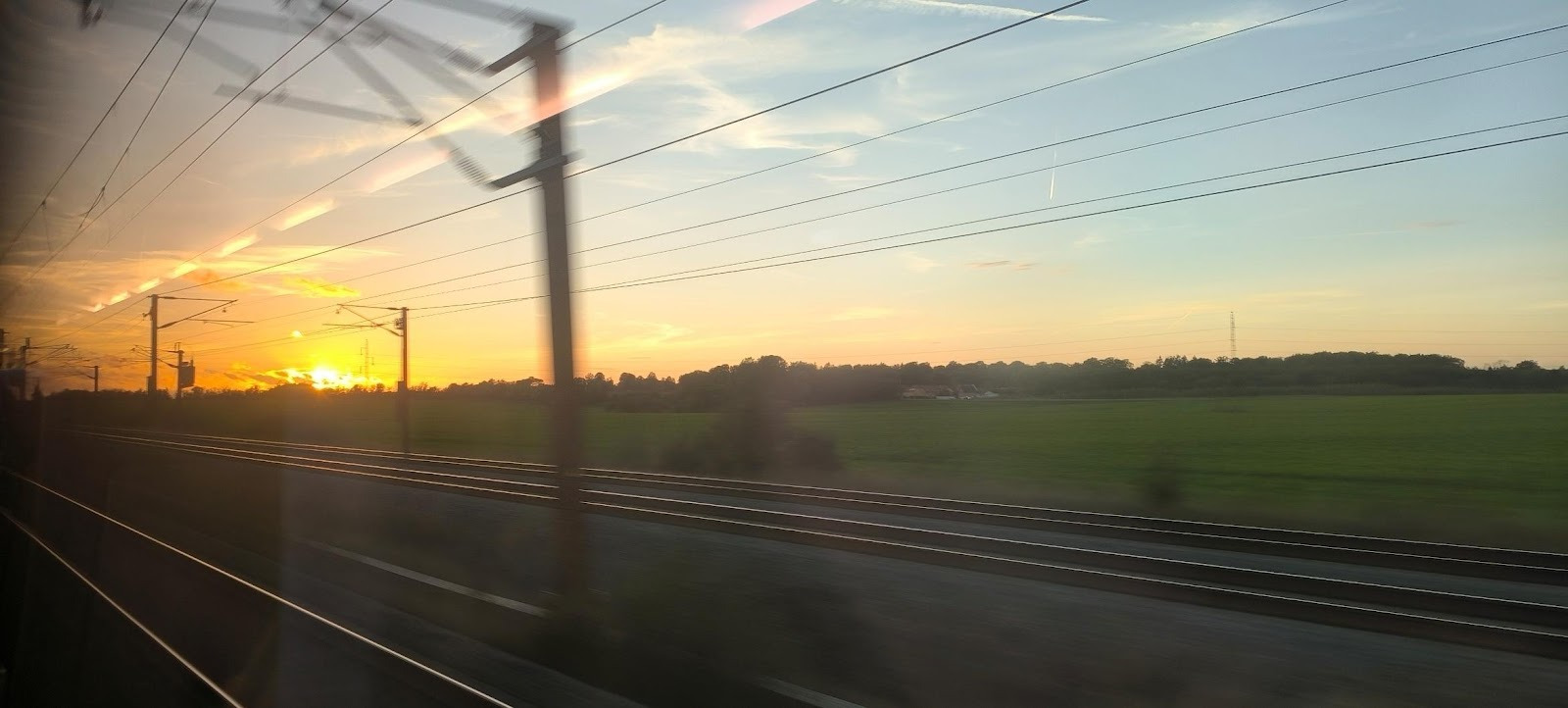
I wasn’t travelling particularly to party, or to do particularly anything other than be there. I was interested in socialising, to try and escape my natural introversion, but it happened sometimes and sometimes it didn’t, as is normal for a solo trip, especially of this nature and this time of year. It also turned into a bit of a sunset-hunting trip, so if you like sunset photos, hopefully there’s at least one good one.
I got absolutely spoilt with the weather – I couldn’t really have asked for any better. I also got spoilt with the timing and a fair amount of luck, although of course, it all balances out and there were some moments which weren’t so lucky (but still memorable), and a couple I’d rather not think about. But that’s what makes a trip a trip – the good, the less good and the not-so-good.
All in all, I’m not sure what I spent exactly – I did buy a little bit of gear (mixed use shoes, somewhere between trainers and hiking boots), but tried to generally be frugal when travelling (pretty much 100% hostels or less). Maybe around £3500 total.
There’s always questions about whether the Interrail ticket is worth it: it absolutely was for this trip. It came to 7.82 GBP per train or 0.0379 GBP/km, excluding seat reservations.
Part 1: Travelling to Isolation
I started as an 18-year-old leaving home. It’s the first proper time I’ve been alone, and certainly the first time I’ve been alone for such a long time. All I had with me was the clothes I was wearing, a 65-litre bag, and a second small backpack. The big bag contained clothes (unfortunately a wide range because of the wide climate differences I could be facing), a hammock and sleeping bag, a little camping hob and all the other small bits and pieces. I had a drone and a jacket in the small bag. When I do this trip again, I’ll probably still need this arrangement, but I’ll drop the camping hob as I didn’t end up using it (although I had planned to and gotten quick close at a couple of points).
I had done a short practise trip of 3 days in the Summer, over more familiar territory between London, UK and Rijeka, Croatia, via an overnight hammock atop a hill in Interlaken, Switzerland and an overnight train.
The first train I boarded was on the Elizabeth Line from my local station, out west of London. I originally had a plan to take a picture of the front of each train I boarded. That would’ve been nice, but was unfortunately quickly forgotten about – I did get a couple though.
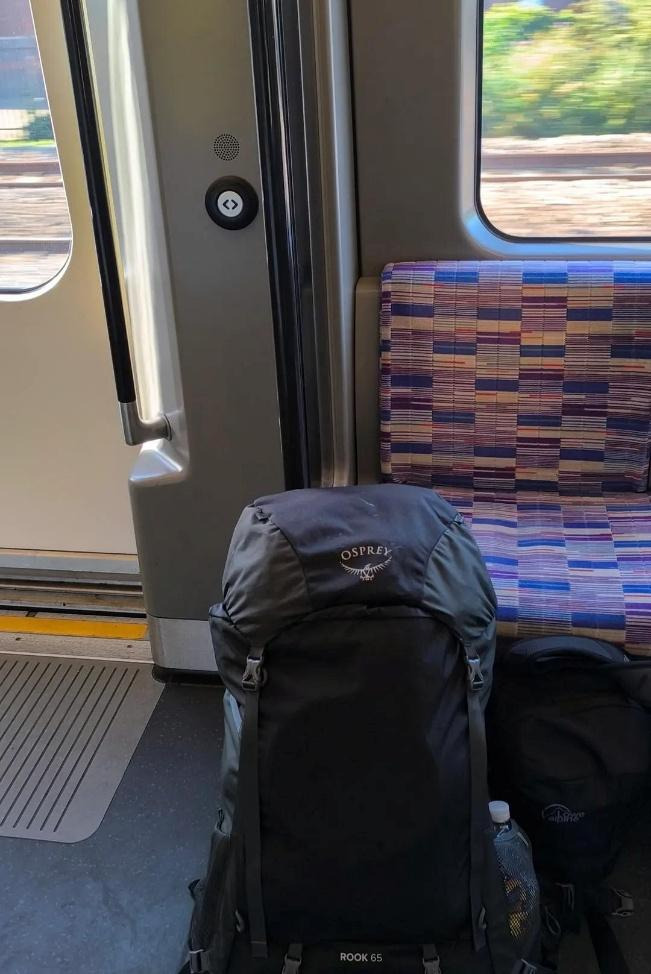
If you’re also coming from the Elizabeth Line, switch onto the Thameslink at Farringdon and you can get to the international station, all included on Interrail. This was one of only 3 points in my entire trip that the planner app didn’t have accurate information – it doesn’t seem to have Thameslink services. If you’re a frequent lurker in the Interrail subreddit, you’ll often see advice not to rely on the Rail Planner app: maybe I got lucky, but most of the time, I only used that app, and everything was OK.
Not much to say about the Eurostar – it’s a great price with Interrail and too expensive without. Arrival into Amsterdam (my first stop) was a little late, as the train was diverted through The Hague, a place with a lot of bureaucracy. It’s also the location where the ICTY trials were held, a history which would frequently pop up in unexpected places across my trip.
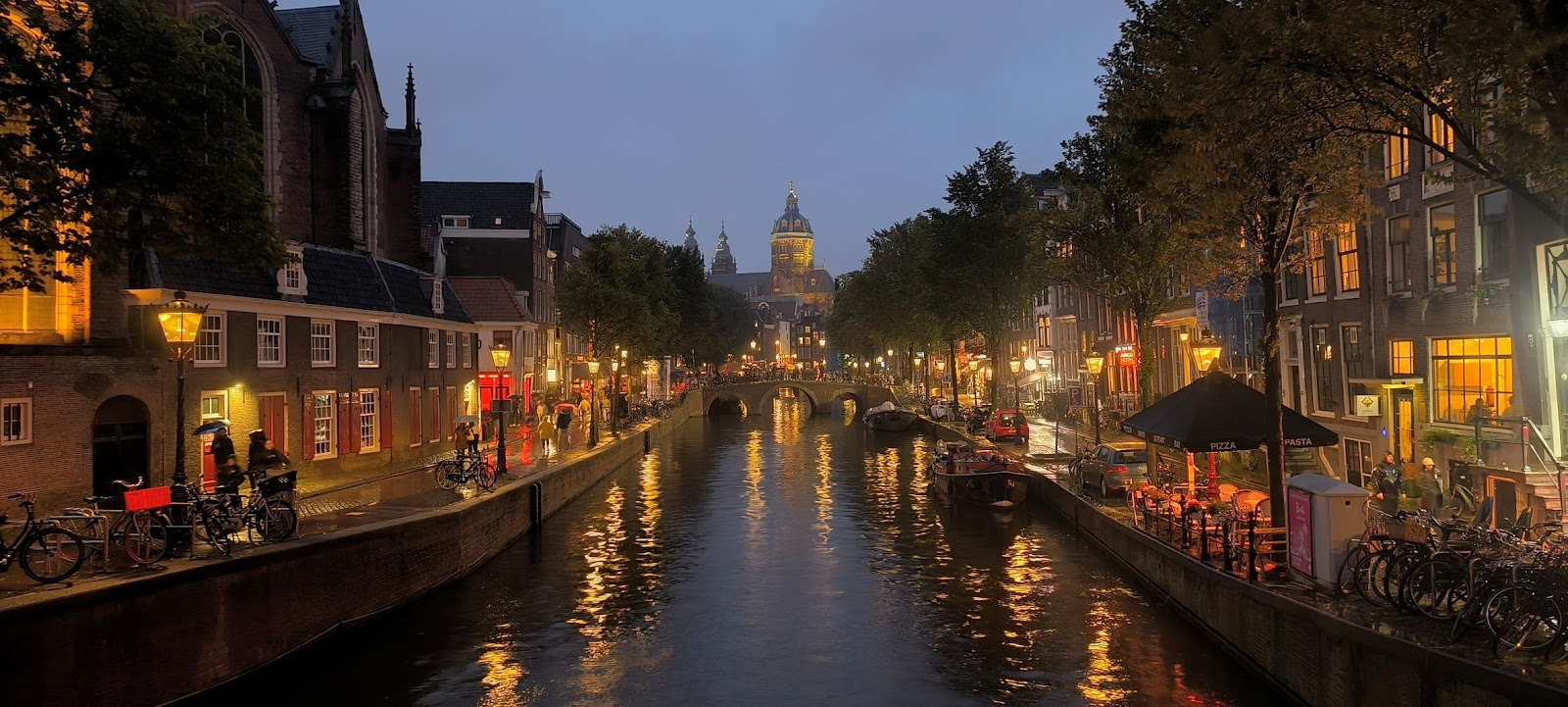
I would rate Amsterdam an ‘OK’ in my arbitrary ranking system. It’s a nice city with some character, and of course good urban design, but it just didn’t feel like what I was looking for (not that I knew what I was looking for). Maybe it was biased by my feelings having just left home for quite possibly 2 months. Unfortunately, I don’t have many pictures of Amsterdam.
I spent my first evening sat on a park bench in the rain (which also didn’t help the ranking), in the dark, with the occasional jogger or walker, just getting used to the feeling of solo travelling.
The feeling of loneliness is real at the start, in the first few weeks. For me, it was worst in the evenings, but I remember it did feel like it was sort of always there, hanging over me. But it does get better. I guess it also helped I was travelling to more and more physically isolated places. I felt the loneliness less when I also felt physically isolated, if that makes sense. Part of my aim for this trip was, as I said, escaping my introversion at least a little, but also just experiencing true isolation, like nobody on the planet knows where you are when you are there, and you can blend in with the surroundings.
In most cases throughout my trip, I spent 1 whole day + a morning or afternoon in each city (after dropping off my backpack or checking whether I could leave it for a while after check-out). Some cities I spent 2 whole days in, but that was the exception as I knew I had a lot of ground to cover.
There’s always loads of questions on the Interrail subreddit about whether a trip is realistic regarding the timing, and the consensus is usually that 2 or 3 full days in each city is the minimum, otherwise there’ll be more travelling than seeing. This does seem a good guide for the average traveller, but adjust to what you know you’ll be interested in and adjust to what your aims are. I moved a lot quicker than most because I knew I was likely to have to cover a lot in a relatively short amount of time, and I had the occasional deadline along the way (some of which I met, some of which I didn’t). At the same time, don’t enforce it as if it’s a rule. Move at a natural pace: the Interrail pass gives that flexibility so you can decide what’s next the night before (at least off season, I almost never had a problem finding hostels). Also, if you can’t move how you wanted for reasons you can’t control, feel free to stay put. In the end, I was mostly happy with how long I spent in each city, apart from a few exceptions, and got better at judging how long I would need in them as I progressed. Another week or two for the same cities would’ve been perfect for me.
I walked a LOT on my whole day in Amsterdam, but honestly, I can’t really remember anything specific. After experiencing the isolation of the first night, I knew I needed to try harder the second night. Well out of my comfort zone.
Luckily, the hostel was quite a good one for socialising, and I managed to find 3 Turkish guys trying to setup a game of Monopoly in the social area. Obviously, it feels weird interrupting a group, but chances are most people are just as awkward as you and won’t say no :D. But seriously, just ask if you can join them. Don’t worry about being awkward. I should’ve taken my own advice more often. After going through the partially dismantled boxes of 3 board games, they quickly decided that there was nothing.
Luckily, I had bought a game of Uno with me, so, we just chatted for a while and played some Uno until 1am. A little exhausted from the sudden change in environment, it was time to get a little bit of well-needed sleep before waking up at 7am for my train in the morning. Thanks guys, and I’m sorry I can’t remember your names!
The next day, my journey was to Copenhagen via Osnabrück and Hamburg. I had about an hour and a half to spend in Hamburg, so I went to find something to eat before the 5-hour train to Copenhagen. Having heard mixed stuff about this service in terms of business, and wanting a seat, I had made a reservation (it was cheap anyway). I think in the end, that service is marked as ‘Please reserve’ by DB, but there’s no actual mandatory reservation in the database. Not sure what would happen if you didn’t have a reservation though.
I arrived in Copenhagen fairly late. I did cook for the first time that night – a meal well known to travellers, pasta bolognese sans meat (far too expensive and difficult to use the whole amount given I was moving quickly and couldn’t rely on a fridge), which would become a staple of my diet for two months. A guy who I started talking to the kitchen also let me have his leftover pasta (which of course, was the same). Then I went out and hung around another park for a while. The mini zip line thing in the children’s play area was fun. But it was very dark and didn’t feel totally safe, which was a nice taste of the freedom and responsibility.
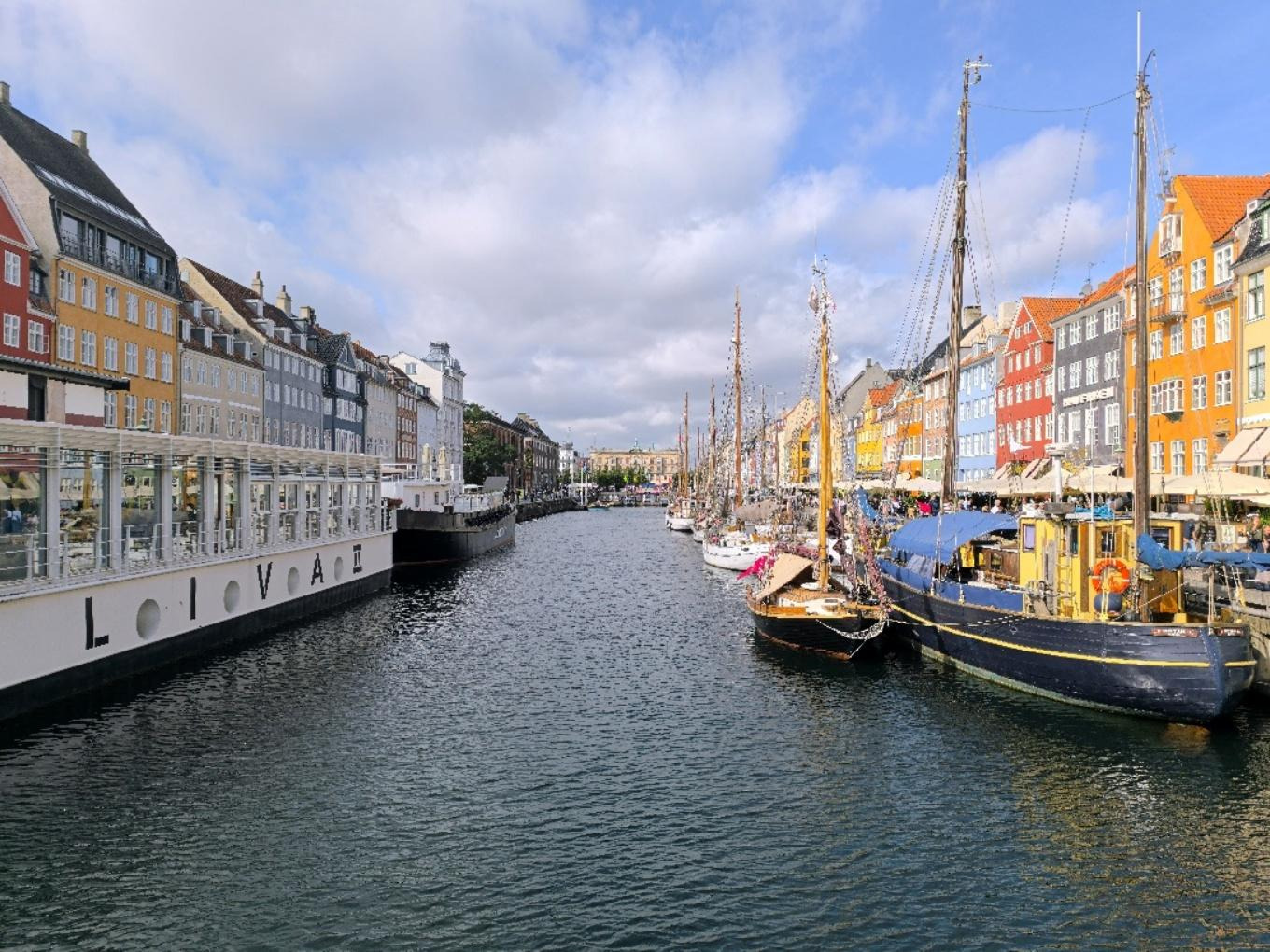
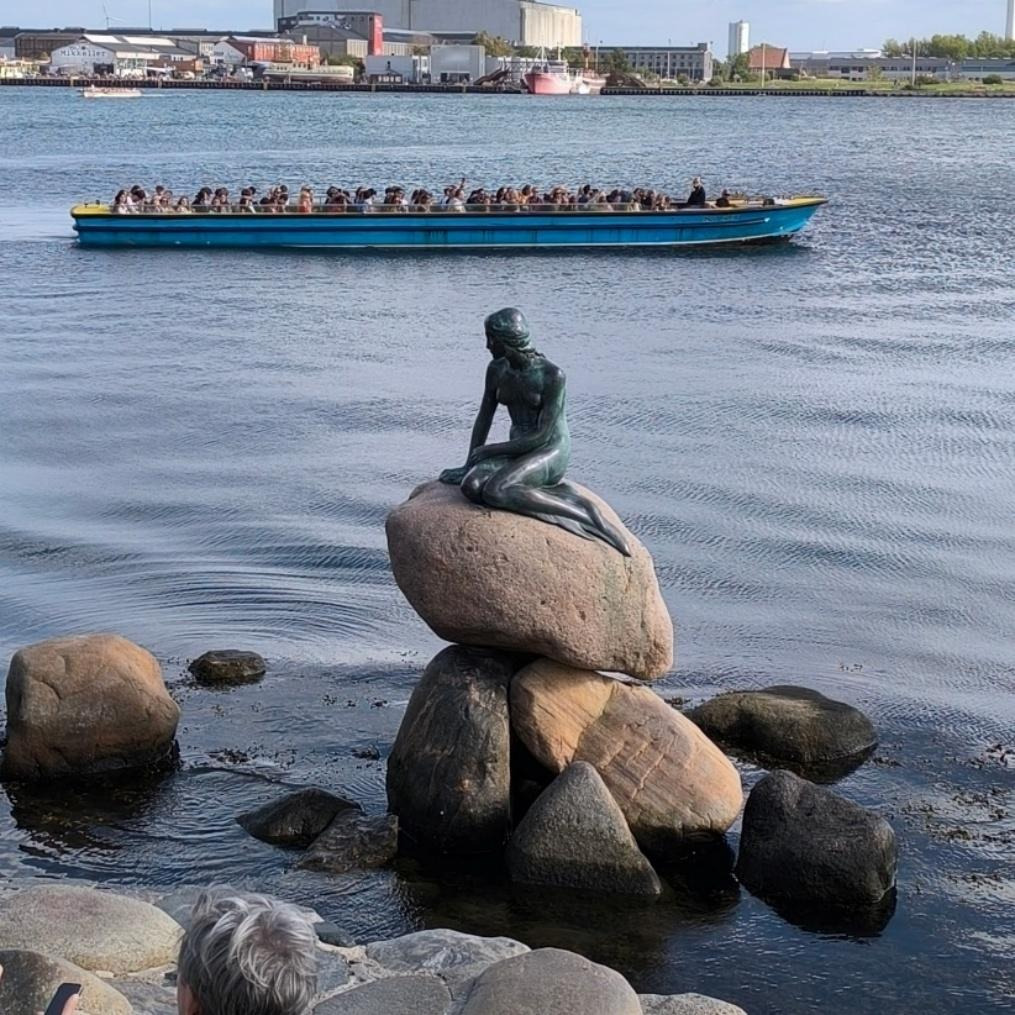
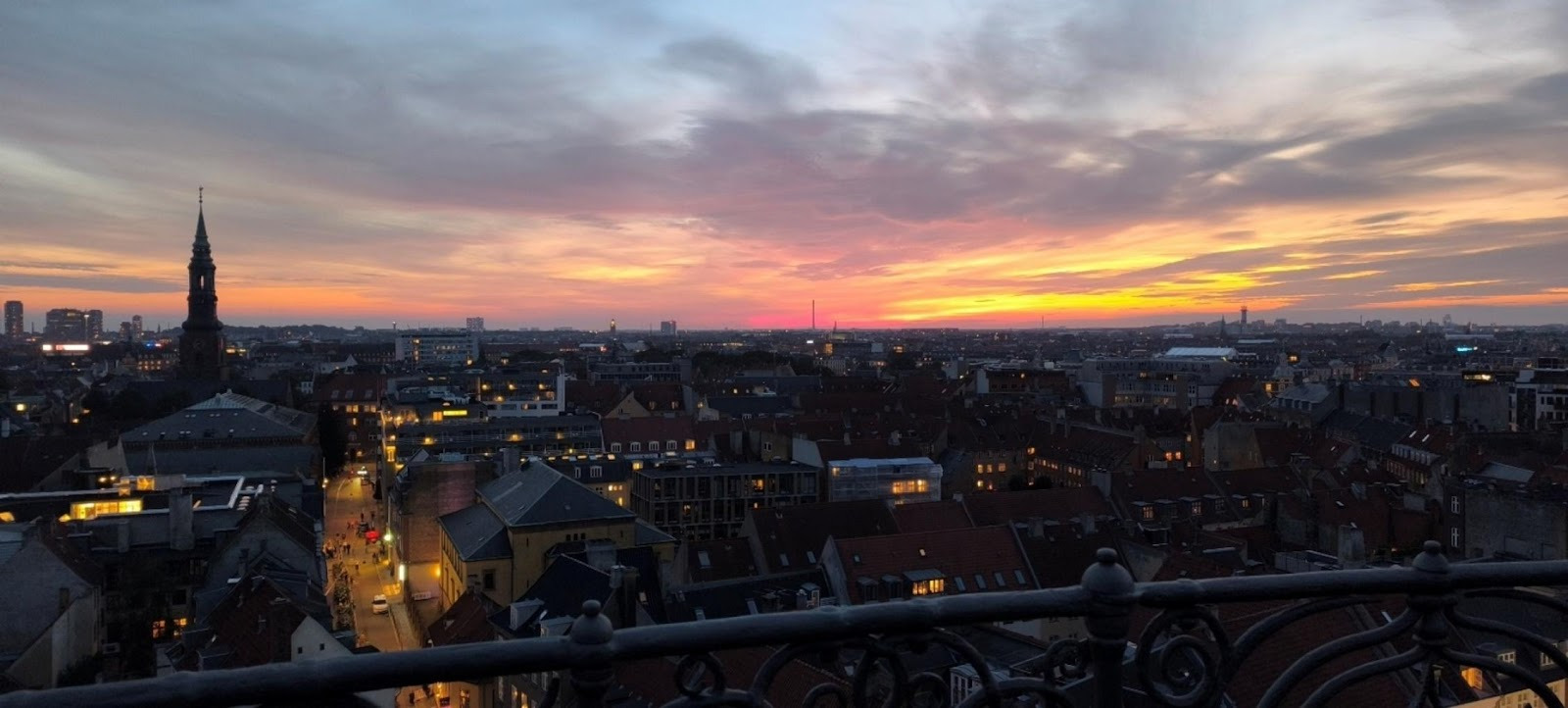
Spent the next day exploring the city, the centre is a pretty good size to take it easy and explore on foot and take in all the main sights, the Kastellet fortress, The Little Mermaid statue. But also, just to see the centre, and chill in the parks. It’s a nice city. Looking for the first sunset of the trip, I went to the highest point in the city centre that I could find, The Round Tower – it wasn’t a bad sunset but also nothing special. Although a nice view over the city with the darkness gradually setting in and warm lights in mid-rise buildings gradually turning on (very different to the big capital city that I’m more used to), and there were two Serbian girls also up there.
I cooked again that night, wanting to compensate a little for eating out twice so far on the trip. If I had known I would be cooking again so quickly, I might have bought some meat the first night. I should’ve planned ahead a little better.
The next day, I wanted to keep moving, so I took the train for an hour over to Malmö. That route had the second mistake on the planner app, but luckily, I knew better in this case. It tries to force you to change at a random station (Hyllie) after the bridge – it’s not necessary.
- Tip: Usually, the best advice is to download the app for the country’s rail network. But 21 apps is a little too much. Usually, the app of each country can give you live and true times, which is useful sometimes, but particularly for claiming a refund – for example, none of the usual apps showed live/true data for Norway, except the NÅ app which I used as evidence for delay repay. If you’re trying to use minimal apps, DB Navigator and ÖBB Scotty are good places to start for non-Iberian and non-British Europe, even if you’re not going to Germany or Austria. They have good planning and DB can do live updates for a couple routes in other countries. SBB Mobile is also very good for live data for Switzerland, and sometimes Germany. But otherwise, those apps plus the Interrail Rail Planner app more than sufficed for me.
- Tip: If you’re going to be buying tickets/reservations/supplements, you can also buy a lot of countries’ (and often for a somehow cheaper price) tickets via the ÖBB site, which is easier to use with Interrail than the DB site. In fact, I usually defaulted to buying reservations where necessary from ÖBB (except in Poland, where I used the PKP Intercity site, and Sweden, where I used the SJ site). In my whole trip though, I didn’t need many reservations.
I spent a while chilling on a park bench in Malmö eating what I had bought from Lidl in Copenhagen, after taking a walk around the centre and the park around the Malmöhus Slott. It’s quite small a small centre and area, but a pretty good size to spend the morning before continuing onto Stockholm, on the 15:07 tilting train. Of course, I had to go to Lidl again before boarding the train to find something to eat on the 4-and-a-half-hour trip. Maybe it’s the tilting + sitting backwards, but this is the only time in the whole trip that I felt travel sick.
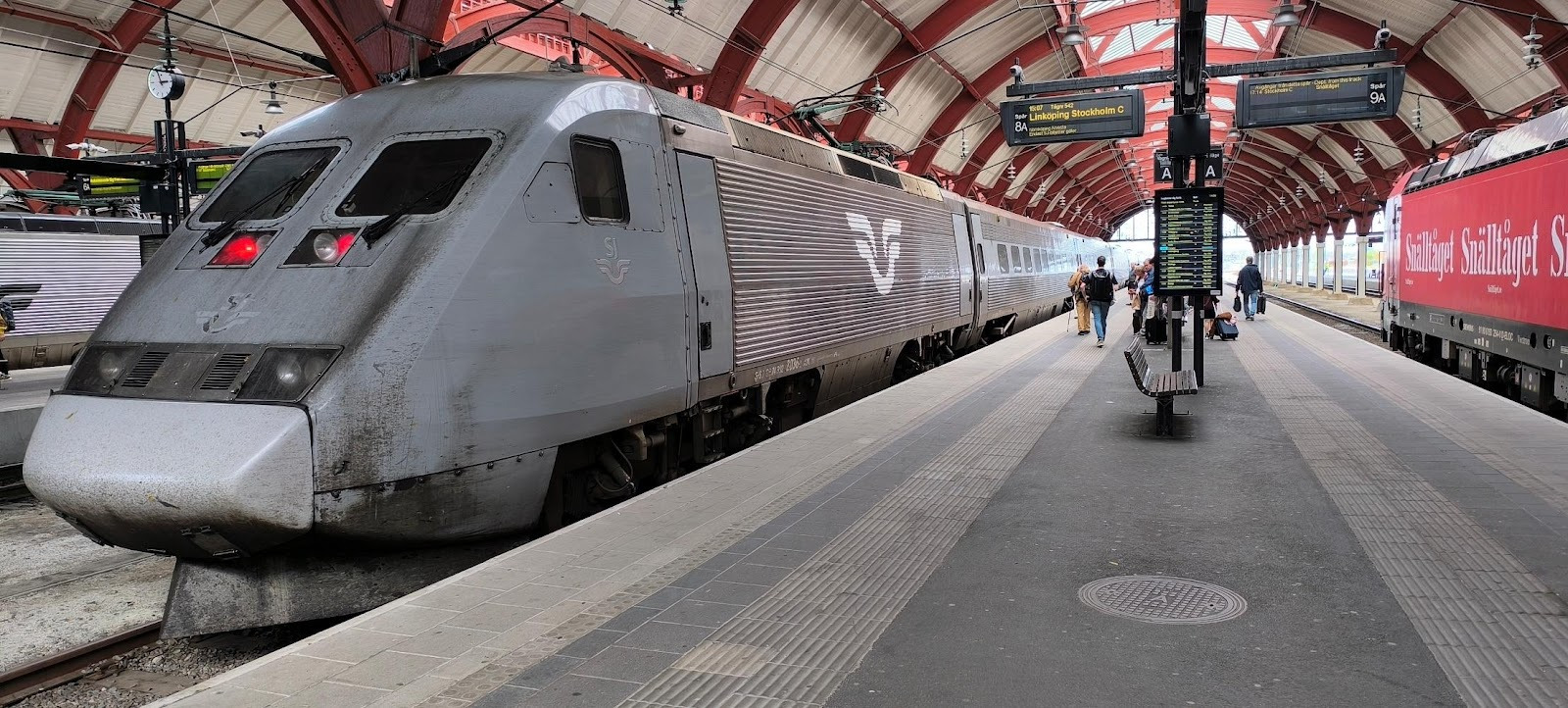
Originally, I had planned to go via Gothenburg from Malmö, then to Stockholm after, but engineering work made that impractical since Interrail wasn’t valid on the replacement busses (they weren’t quite standard replacement busses?) and full price was too expensive.
I arrived in Stockholm later that night. I would be in Stockholm for 2 full days plus a morning. I remember the feeling of loneliness creeping back in in Stockholm, particularly the second evening. I chose not a great hostel – kinda nice but also kinda out of the way slightly and not much atmosphere.
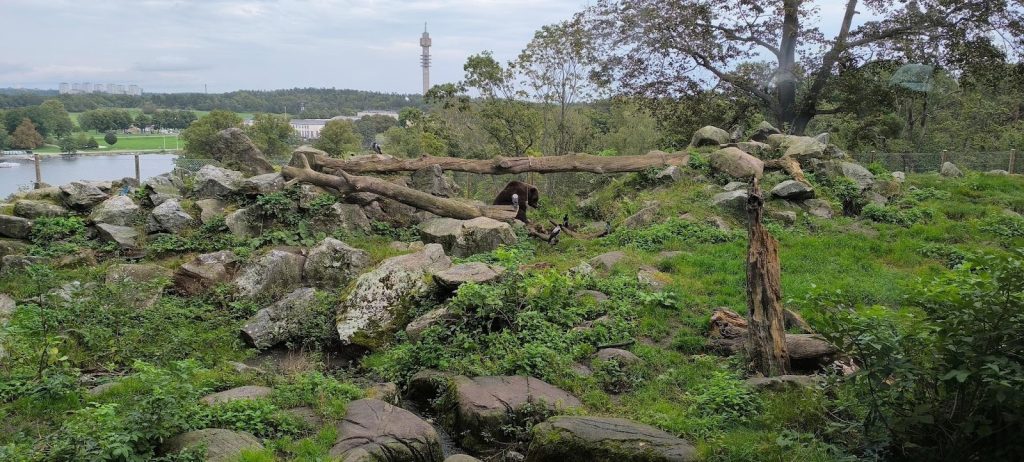
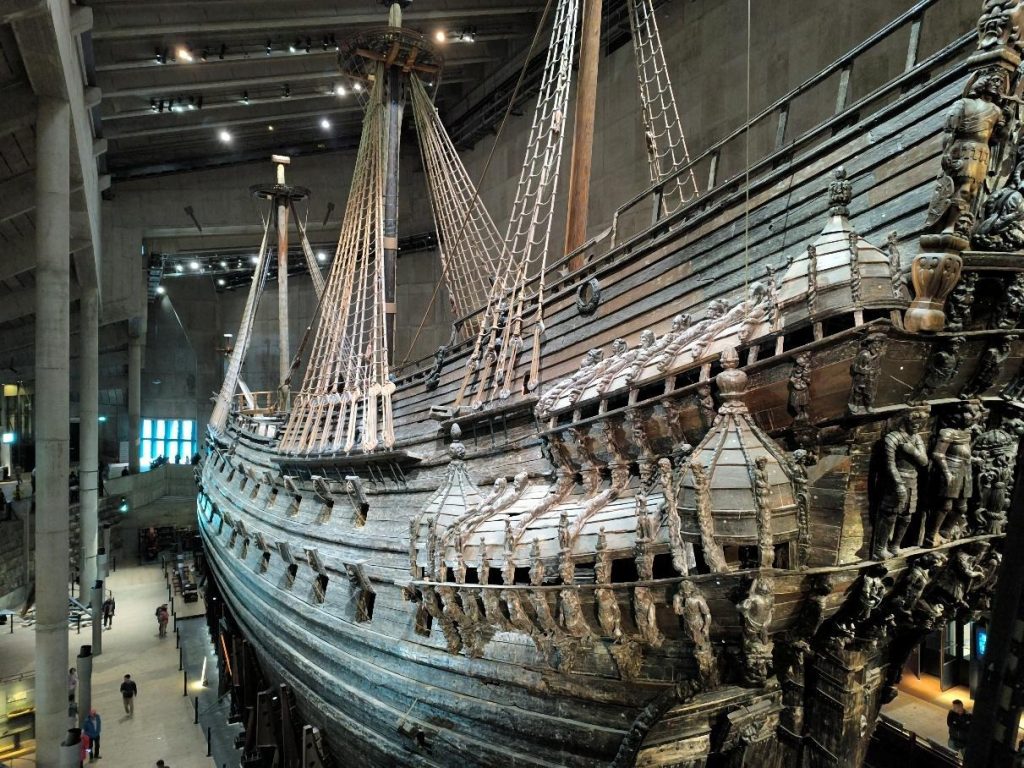
The next morning, I walked around the island, then took the ferry over to the next island, and visited the Vasa Museum (housing the world’s only preserved 17th century ship), which is well worth a visit (and free if you’re 18 or under), along with Skansen nearby. Skansen is a strange place: they call it an open-air museum which shows off the way of life of Swedes before the industrial era. They have an old village, consisting of mostly original buildings, transported to the museum piece-by-piece; a zoo – including arctic foxes (if you’re lucky enough to spot them), moose, lynx, brown bear, reindeer, and cats, alongside others; a ‘sea centre’; and an aquarium (run separately). I then found a nice burger bar to eat at (a little expensive, but also a very good burger), and then went to the old town (Gamla Stan) to walk around. I then crossed the water again to the south, and walked up the hill a little to get a view over the city.
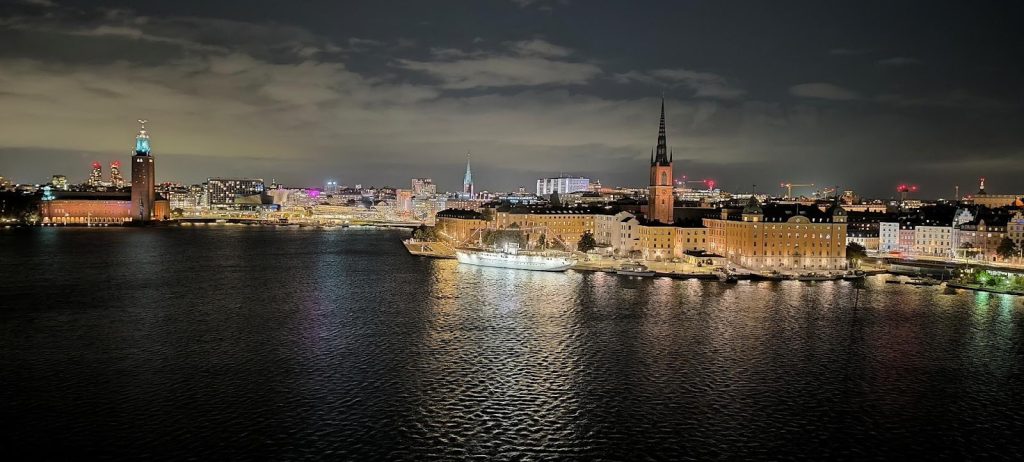
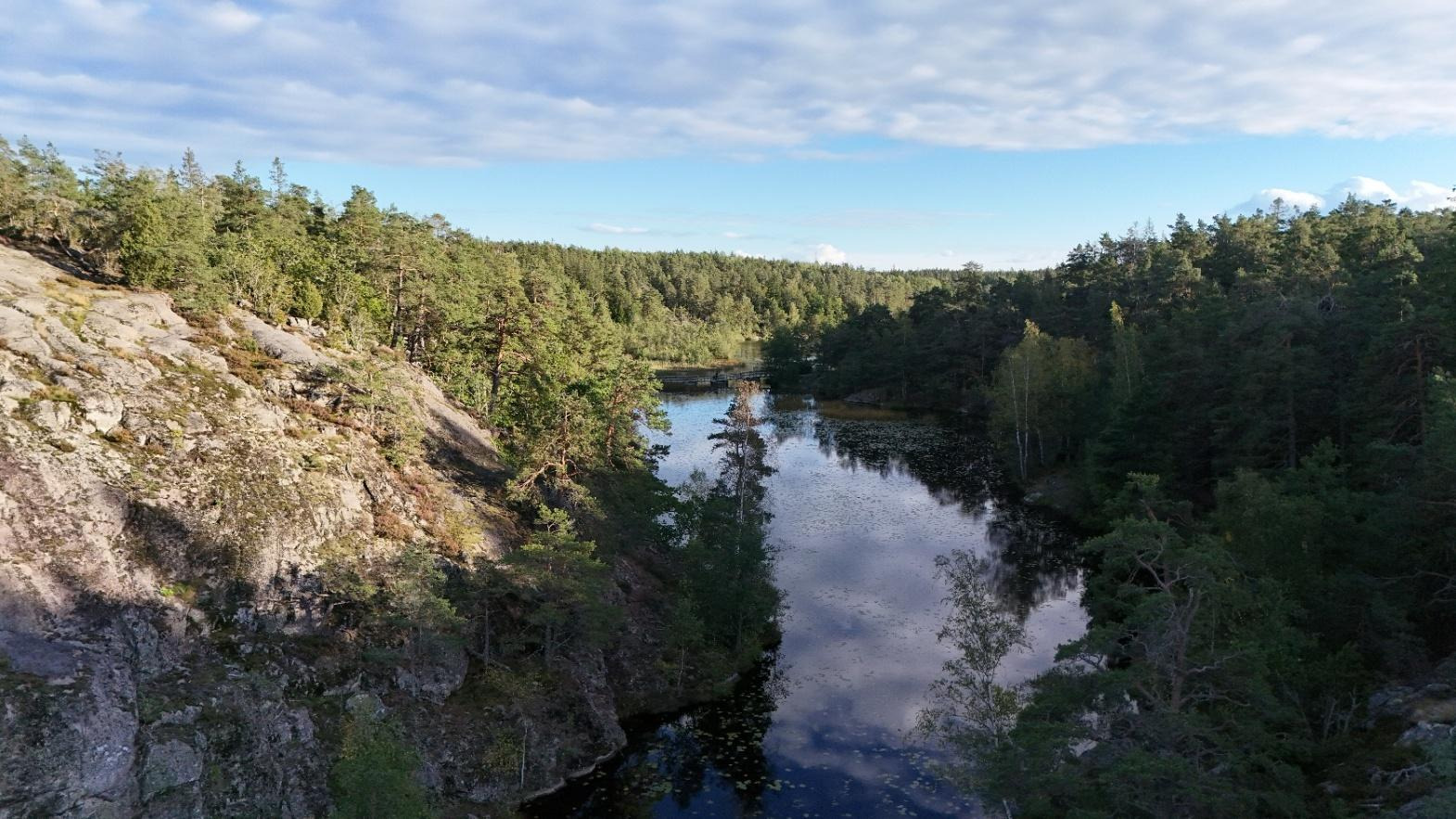
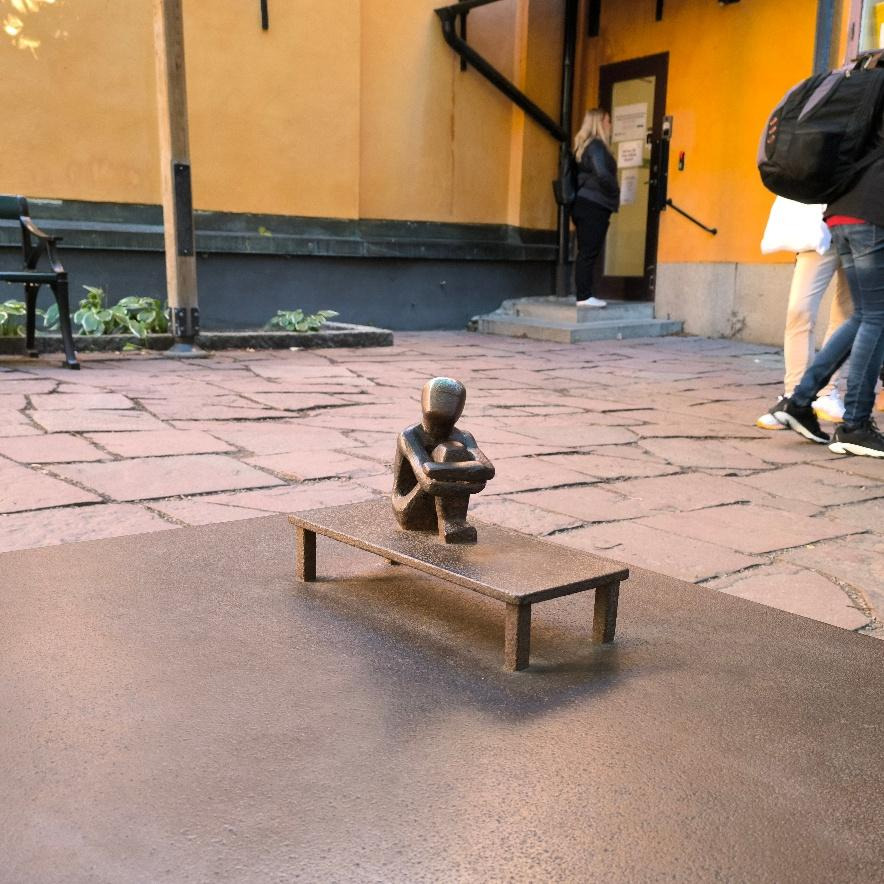
The next day, I took walked around the centre and old town in daylight, found a very cute small statue of a boy watching the moon, then walked over to the town hall, then back to the metro station in the old town to take it out south a little to take a walk and fly my drone a bit in the nature reserve (Nackareservatet). The nature reserve was quite nice and peaceful to walk along the hiking path along the river.
After doing my first laundry of the trip the next day, I took the afternoon/evening train to Oslo. Stockholm was a really nice city and I had enjoyed my 2 days there, even if I had left a little alone at some points. So I was looking forward to seeing how Oslo compared. Anyway, that was a nice long (7 hours) ride with beautiful scenery and a beautiful sunset. The old trains are the best, and I really don’t mind the slower services. Better seats, more comfortable, and you can stand at the back and watch the tracks come out from beneath your train, which works quite well along this route because of the sweeping turns, straights, single track sections, and flashing signs warning of level crossings with their barriers coming up after your train went past.
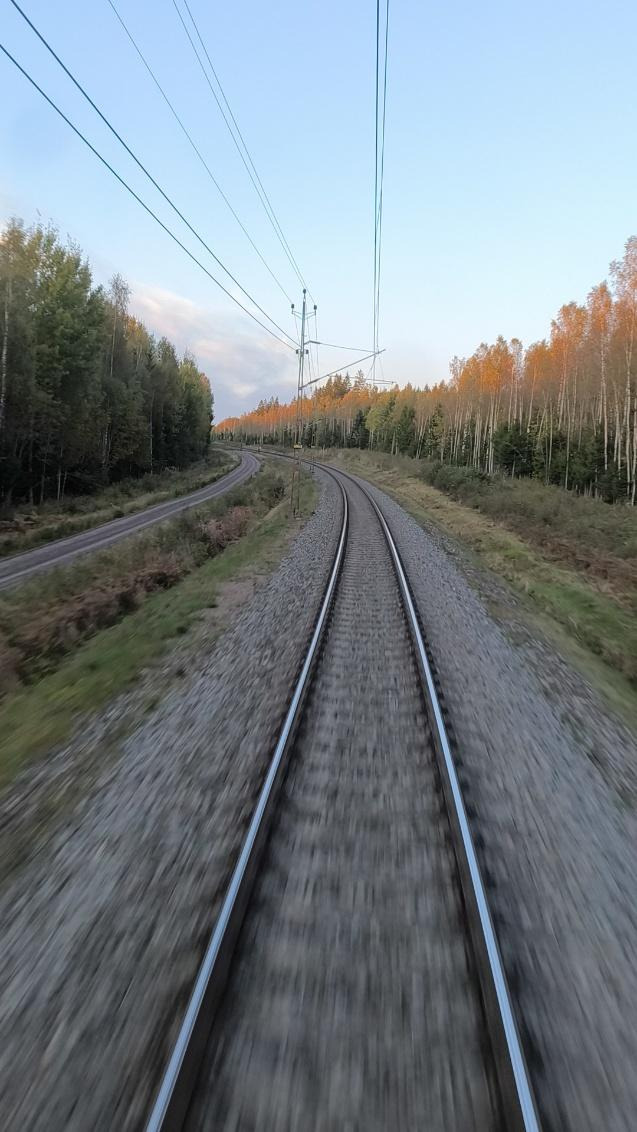
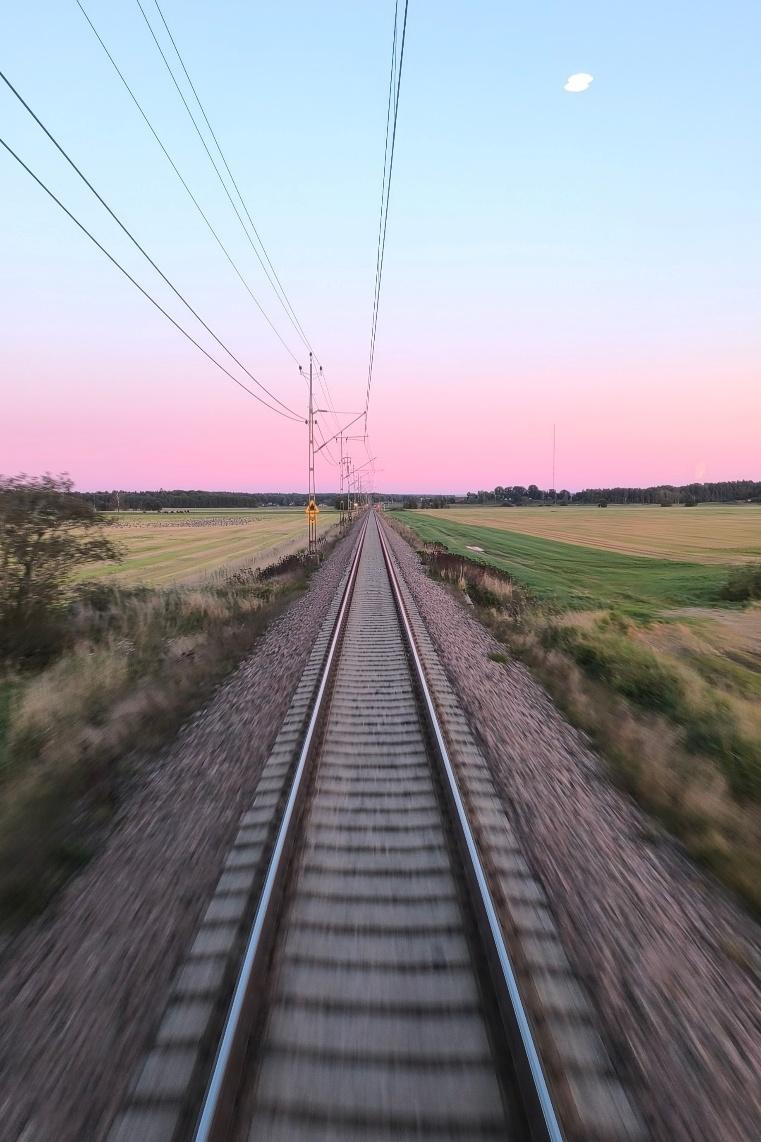
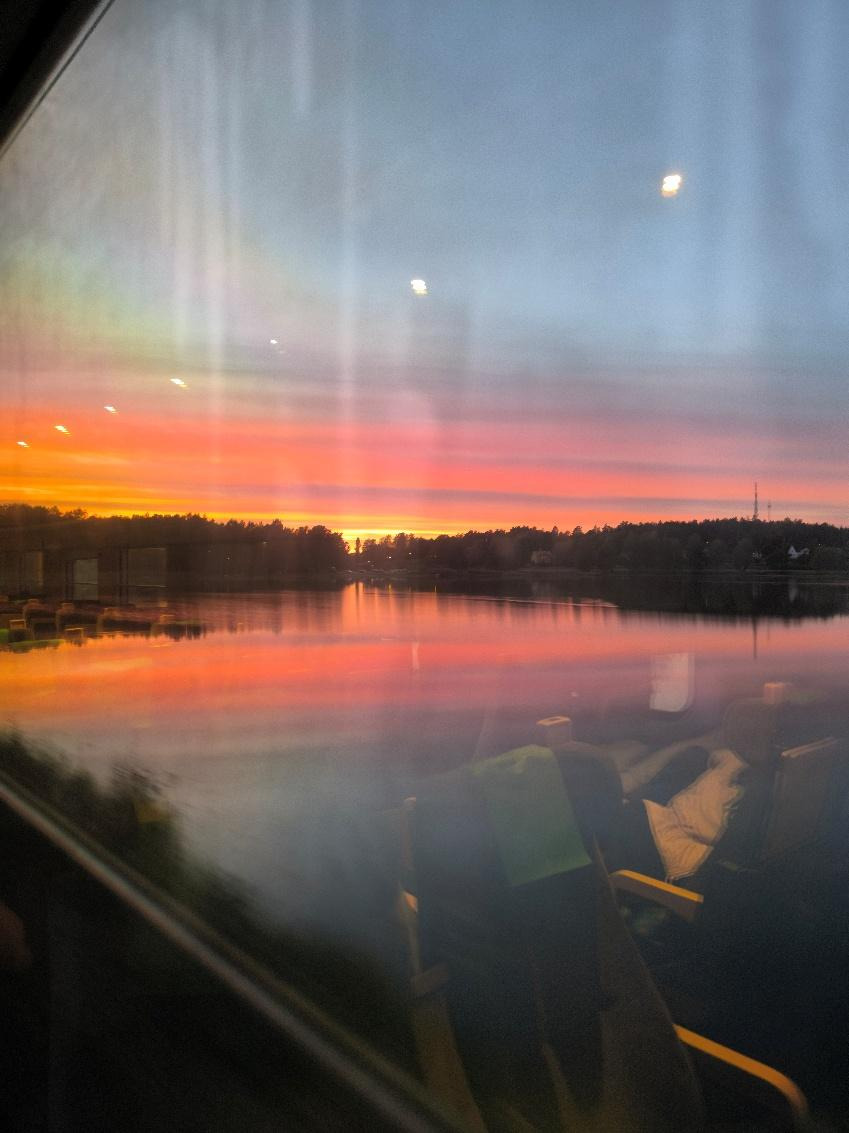
When we eventually pulled into Oslo, over an hour delayed, I realised I no longer had my water bottle. I tried searching on the train, since I knew I had it with me when I boarded, but it probably had rolled to the other end of the train while I was staring out the back. And I didn’t mind the delay – even as we stopped over and over again to let freight trains overtake us (maybe we were delayed by enough that we became lower priority and not worth interrupting the freight traffic for). It’s part of the trip.
> Tip: don’t carry a reusable bottle, it’s just annoying. Instead, buy cheap plastic bottles and refill them. Take advantage of the deposit-return/pfant bottle recycling & exchange systems to get a new bottle fairly frequently and save some money. This way, you can have water and other flavoured drinks, and don’t need to keep track of a bottle. And you look like less of a tourist.
With the train arriving at 22:30, I didn’t have a lot of time to catch the last metro train that would enable to me to reach the hostel by 11pm. This was when check-in supposedly closed, but I think a hostel of this size does not care if you’re a little late and has 24-hour reception.
So, after a little bit of a sprint up the seemingly endless walkways from the platforms to the overbridge concourse at Oslo station (not using the travellators either because they were full of people standing still), and a race through the station, up into the street, and across and down into the metro station, I just managed to reach it in time and buy a ticket as I ran past the ‘ticket required’ line.
Oslo was a ‘NICE’ city – I don’t really go ‘into’ anything much (like museums) when I have only a day, I prefer to just walk around. One full day was plenty of time to walk into the centre from my hostel on the outskirts (where I was lucky enough to get a free upgrade to a private room because a big school group had booked all the bunks), have a wander, reach Kontraskjæret overlooking the sea, and then walk along to the architectural masterpiece of the opera house and the slightly less masterpiece look of the ‘Barcode Project’. Then back to the Kontraskjæret for a nice sunset. I think two days is probably the better number, to say you’ve properly seen the city, but I was glad I went a little out of the way to get here, even if it was just a day.
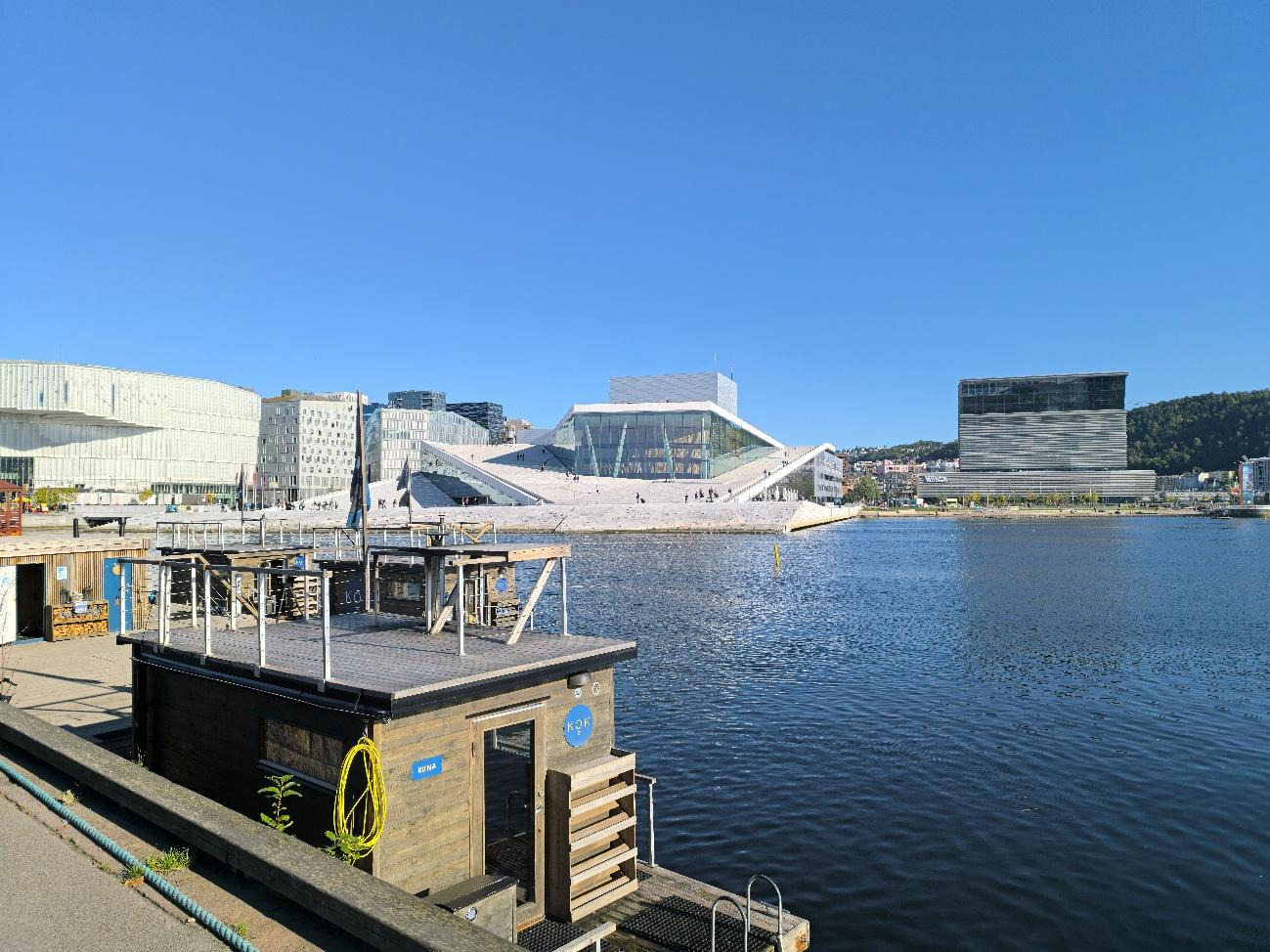
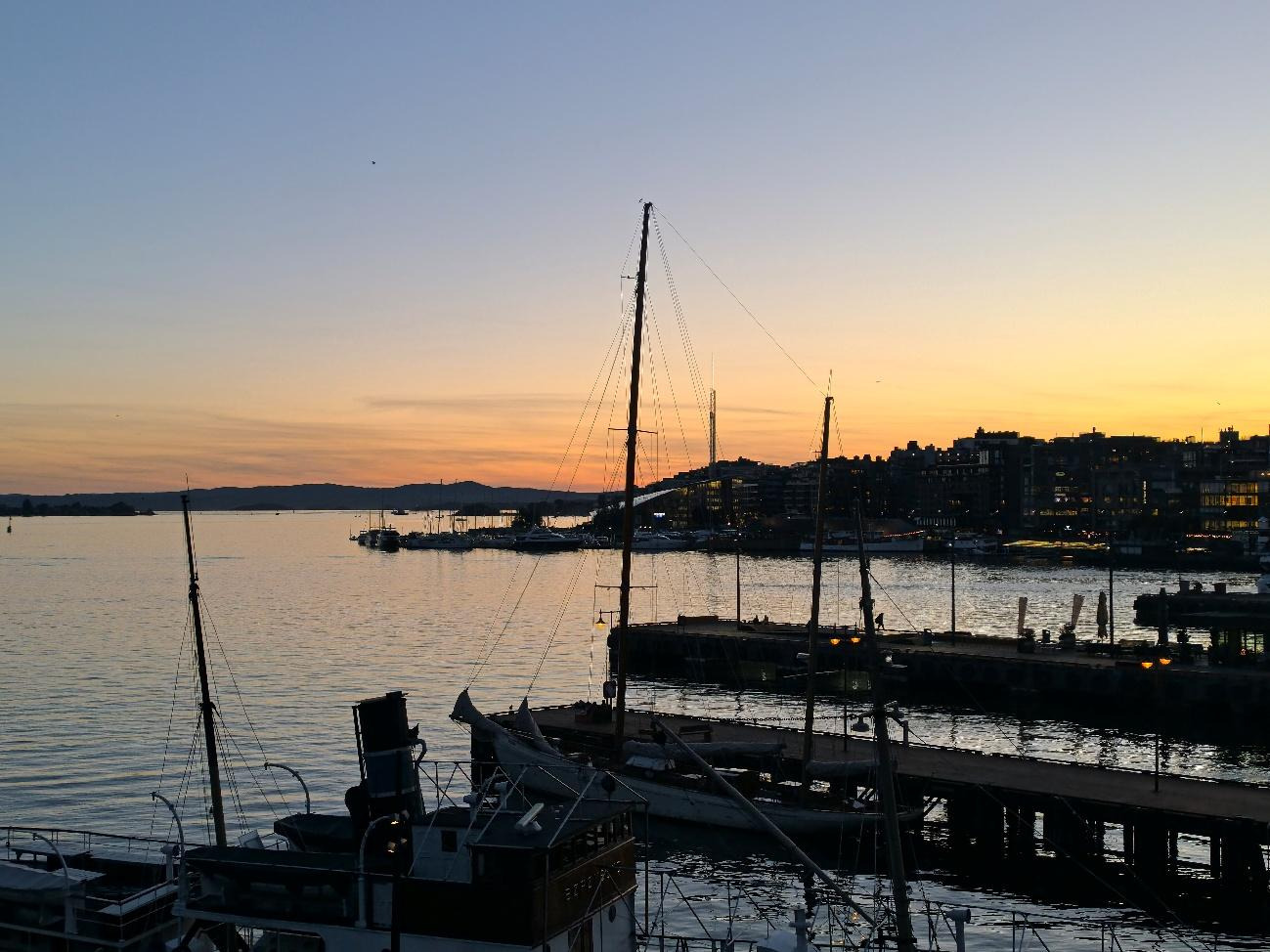
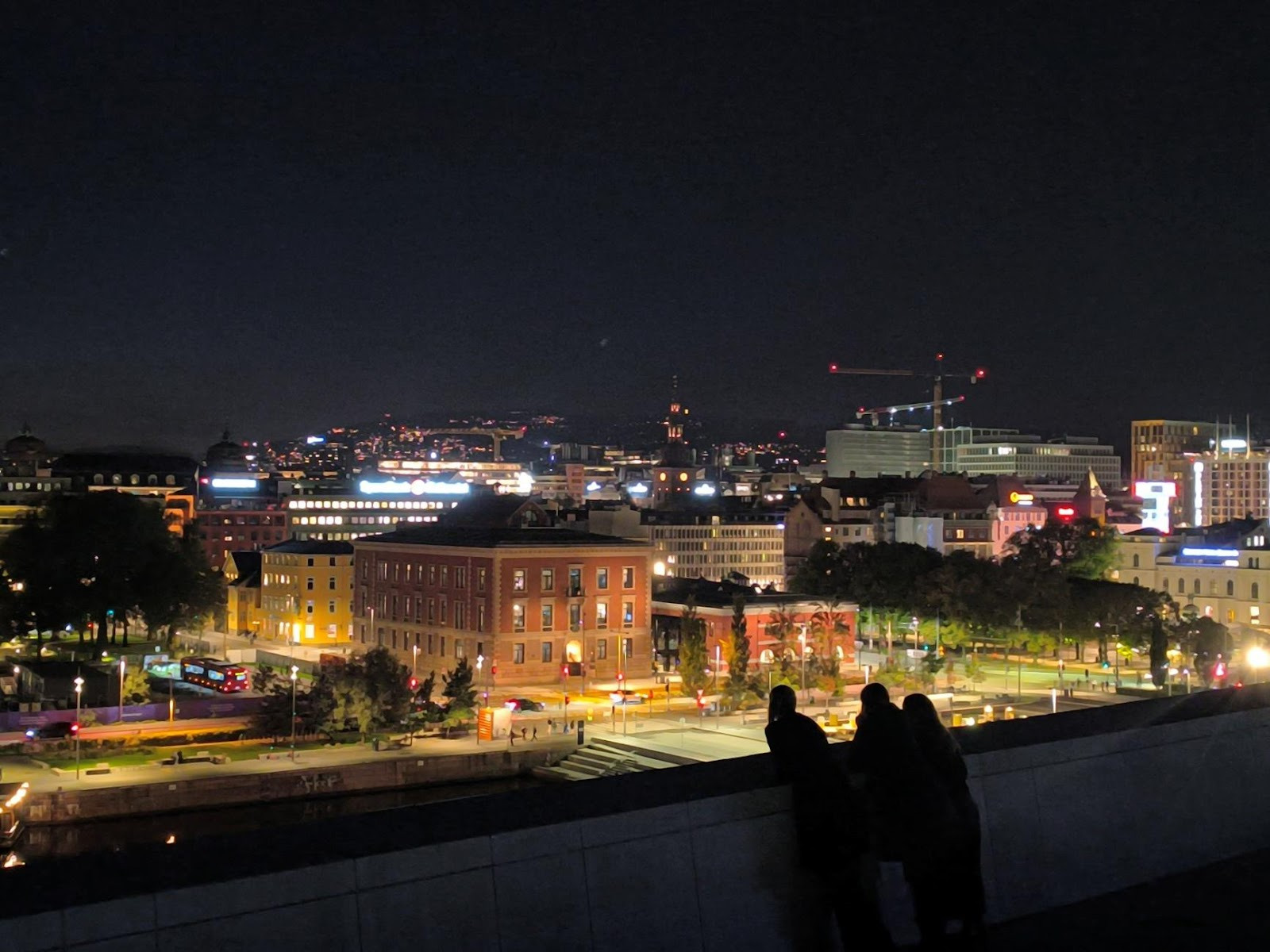
> Tip: try to use local train services where possible, make the most of your Interrail pass. For example, the night I arrived, I had to use the metro, but the next trips to and from the hostel, I could use the train.
Having successfully dodged any major works or unplanned delays until this point, it was of course time to get a little reminder that being a little spontaneous is required for travelling like this.
Because of track works, there was a replacement bus service for the first half of the way back to Stockholm. Having heard less than positive things about replacement busses in the UK, I was dreading this slightly – but in the end, it was no problem. Of course, not as good as travelling by train, but it was nice to see some different scenery and cross the border back into Sweden on the road where there’s an actual acknowledgement of the border. And it was comfortable enough.
At this point, I had been planning to have a couple of hours in Stockholm to eat and buy some food for the journey ahead, before taking the well-known sleeper up towards Narvik, as far as Kiruna. In Kiruna, I would spend a day and take a tour of the LKAB mines – the mines responsible for sinking the town to the extent that they had to physically move the not-deconstructed church across town (https://www.bbc.co.uk/news/resources/idt-f59e6f5d-1dd0-4893-a52f-162b60a695d9).
I had already had to shuffle my trip a little, as about a week before I started the trip, LKAB informed me that my chosen day was no longer available due to low demand, and that I could move to the next day free of charge, or get a full refund. I had moved to the next day, which is why I had two days in Stockholm, which was nice, but did cause some shortage of time later as I had a later non-refundable accommodation booking.
So, when I got the email that the night train had been cancelled, I knew that the plan was yet again going to be messed up, and I no longer had a buffer day if I wanted to keep my reservations. The people at SJ were very helpful and worked with me when I used their online chat, so that’s great! More about that in a second.
Anyway, as I changed onto another tilting train in Kristinehamn, which had been waiting for our bus, we arrived in Stockholm a little late but with plenty of time for the later night train I would now catch. So, I went back to eat at the burger place I had found before – they were good burgers.
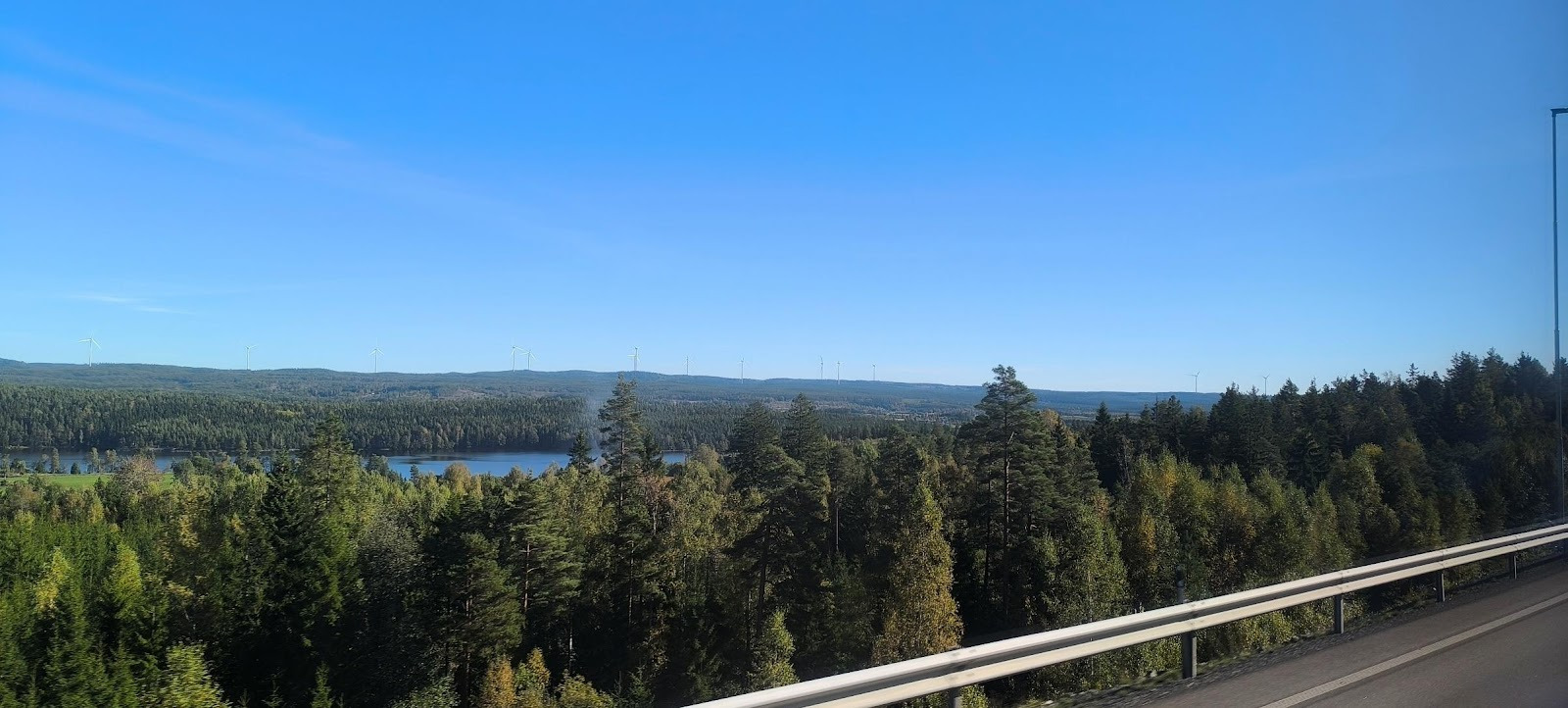
Around 20:30, I boarded the night train, and we set off on time.
My original night train 94 had been cancelled due to severe weather impacts in the north.
I had been rebooked with tickets for the number 92 night train to Luleå, which would take an alternative route.
It’s a bit difficult to piece it together. I believe that the coastal Bothnia Line, between Sundsvall and Umeå had been significantly flooded before I had even started my trip. This flooding persisted. There were also two freight train derailments, knocking out the Ådalsbanan, which is the preferred diversion route when the coastal line is shut, from what I understand, and another line which I can’t figure out 100% where. So, with capacity constraints, they cancelled some of the trains, including this night train.
Unfortunately, I cannot be sure exactly what route was taken. I know the train did not stop at Umeå C. I’m pretty sure that it did not stop at Sundsvall. My first image in the morning is on part of the Main Line Through Upper Norrland at Jörn.
There’s two options. If the Main Line Through Upper Norrland was still closed, we went via Östersund, onto the Inlandsbanan, then back down onto the Main Line Through Upper Norrland. Otherwise, we followed the followed the Main Line Through Upper Norrland between Bräcke and Vännäs, which is only used for freight normally, and usage as a diversion is rare as normally it would be possible to use one of the other connections (such as the Ådalsbanan) to avoid a short closed section of the coastal line.
For at least some length of time, option 1 on the Inlandsbanan was the only available option as the Main Line Through Upper Norrland was totally blocked by derailments. However, I think it might have just caught the reopening of a stretch the night before – so I think it may have been option 2 in the end.
Either way, it’s a shame I fell asleep – it would have been very interesting to see which route we took for sure and I’m sure the scenery would’ve been spectacular to witness on this rare route (either one!). Not one diversion, not 2, but 3!
In addition, I had been booked a hotel room for a night in Boden (one stop before Luleå), and my tickets on the Iron Ore Line stopping at Kiruna were replaced with through tickets on the day train the next morning – the very helpful people over at SJ understood my change of plans and were very nice. I would now miss my mine tour, which was a shame, but at least I was able to claim a refund, under the excuse that I was no longer able to attend the new date – they were very helpful as well, thanks guys and sorry I cancelled a little late. I did also lose my non-refundable accommodation in Kiruna, but I think it was only one night, and I got a free upgrade on the train and hotel room – so I’m not complaining.
My replacement tickets for the night train appeared to have been an upgrade (unless I misunderstood what reservation I had made initially), so thanks to SJ again, so I had a proper sleeper bed.
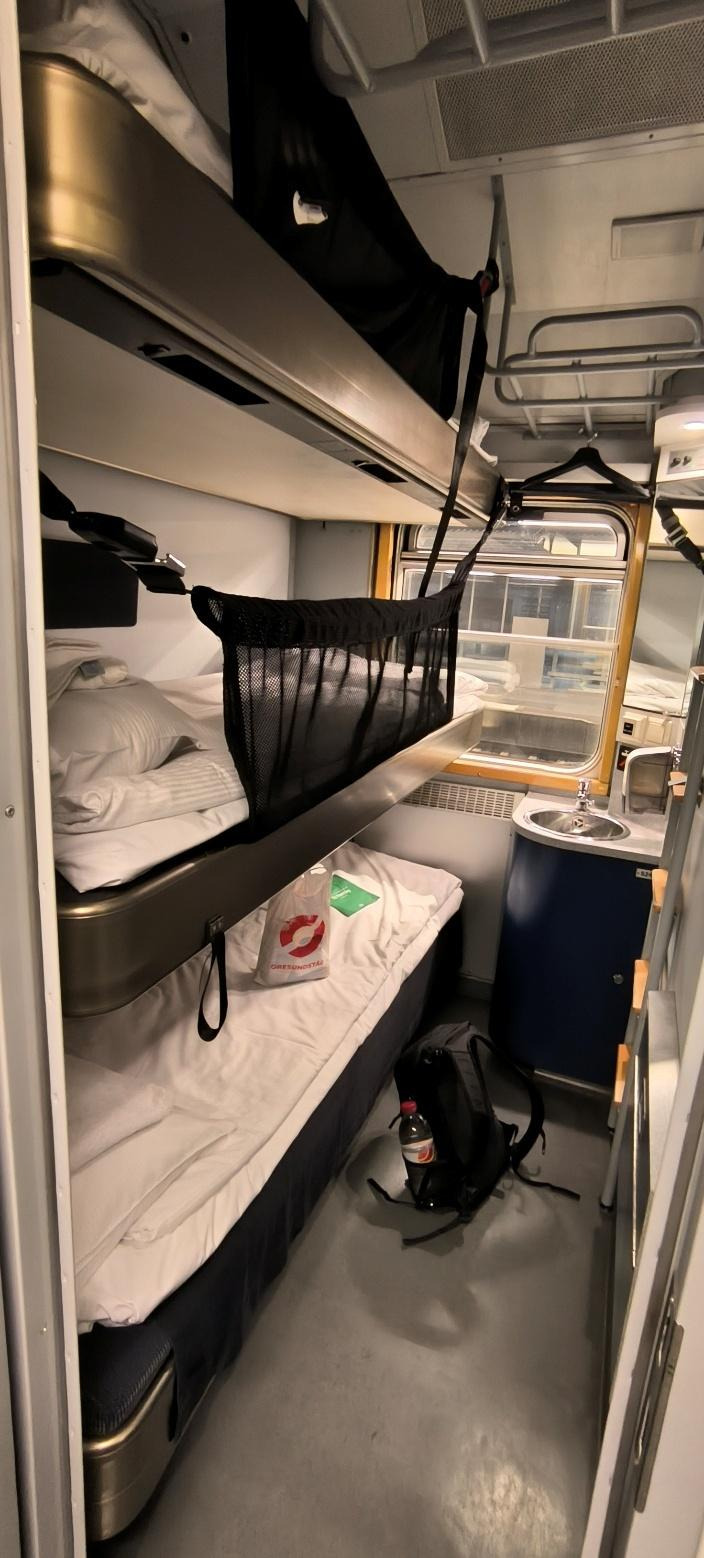
> Tip: the train from Copenhagen to Malmö, I think it was the Oresundstag, had lots of small plastic bags under the table which goes between the group of 4 seats (2 facing 2). As I found out, this is quite common and seems to be for collecting litter and then making it easy to clean up. But these ones were high quality enough that took a couple to use as plastic bags. It gets expensive buying them every time you shop!
The compartment was snug but nothing I wasn’t used to. I had previously taken the night train from Zürich to Zagreb on my practise trip, and it was about 12 hours. I chose a seat as I didn’t want to pay for a couchette. That was an experience – and honestly, a good one. Yes, I was tired the next morning and didn’t get much sleep, and travelled the longest distance out of the 6 of us in the compartment, but it was alright. I would recommend doing it at least once. It was a cool experience greeting everyone as they came in, from randomers who seemed to maybe be a little high but friendly, to a dad and his two daughters, to a guy from another compartment who got kicked out and replaced with another guy who seemed to be nice from the couple of smiles and laughs we exchanged. There’s no privacy at all, but that’s part of it. The very quiet whispers in a language you can’t understand, the occasional laughs shared as the conductor’s stare bores into the lady obliviously blocking the entire gangway with her and her bag in the middle of the might, and the compartment next door randomly blasting what sounded like a call to prayer at 6am in the morning before being promptly told to ‘turn off the music’ by the conductor.
But I was glad I would have a proper bed (or at least, as good as it can be) for this trip – I needed all the sleep I could get. And I slept well – I even managed to sleep through the other guy in the compartment who I had talked to for a while the evening before leaving the train.
We arrived in Boden later than scheduled, around 12:30, so a total of about 15 and half hours of travel. At this point, I was already beginning to be kind of happy that my plans had been forced to change. Now, I would see a little more of Sweden, visit the coast of the Gulf of Bothnia, and I would be able to travel the route to Narvik on a day train with a seat and proper window rather than awkwardly cramped into a couchette compartment.
Boden itself was very small and very much off the beaten track for tourists. But it had everything needed and was a nice break from the bigger cities, and a taste of what was to come. I decided to take the train out to Luleå that evening. It ended up being a bus replacement service again (this time a minibus instead of a coach, which didn’t even check my ticket), but never mind. Luleå was nice enough, not a lot there again, but I had a Max Hamburger burger (this town is their headquarters) and walked out to the inner bay, then across to the coast (or as close to the coast as is possible). Not a bad sunset either, and it looked pretty nice reflecting off the clouds and the flatness of the water.
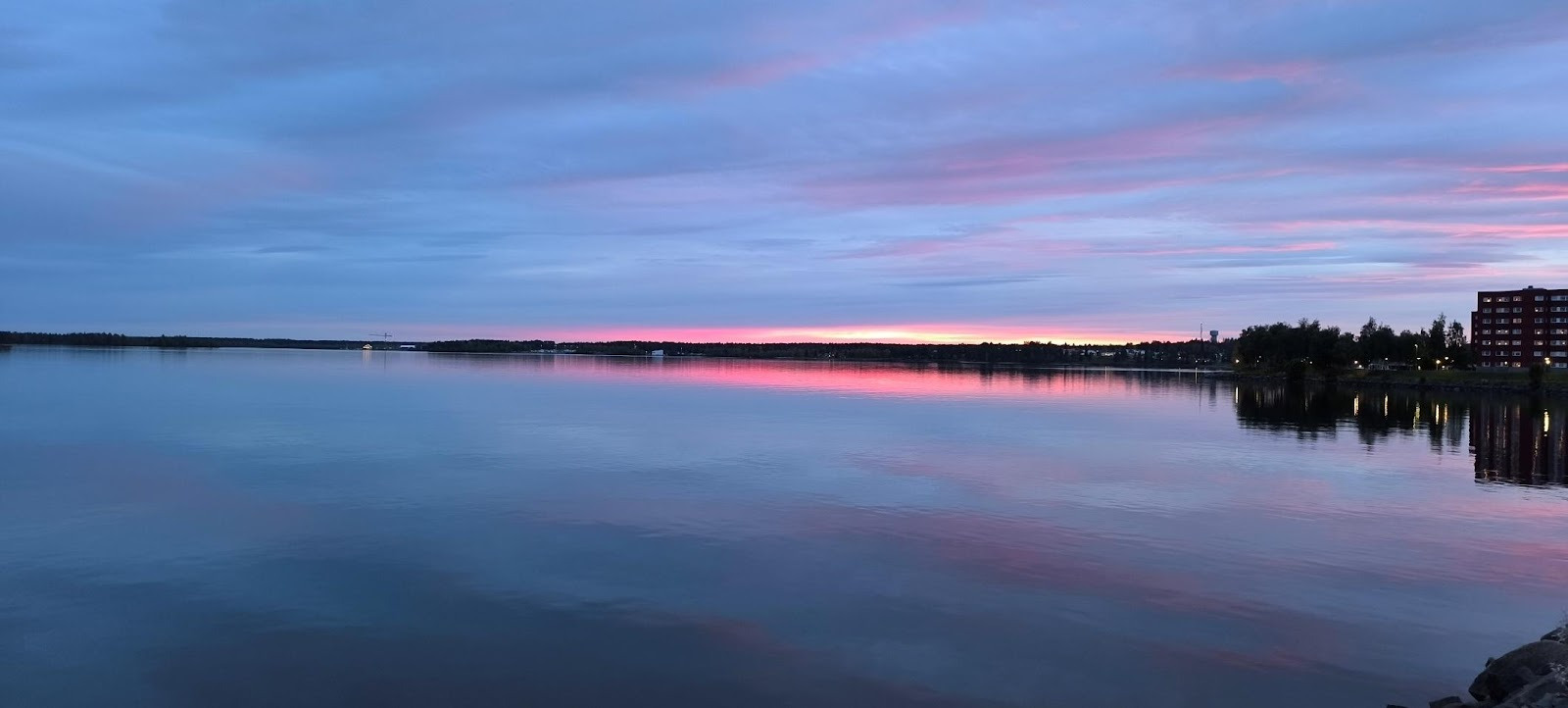
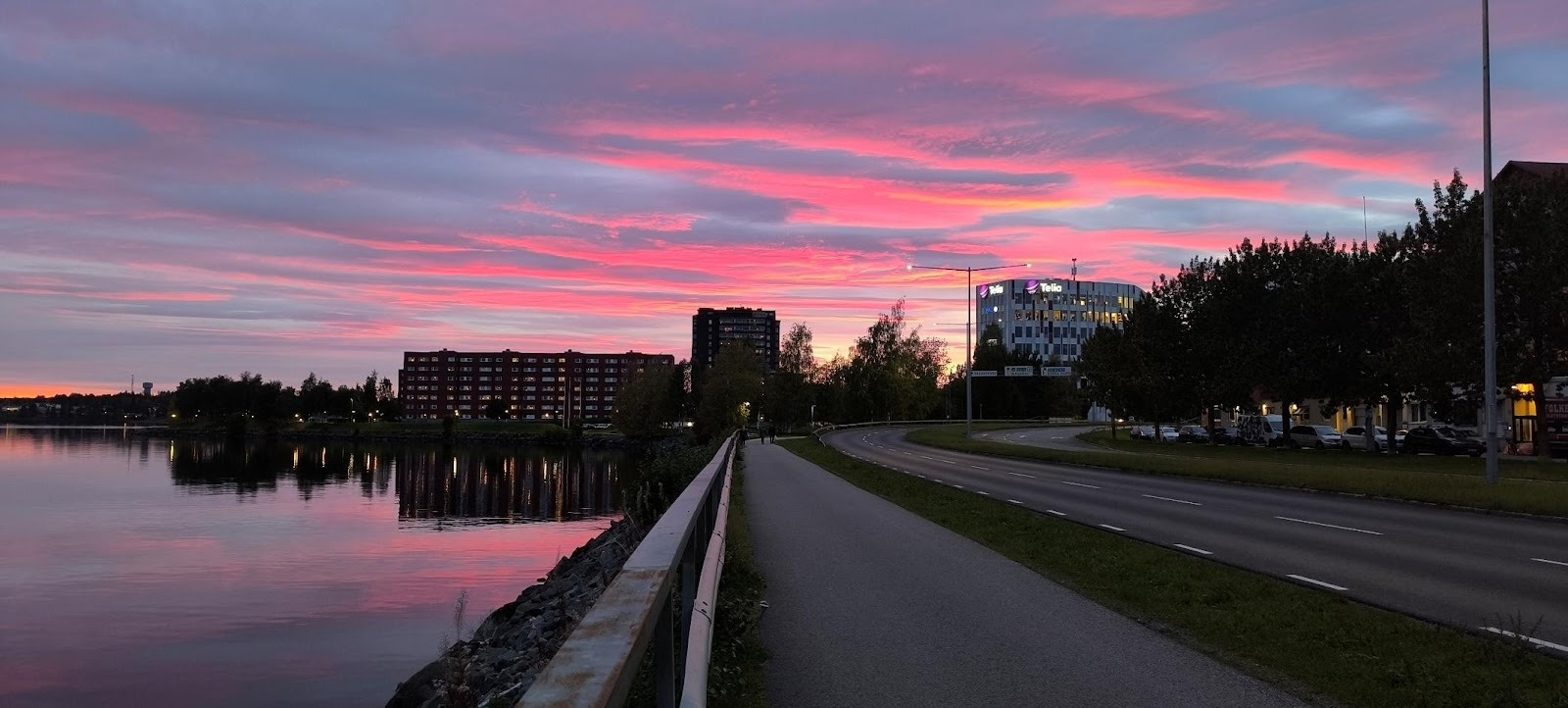
I returned on the last train back of the day, headed back down the coast to Umeå, to Boden. I also had a talk with the ticket inspector, not for anything bad, he was just a friendly guy and happy to talk. If I had a penny for every time I had a friendly chat with a ticket inspector, I would eventually have two pennies, which isn’t much, but it’s interesting it happened twice…
The next morning, after taking opportunity of the hotel to do my laundry, I walked back to the station in time for the train to Narvik – I believe the most northern passenger-serving train station in the world outside of Russia.
I was lucky and got a seat right at the back of one of the carriages which was next to the window and was by itself (to make room for the doors). Much better than a cramped and awkward night train. It was also quite quiet on the train, not being the main tourist carrier.
The scenery along to Kiruna was nice, but nothing spectacular. The autumn trees painting the landscape with shades of green and orange was nice – although it’s a shame it wasn’t snowing, as that’s the best way to experience this route.
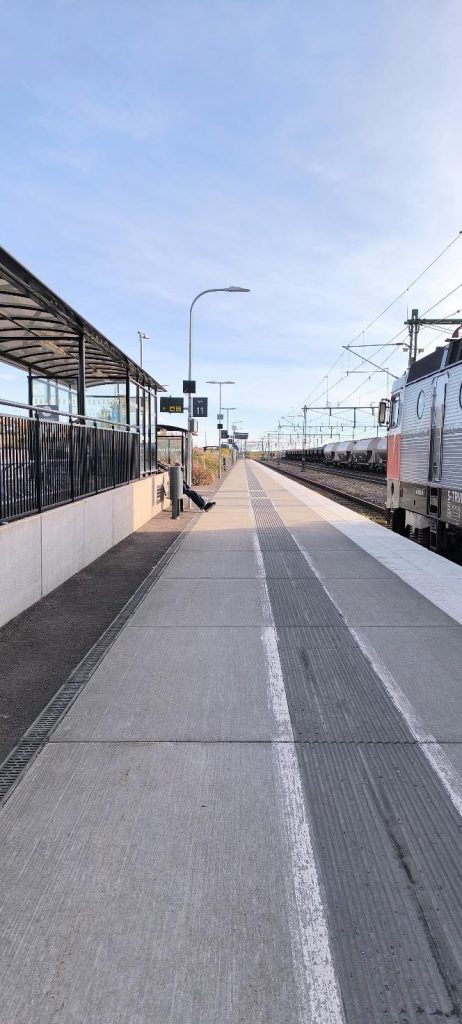
We paused for a few minutes in Kiruna at around 15:30, enough time to leave the train and get some pictures of it and the station (which is a new one built in the north of the town), and watch the powerful specially built LKAB trains haul their cargo.
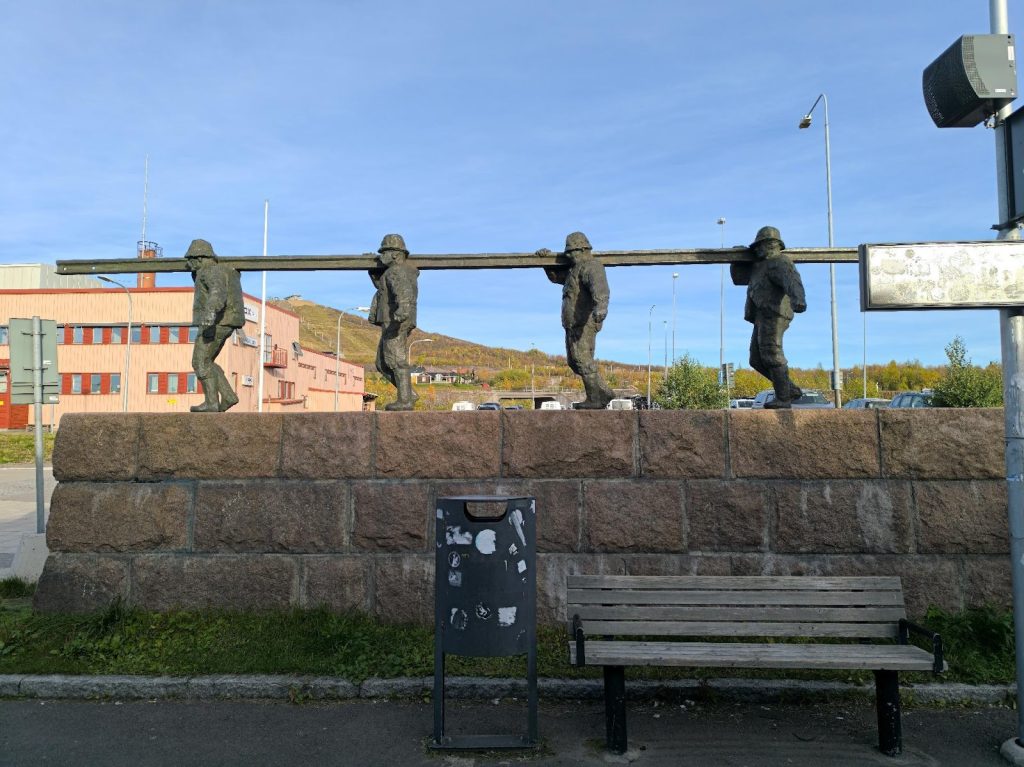
As we pulled out of Kiruna, the scenery changed again. I couldn’t have asked for better weather at this time of year. The landscape was spectacular as we travelled along and above Tornetrask – the big water surface and huge snow-peaked mountains in every direction – then down into Narvik after you cross the border into Norway (there’s a brief flash of a flag sign as you enter the ‘protective tunnel’ after Riksgränsen).
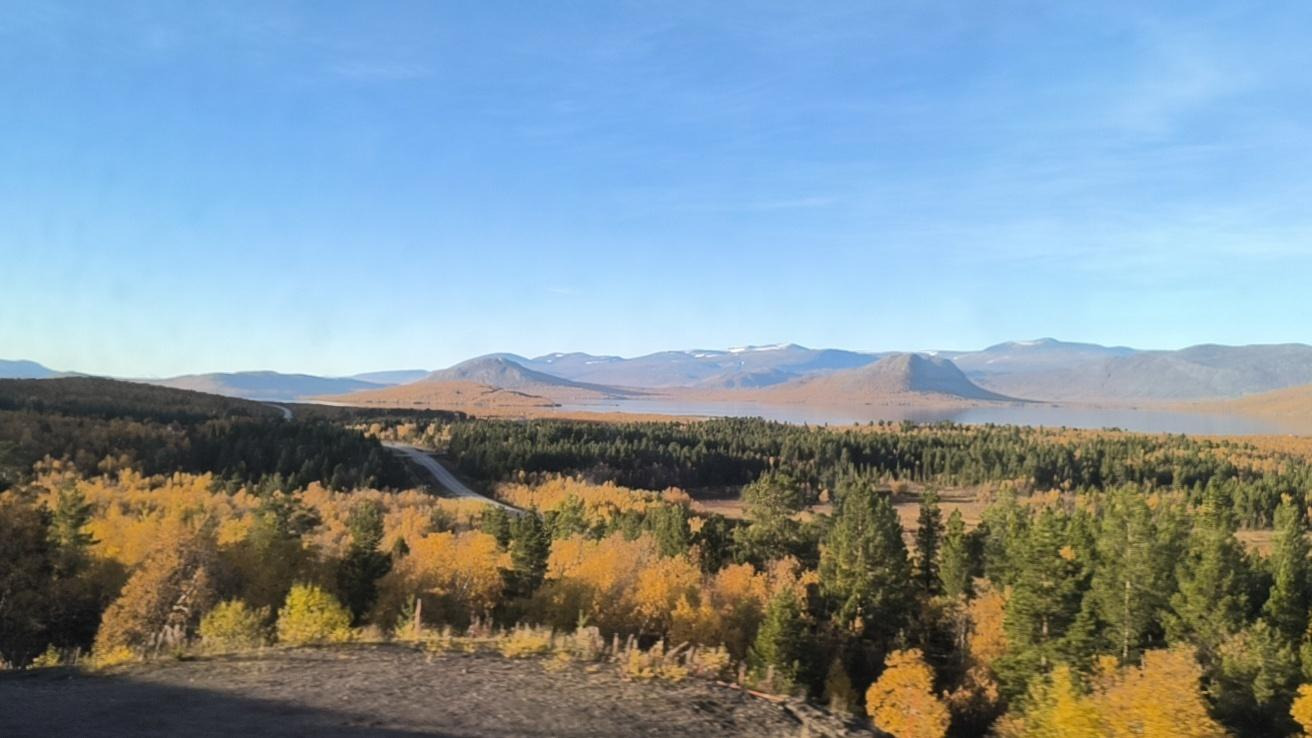
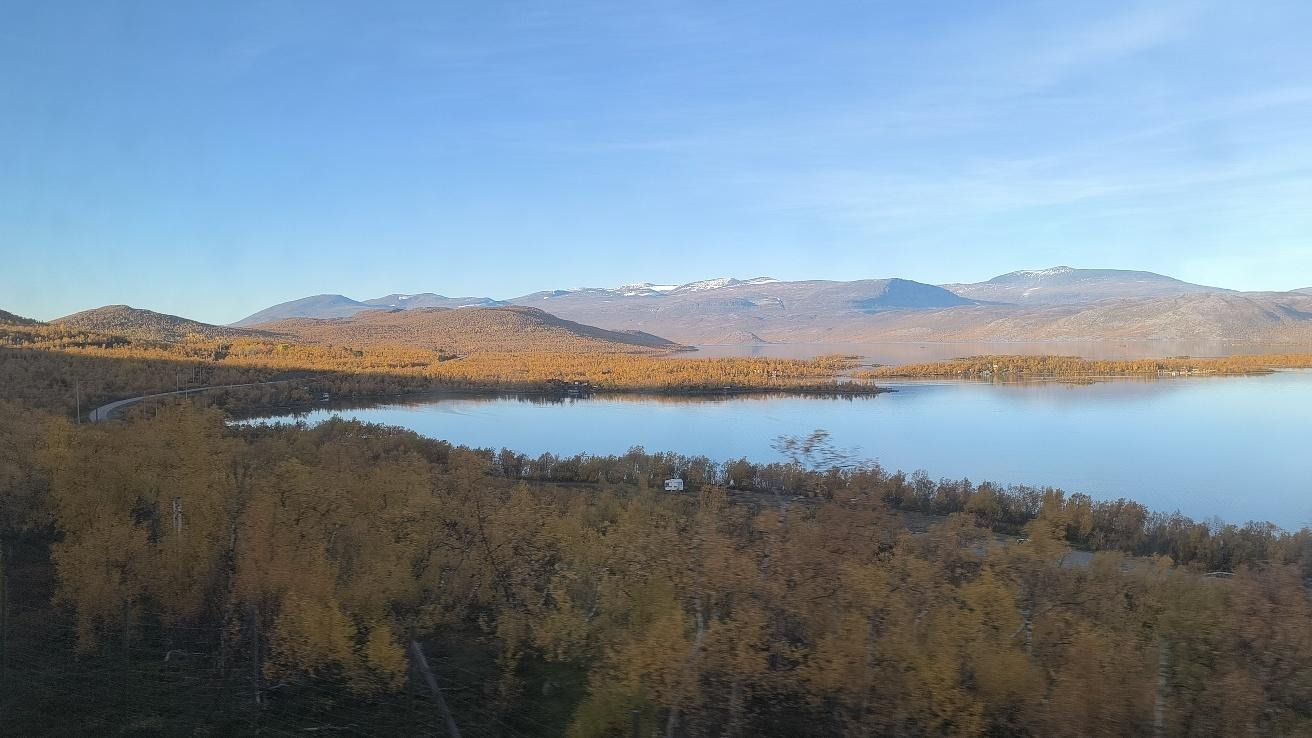
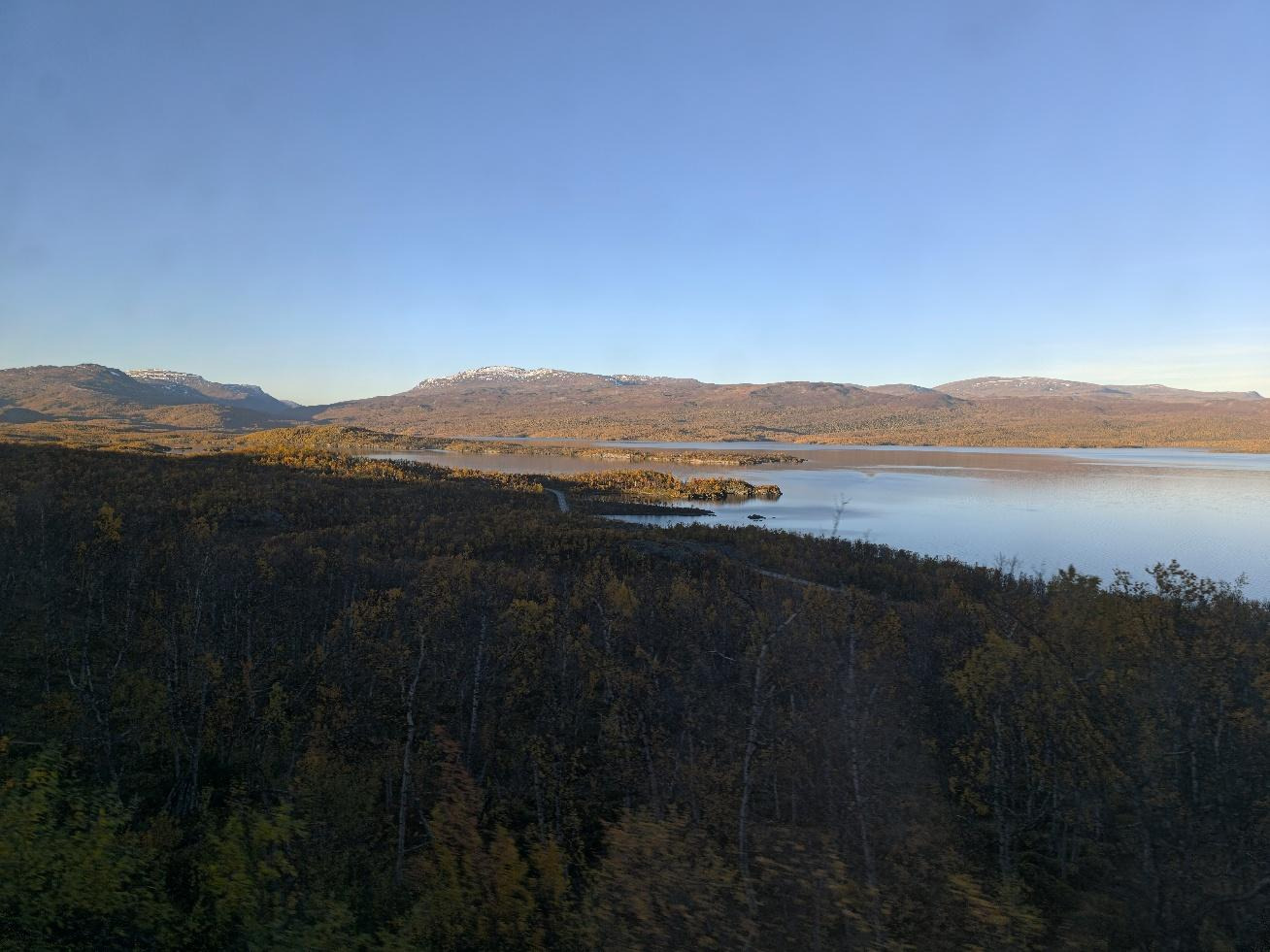
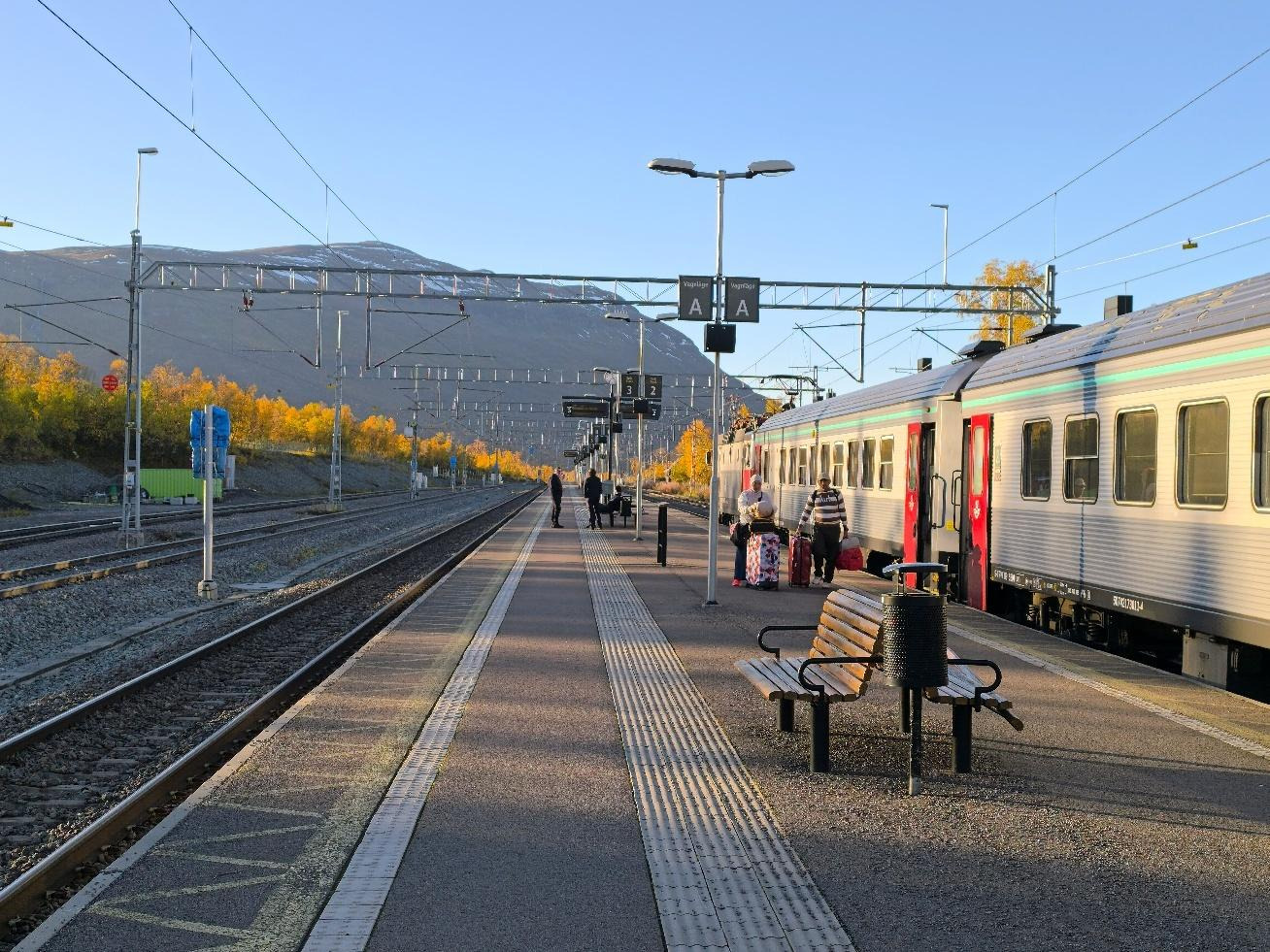
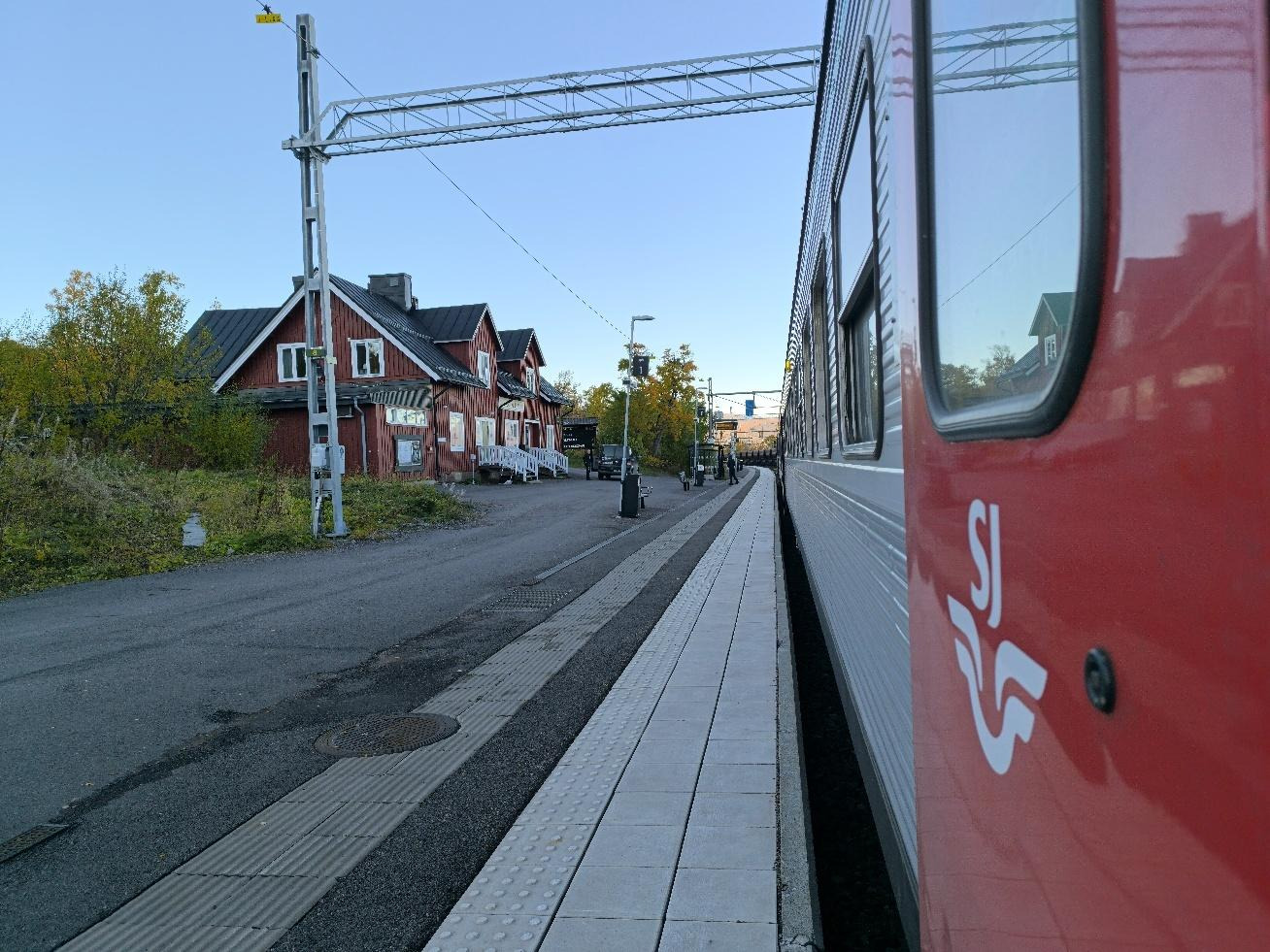
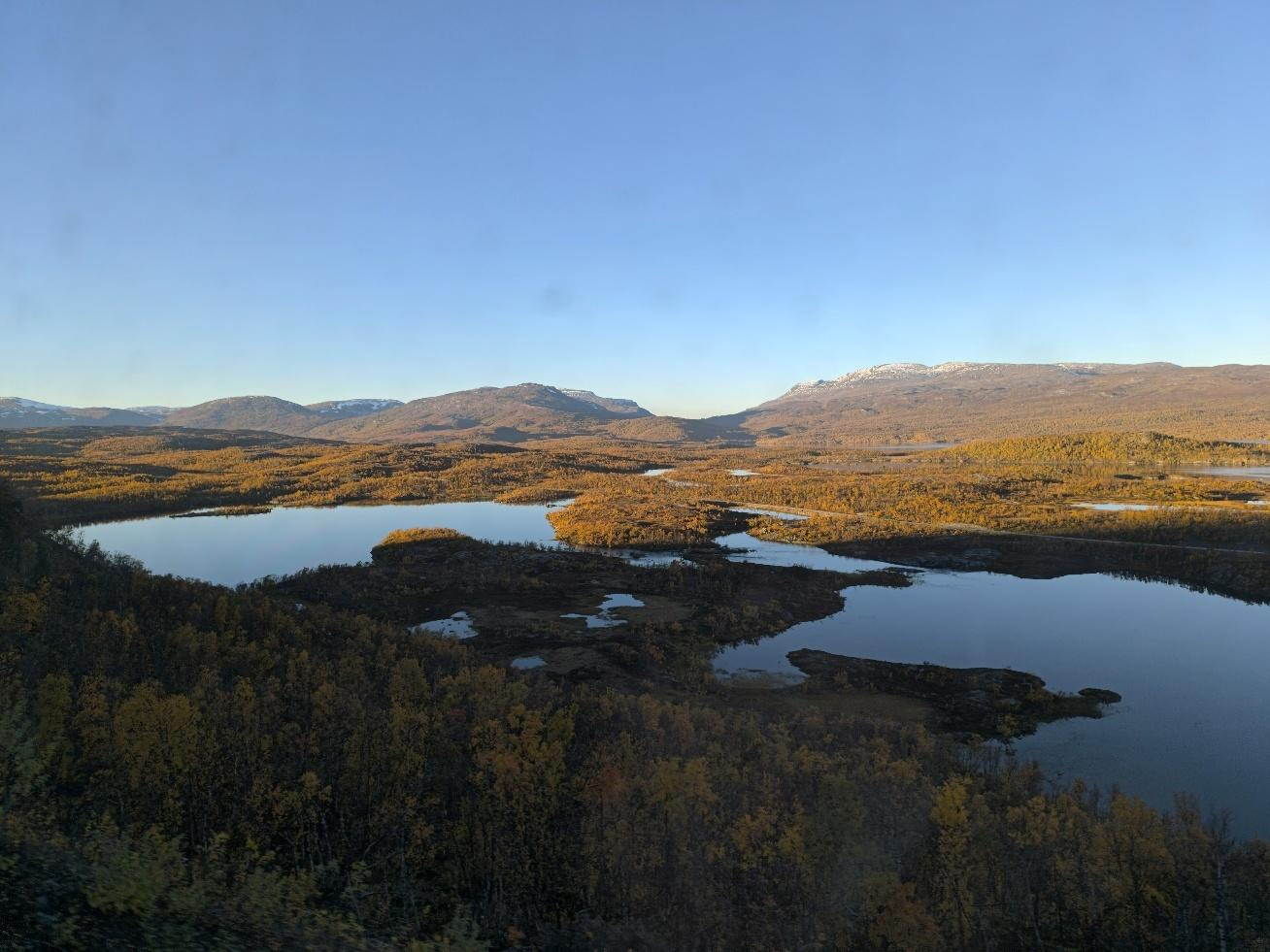
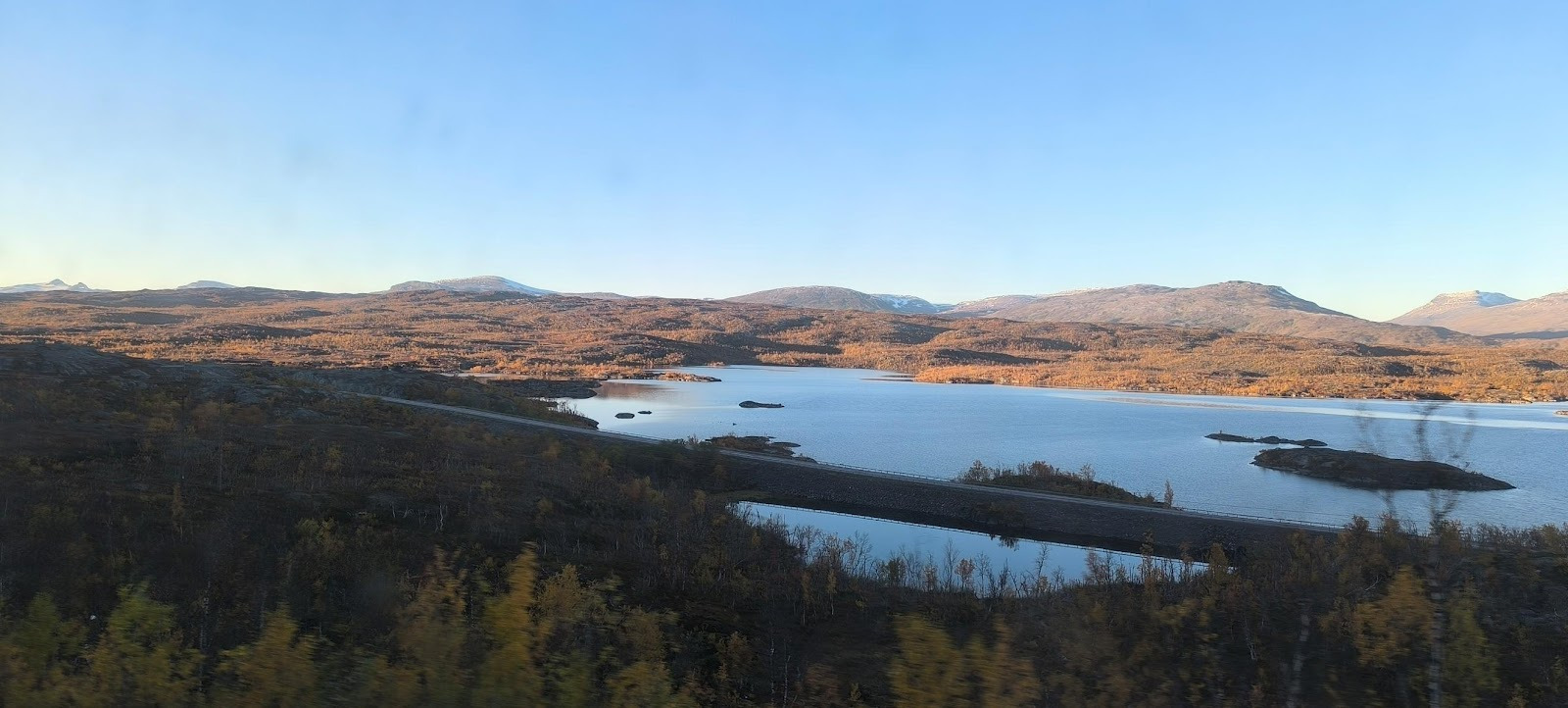
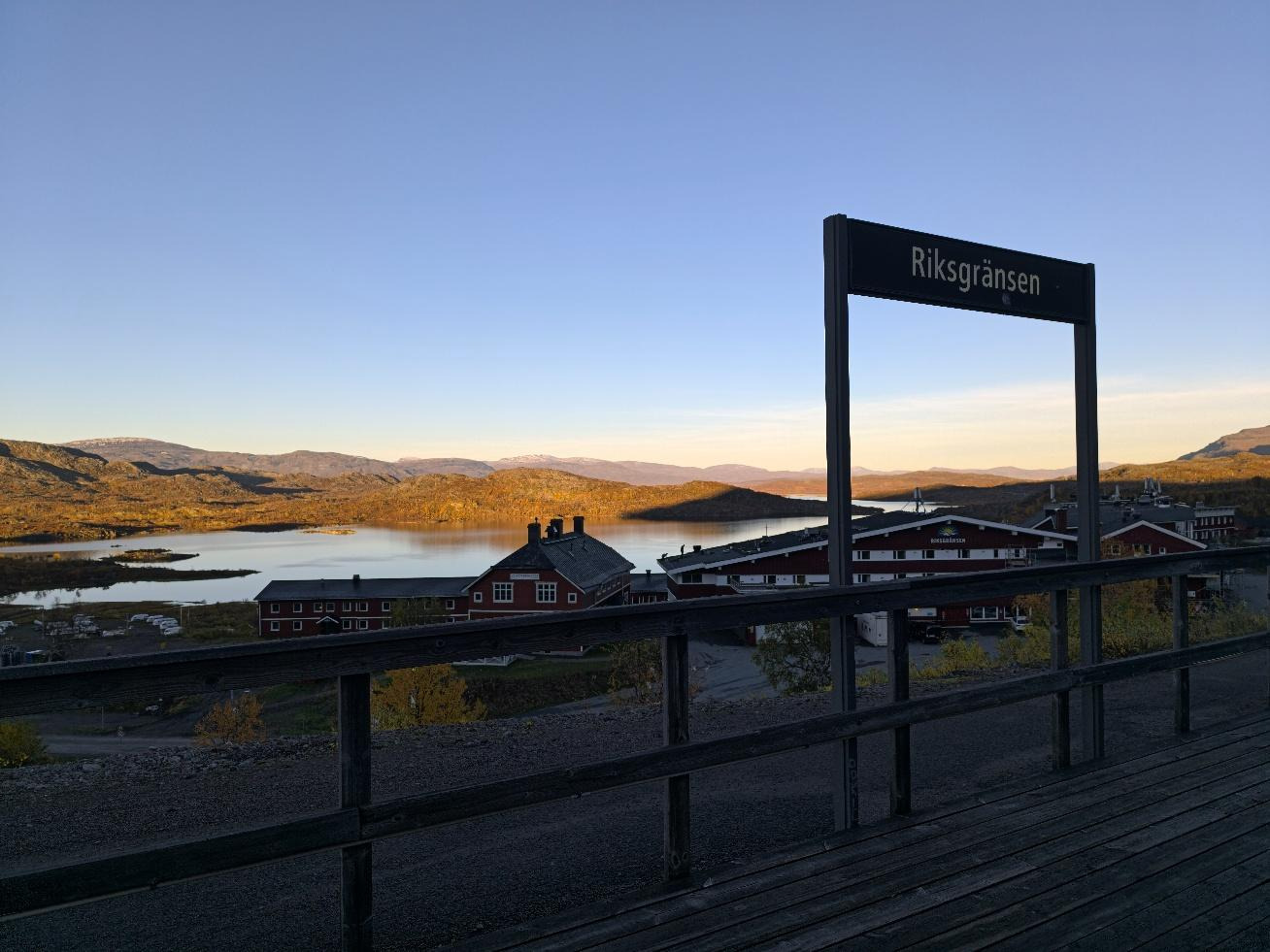
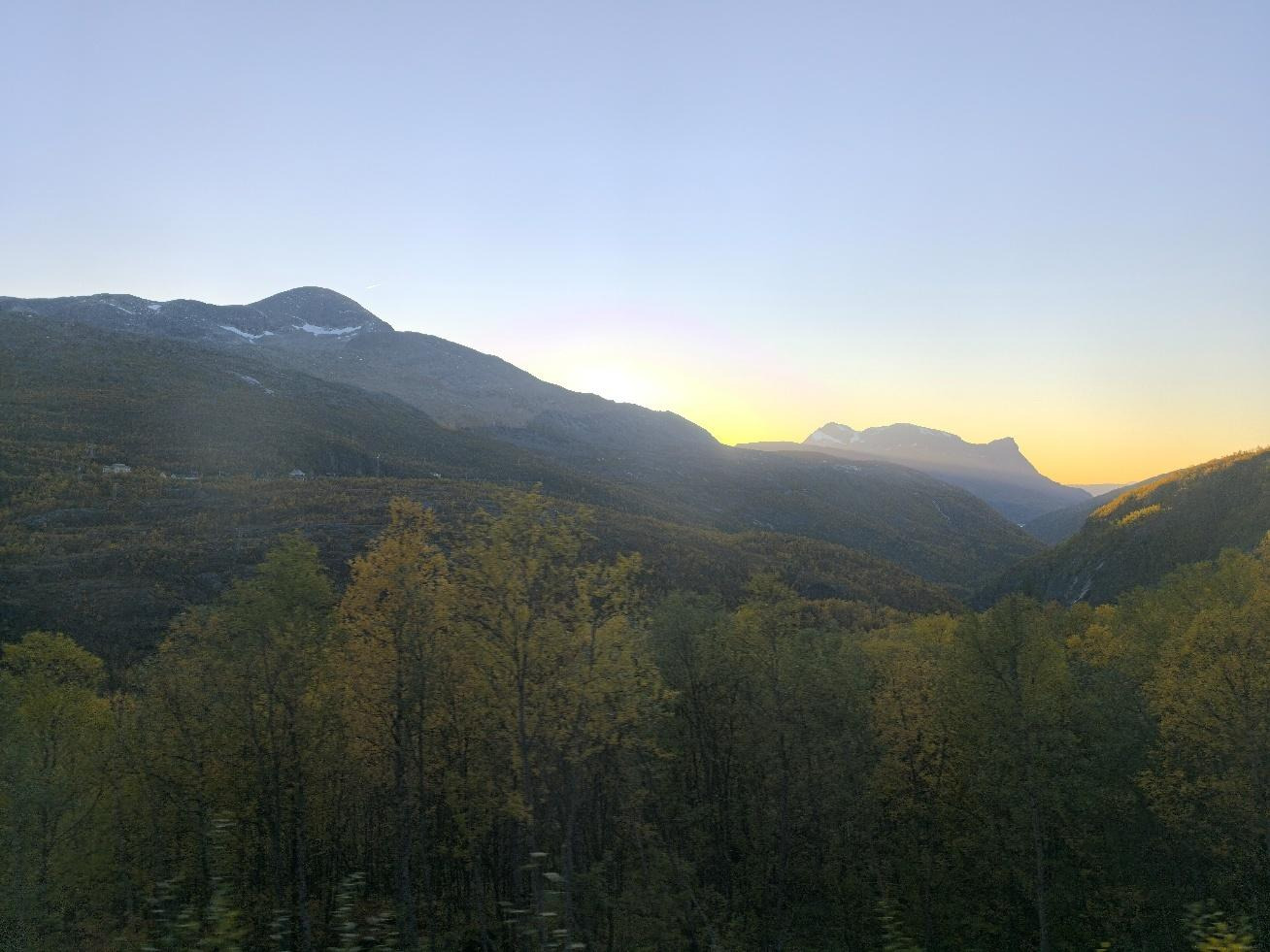
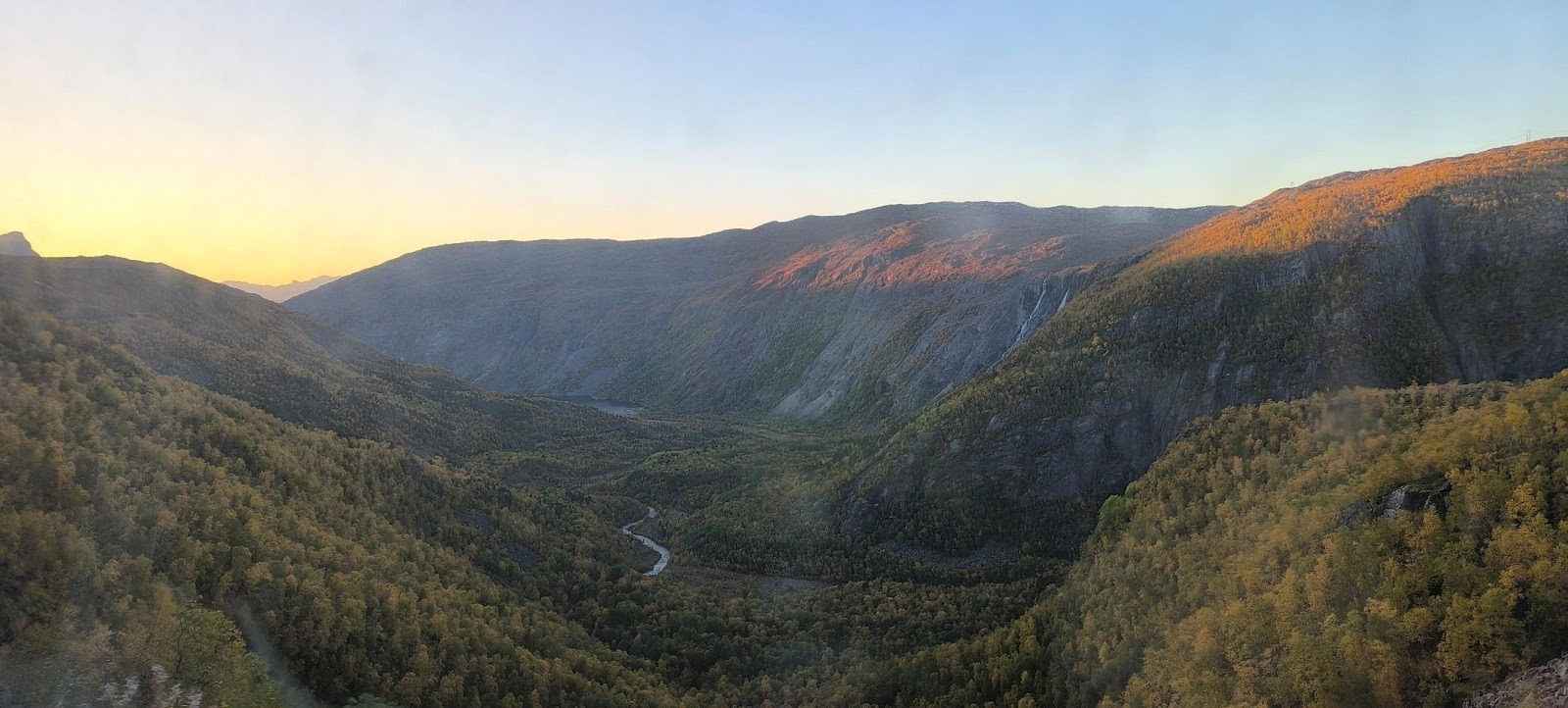
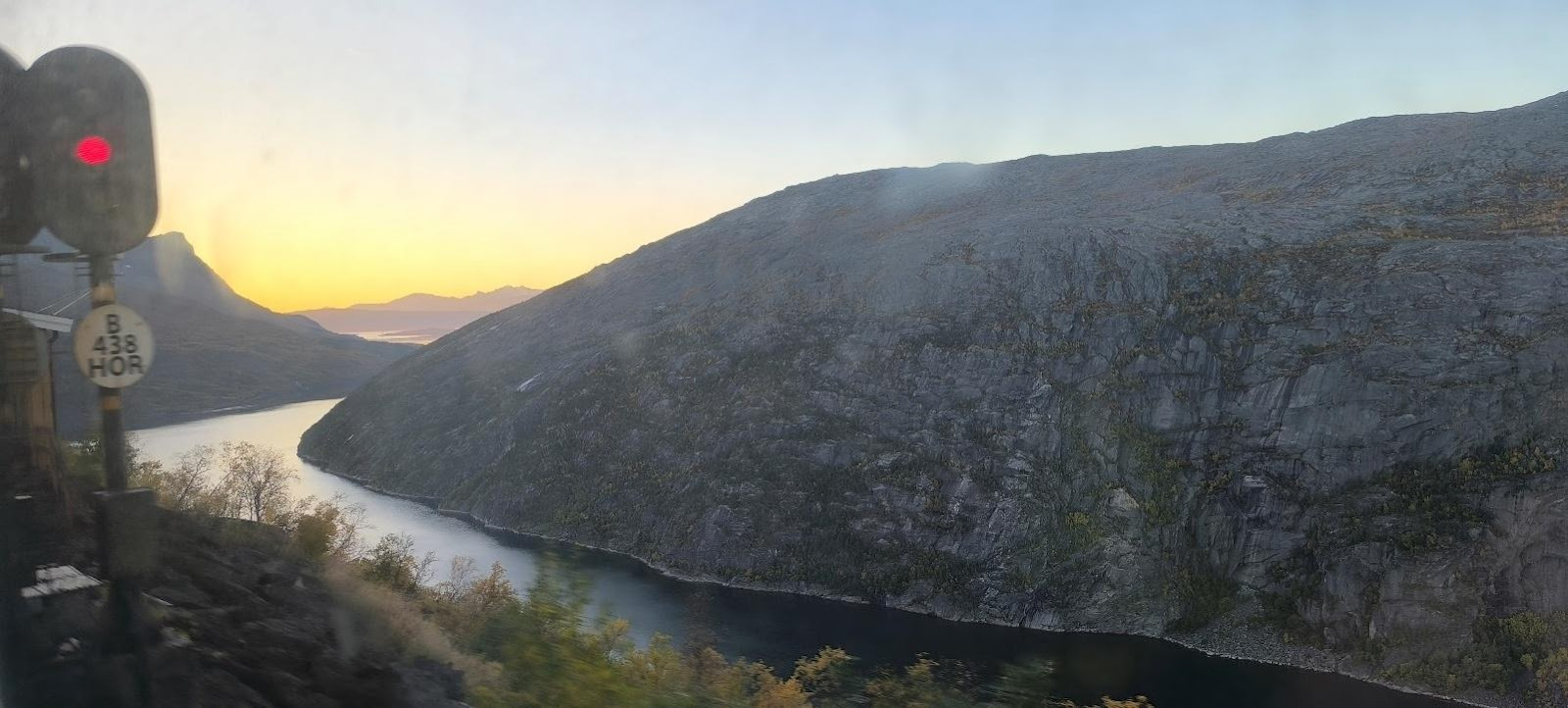
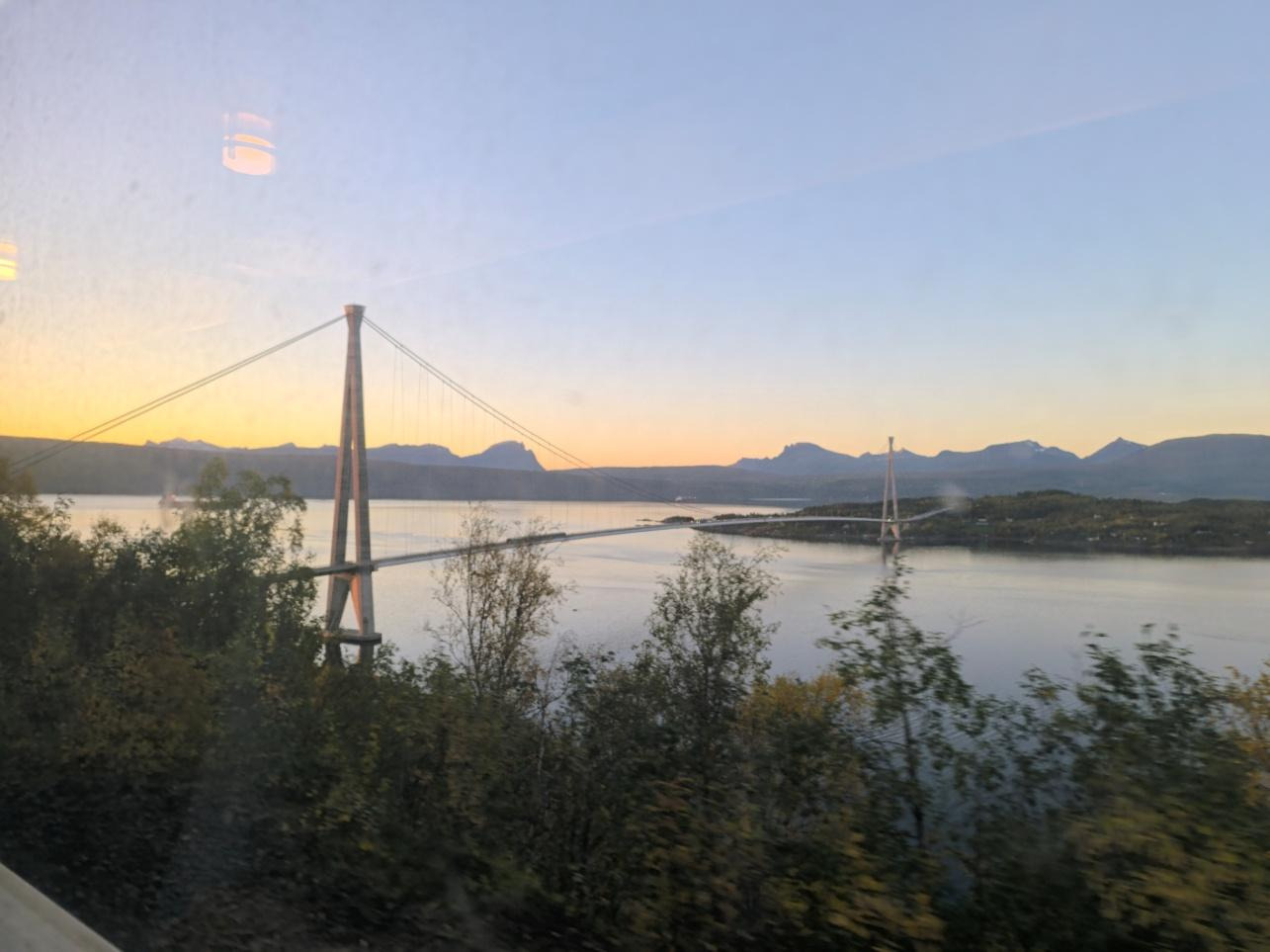
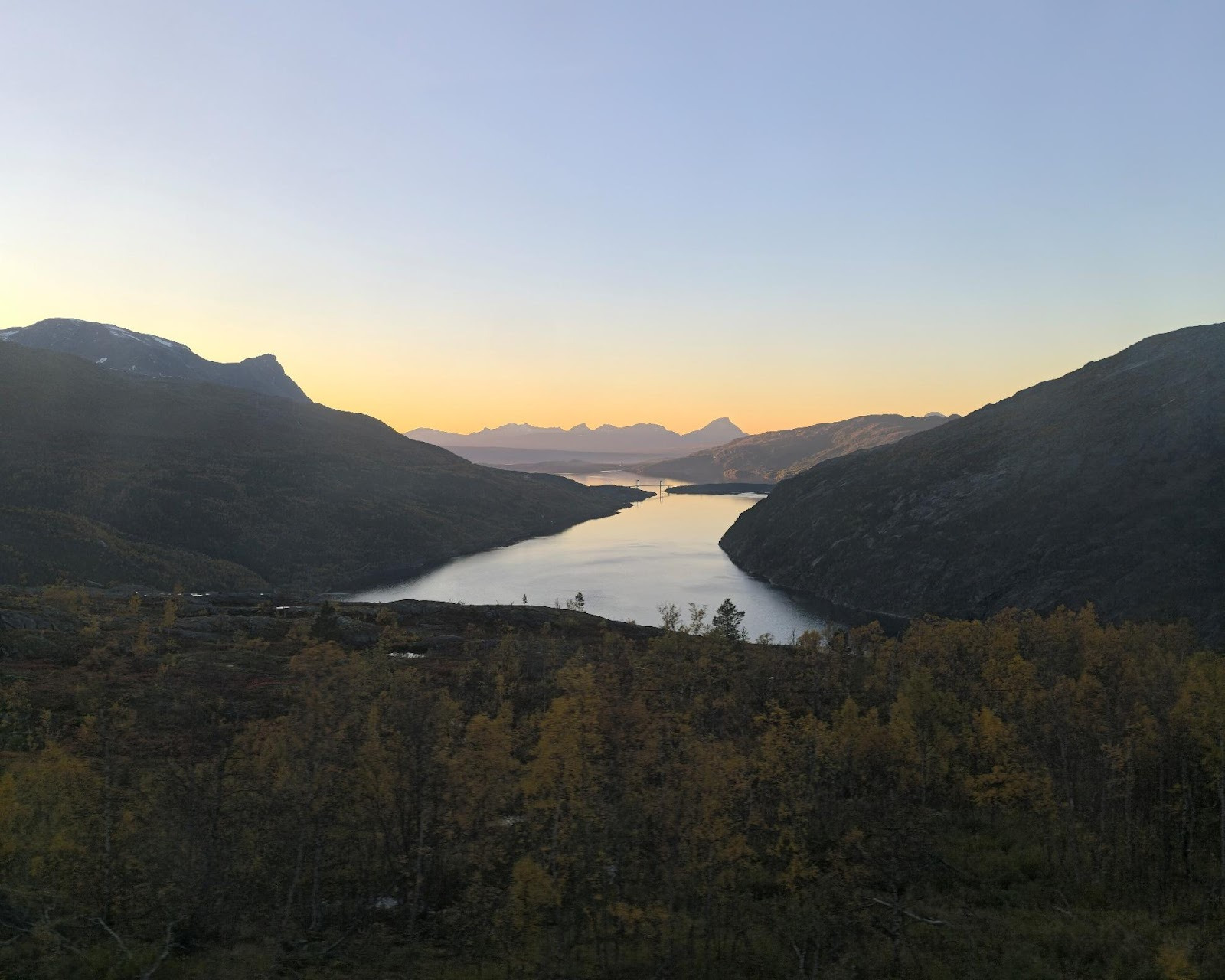
Fun fact, the fully loaded iron ore trains heading down from the border into Narvik produce enough electricity to power the empty trains back up to the border.
As we pulled into Narvik, I was pleasantly surprised by the high-quality dual-language visual display. Here in Britain, we only really get dot-matrix – and Norway can afford it at a train station above the Arctic Circle, whilst we can barely afford it in London.
Most people had alighted at Abisko turiststation. So the remaining travellers were a mix of mostly locals and a few tourists – who, after I spoke to some of them, quickly realised were all hiring cars to continue their journey (mostly into the Lofoten islands) or were returning later. My original plan had been to keep moving to Tromsø by hitchhiking, as I had no accommodation here and wanted to reach there in time for the first night of my booked accommodation, to catch up to my planned route. I was still eager to keep to that plan, but after nobody on the train said they were going that way, and after I had bought some much needed food from the shop, I realised that it was better to stay put – I was exhausted after that 7+ hour sightseeing ride.
- Tip: always prepare food for a long train ride. Being hungry or lethargic really does make a long journey much worse. Try to have something substantial if you need it, like a pot pasta or pot noodle. If the train has a catering facility, they’re usually happy to provide hot water with a small fee. I got some free water because the card machine didn’t have an Internet connection both times they tried 😊.
- Tip: don’t push on if you’re tired – I knew this tip before I left for this trip, but almost forgot it. Staying put is usually the better decision.
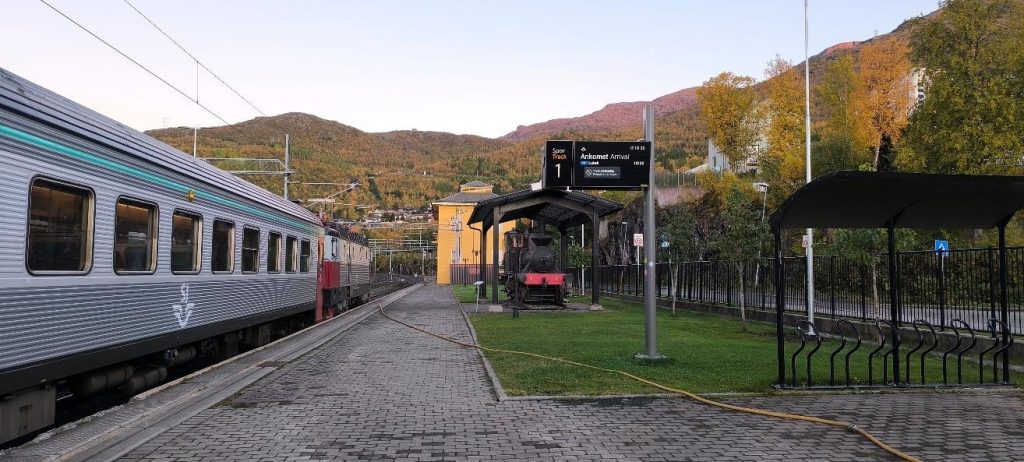
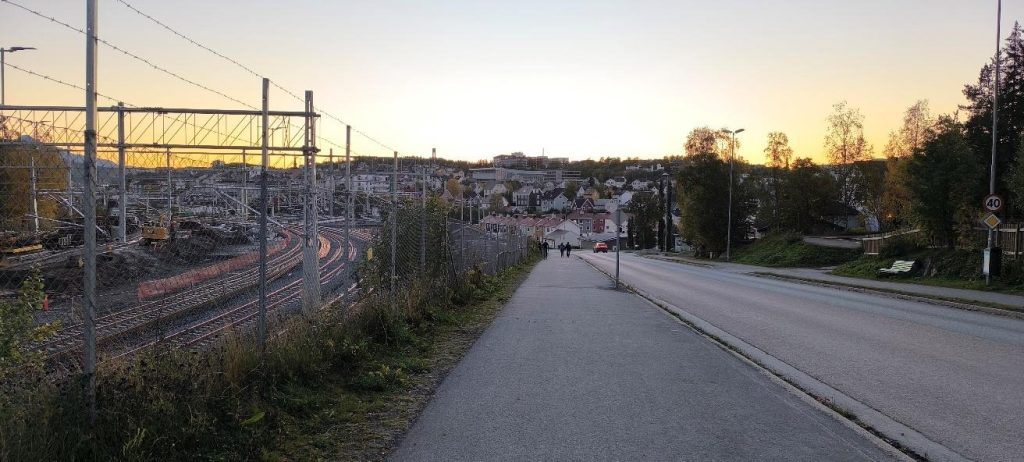
Originally when I was making my plans early early on, I was going to try to stay the night in my hammock, in a sort of preparation for what was to come. I knew it was a long shot but there looked to be a nice beach just north-east of Narvik – unfortunately it was only served by public-accepting school busses on weekdays, so I would have to find somewhere else.
(I found out when researching how possible it would be to get to the Russian border at Kirkenes (yes, it’s actually possible to do on busses if you time things right) and then back into Finland at Utsjoki via Tana bru, without spending 23 hours at Utsjoki – many of the less trodden routes are school busses which carry non-school passengers. But of course, they only operate on school days, once in the morning and once in the afternoon.)
Narvik was an experience. A small town tucked away up North. Not really isolated, there’s loads of transport links – but it definitely felt like it. I was suddenly very aware of just how far north I was getting.


In Narvik, there lies one of those posts with lots of fingers pointing (not very accurately to other cities), stating that the North Pole lies only 2,407km away. Of the 22 cities shown, I would visit 13 of them on this trip, the furthest being “Beograd” at 3,660km away (in a straight line). I wasn’t sure why Belgrade was selected – it seemed like an odd choice, but maybe it can be explained by something I found out later. Also there is the Hiroshima stone, a stone from the zero-point field in Hiroshima, which the adjacent inscription “Never again Hiroshima. Never again Nagasaki.” Perhaps it was not the only reminder of World War 2 in the area, or indeed on the trip…
I stayed in a rather unique hostel, built into the basement of a church – not bad though, apart from sharing the room with 15 others.
Not wanting to give up on my hitchhiking idea, I did a little research on hitchmap.com and found that it might be possible to hitch out from a bus stop on the northern edge of the town. So, the next morning, I walked the 15 minutes there and set up. Conveniently, the bus to Tromsø does also stop here – I had about 3 and a half hours to try to hitch out before I would have to pay another 30 euros for a bus ticket (stupidly, I had prebought these bus tickets and they were non-refundable).
I didn’t want to end up at the intermediate junction at Nordkjosbotn (where the E6 and E8 join and run concurrently to Skibotn, or the road splits to Tromsø) since I didn’t want to end up stuck in that very small village. So it was quite an ask to get all the way to Tromsø in one go. In the end, most drivers pretended not to see me (an annoyingly large amount), but a couple smiled and shook their head or pointed (“not going there”), and two pulled over but then said they weren’t going there when they saw my sign a little closer.
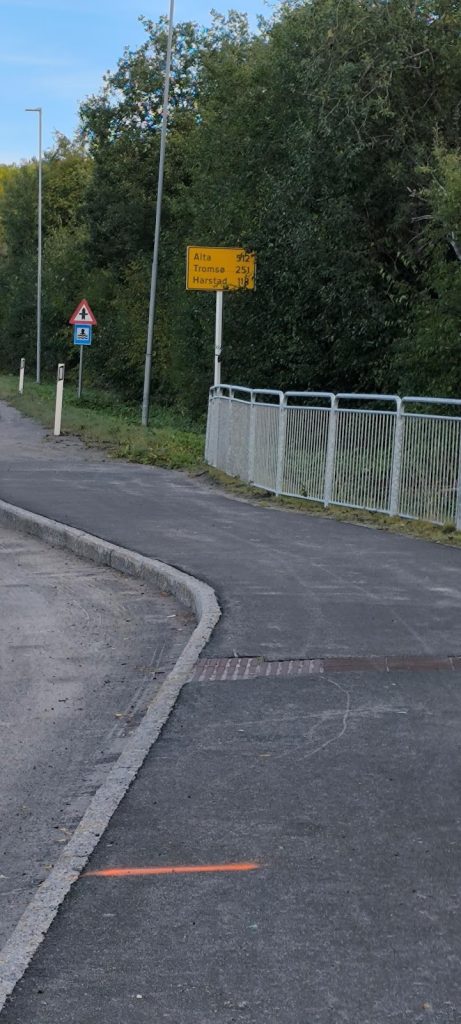
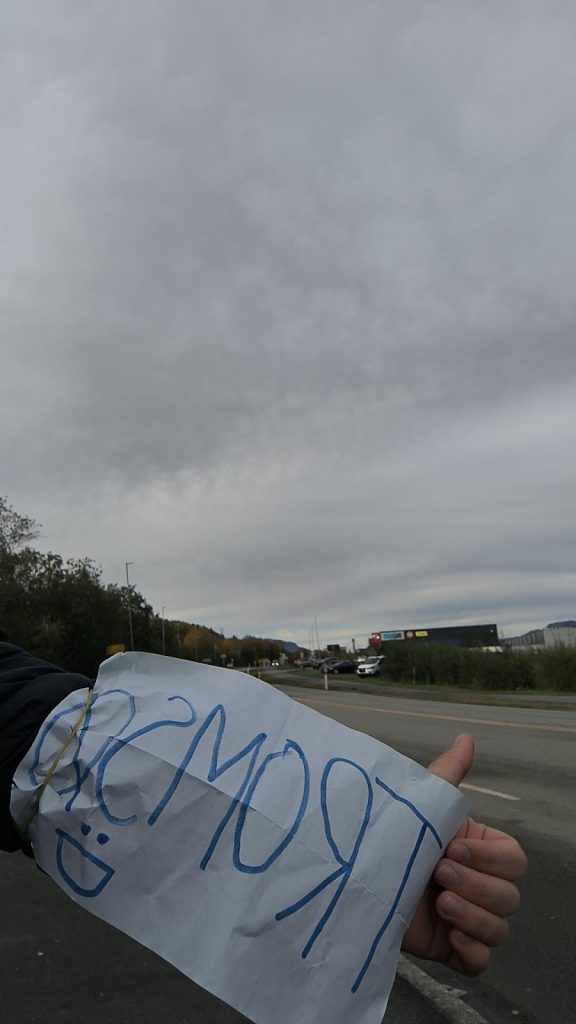
From Narvik to Nordkapp proper, it’s a minimum of 4 busses over 4 days, one a day. Most people drive – many people don’t know it’s possible to do by bus, or just aren’t willing to spend 4 days doing it. Whilst I have a driving license, unfortunately I’m not old enough to hire a car yet – but it feels better reaching somewhere so isolated whilst not having the comfort of your own space.
The first bus pulled up the bus stop (which I was trying to hitchhike from) at around 1pm. It was quite an amazing bus ride with really beautiful scenery.
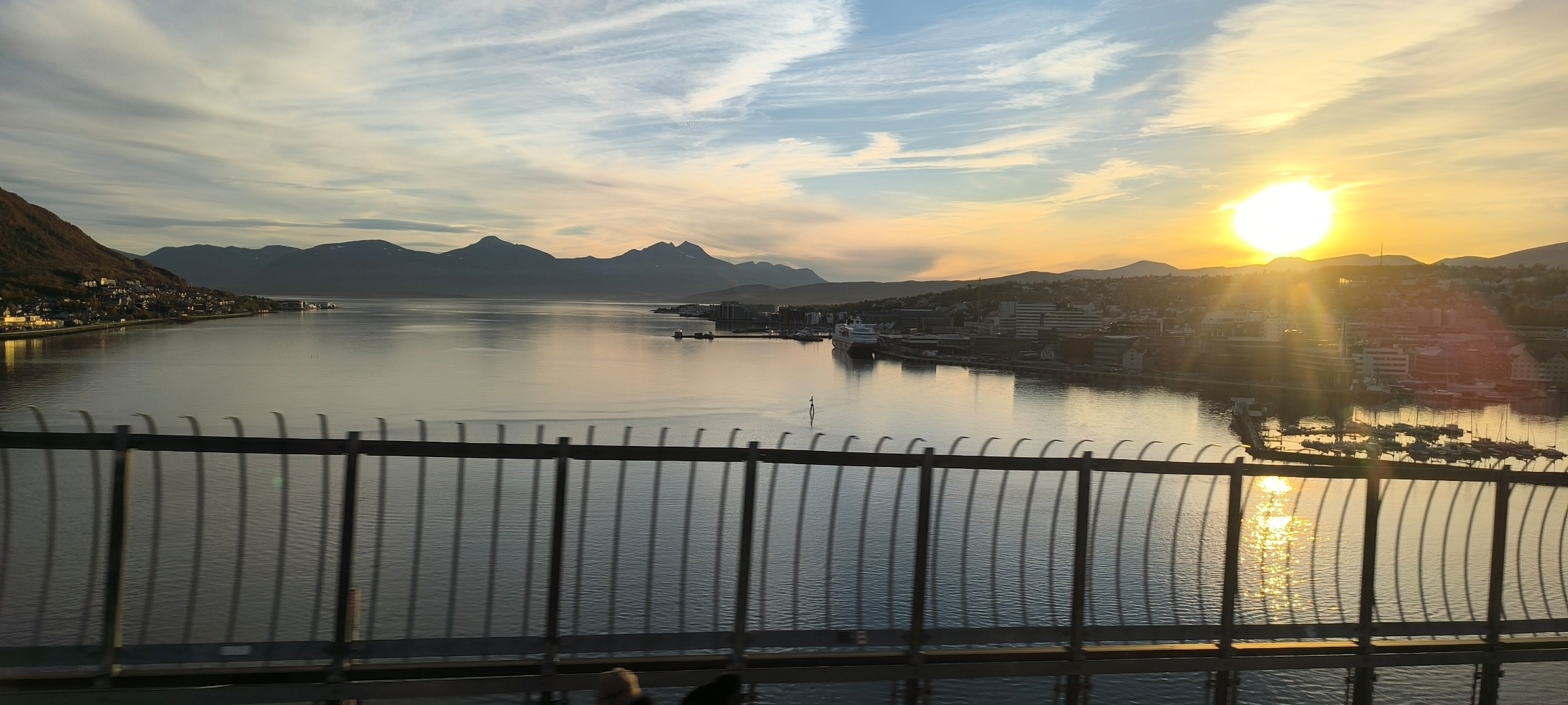
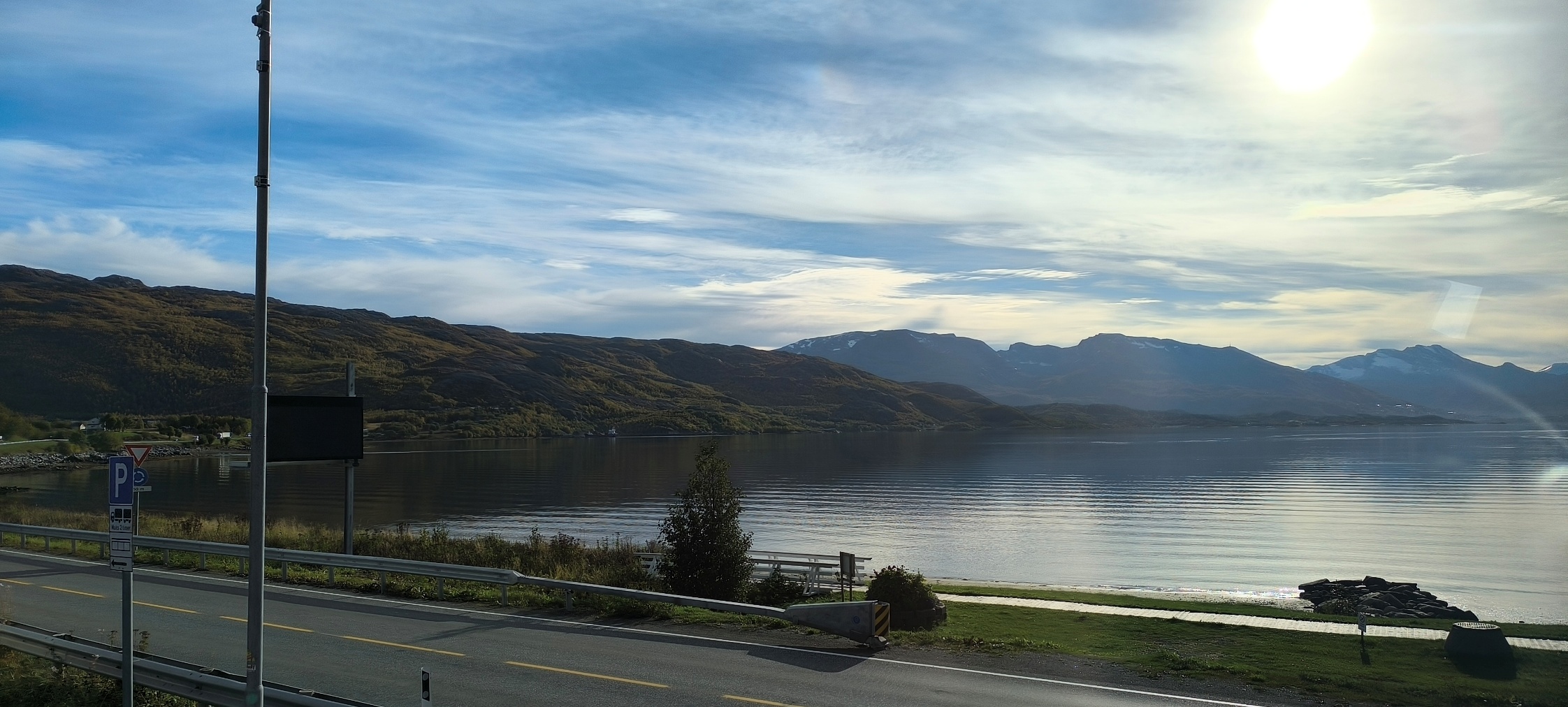
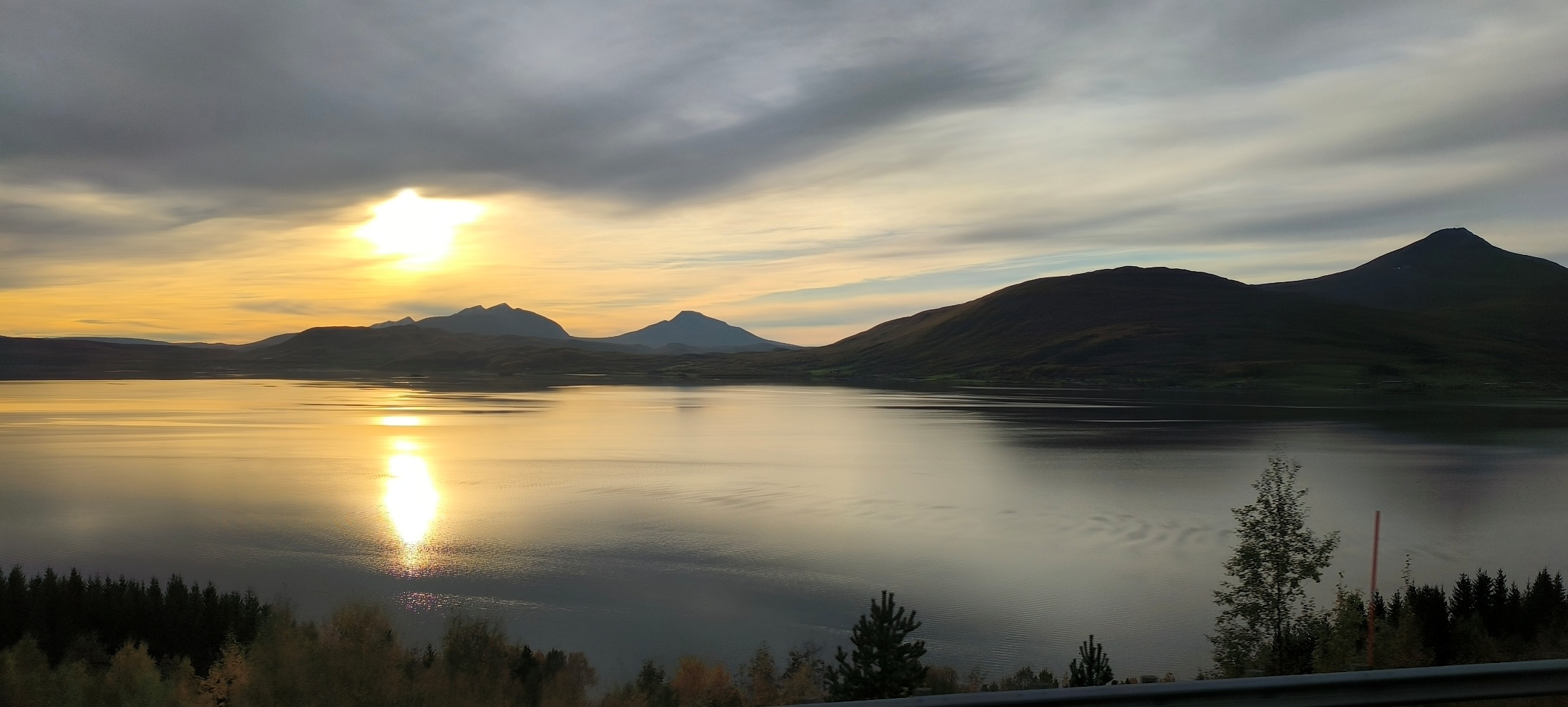
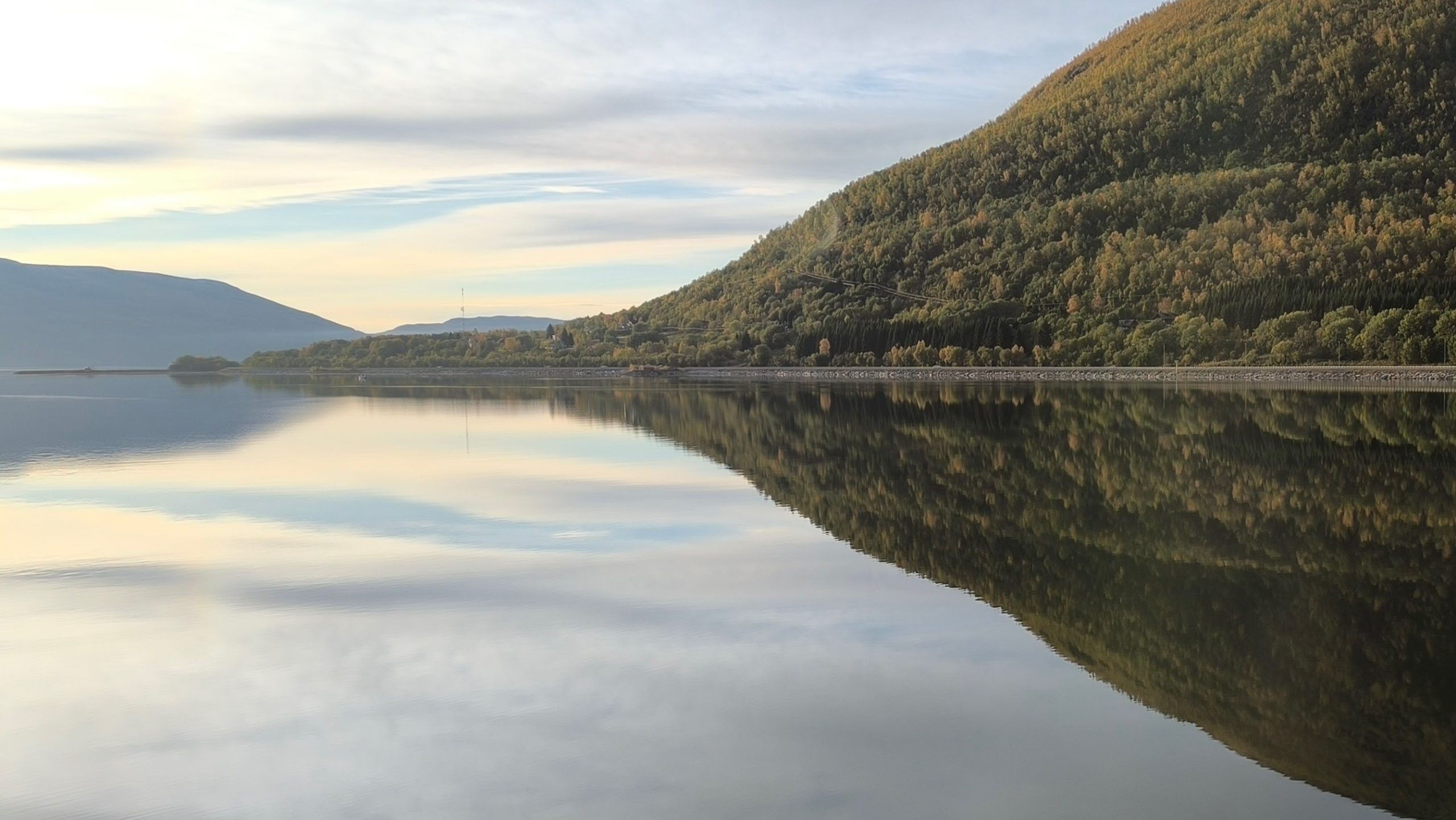
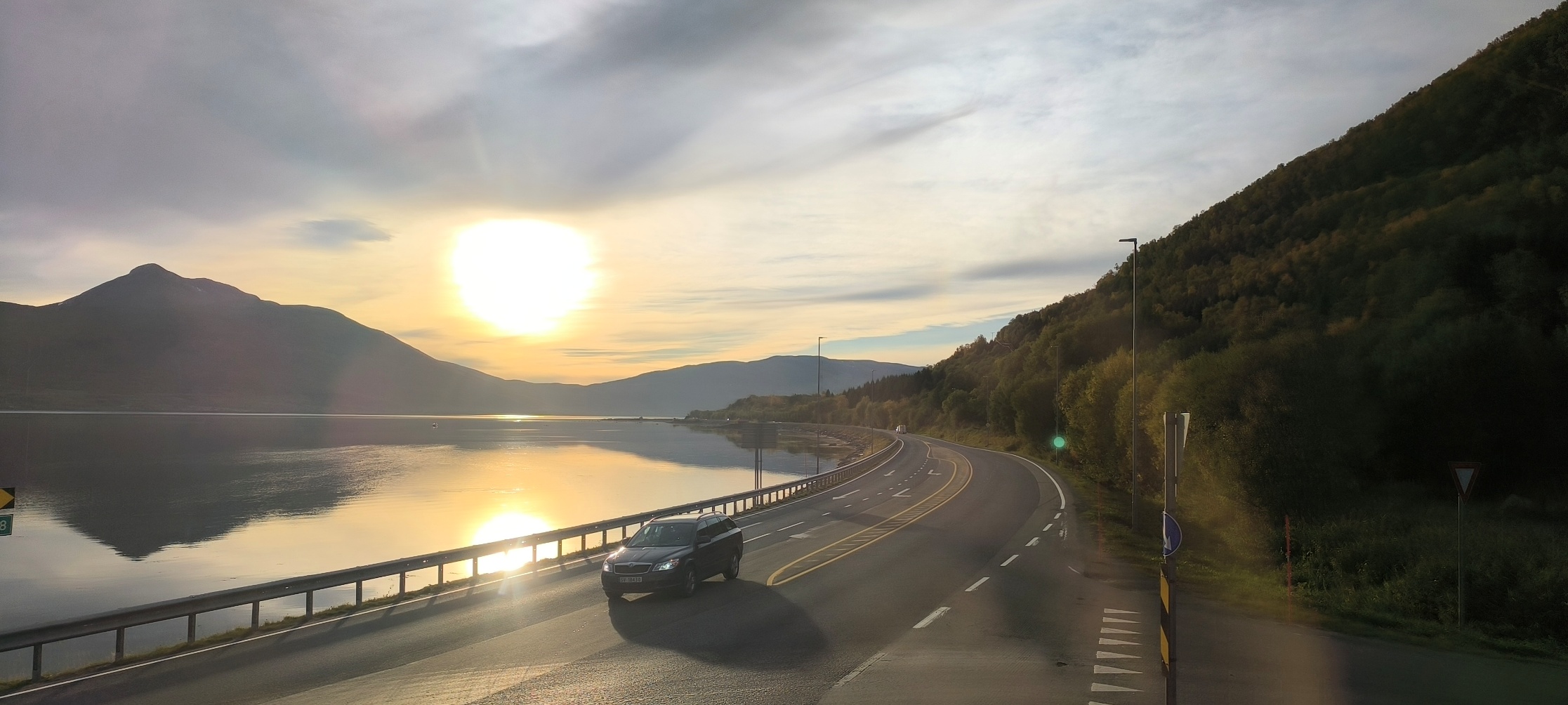
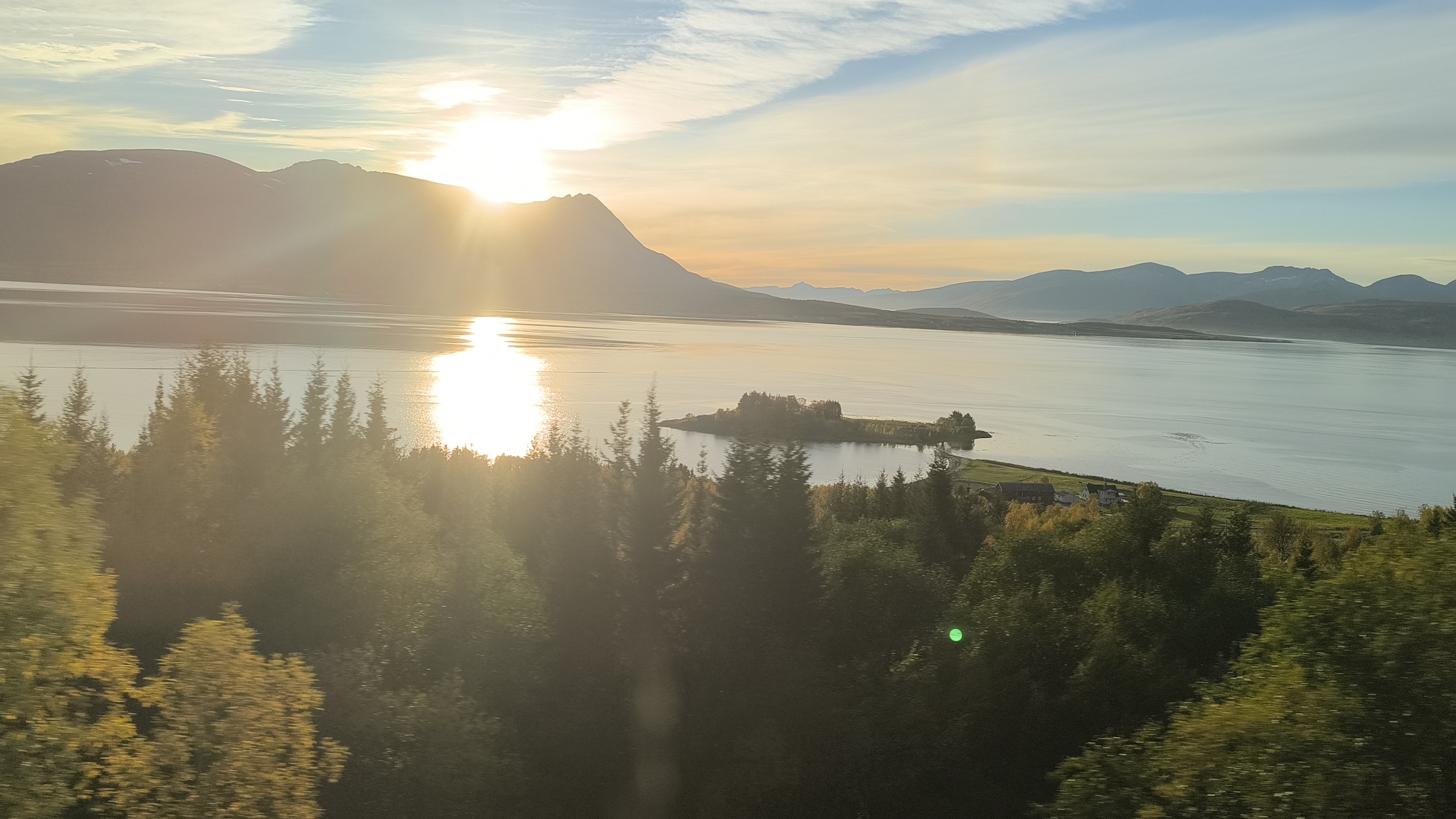
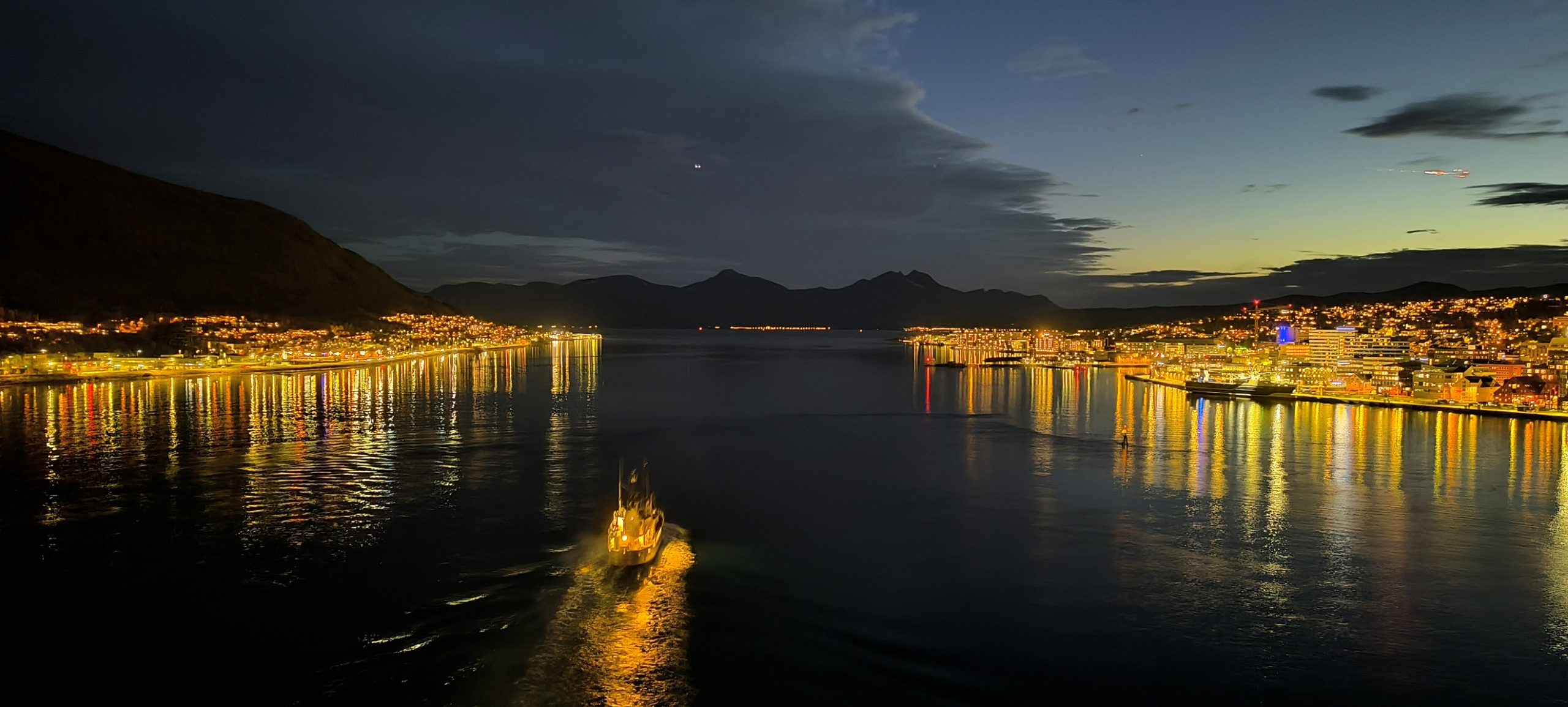
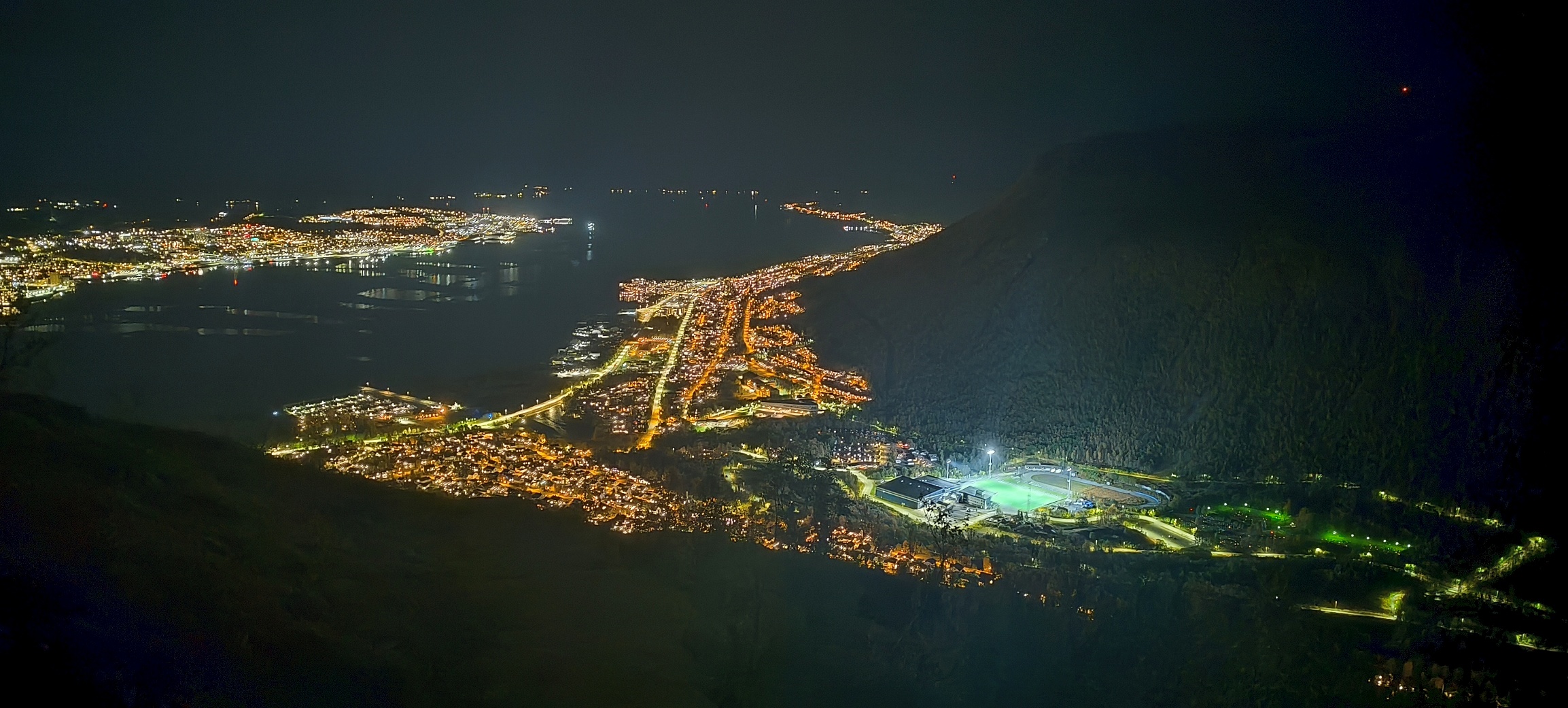
The bus pulled into the central bus station in Tromsø after a little under 4 and a half hours. I originally planned to have 2 nights here, but with the delays caused by the train cancellation, I now only had one night, so I was pretty determined not to waste time. I also hadn’t seen any Northern lights yet – rather annoyingly, one of the guys running the hostel showed me an amazing picture of the one right above the street outside the hostel the last night (the night I was supposed to arrive). So, after replenishing my pasta supply, I dropped my bags off at the hostel, cooked and ate quickly, then walked over the Tromsø Bridge.
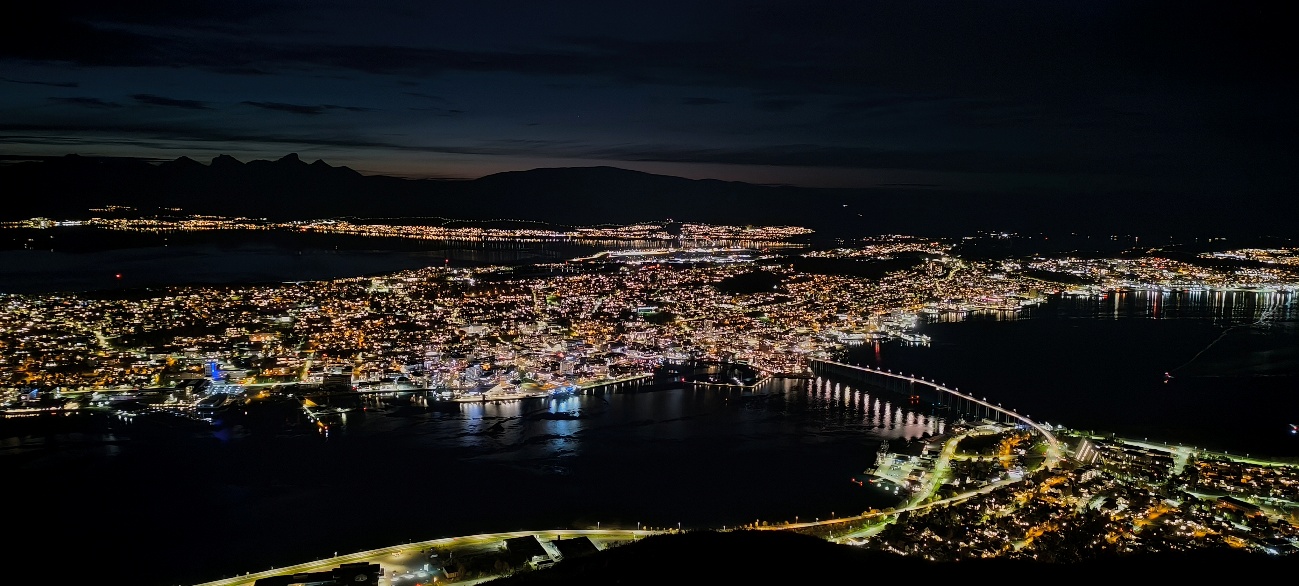
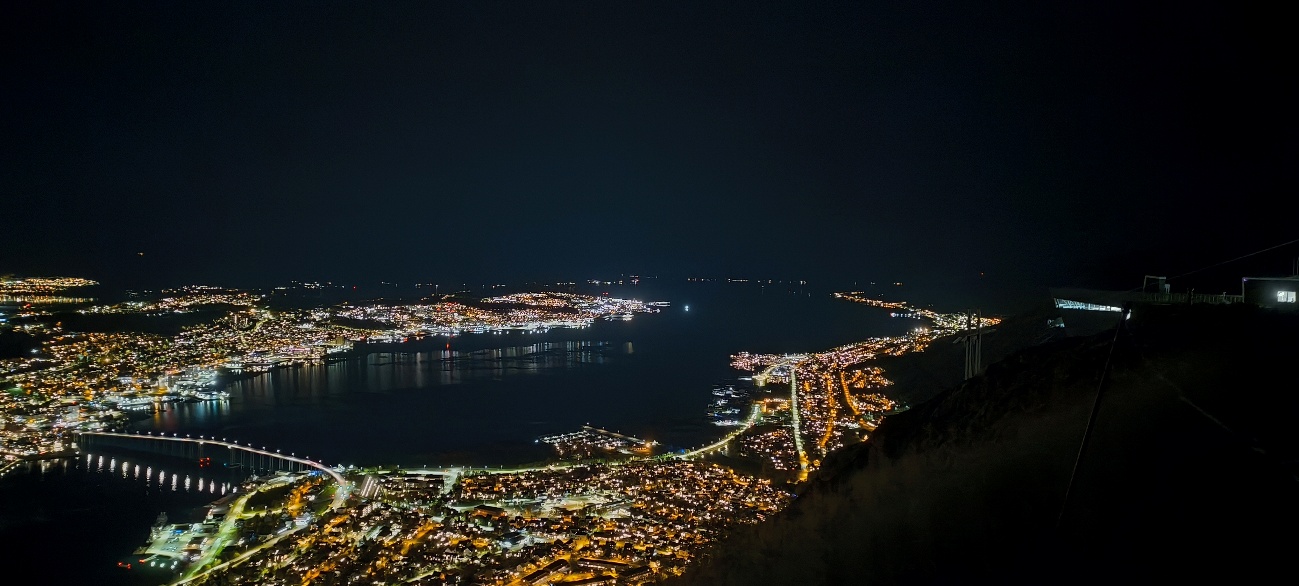
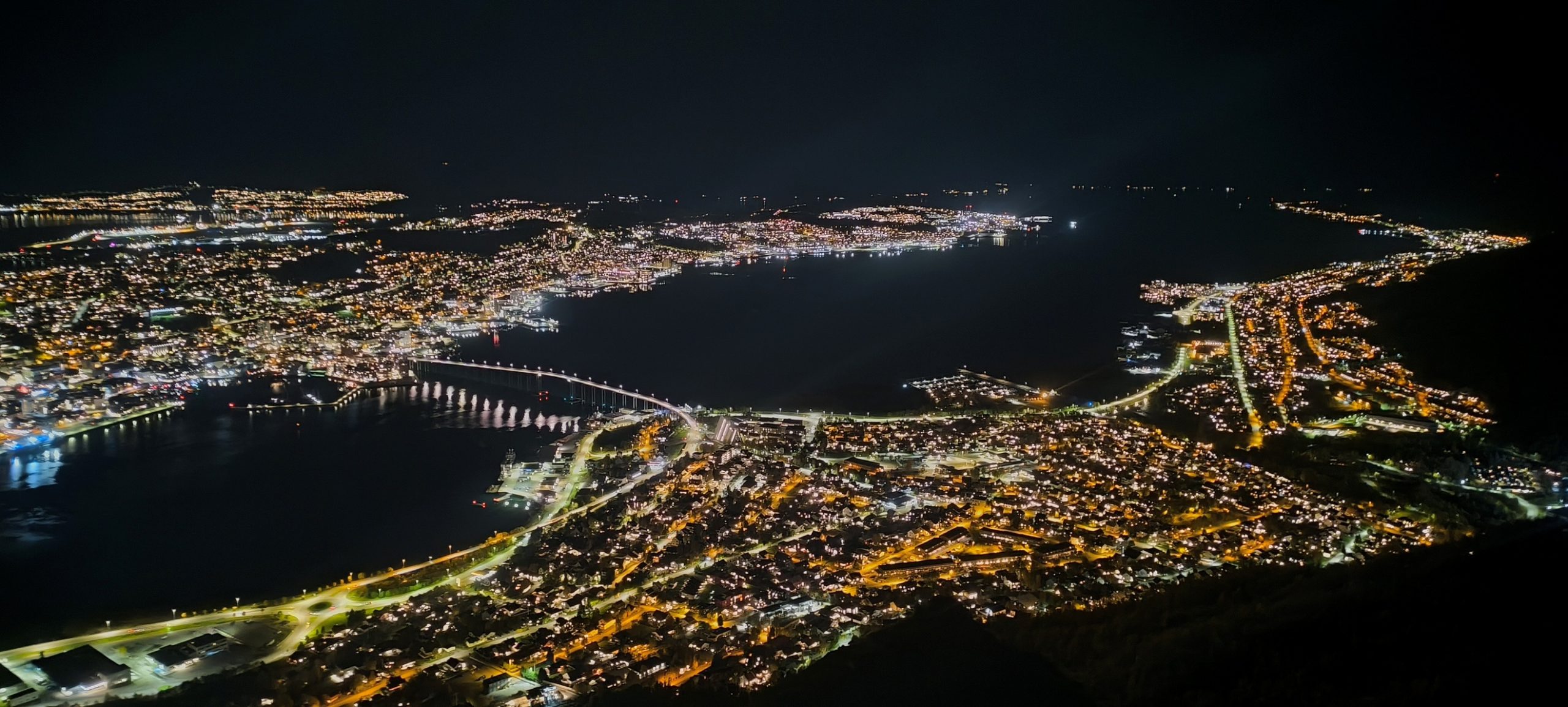
On the east side of the city, there’s a rather overpriced cable car up to the mountain overlooking the city. The small building at the top was the finishing point of the first series of the celebrity-ish version of Race Across The World broadcast on the BBC a few years back. Unfortunately, it does not seem possible to get onto the roof of the cable car building anymore.
It began to drizzle a little as I reached the top – but it just adds to the atmosphere. Being out of either peak season, it wasn’t busy, so I only had to walk along the edge for a little while before I was out of range of most of the torchlights of everyone else. I stood overlooking the city for a little while, taking pictures, thinking about what I had already done and what lay ahead, watching the last daylight fade out of the sky over the horizon. I laid on the ground for a little while (I had a warm jacket, and the ground wasn’t soaked yet), looking at the clouds and the stars – no lights unfortunately, but I knew I still had plenty of time. I started making my way back around 22:30 – I took the 1203 steps down via the Sherpatrappa stairs to save on the cable car a little and to get another view out of the range of most visitors.
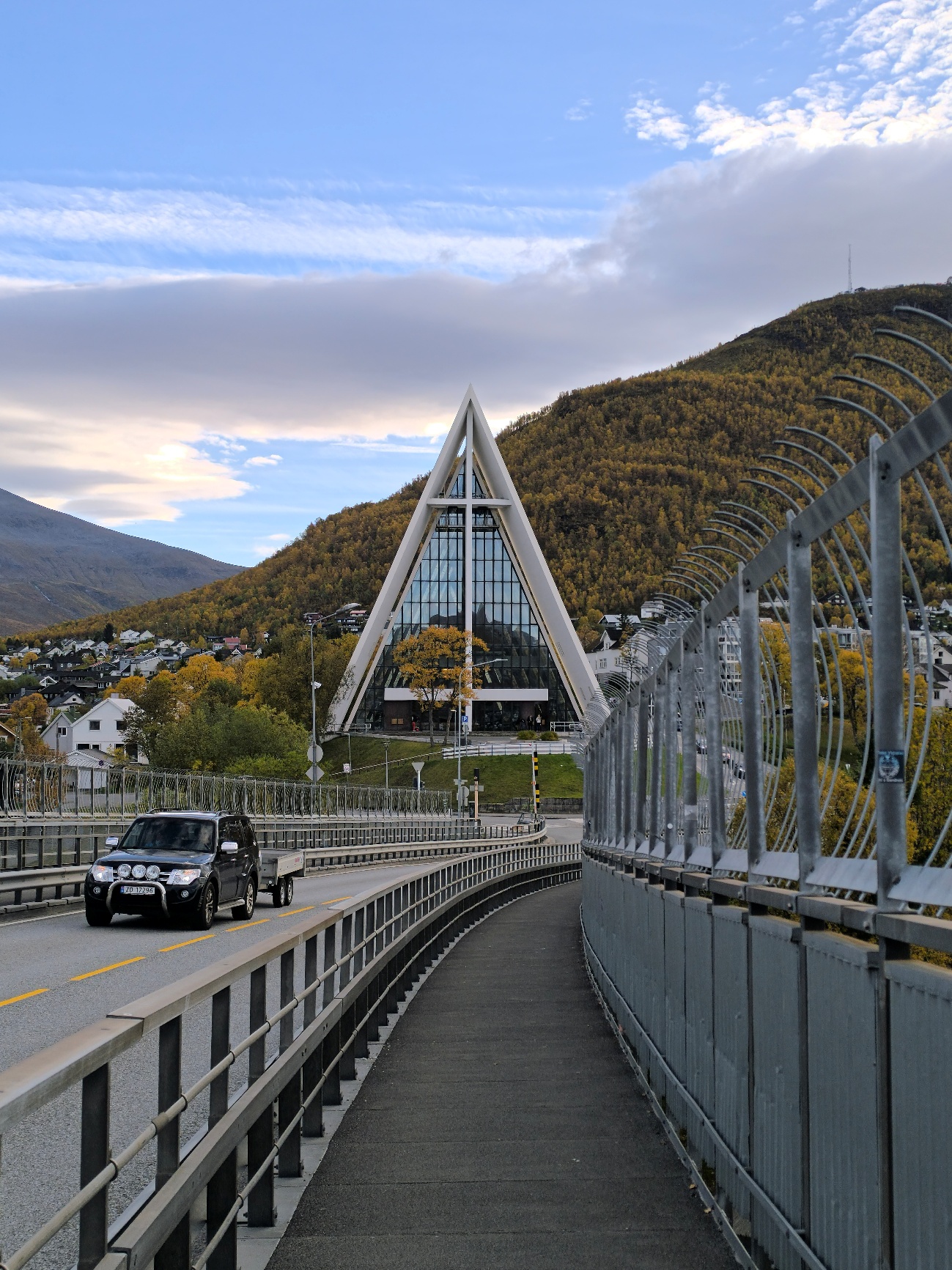
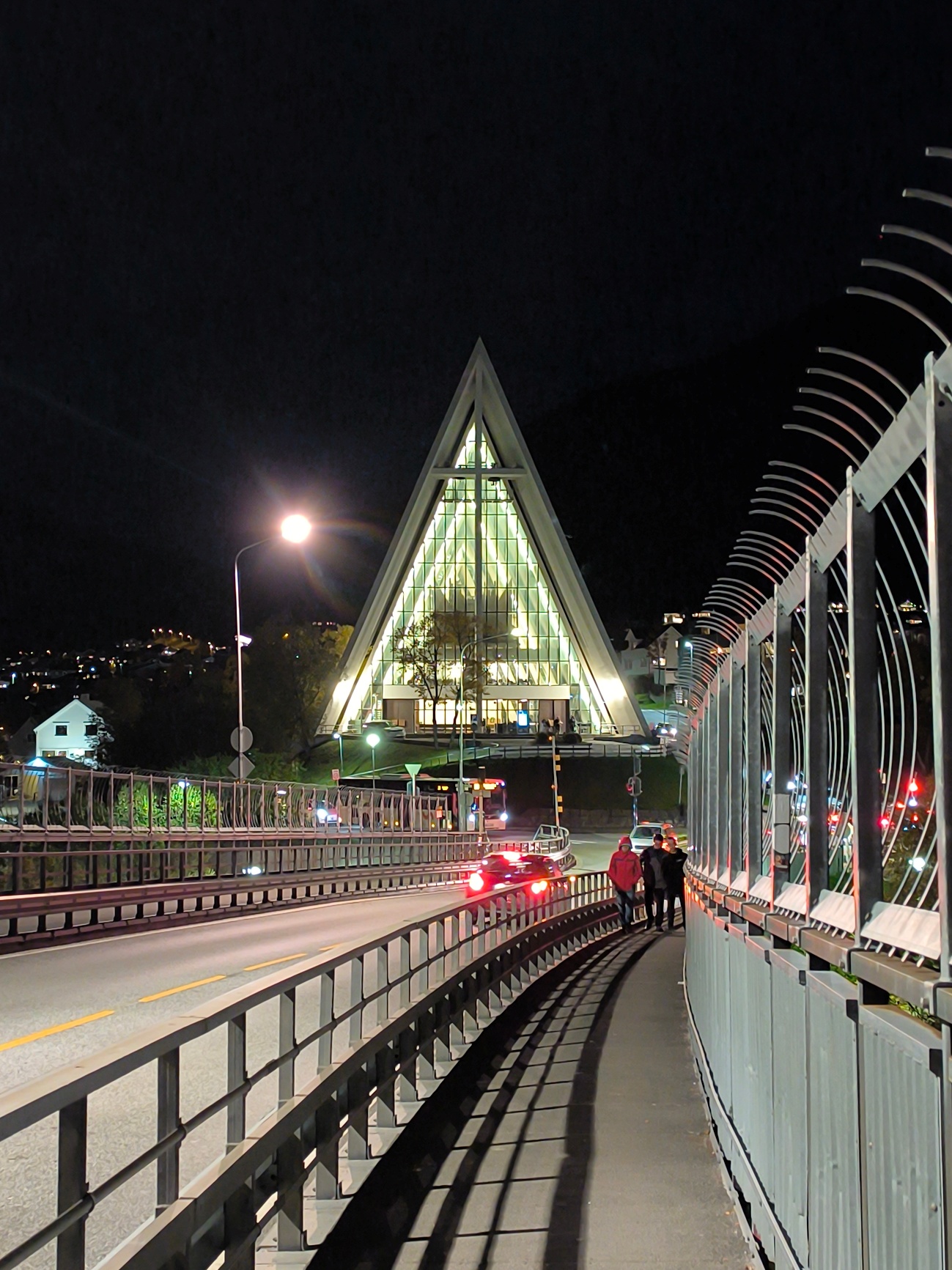
The next morning, I walked across the bridge again to visit the Arctic Cathedral. It’s a unique church, quite small on the inside but worth a visit (even if it is a little expensive).
I do regret not spending more time in Tromsø, although there was not particularly much to do after you’ve seen the centre if you don’t have access to a car and aren’t with a tour group.
But I had to leave fairly quickly. The next bus takes you well off the beaten tourist route – I think most people taking public transport stop here. The 150 route takes you off the main roads, as it serves isolated communities between Tromsø and the and Olderdalen on the E8. Interestingly, the bus takes two ferries, each about 25 minutes, which carry cars as well, but are synchronized with the bus timetable. The view from the ferries was spectacular.
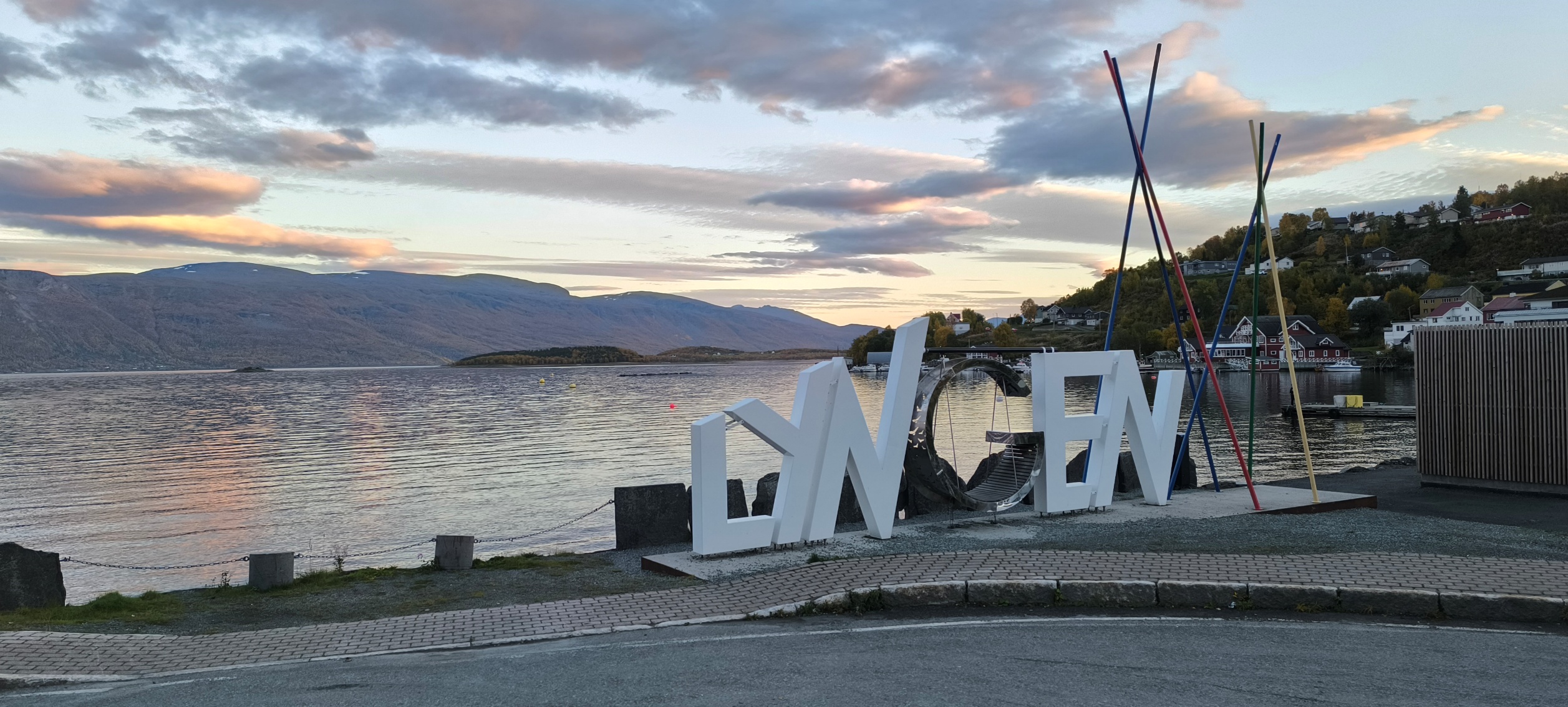
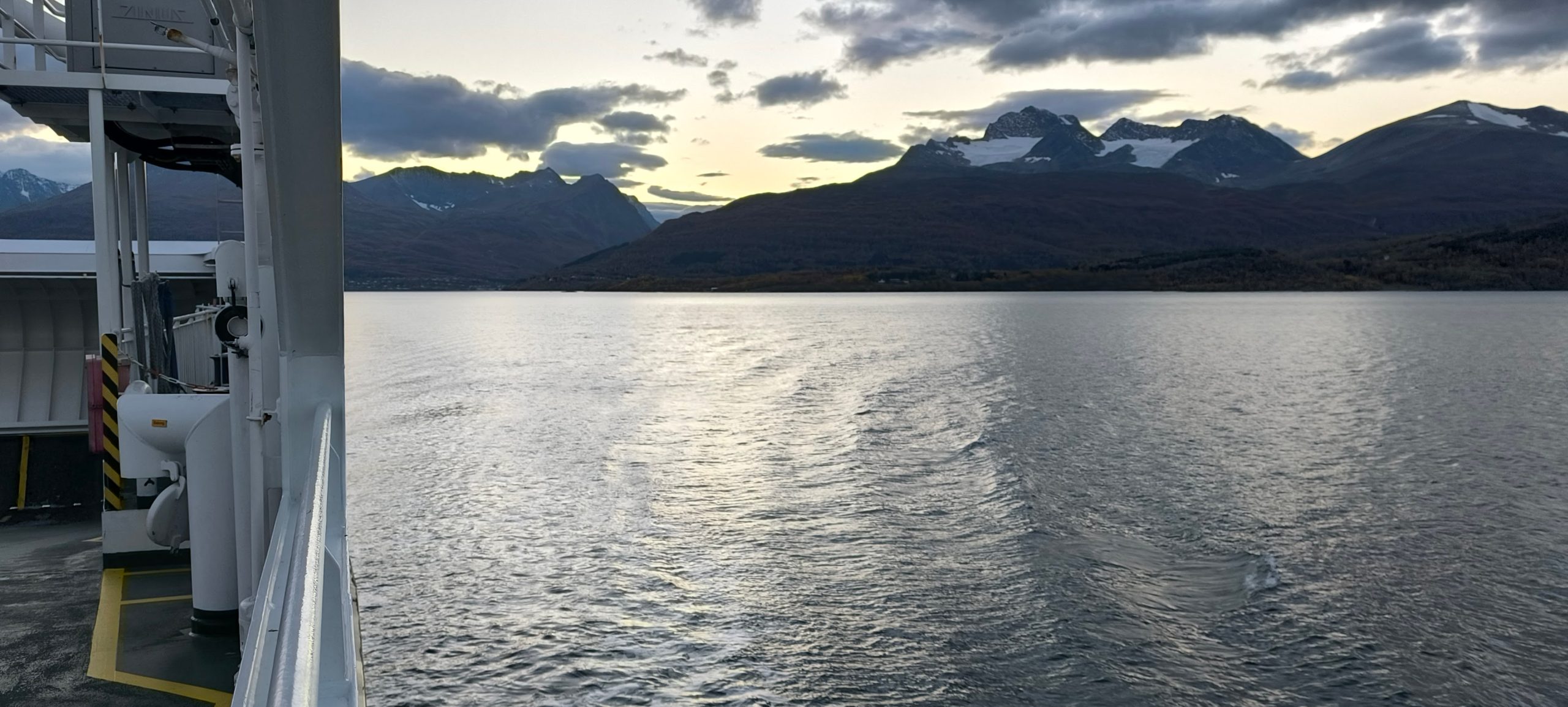
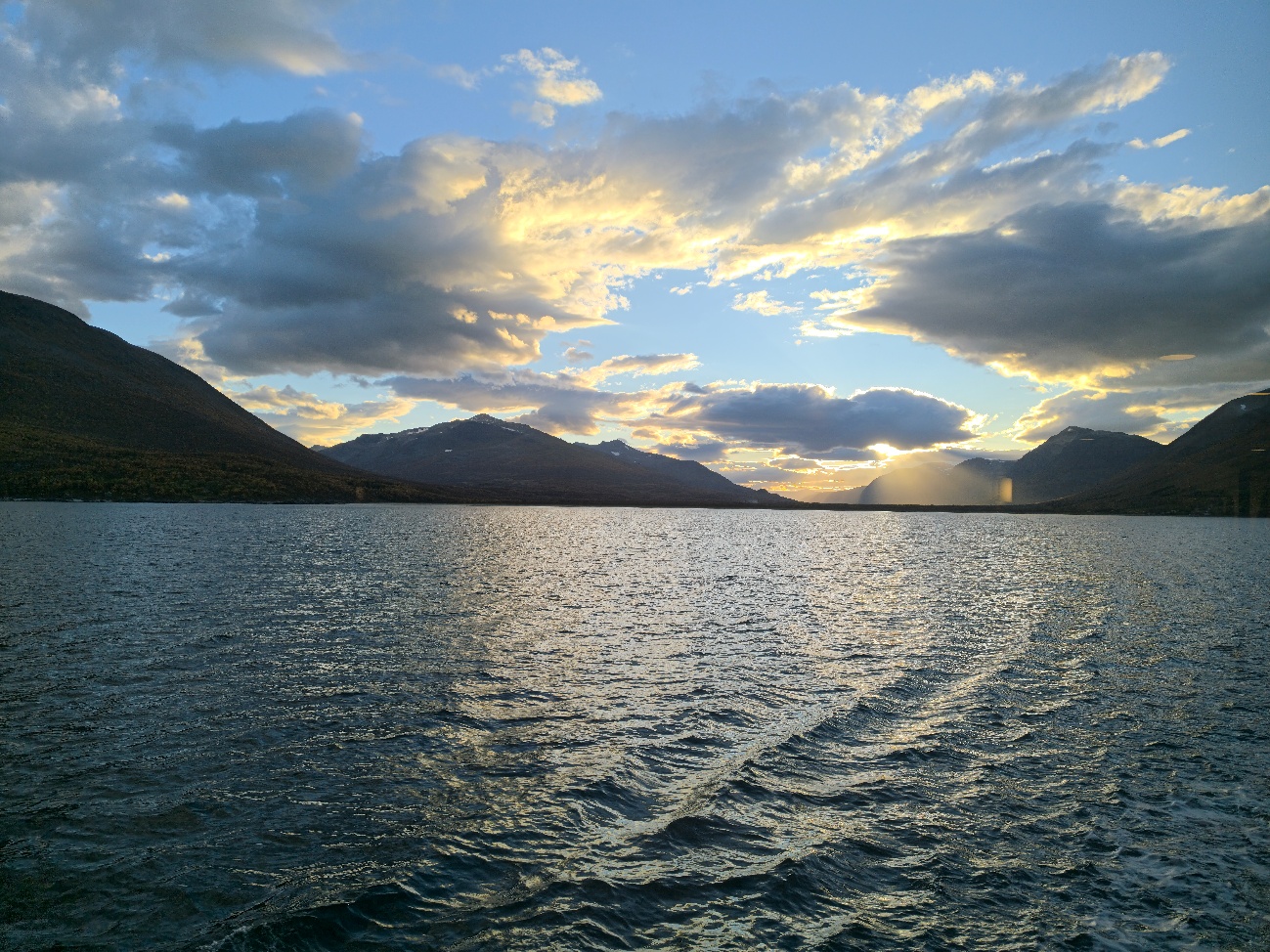
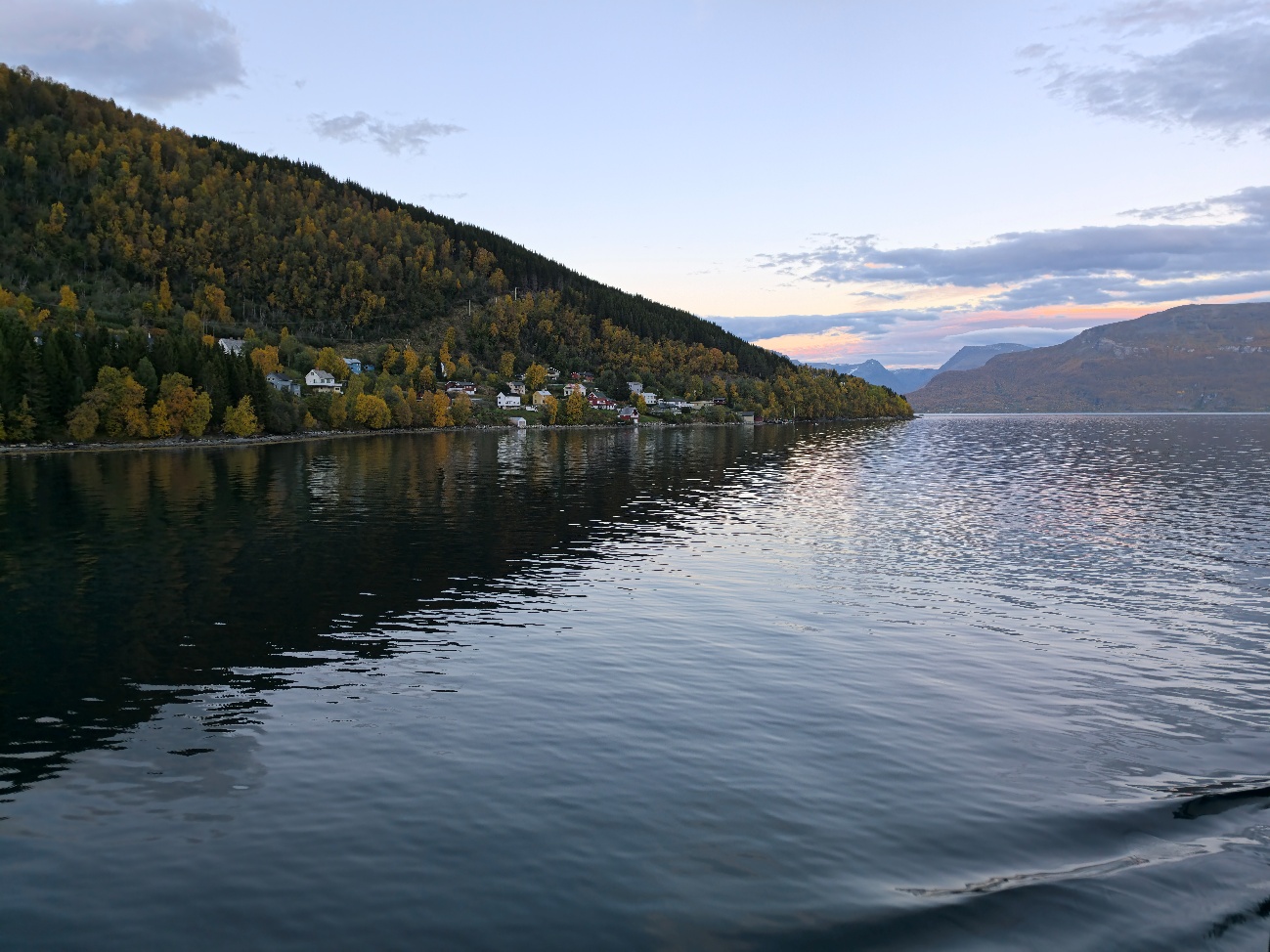
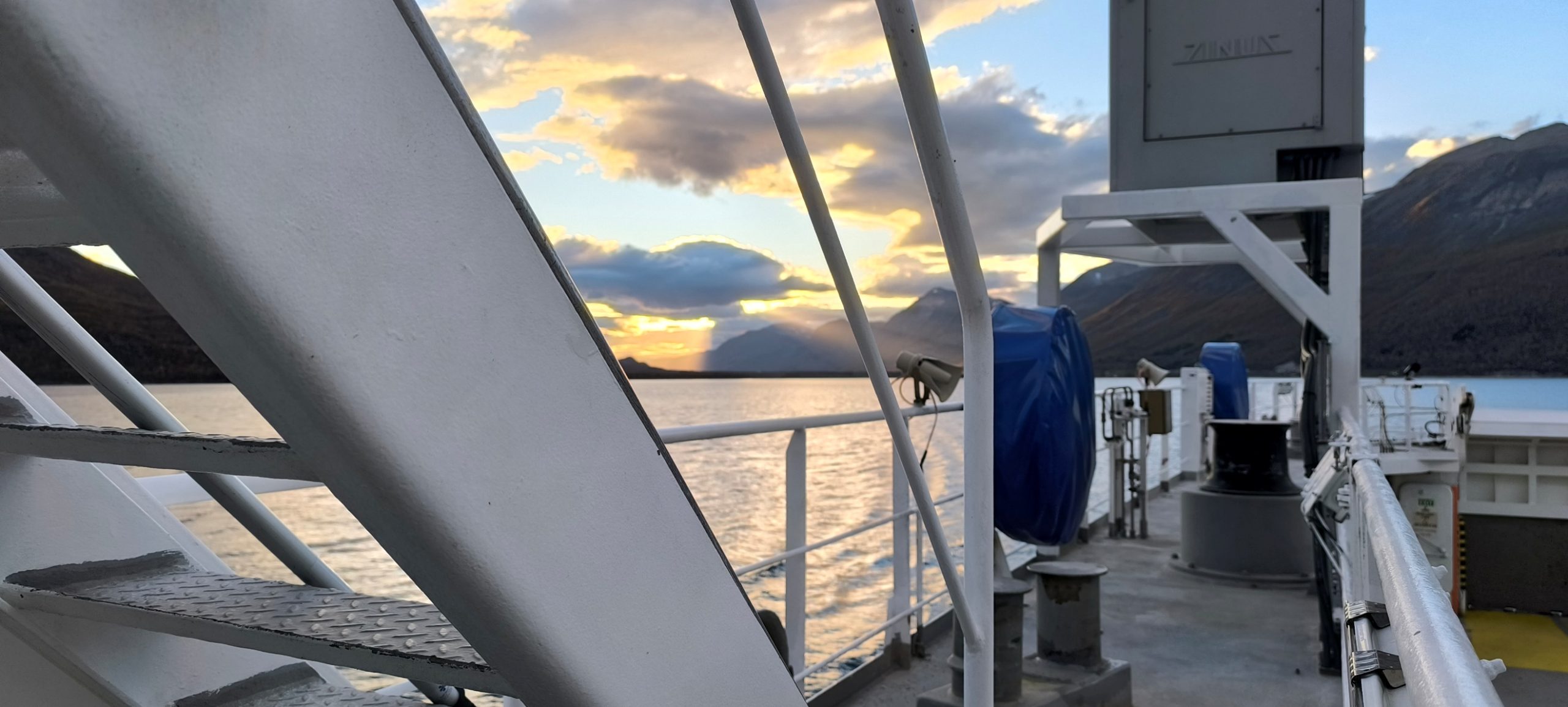
The bus arrives in Alta around 6 and a half hours after leaving Tromsø at 4pm. It includes an additional stop at one or two service stations (as the bus doesn’t have an onboard toilet, and the bus synchronizes with connecting busses), which if I remember correctly, has free hot water.
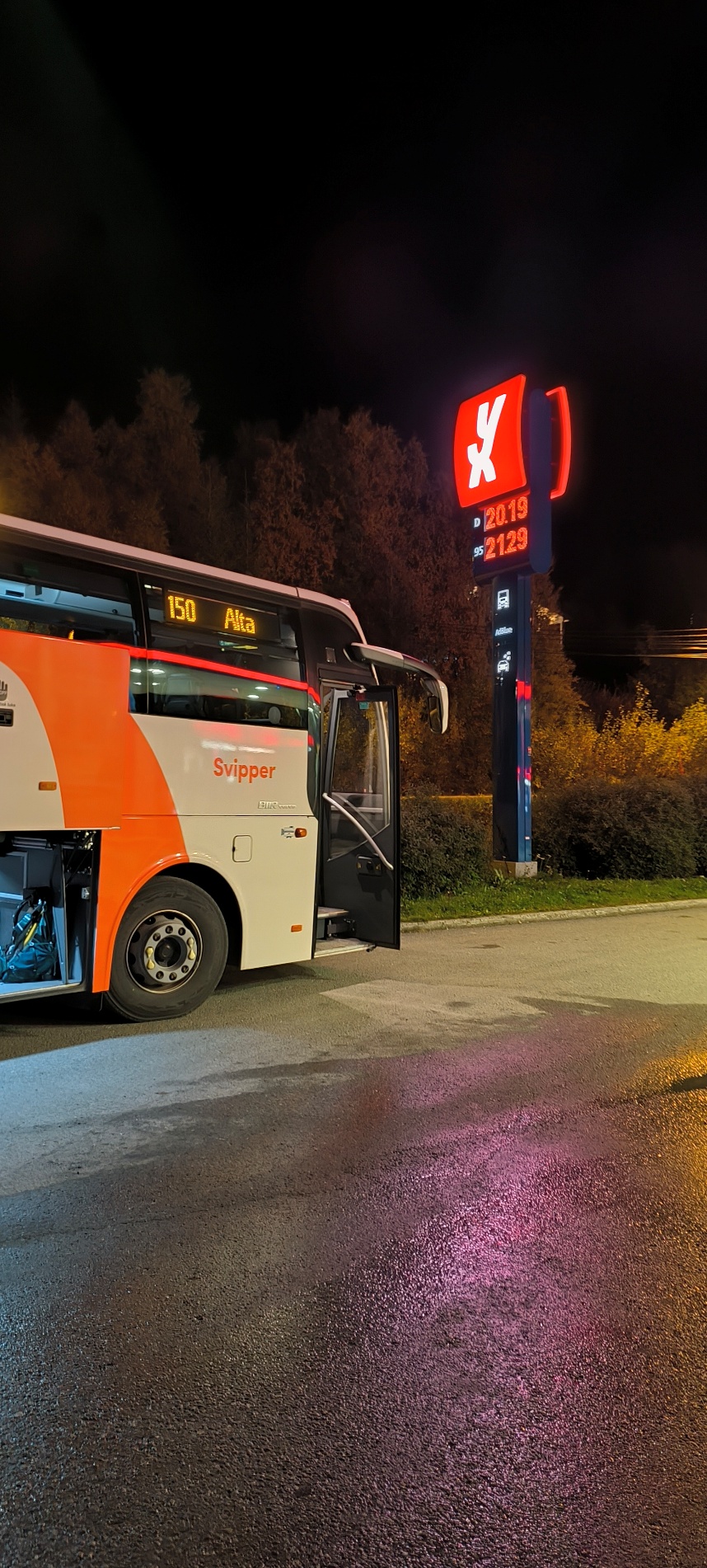
Again, one of the only remaining people on the bus at Alta, I had just enough time to use the toilet in the nearby REMA 1000.
It’s here that it becomes clear why I took a hammock. There are no hostels in Alta, only a couple of overpriced chain hotels – and I did not want to break my streak by using one of those. Yes – I decided I would be OK hammocking well above the Arctic Circle. My equipment (sleeping mat and bag) was suitable to around -5°C, so I was well prepared. In the end it was about +4°C, so not too cold once wrapped up.
Initially, I tried wondering off into the bushes behind an industrial area – but quickly realised that there was nowhere suitable there and the hedges were too dense to push through, at least at night down the steep bank they were on. It was also at this point that the police minivan I had given a small wave to as I stood alone in the REMA 1000 car park looking at my map came up behind me and wanted a quick word.
Of course, it’s not illegal to wild camp in Norway and they have some of the best right to roam rules in the world. So nothing I was doing was illegal, except maybe a little minor bit of trespass, but they weren’t worried about that. They were more worried about what I was doing, clearly young and alone in this part of the world. Once I handed them my documents (interestingly, they wanted my British passport after I had already given them my Croatian one, which I was using to travel). They were also interested in where I lived, despite it saying on my passport (my normal answer of London wasn’t precise enough, and nobody knows Slough, so my next go to is Windsor, the home of the Queen, which was apparently quite funny). But after making a note that they had seen me, they offered me a little advice. Apparently, this area had some problems with drugs usage and needles, so it might be better to walk for around 20 minutes to somewhere else they pointed to on a map. It turns out this second location was a place I had scouted out in my research on street view. Basically, it was out the back of a car park next to the Alta Kultursal, a small university building, and a hospital and rehabilitation centre. So slightly dodgy, which is why I had looked for somewhere else.
Anyway, after around 15 minutes, they let me go and wished me good luck. Of course, I saw them again on my walk, and they offered a wave this time. I found my sleeping place, setup my hammock and slept.
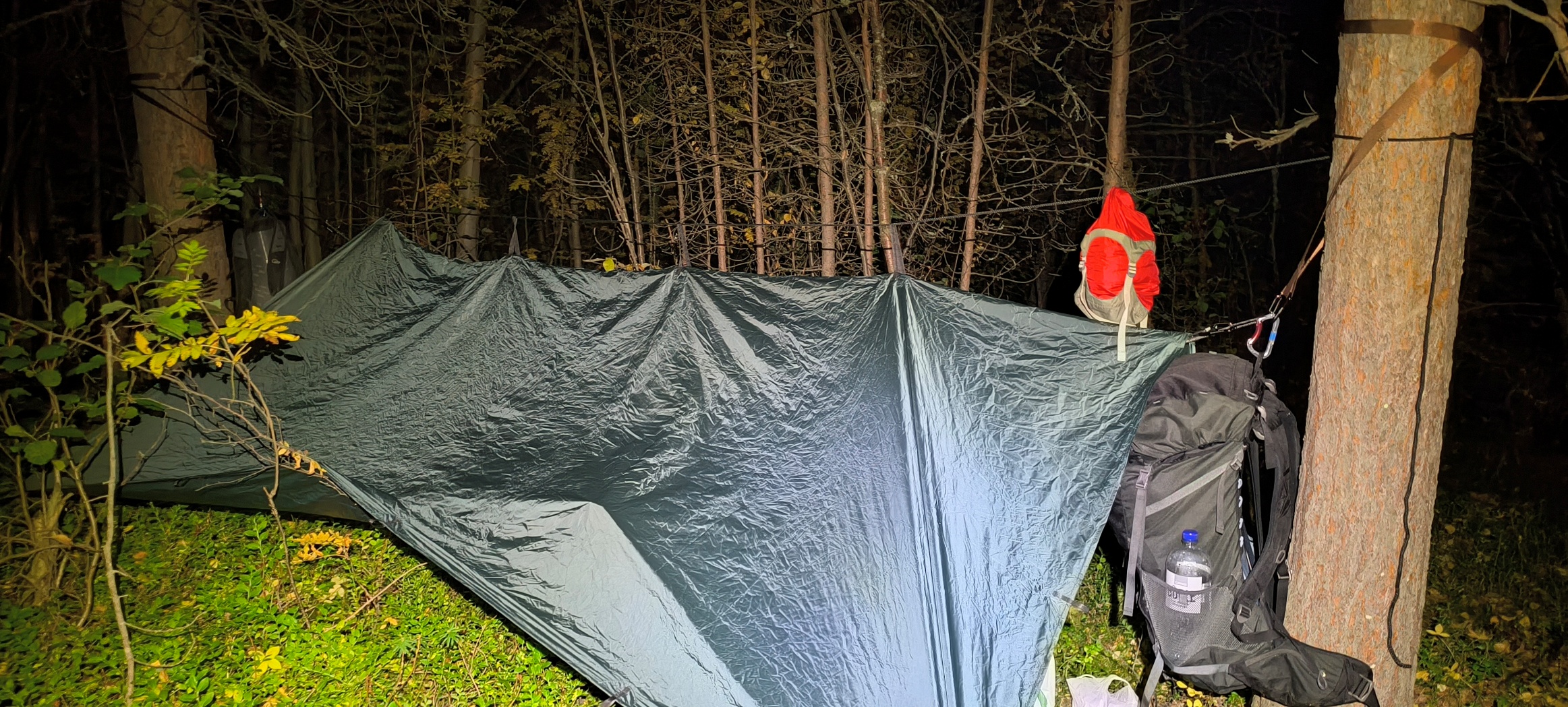
The sleep wasn’t so good, but it was adequate.
The church in Alta, the Cathedral of The Northern Lights, is a rather unique design, built from concrete and titanium. As it is a tourist destination for seeing the lights, travelling north again becomes even more rare, especially by bus. It’s the first place I went in the morning, to wake up away from the car park that had filled up while I slept.
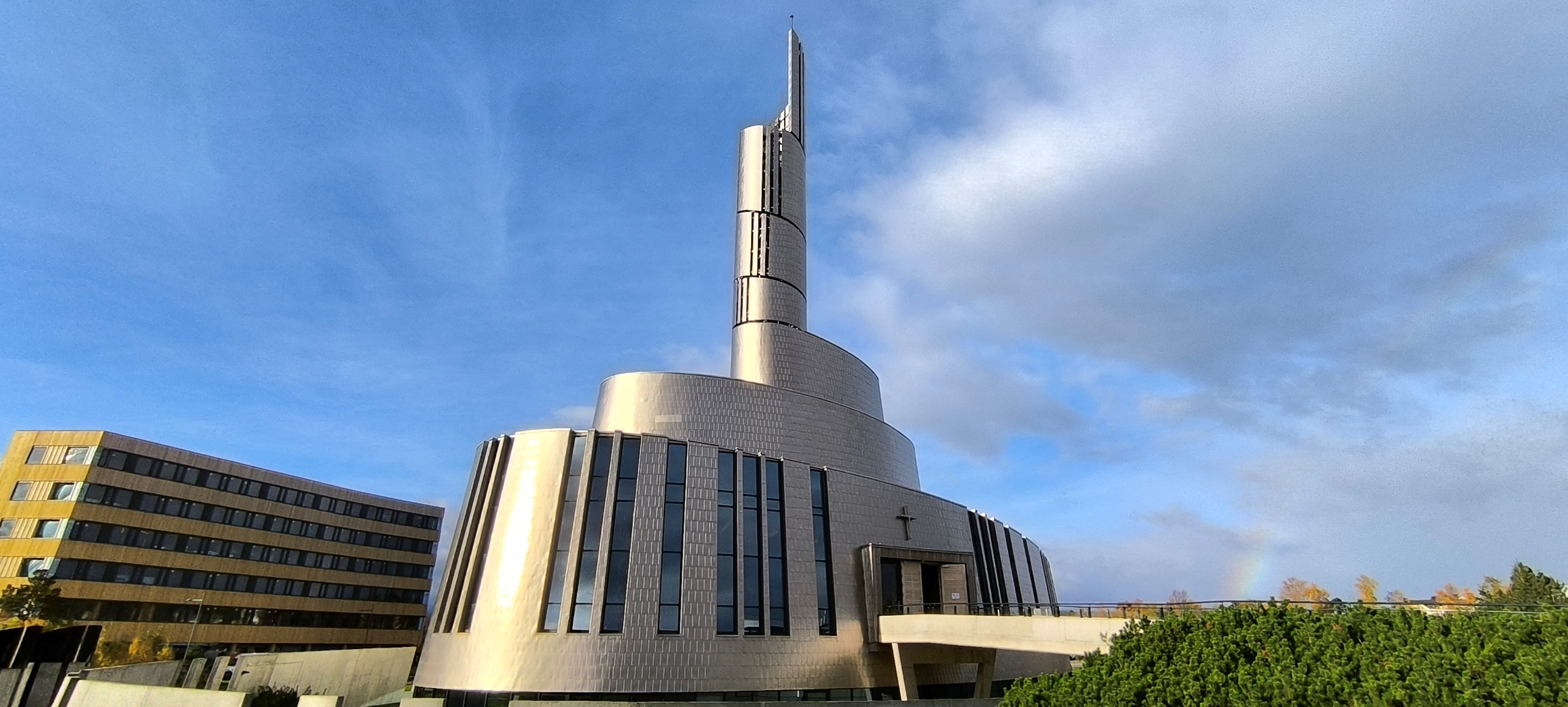
Alta is considered (by its Wikipedia page at least) the most northern city in the world, of course by some definition which suits it. Honningsvåg also claims this. From here, you could follow one road south 5,120km all the way through to Gela in Sicily: the E45 is the longest North-South E-road. Or, you can continue heading north, switching from the Svipper/Troms bus network to the Snelandia/Finnmark bus network.
Further north than Lapland, and extending further east than St Petersburg and Istanbul, this is the North-east extreme of Europe. It has a population density of 1.55/km2, less than Iceland and supposedly less than Siberia.
The bus 110 had left just before noon, carrying me, a couple locals, and a group of (I’m assuming) army conscripts around my age or a little younger, who would change bus to a place I would travel past later (I think?).
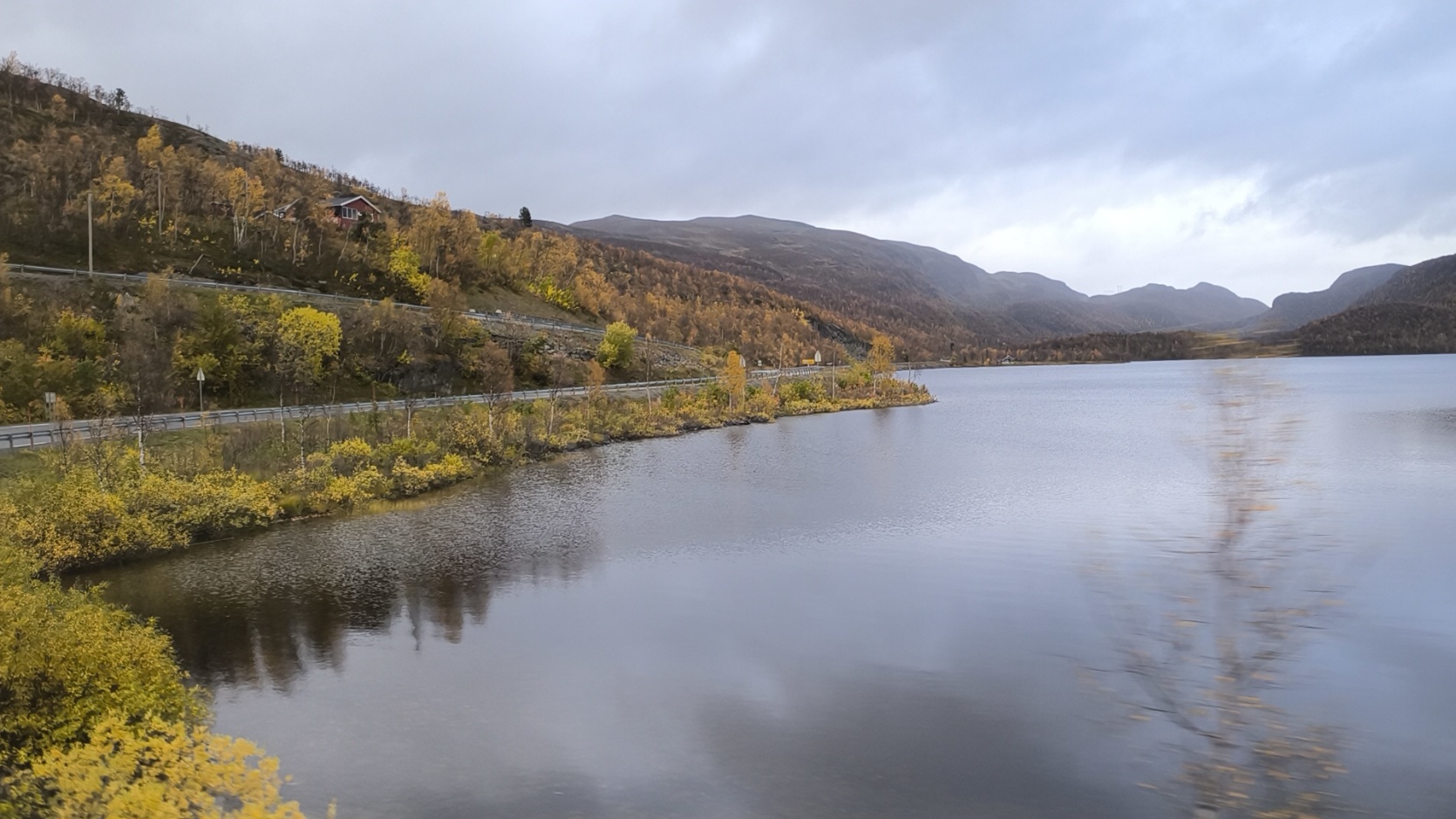
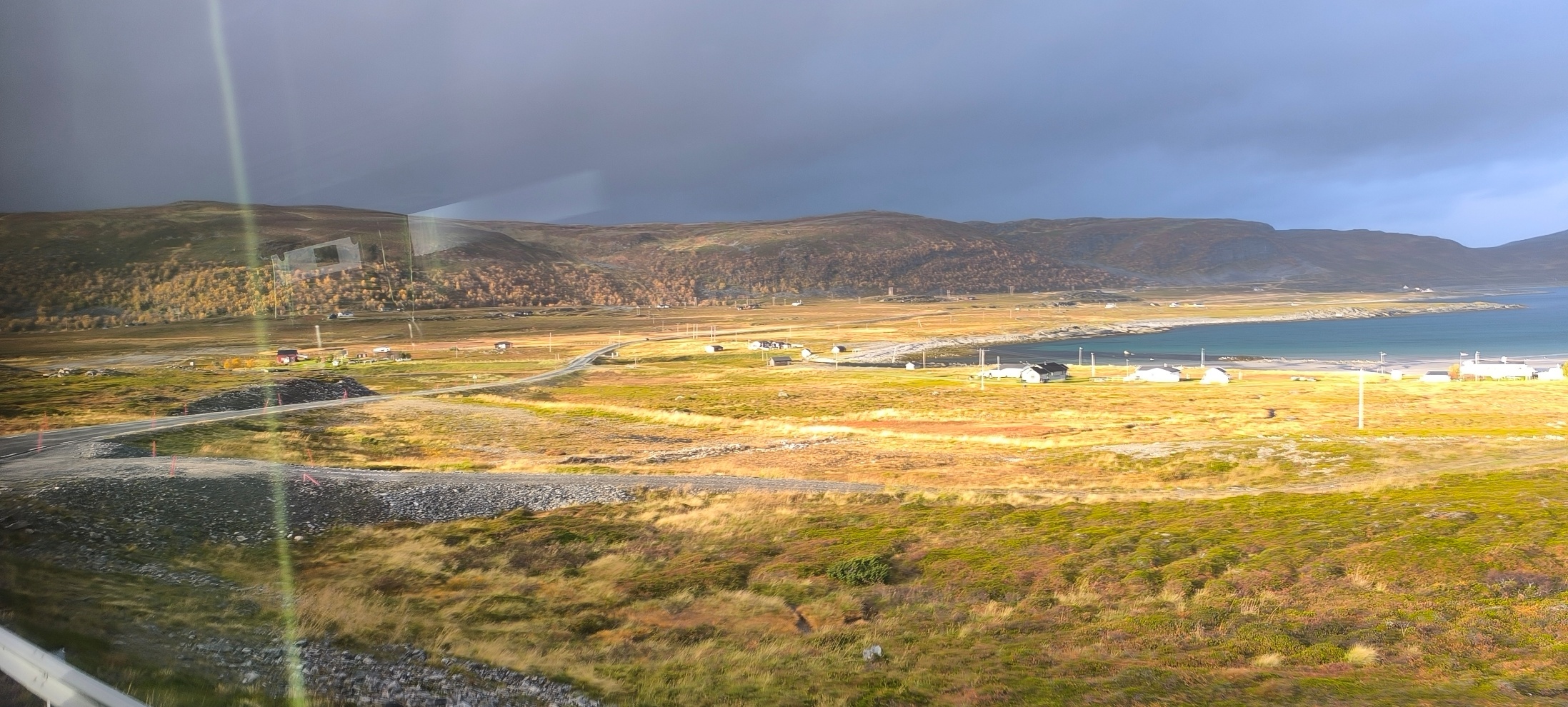
I can’t be sure, but I think this is possibly the most northern public bus route in the world. After traversing some unique landscapes, rising above the northern tree line where most plants become small grasses and the occasional shrub, it just pops above the 71st parallel north. The sole entrance to the island Honningsvåg lies on by land is by the 6,875m long Nordkapptunnelen. It carries, the E65 road, as well as the EuroVelo cycle routes 1, 7, and 11, and the European long distance hiking trail 1, down to 212 metres below sea level on a 9% maximum gradient. There’s another few tunnels through mountains, but when you finally emerge into the light of day on the other side, you’ve arrived.
There are not many other people on the bus at this point – I was one of 3 including the driver. Most tourists arrive by cruise, or by car, campervan, or motorbike. Very few arrive by bus. (Even fewer arrive by foot or bike, but we don’t talk about those.) Indeed, I saw and talked to nobody else who hadn’t come by one of those methods in the whole time I was there.
Honningsvåg can be considered the ‘base camp’ for Nordkapp. It’s tucked away on an island – which, yes, does mean that technically the most northern point of the main landmass of Europe is slightly further South-East, but you’re almost at the most northern point of the ‘main parts’ of Europe, and the most northern point accessible by road. It’s a strange feeling. There’s more isolated places on the planet for sure – but the isolation is doubled when you’re solo travelling up here. It’s not a ‘hidden gem’ – but those are rarely actually hidden and there’s no achievement getting to those places.
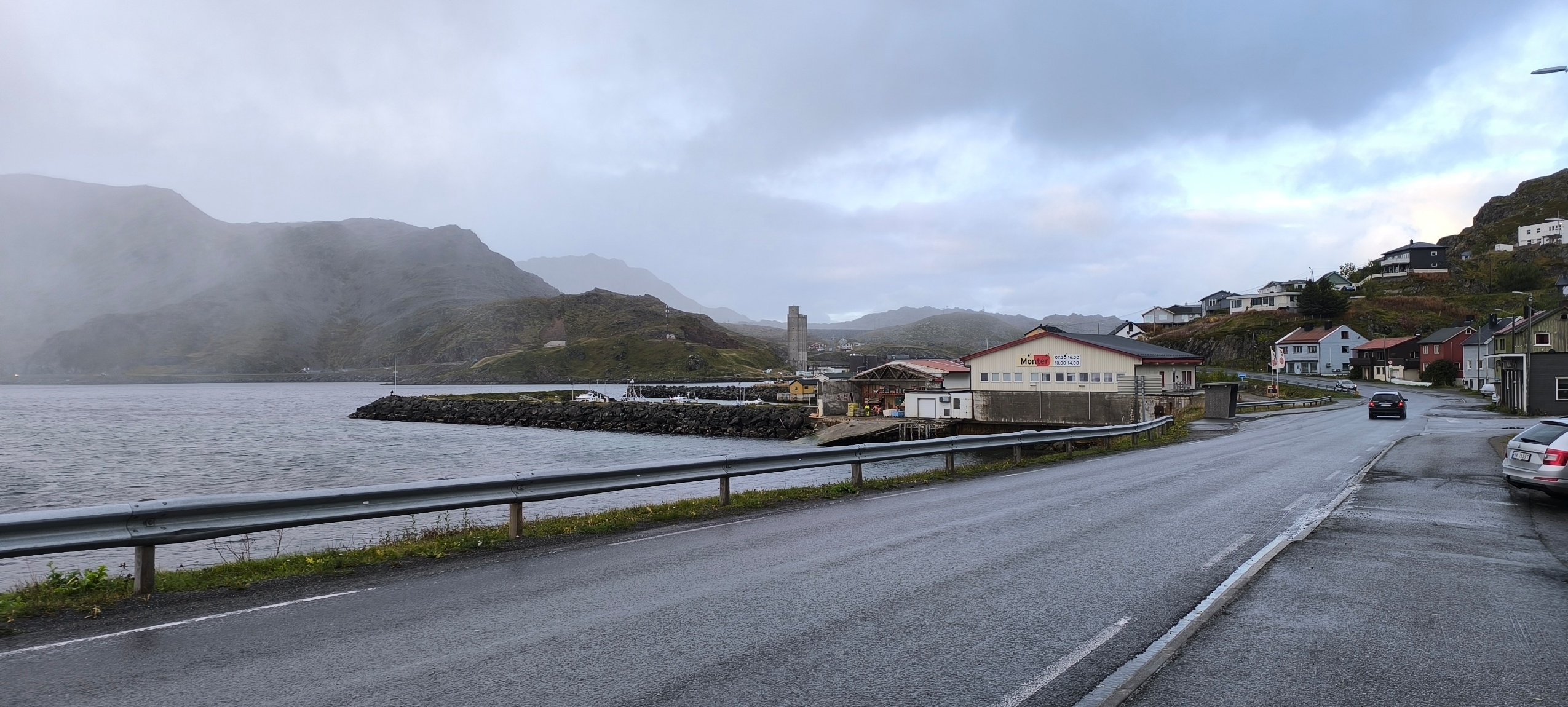
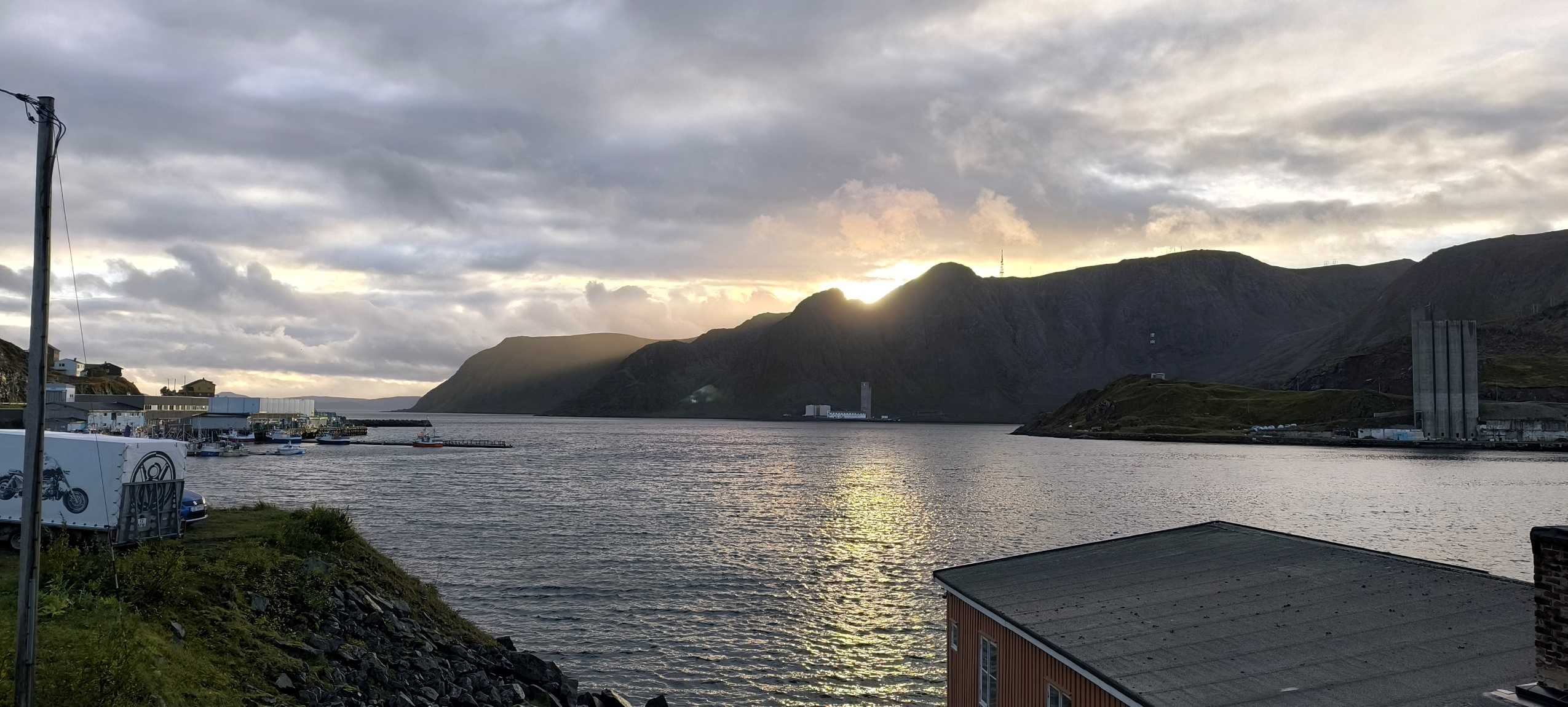
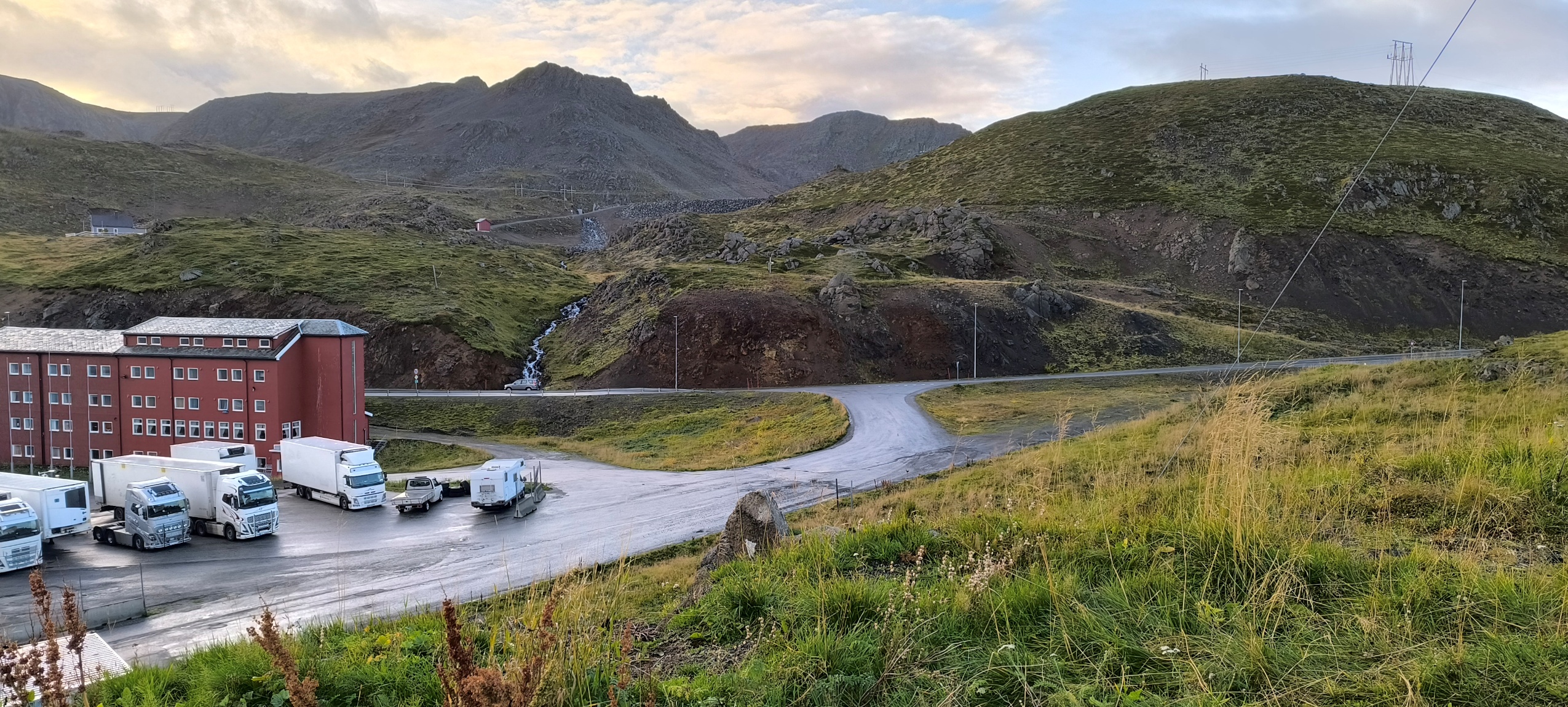
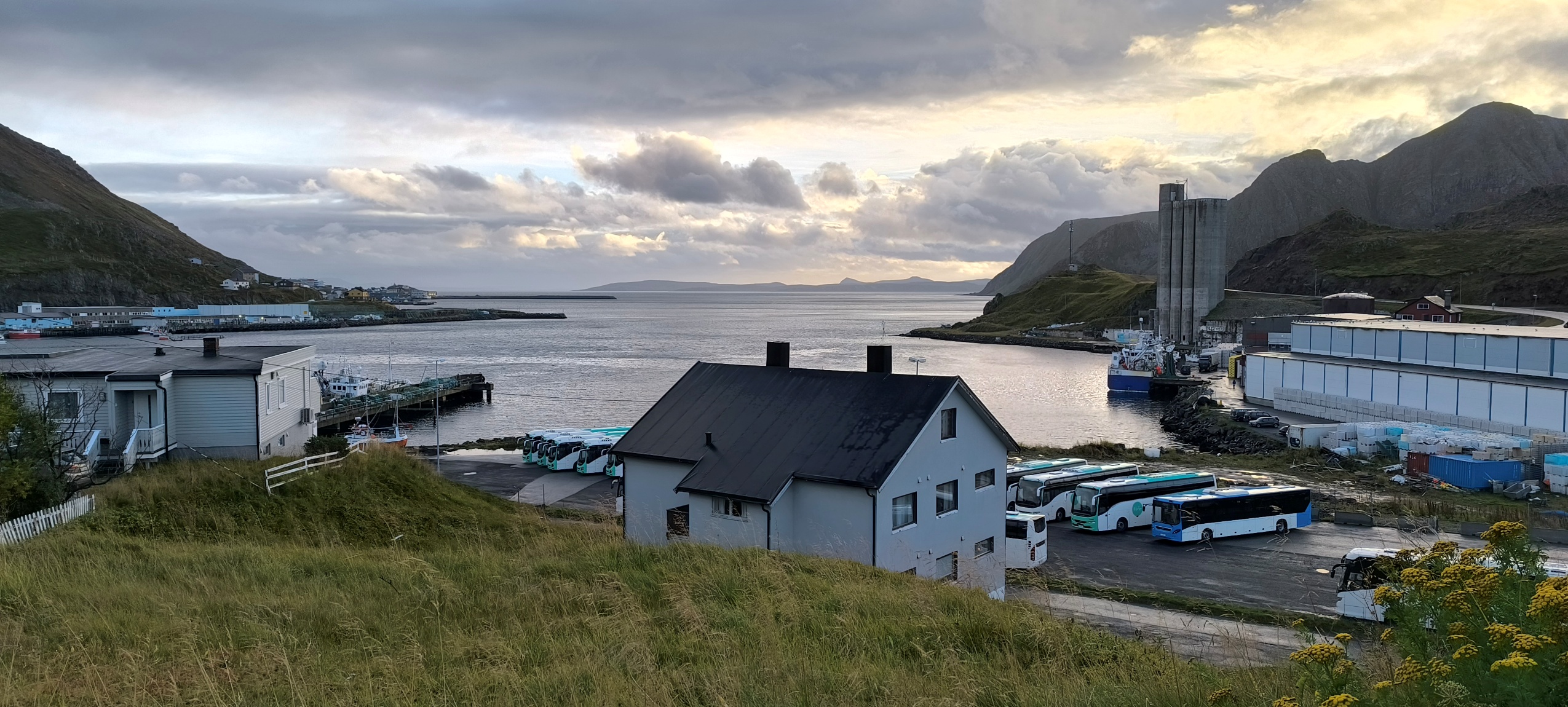
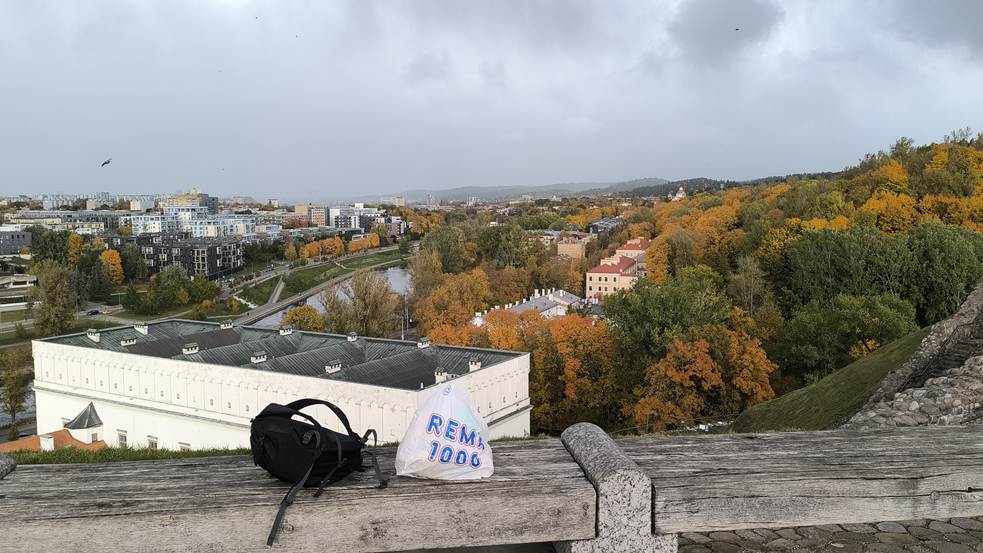
I have no source, but I think the REMA 1000 in the north part of Honningsvåg, known as Storbukt (where my accommodation was), is the most Northern supermarket in the world outside of Russia and Svalbard. So, as a little souvenir, I carried the plastic bag I bought there all the way home. The 71st parallel north passes right through it, only a few meters north of my accommodation.
- Tip: REMA 1000 is by far the most common supermarket in Norway, and it doesn’t have a bakery section, so if you’ve come from the land of Lidl bakeries, remember not to rely on it for a quick breakfast. I starved myself a fair few mornings.
The tourist centre at this time of year closes at 2pm, before the bus from Alta arrives, so I had to hope that my plans for the next day would work out. So, I walked along back to my accommodation from the centre where the bus finishes its route. After chilling for a little while, I walked back along to the centre as the night was falling.
And, at last, I had seen some northern lights. Hunting tour or private car not needed.
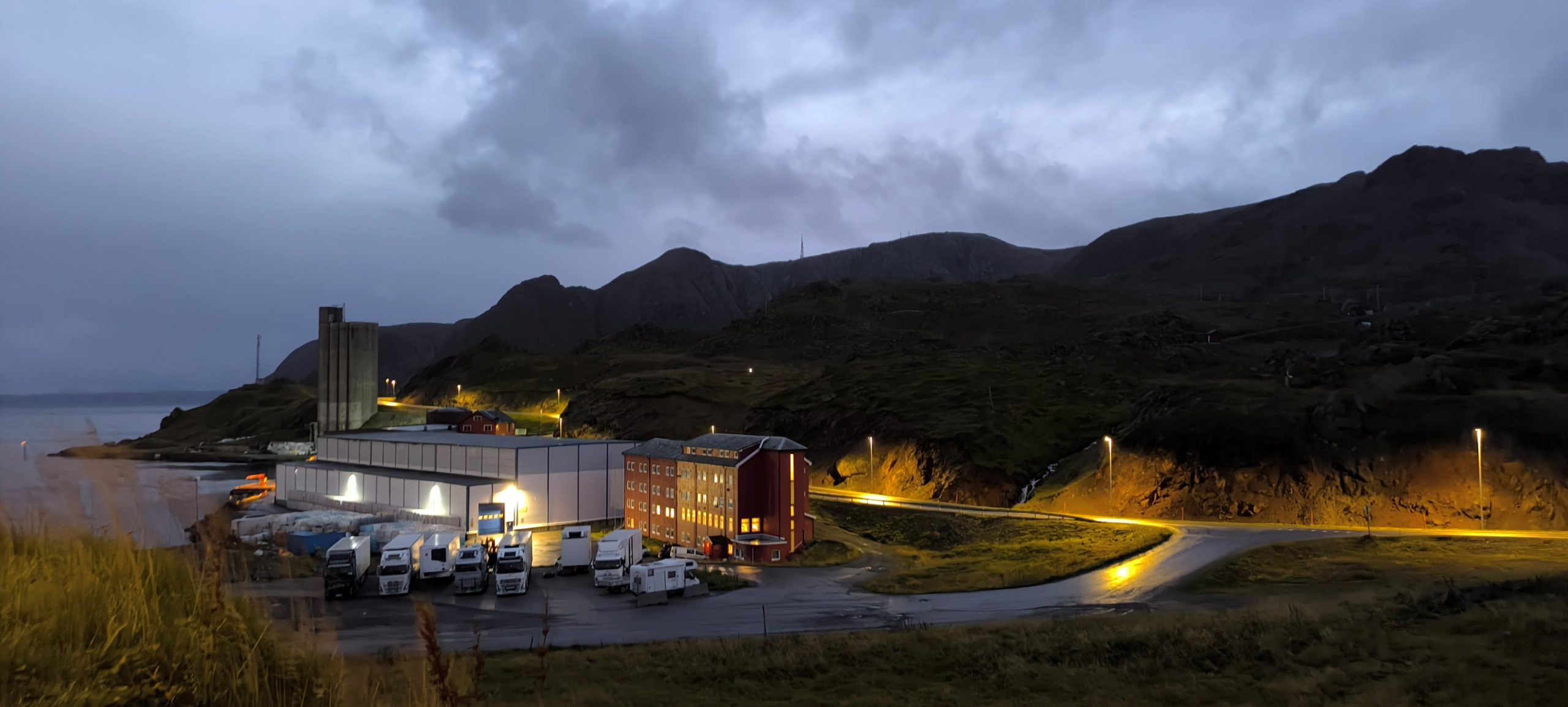
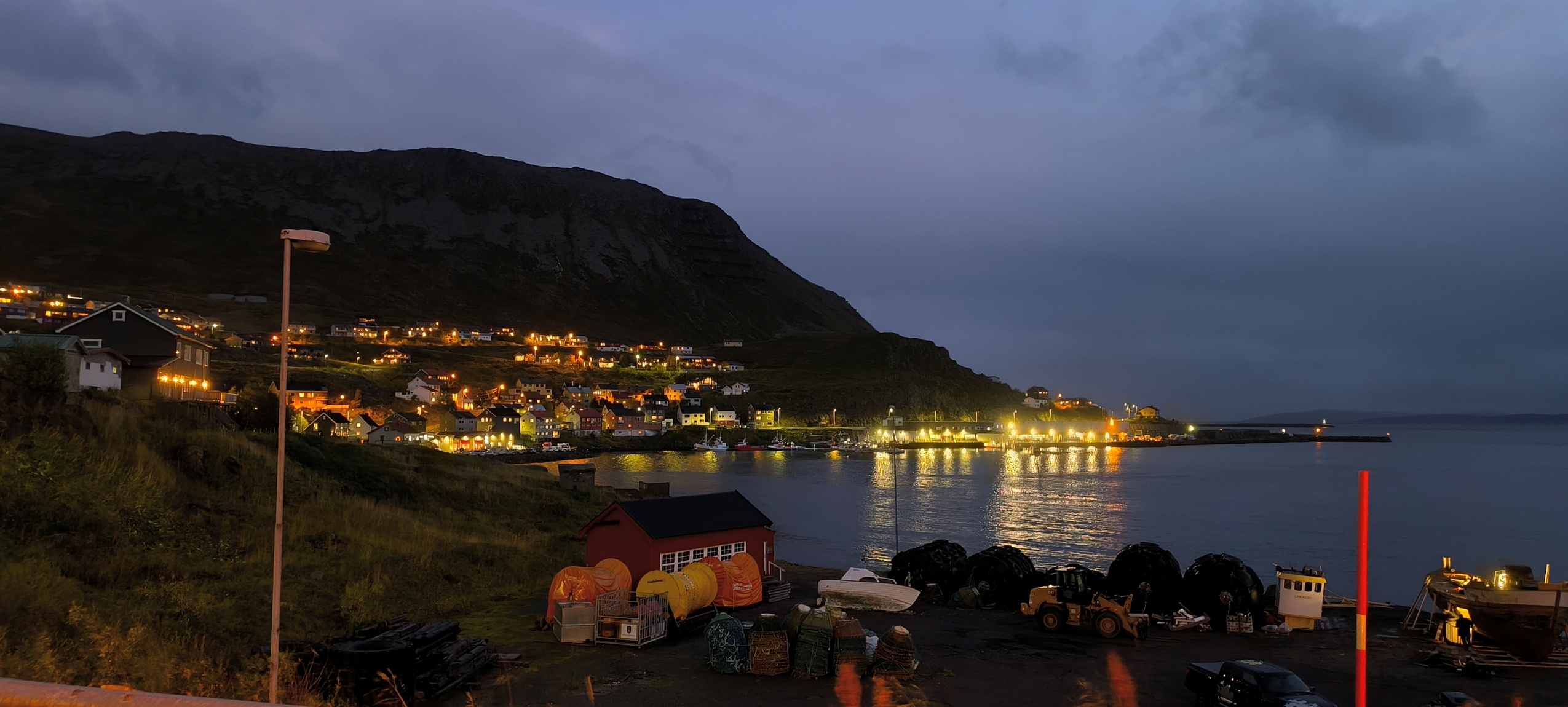
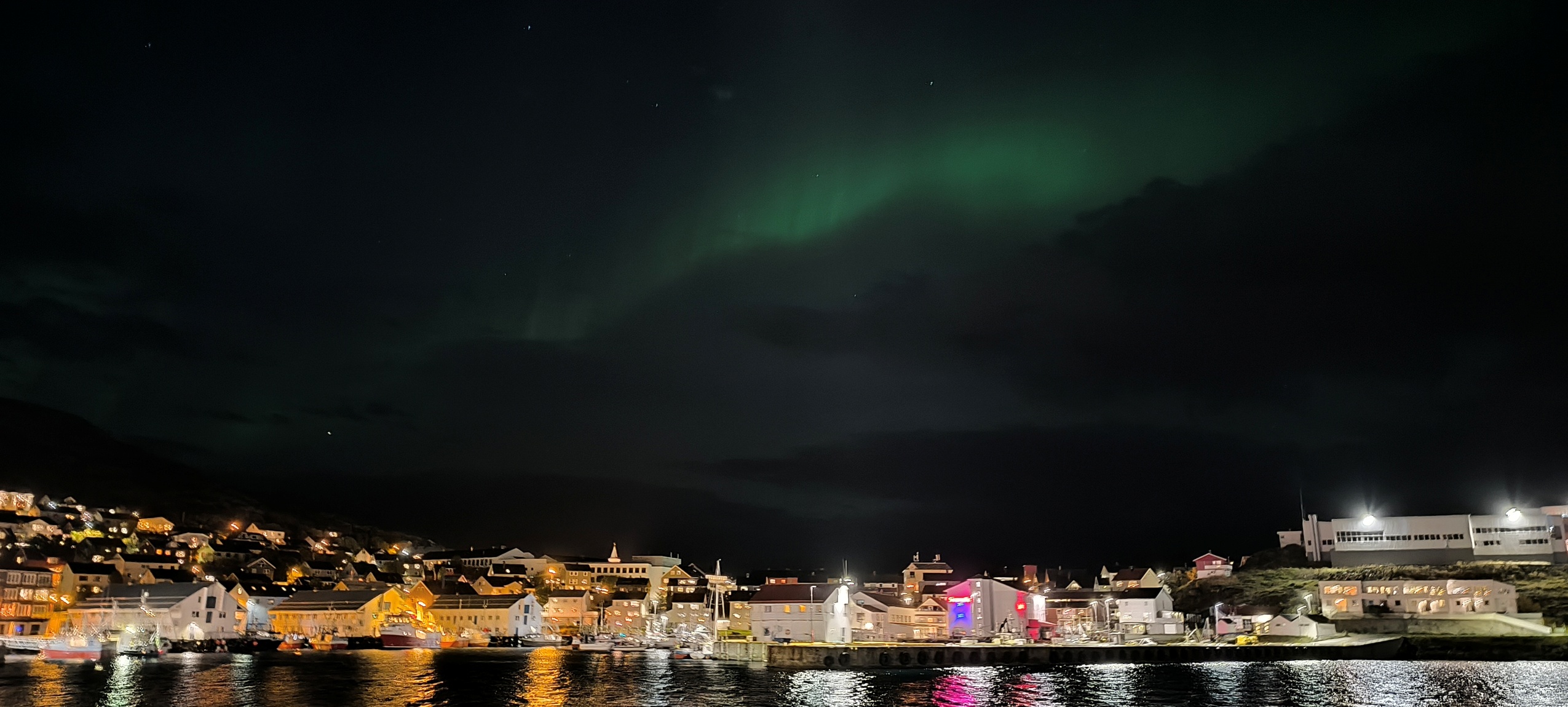
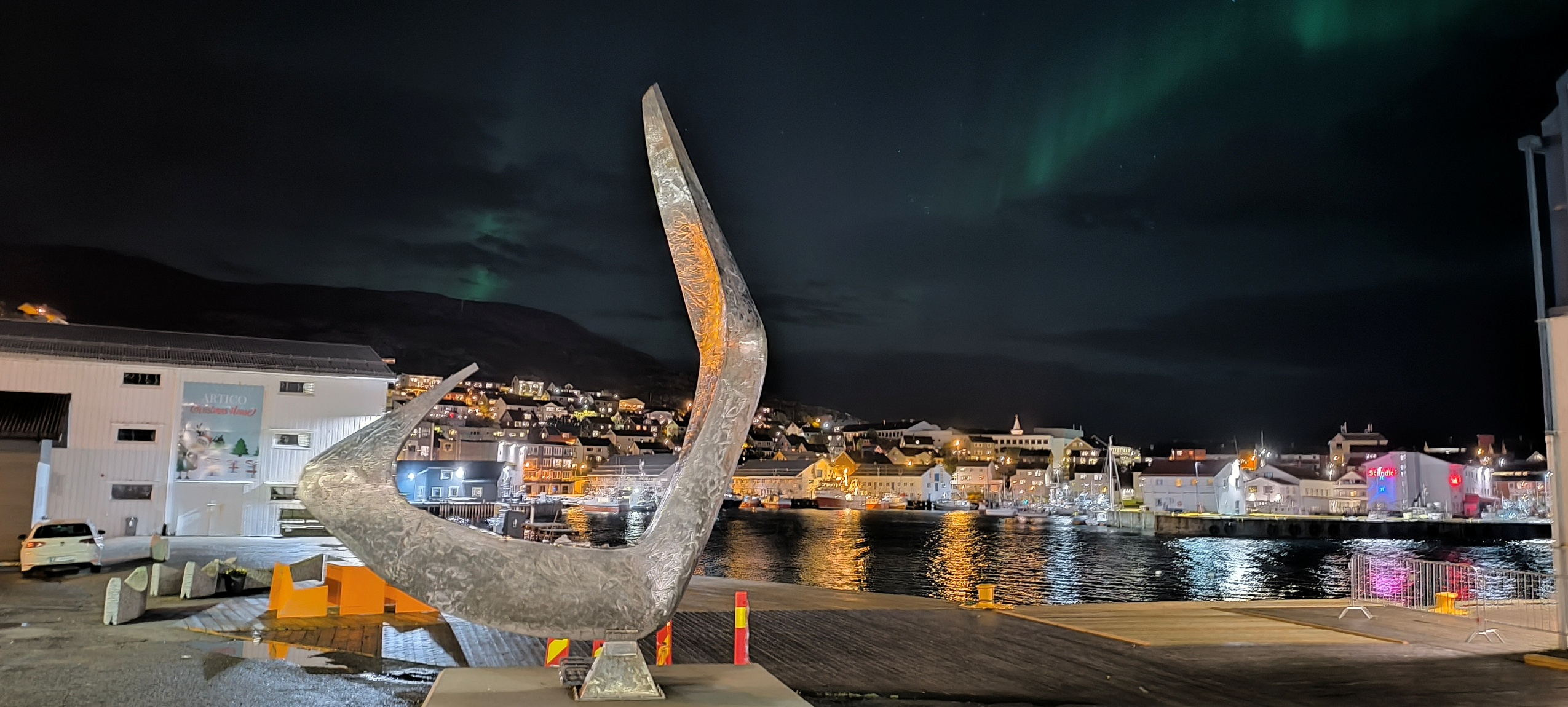
The next day, it was time to finally get to the tip. I put on the thermal layers I had bought, put on my waterproof jacket and trousers over everything, and packed as light as possible.
It’s unfortunately not possible to take any of busses which shuttle the cruise passengers to and from Nordkapp (I asked a couple), and the last local busses to Nordkapp were cancelled a few years back from what I , so the only remaining options (at least at this time of year) re by hitchhiking/car, or a single operator who operate a minibus from the tourist centre, stay at Nordkapp for an hour (which is probably enough, although it does feel like after all this time spent getting here, you should stick here more than an hour), then come back, once a day. At least on the day I was there, a minibus was more than sufficient, with only myself and 2 other people present on the bus – one of whom was a cruise ship passenger, and the other, I’m not sure.
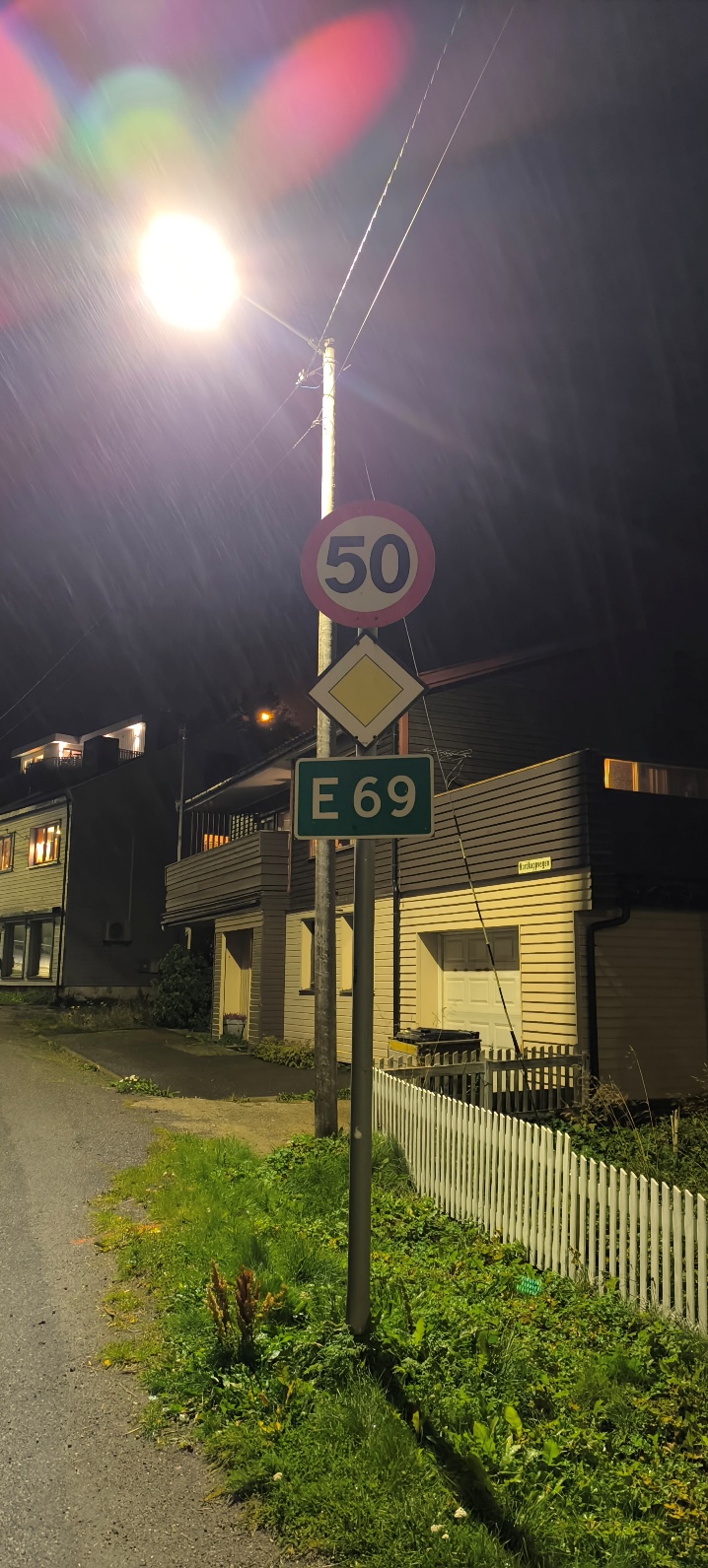
At this time of year (actually starting the day I arrived), convoy preparations are made for the imminent arrival of snow on the last stretch of the E69 (the northernmost road in the world with connections to a major international road network) where it takes a left, leaving the Fv171 to serve Skarsvåg (the northernmost fishing village). When it begins snowing, all the cars and busses go in a convoy to and from Nordkapp a couple of times a day (once around midday, and once later at night). We didn’t have a convoy as the snow hadn’t arrived yet, but we did pass the truck putting out the neon-orange sticks that mark the edge of the paved road, in preparation for the snow.
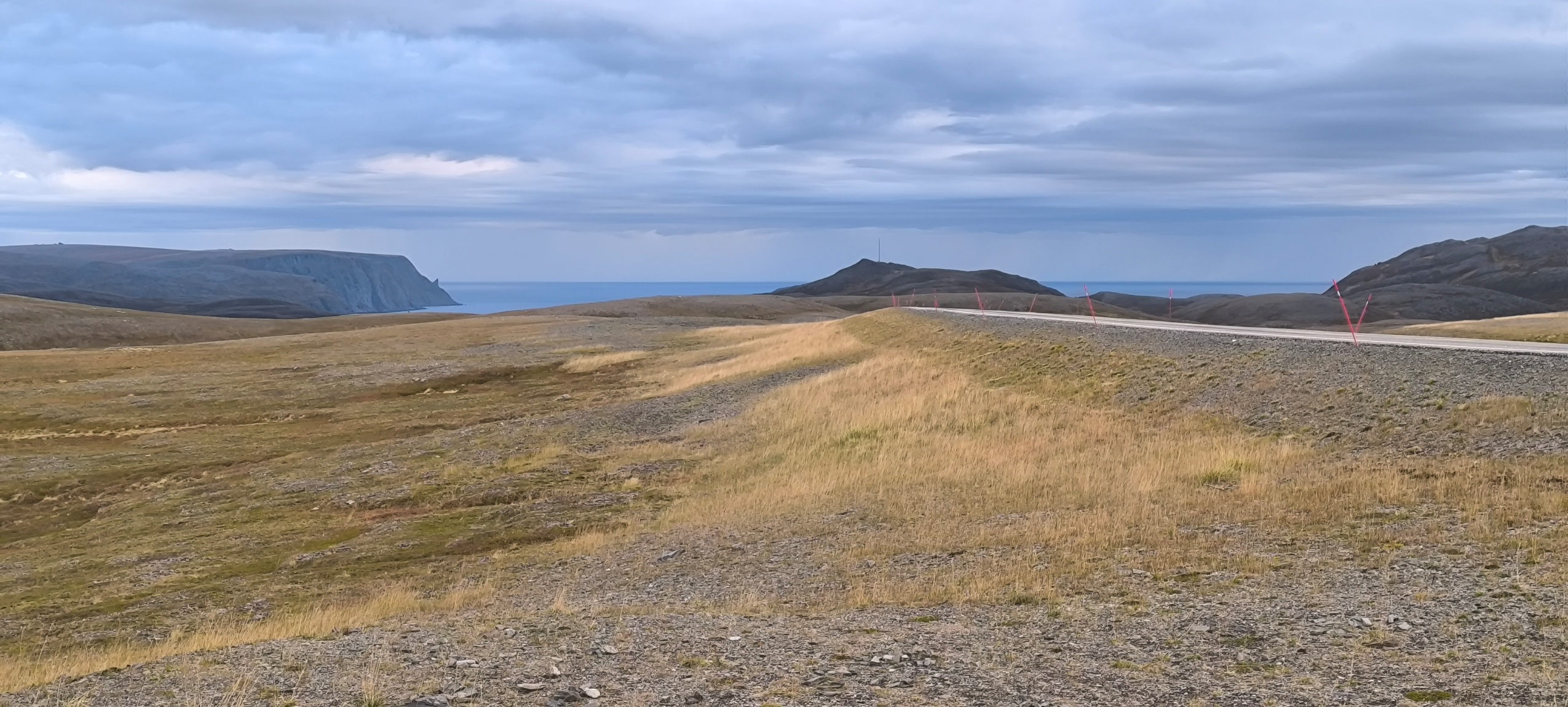
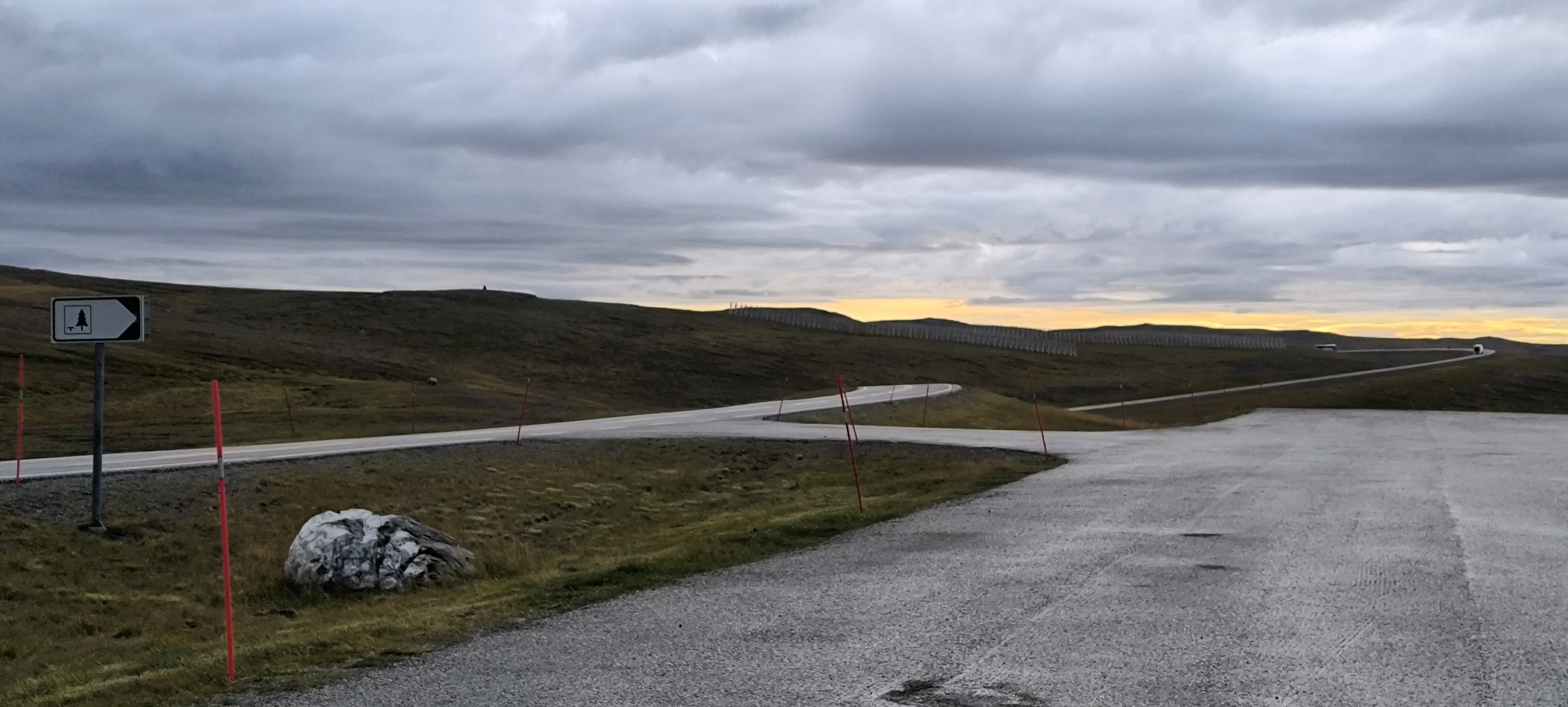
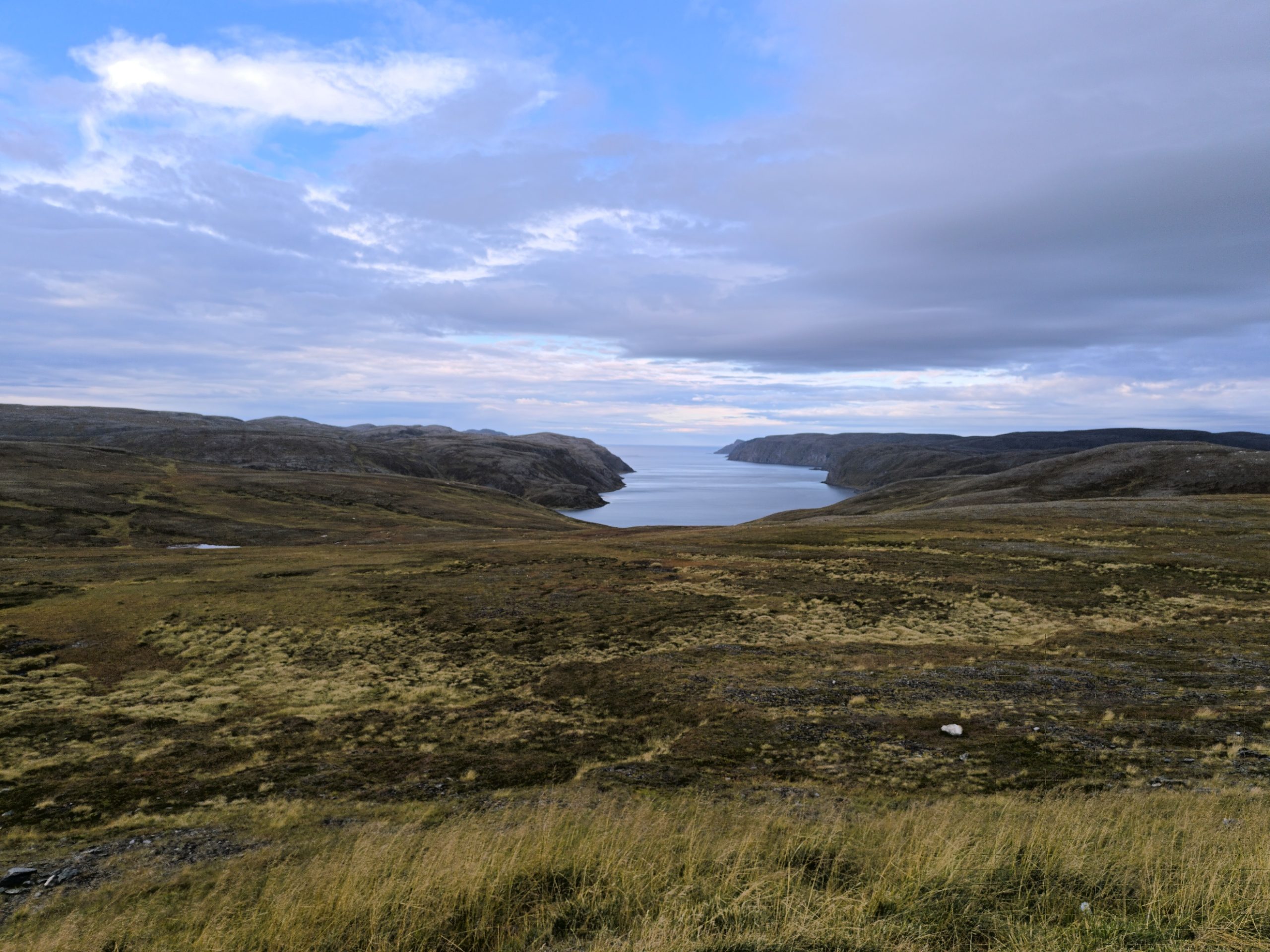
15 days after I had left home, I had reached Nordkapp.
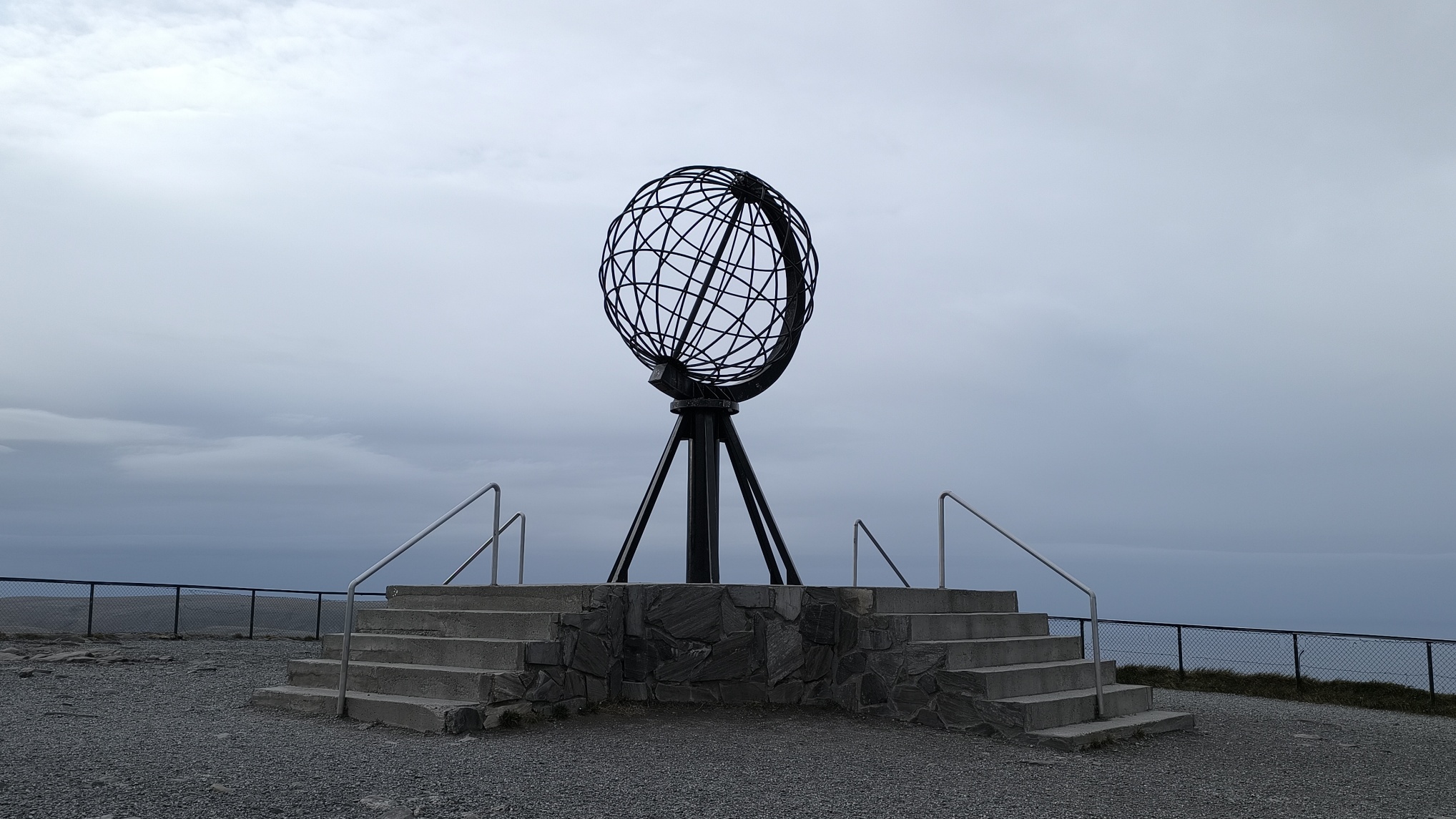
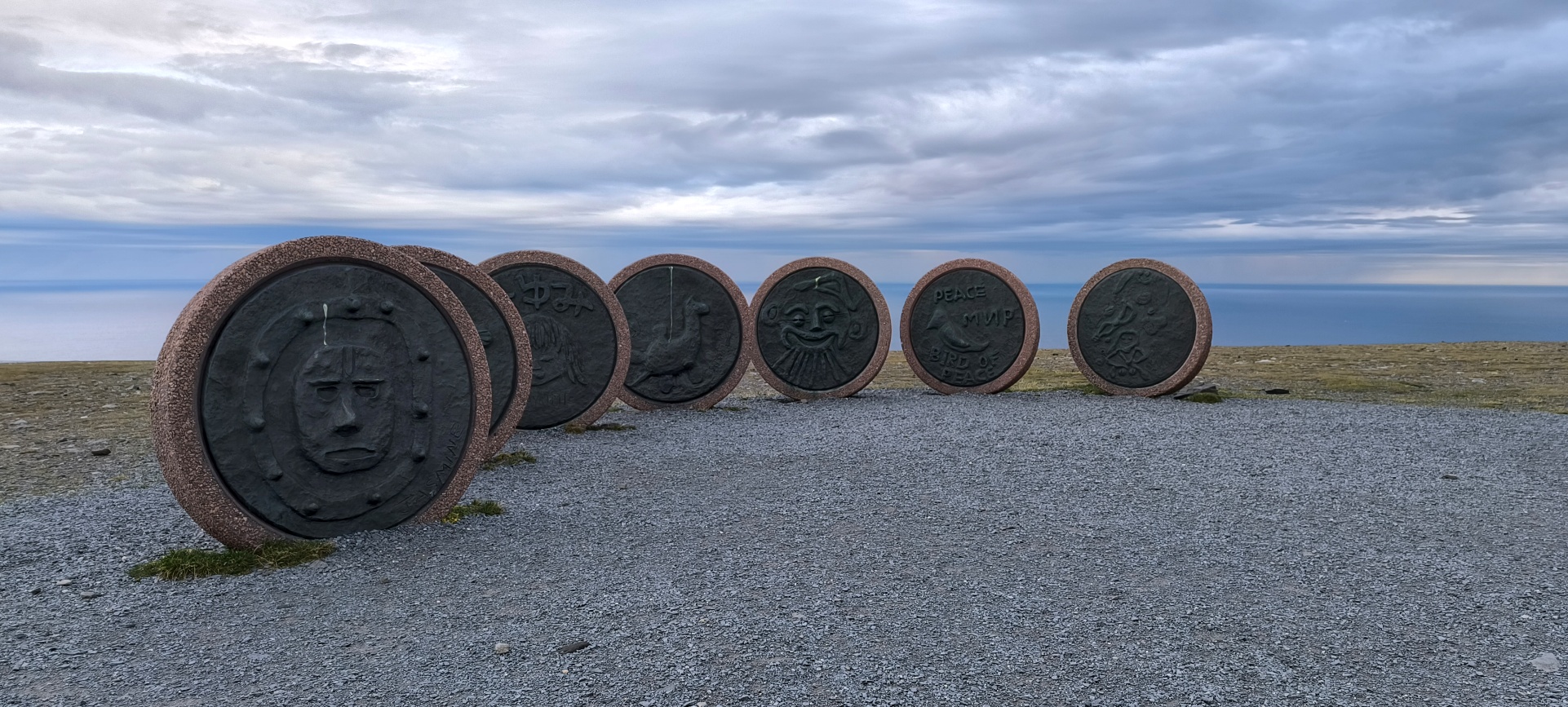
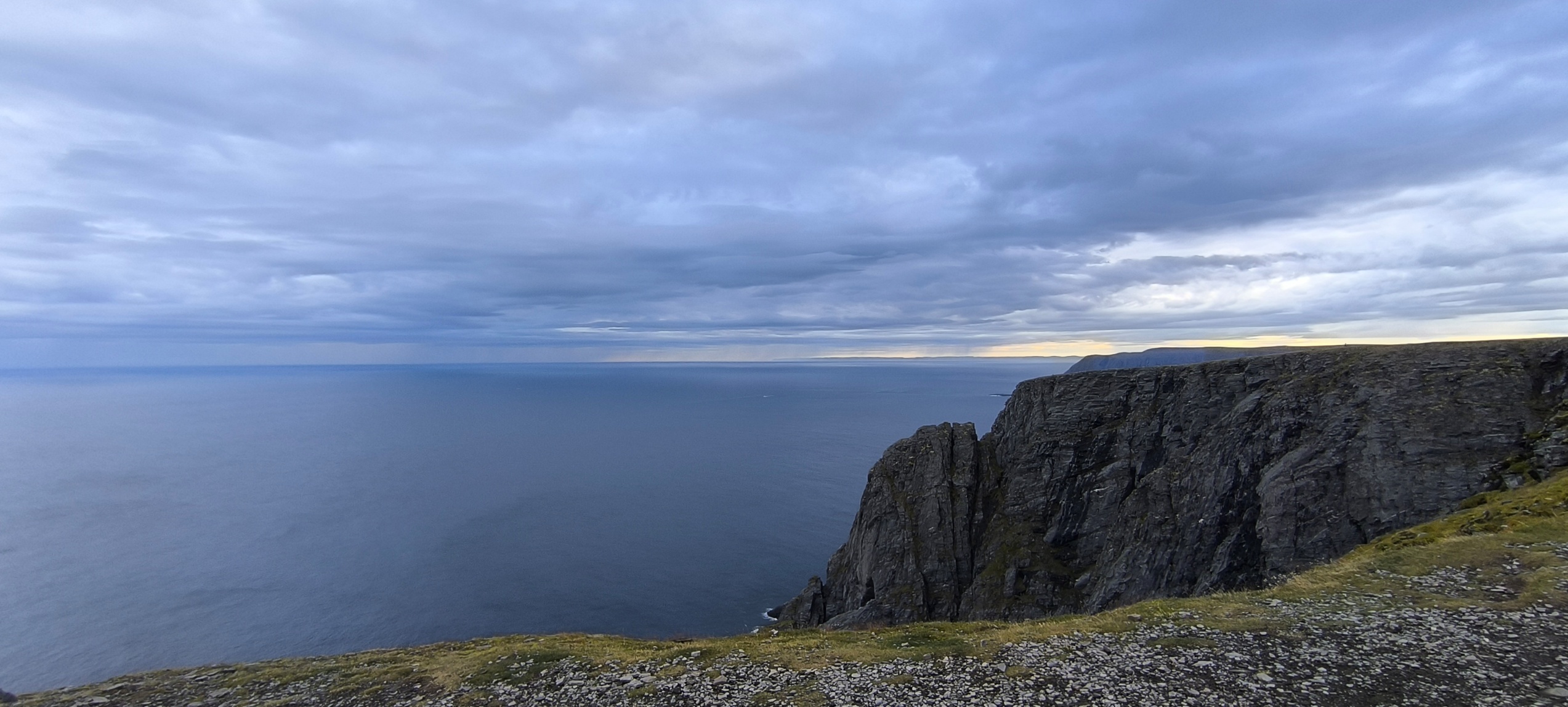
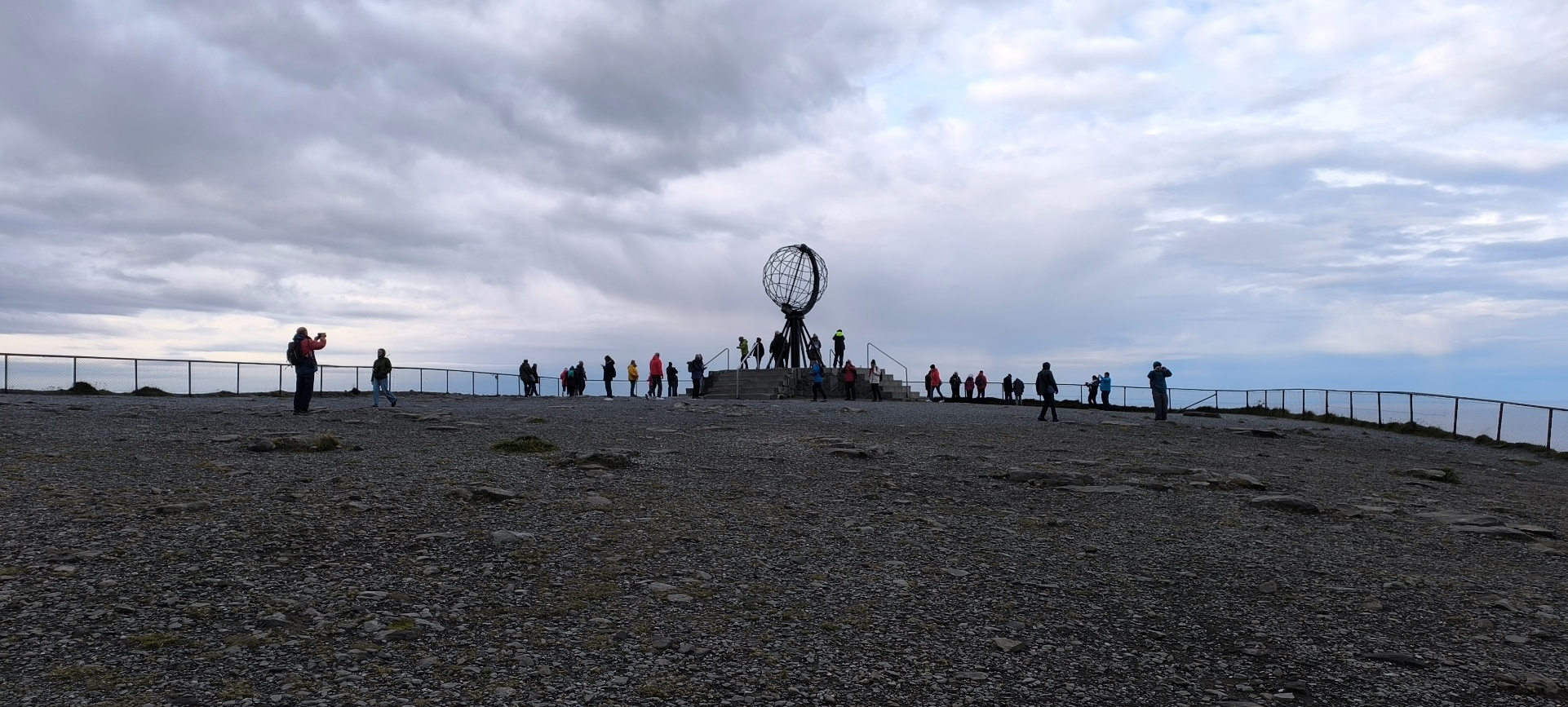
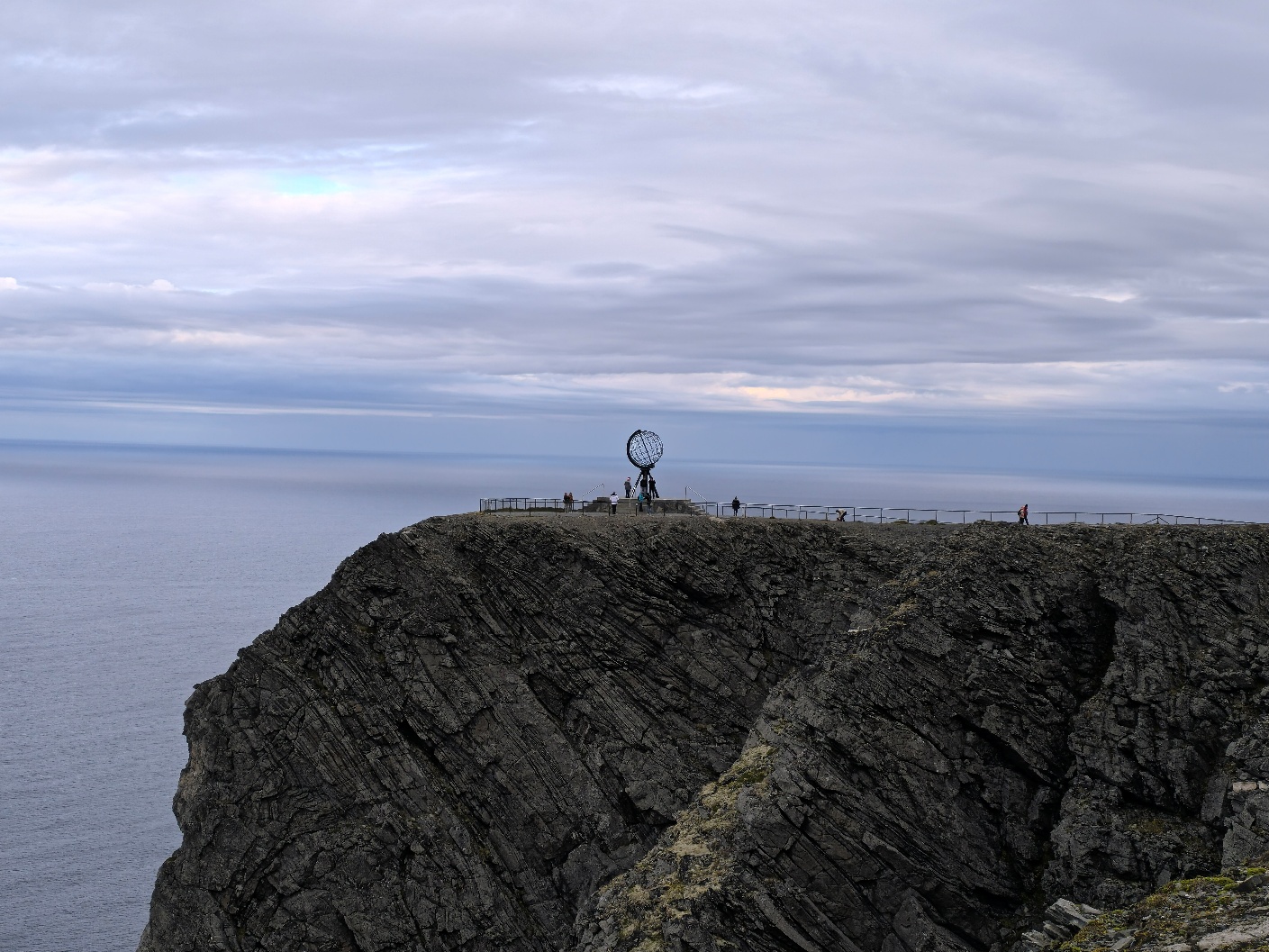
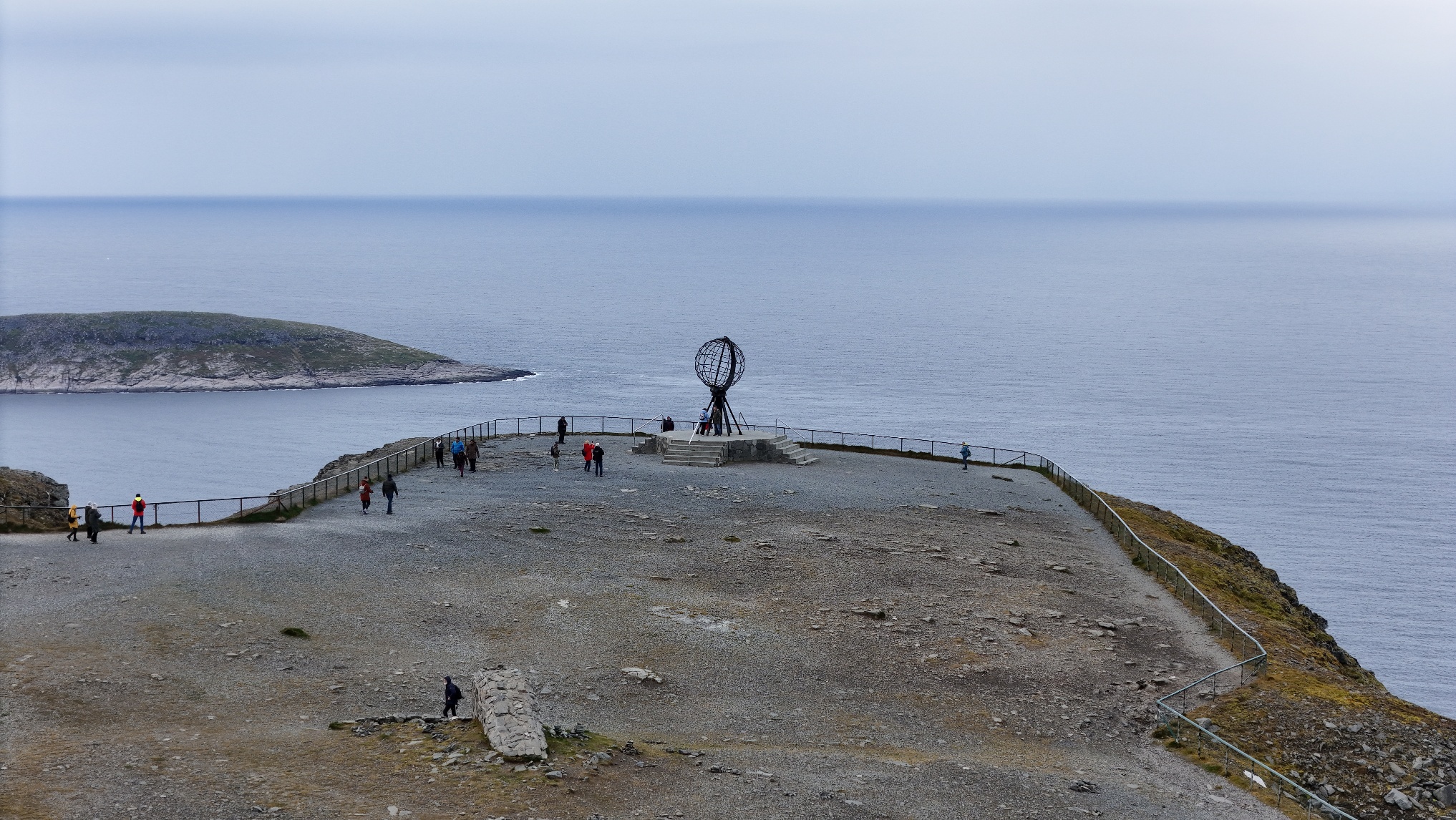
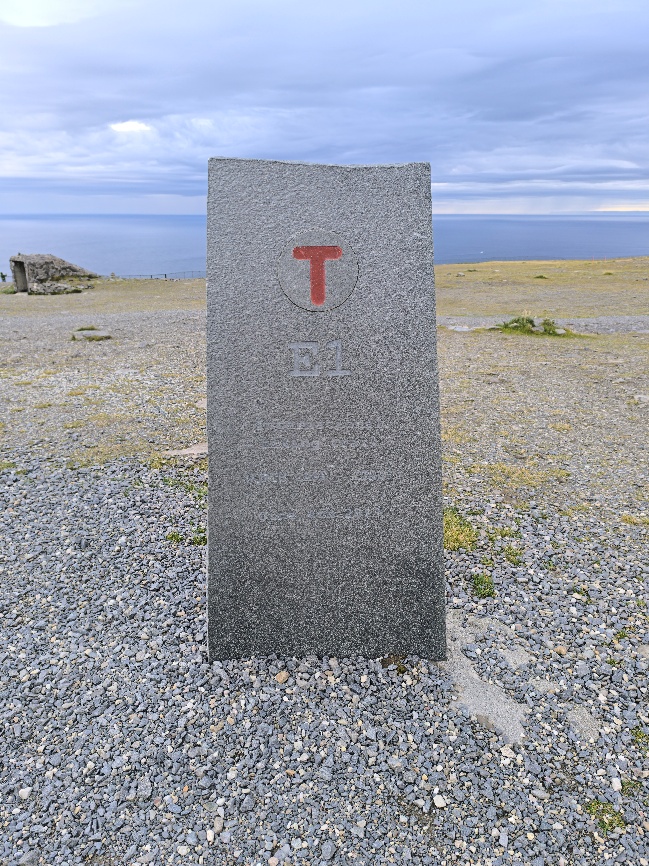
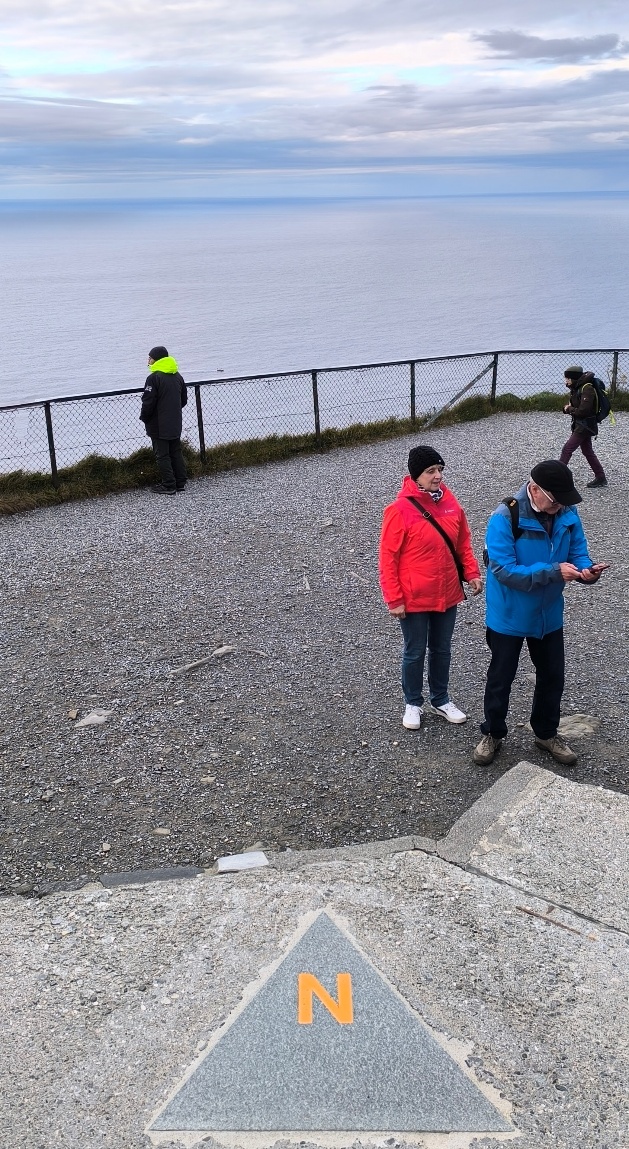
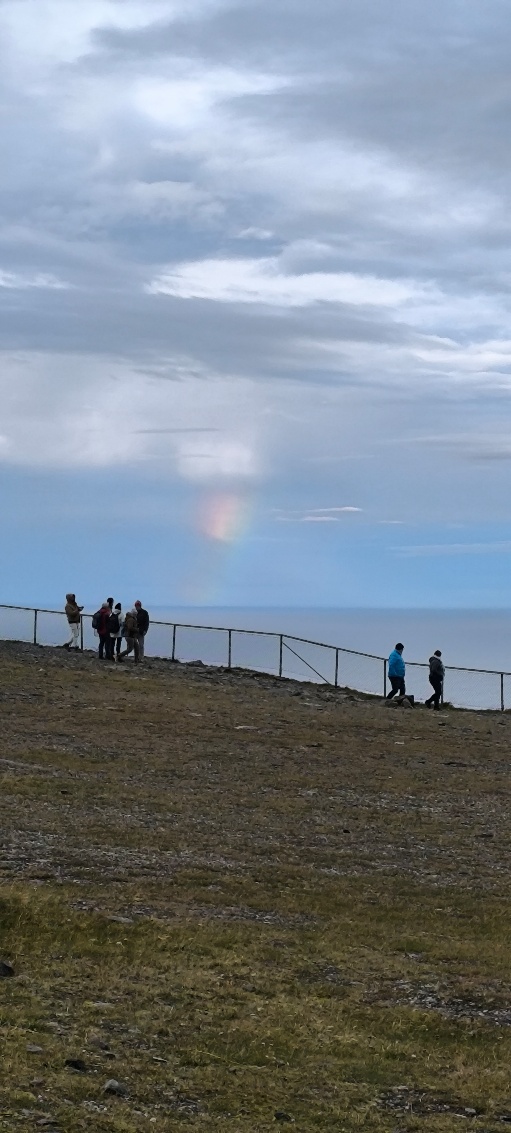
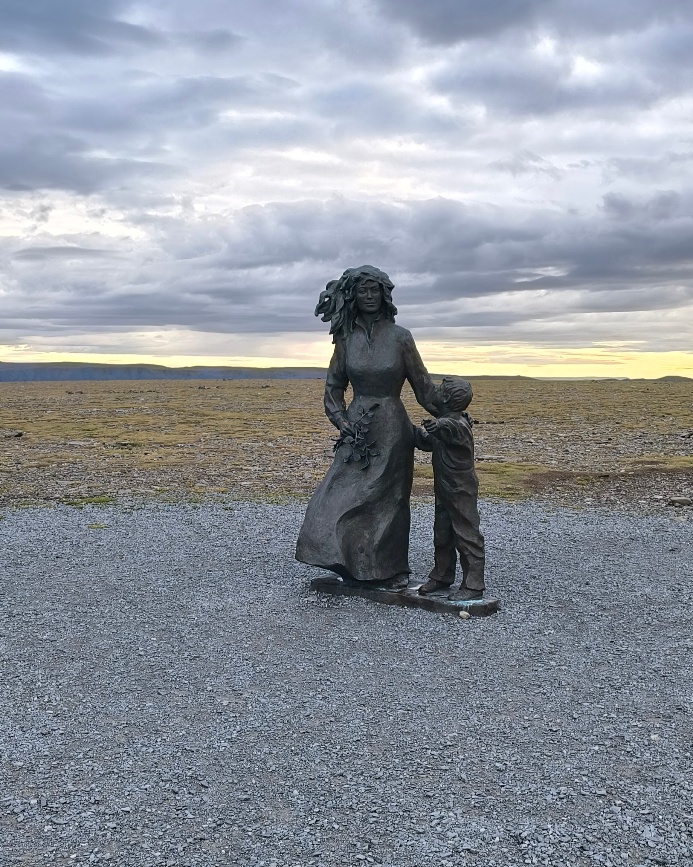
It is a pretty amazing place, and the sense of achievement is massive. Continuing my streak of luck, I had good weather – not amazing, but also with a good visibility distance. The visitor centre is of course mostly a tourist trap, but I quickly forgave myself for paying the overpriced entry fee – after all, it took a while to get here so you might as well make sure you’ve seen everything.
Unfortunately, there does not seem to be a marker for any of the EuroVelo routes, but there is a stone marking the start of the E1 hiking path nearby the famous globe. If you wait a little while, most of the other tourists from the cruise ship + bus combo will disappear to somewhere, and you might have the luck of getting some shots of the globe without anyone else in frame. However, this is not a normal tourist attraction – even when it’s busy, it’s still quiet. Both in terms of business but also sound. It still feels isolated if you turn your back on the visitor centre and stand at the railings, looking out at nothing.
This is not the true most Northern point of Europe, although it is a convenient location for tourists. But hopefully you’ve realised at this point, that just doing the tourist route isn’t enough. Technically, the most Northern point is Svalbard and Jan Mayen, further north, accessible only by flight.
Ignoring that for obvious reasons (I wouldn’t really call that Europe anymore, even if it technically is), stretching 1,450 metres further North, about 4km further West, and getting to sea level unlike Nordkapp, is the Knivskjelodden peninsula, accessible only on foot following a poorly marked path starting from the E69 south of Nordkapp. I feel comfortable saying that Knivskjelodden is the most Northern point in the world accessible only by public transport and a little walk. There are other places further north, but they are only accessible by flight.
However, walking the path, especially at this time of year, without access to a car parked at the small layby a risky idea. There is no means of transport back to Honningsvåg except hitchhiking, which is obviously unreliable, especially on cloudy nights without the Northern Lights since there will be fewer tourists driving this road to go hunting for them. It being one of these nights, I was more than a little worried about the prospect of a very long rainy night walk (~30km) back to Honningsvåg after the 18km hike, with no food or shelter.
But I was only going to be here once. So, after surprising the bus driver by asking them to drop me off at the layby on the way back, they kindly discounted the bus ticket a little and wished me good luck (of course after asking me if I was sure I knew what I was doing).
If I had felt isolated at Nordkapp, I hadn’t known what the word ‘isolated’ meant. Quickly, the small layby car park with two or three parked campervans went out of view – I still don’t know who they belonged to or why they were there.
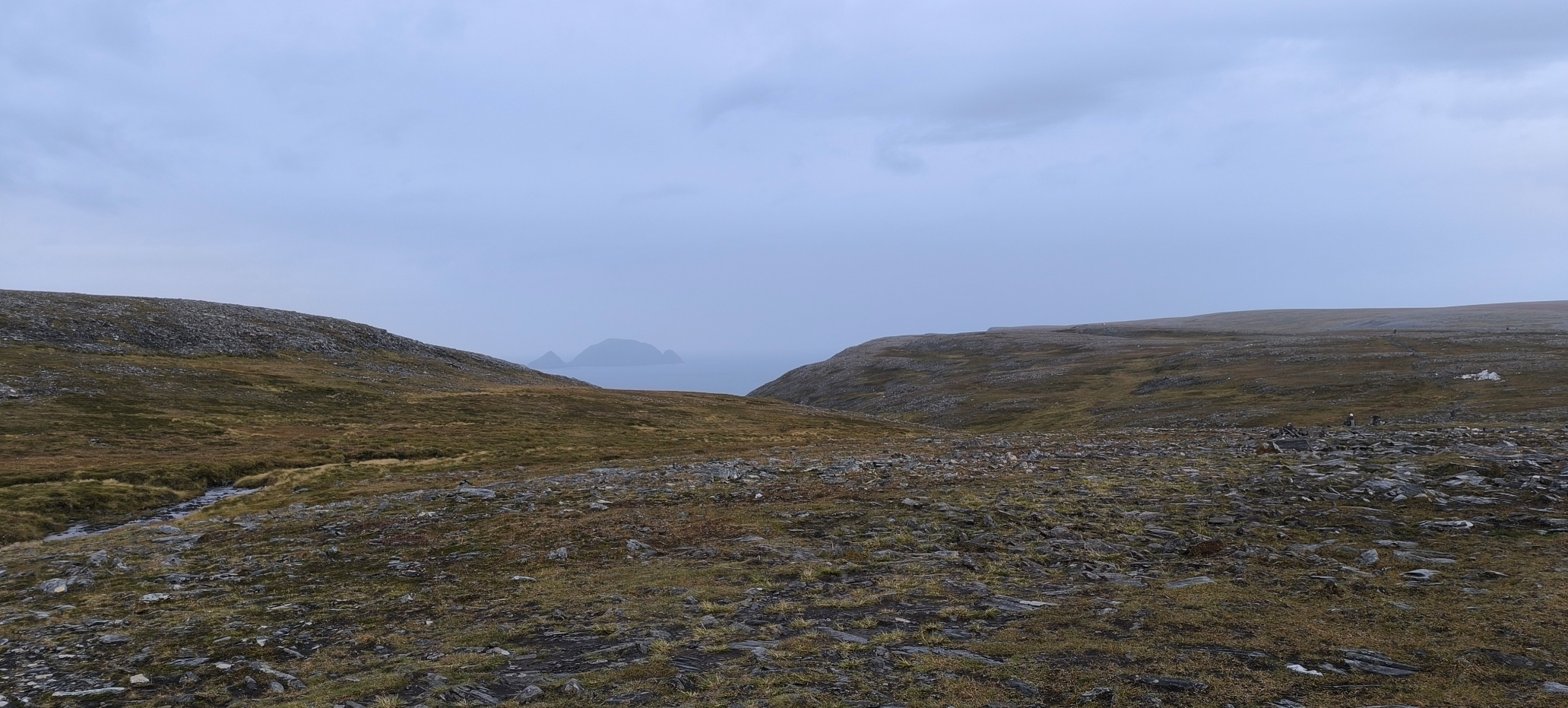
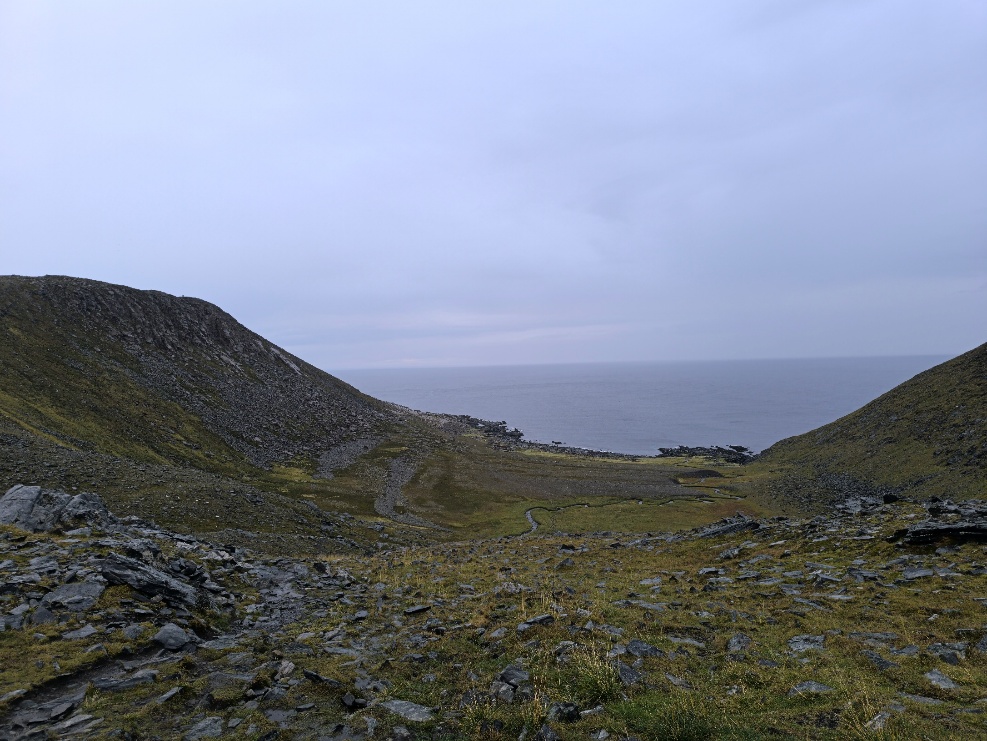
I did not see anyone else as I traversed the path to the end of the world.
My only company was the worsening rain, the sound of the wind whistling across the barren hills, and my shoes (my only pair for the whole trip) sinking into the waterlogged mud. But it was a fitting atmosphere, and matched the rest of my trip perfectly – not too easy as it could be in summer, not too tough as it could be in the depths of winter. Weather miserable enough to feel like that’s how it should be.
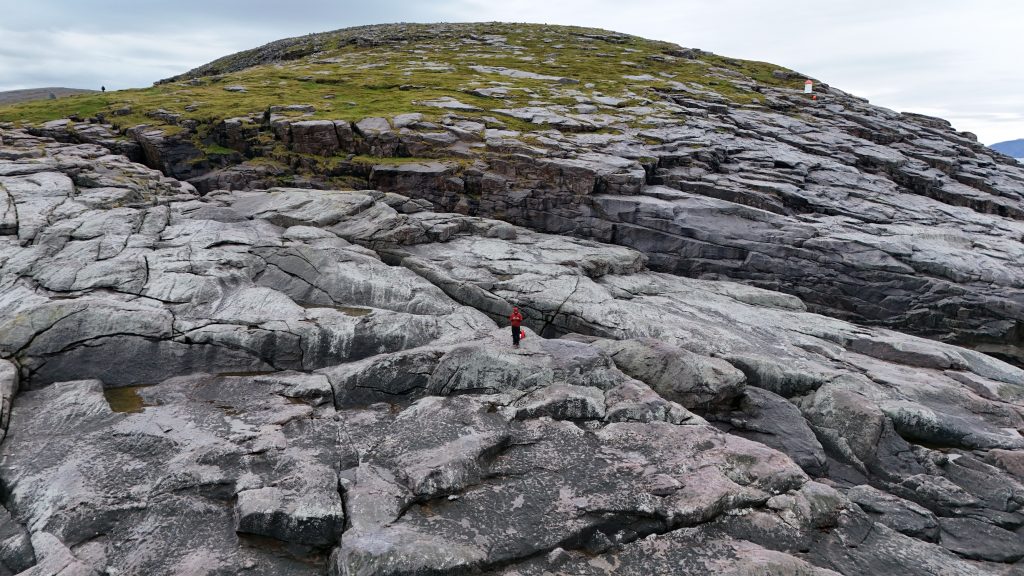
The final section of the path leads across a slanted plane of slippery rocks, threatening to pull you all the way into the sharp rocks that mark the coast if you slip. And it is impossible not to slip at least once in the rain. Having slipped probably around 3 metres down and managing to stop my descent on a lucky small flat section of grass between two rock planes, I took my time tiptoeing the last section.
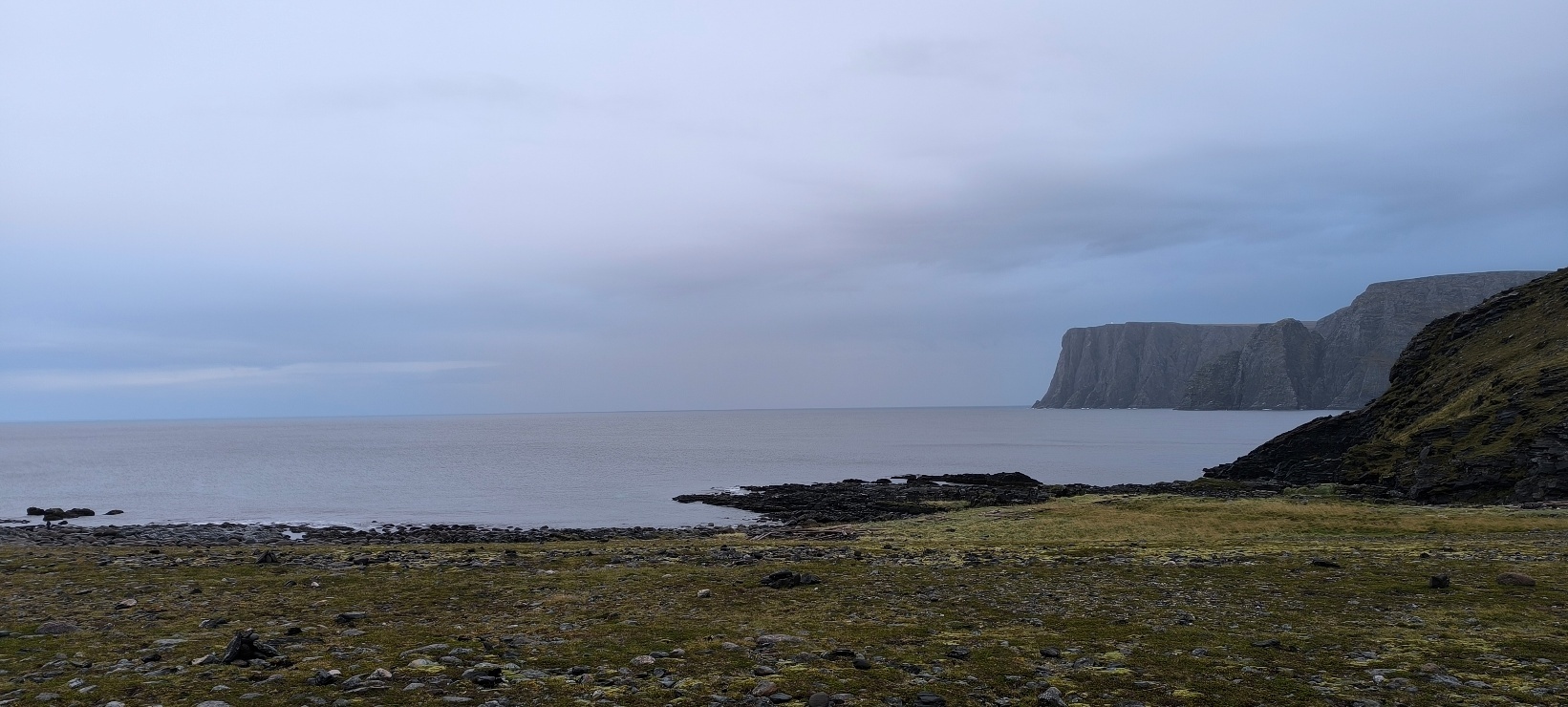
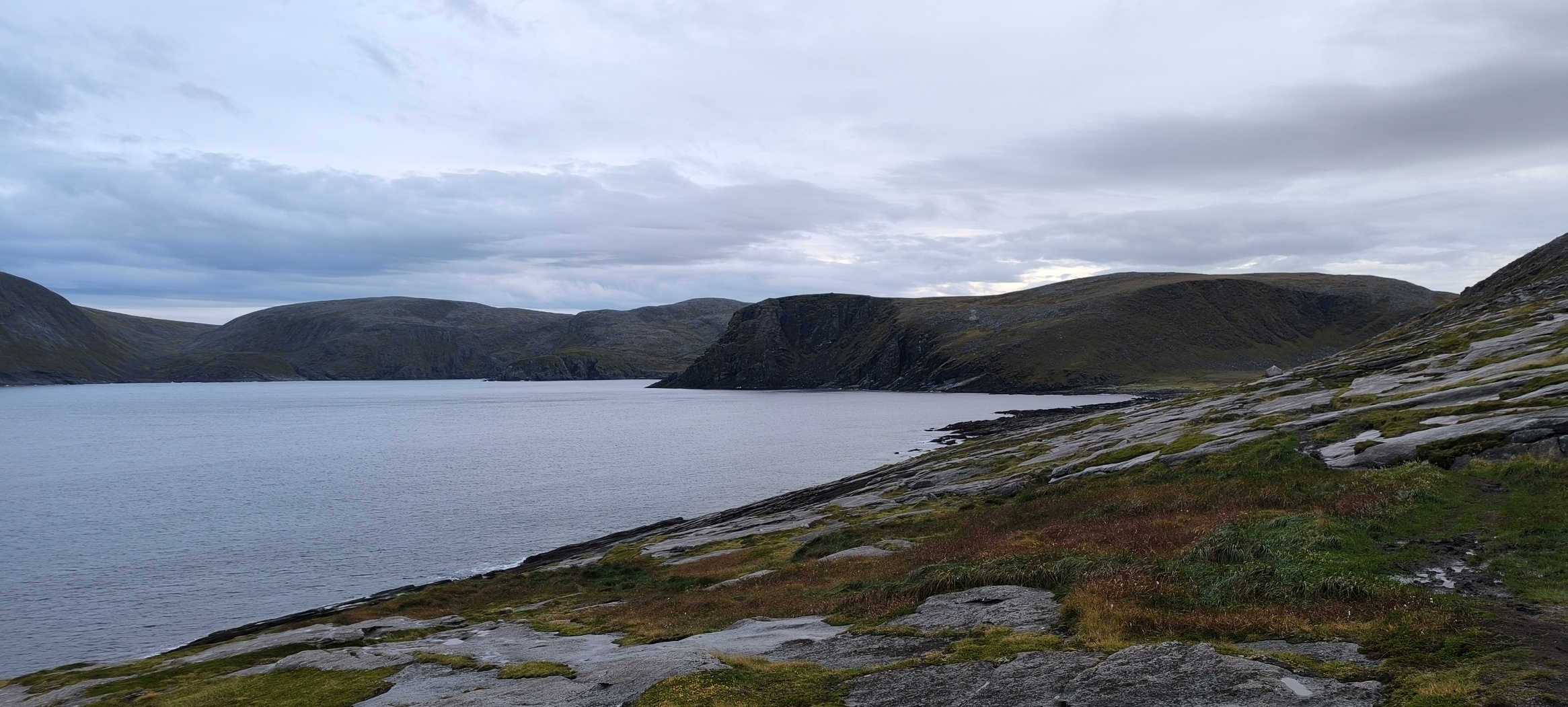
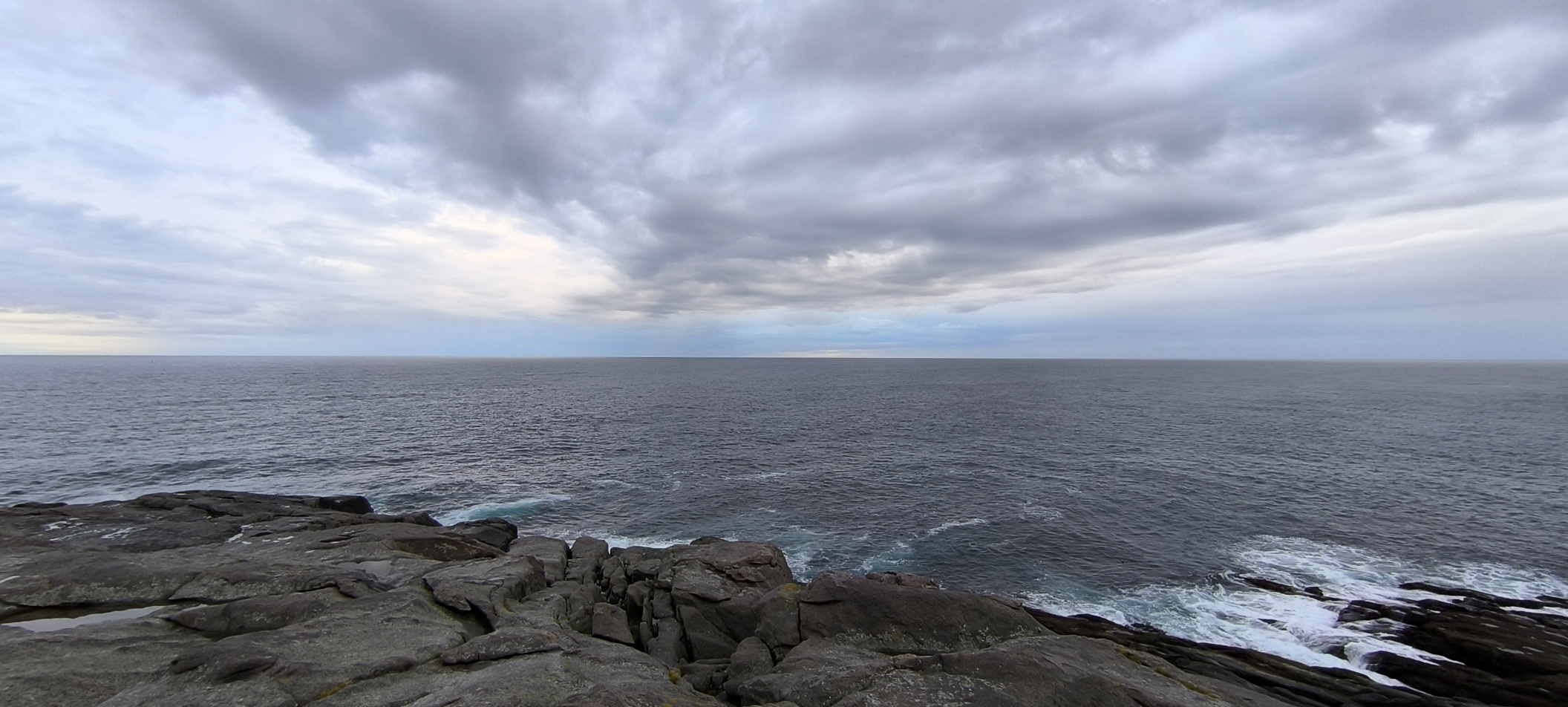
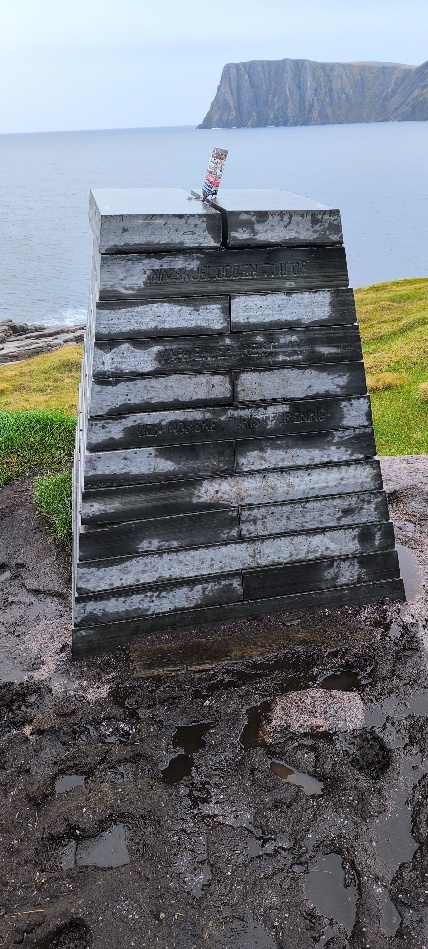
As you stand at the end of the world, looking into the vast nothingness, remember that there’s only maybe 25,000 people standing further North than you are stood – or a little more than the capacity of a small arena/stadium spread across more than 13.5 million square kilometres.
I did not feel much as I took a seat and watched the waves crash against the perilous rocks (a swim in the Arctic Ocean here would not be a good idea). Maybe a bit isolated, but not as much as I expected. Maybe a little out of breath, but not as much as I expected. Maybe a bit content. Maybe a bit fulfilled. Maybe a bit nostalgic. Maybe a bit relieved. Maybe a bit scared. But not as much as I expected.
I don’t want to spoil the feeling of isolation here for anybody that might end up here after reading this. But if you got here like this, then you got here. Not quickly. Not in something comforting and familiar, like your own car or campervan or motorbike. Not cheating by flying, an invention that has shrunk how we view our world. But at the mercy of everyone else, and by letting the world drive past you – although that’s not to say you were lazy, not by any means. This is as far as you can go North, travelling in this way. ~99.999696% of the world’s population is behind you right now.
It did not feel like a particularly special achievement at the time. That has come later, far away from the land of emptiness and remoteness and isolation, far below the tree line, far below the Arctic Circle, increasing as I rejoined society in cities further south, and increasing now that I’m writing this, from somewhere familiar.
A swim in the Arctic Ocean here would be a good idea – but I didn’t.
It was my birthday today. I turned 19 as I stood here, alone.
Part 2: Just Head South
I spent a little while there, thinking about things I can’t remember. Soon it became necessary to start heading back otherwise I would definitely lose my small chance of an easy way back to my accommodation, as the sun was already beginning to set – although it just looked like things became darker, the way things do when you can’t see the sun behind the clouds.
Turning around, heading back up the rocks to the path back to civilisation, there were in fact two other people there, a husband and a wife. I’m glad I didn’t realise they were there before I reached the end of the world. A quick “hi”, then I left them a little time to get a head start before I walked slightly slowly behind them, watching them climb up the hill away from the sea. I knew that they would be my opportunity back, but I also didn’t want to intrude, so a game of remaining behind enough to give them the feeling isolation and keeping myself out of sight, but also close enough so that I could catch up with them towards the end, began.
The rain had stopped for a little while at the end of the world, some sort of reverse pathetic fallacy. But it began again as I also ascended the hill, leaving the ocean behind me.
Sure enough, I timed it pretty well to end up joining them about 20 minutes from the car park, where their car was parked. They were more than happy to offer me a lift back to Honningsvåg, although they said they would continue that night to Lakselv – a small town which I would later pass through.
We did not reach the car park before we had to turn on our torches, but it did not matter.
After they dropped me off at the REMA 1000, I bought a few things to cook dinner – a basic pasta sauce of course.
- Tip: cooking is usually cheaper than eating out, and healthier (although make sure to get a balanced diet – I was eating more than just pasta). But remember, if you’re moving quickly and can’t keep cooked food cold or preserved, you can’t cook in batches. So often a full meal, especially with meats, might be more expensive in some cases than eating out.
After cooking dinner, I made my plans for the next day. I had originally planned to leave the next day, but I quickly realized that there was no particular rush once I realized my plans to head east to the most Northern point of the EU at Utsjoki Nuorgam, and Kirkenes, Russia, and the Finland/Norway/Russia tripoint (I believe the only place where 3 time zones meet at a single point) were unfortunately unrealistic as I had a deadline to meet my parents in Helsinki. So, I decided to give my shoes an opportunity to dry out properly, along with the rest of my clothes, and had a rest day. My first real rest day of the trip.
Lots of people have that feeling when they do nothing all day that it’s a wasted day. Sometimes I feel like this. Having a break and staying in your room (especially as I had a private room (with shared kitchen) at Honningsvåg) is fine to gather yourself. At this point, I had run out of plans, and now only had a rough idea of what was next. Prior to this, I had planned each train and each night’s accommodation. So, I would just travel in roughly the right direction to reach Serbia, and take it easy, at least for now.
Having not seen the Northern Lights at the most Northern point, and being sceptical that I would see them again, I did walk back into the centre again that evening to see some. And I’m glad I did.
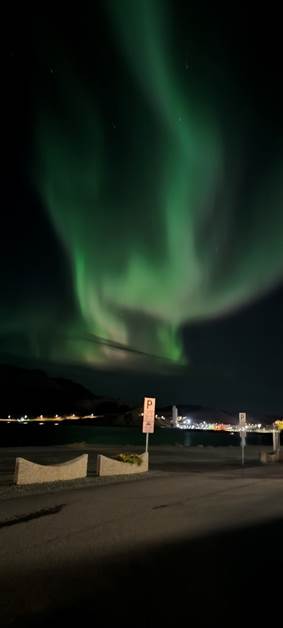
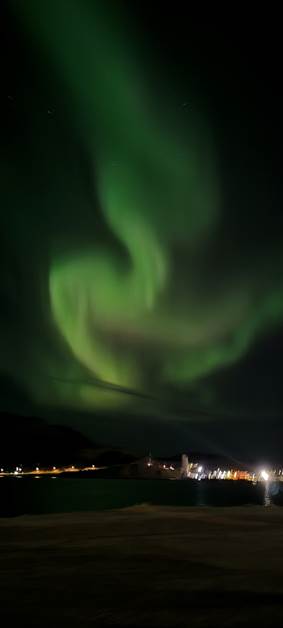
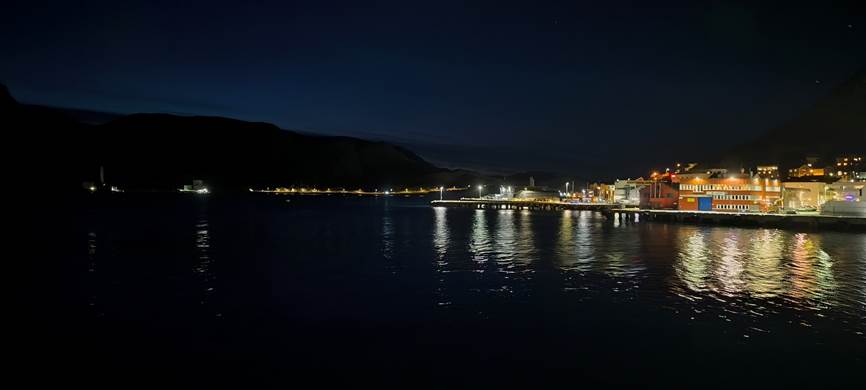
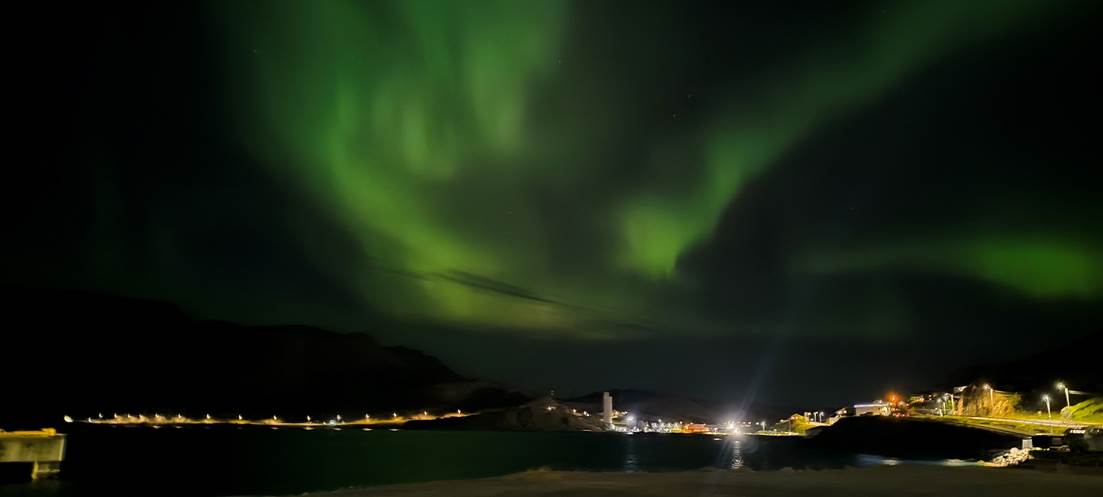
I had to leave what felt like a mini holiday in itself the next morning. My bus would leave from a stop next to the accommodation, and I had about 50 minutes between the check-out time and the bus – not enough time to walk into the centre, but more than enough time to find something to eat at REMA 1000.
Leaving Honningsvåg was as much an experience as entering it for the first time. As you again go through the tunnels, whilst not that much physically changes, the feeling of isolation begins to wear off.
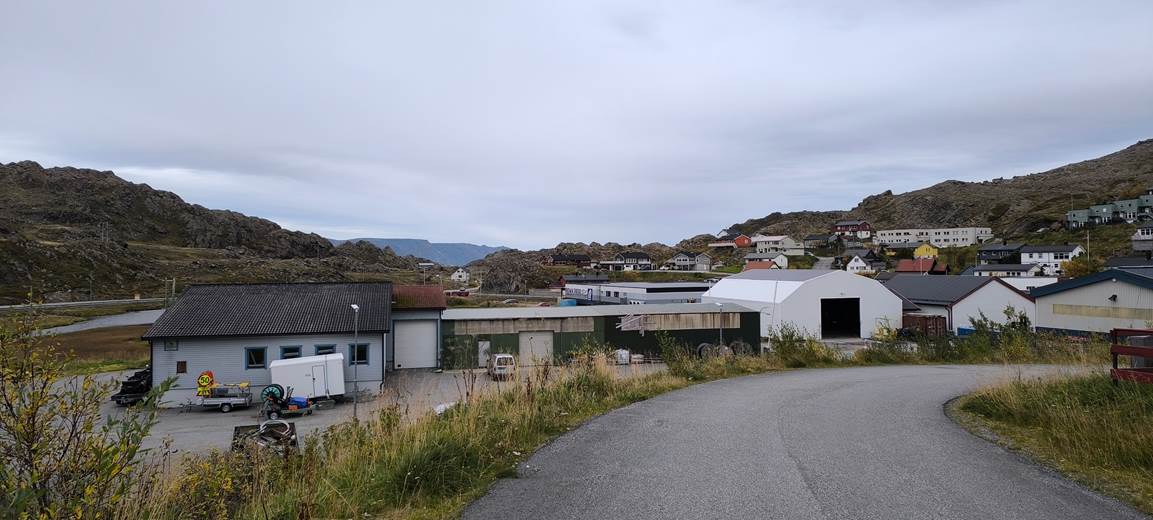
The bus was again the 110, but this time I would take it only as far as Olderfjord, the junction where the E69 leaves the E6. Here, the buses all meet up for a few minutes, then leave in their different directions. I switched onto the bus 140, to Karasjok.
I did not know exactly how I would get out of Karasjok the day after I arrived there – whether it was hitchhiking, or a non-state operated bus route into Finland.
As I arrived in Karasjok, I can only say the atmosphere was eerie. Again, I was one of two or three people getting off the bus, and as I walked through the town, it was spectacularly quiet and the E6 road was not that busy. I was heading for a small monument hidden away and unsigned, which I had seen on Google Maps and which had piqued my interest.
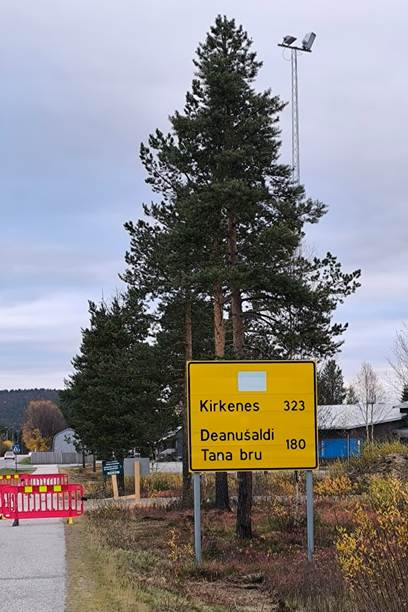

I’m not sure what exactly they were, maybe huskies or wolves, and I’m not exactly sure what triggered them, maybe me, but as I walked along the pavement of the silent road, an almighty howl began, like out of a movie. The quiet and valley landscape made it sound like the sound was coming from every direction. It sounded like the souls of the damned, perhaps the very ones buried here. The overcast weather, diffuse lighting, and emptiness all added to the creepiness. I decided at this point, I would not sleep in my hammock that night.
I found the monument eventually tucked away. The inscription in two languages – Norwegian and Yugoslavian: “In memory of the Yugoslav prisoners of war who lost their lives in Karasjok during the war 1940-1945 and who were buried here”. Even this far north, wars cannot be escaped.
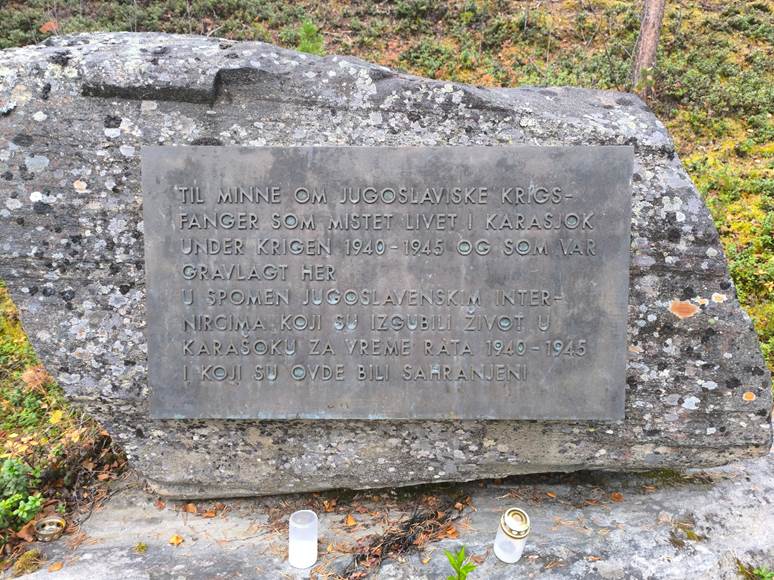
Karasjok was the site of one of the first four Nazi concentration camps in northern Norway. In 1943, 374 political prisoners and prisoners of war, mostly Yugoslavs were landed at Narvik, and transported to Karasjok, tasked with expanding the 18km road to the border with Finland as Karigasniemi. This road would become locally known as the ‘blood road to Finland’. Other ‘blood roads’, also built under similar conditions were built by Yugoslavs and other prisoners in Norway.
From nrk.no:
The German chief engineer who was responsible for the construction of the road is said to have said the following in the opening speech of the camp when he arrived in Karasjok: “It’s 18 kilometers to Finland and for every 50 meters there should be one dead person.”
One of the reasons the SS could let so many of the workforce die was that they did not have the status of prisoners of war, but were sentenced to death in Yugoslavia for having been partisans. Some were also innocent civilians who were caught in retaliatory actions against villages that helped the partisans.
The Yugoslav prisoners had the worst conditions of all the concentration camps in Northern Norway – ethnic Serbs were treated the worst, but Bosniaks and Croats also suffered alongside them. After four or five months, the prisoners had reached the end of their stay. Only 111 of them were still alive. 45 were then shot in a massacre just before their transportation out by SS and Norwegian officers. The dead were buried in 3 mass graves in Karasjok – one right along the road they helped to build.
I left the memorial behind – at least for now. It would not be the last time on the trip I thought about it.
In my search for something to eat, I found a pizzeria across the river. The pizzeria was inside some sort of small shopping centre, seemingly abandoned, and run by 2 definitely not Norwegian guys. With the décor feeling very strangely American and them doing more than just pizza, I decided I didn’t trust the pizza and ordered a burger instead. It looked like they had just hosted some sort of pizza party, but true to the town’s form, they were all gone and all that remained was crumbs of pizza and untucked chairs. I remained the only one eating there, apart from one individual who came in, talked to the guy running the place, then left without ordering anything but a small drink. Thoroughly spooked by this point, I ate my burger as quickly as possible and left.
I paid for a small hut in a camping site just outside of town. The hut did smell slightly strange, but I decided that whatever the danger in here was better than whatever was going on outside.
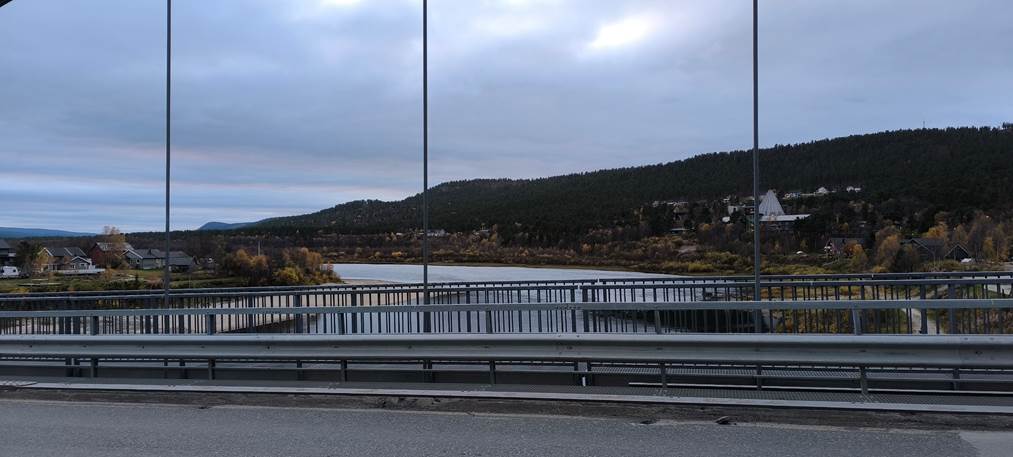
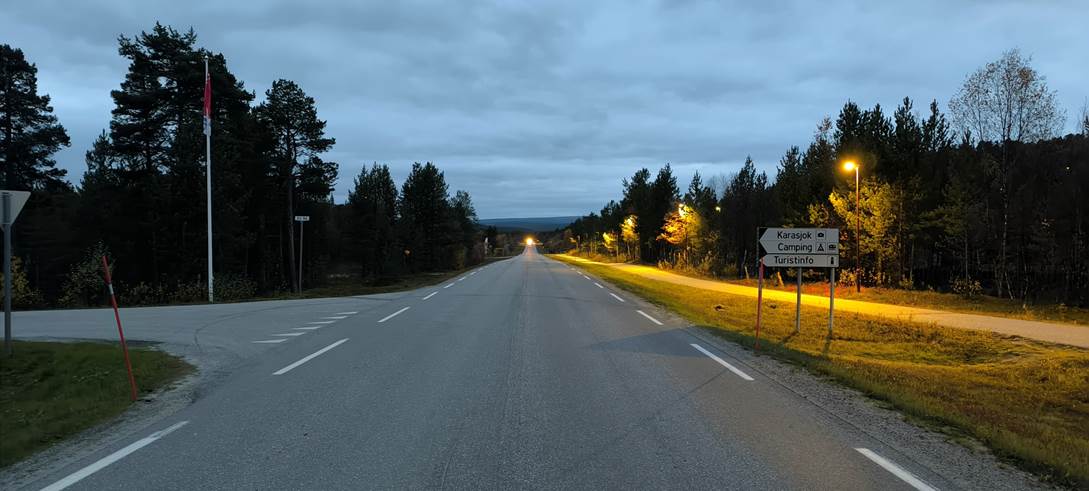
Still alive the next morning, I went to buy the supplies for the 7-8 hour bus ride ahead from the local REMA 1000 – feeling more comfortable after finding the supermarket wasn’t also empty. It was of course, just a normal town.
The bus was my only real route out of here, unless I wanted a very early 4-5 hour walk along the blood road to the border to start my day, so I paid the 90 euros to take me to 450km to Rovaniemi in Finland. First via the blood road to the border at Karigasniemi, then along the E75.
- Tip: bottle recycling schemes are a great way to drink water and have non-water drinks without carrying a reusable bottle, or several bottles. But before you cross a border, exchange all the ones you have for fresh drinks – the bottles from one country can’t be recycled in another, and you’ll lose the deposit you paid on it.
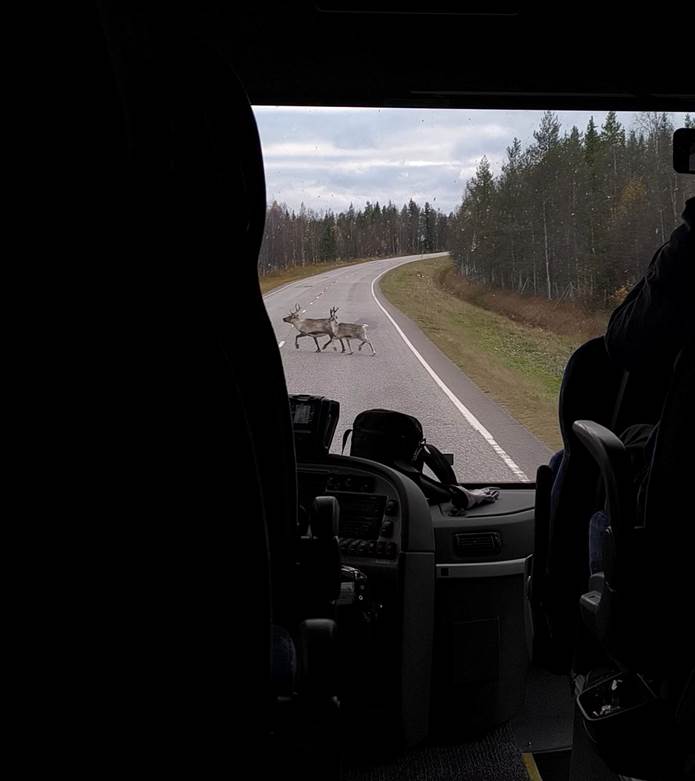
The bus ride did take a long time, but it was not boring. It was a relatively quiet bus – of course – and the driver had put the local radio on, which was a nice change from my own music. There were a couple stops along the way to buy further supplies or have a walk. Along the way, we managed to see some reindeer in the road. And the scenery and landscapes rolling past were so different for me, that it was always interesting. This stretch of the trip also included the most eastern point on my trip, close to Inari.
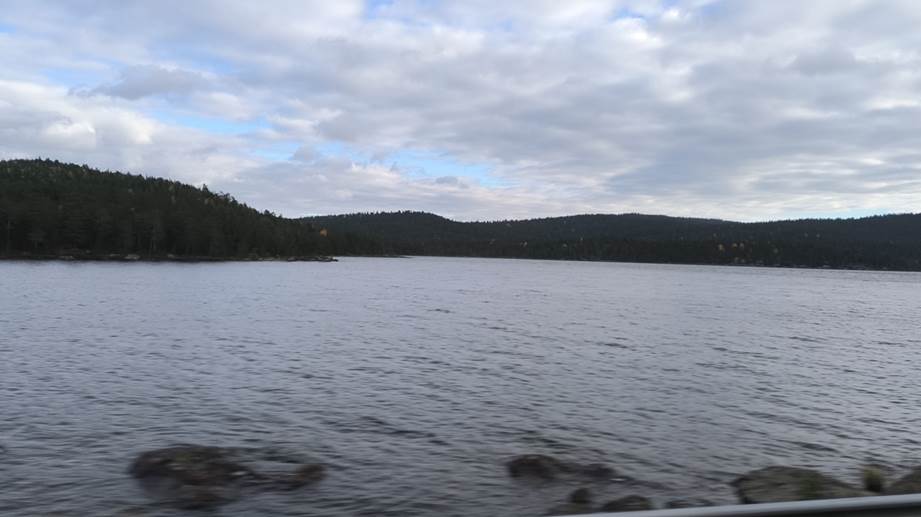
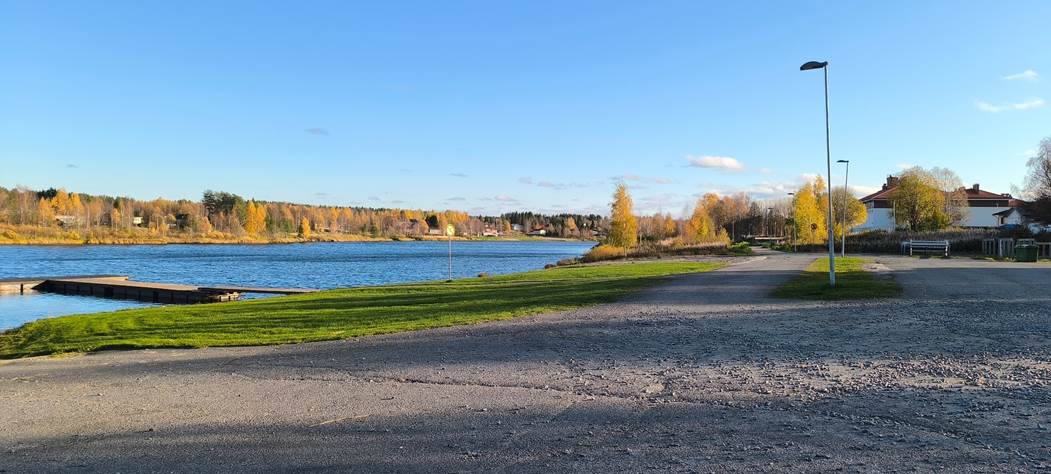
On arrival in Rovaniemi, I checked into the hostel – which was quite small and a very relaxed affair – then went to find a pizza and walk around.
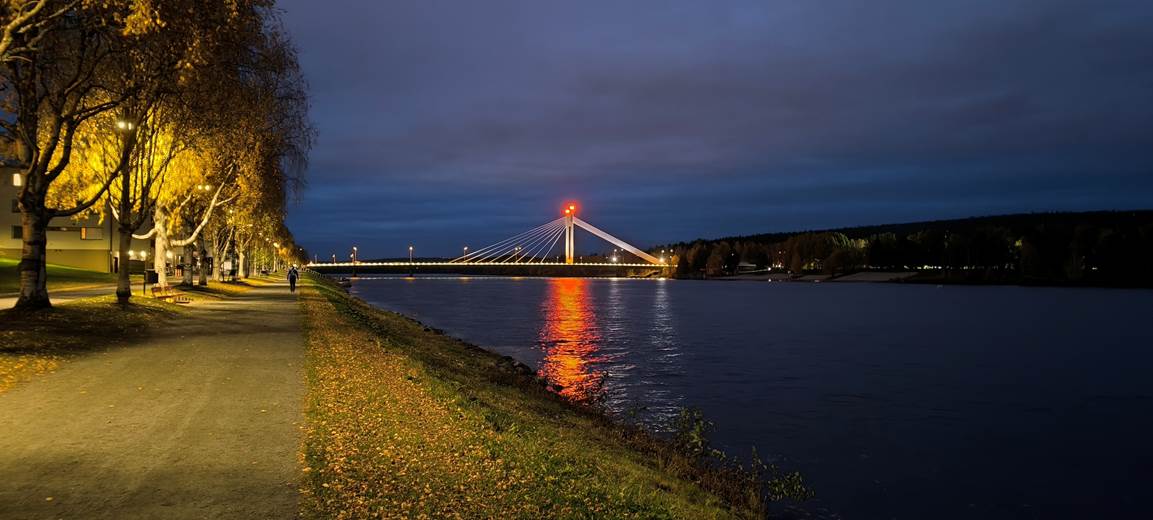
It was very early for the tourist season, so the place felt pretty relaxed. Rovaniemi suffers greatly from overtourism in the winter peak season.
I had only a long morning to spend in Rovaniemi, but I quickly realised that unless you’re on an organised tour or have access to a car, there’s limited things to do, especially out of season. So, against my better judgement, I took the bus to the Santa Claus Village.
The village was mostly closed and mostly empty – a strange way to experience it. There were a few reindeer in holding paddocks, and the very occasional tourist taking the very overpriced reindeer sleigh ride (400m for some insane amount of money) – where both the reindeer handler and the reindeer looked equally as glum.
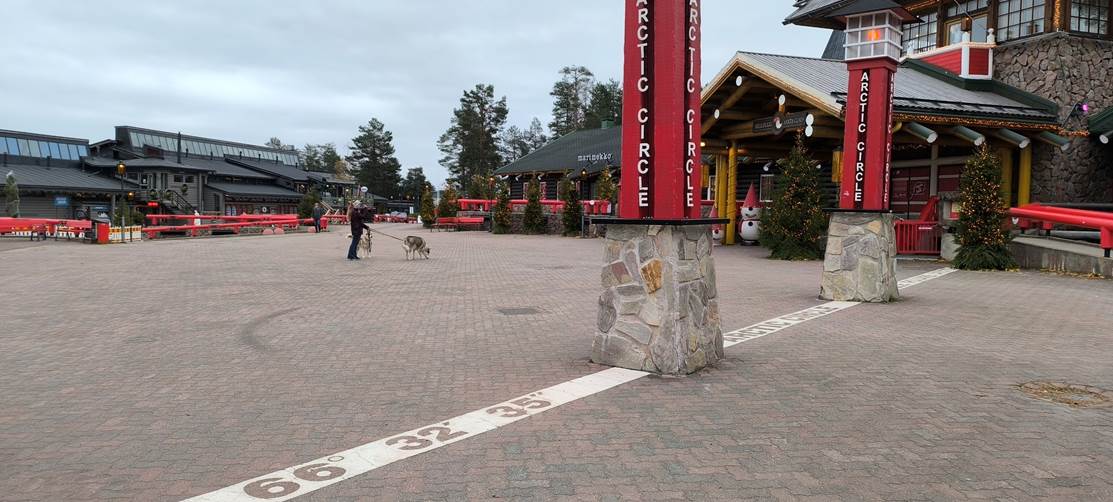
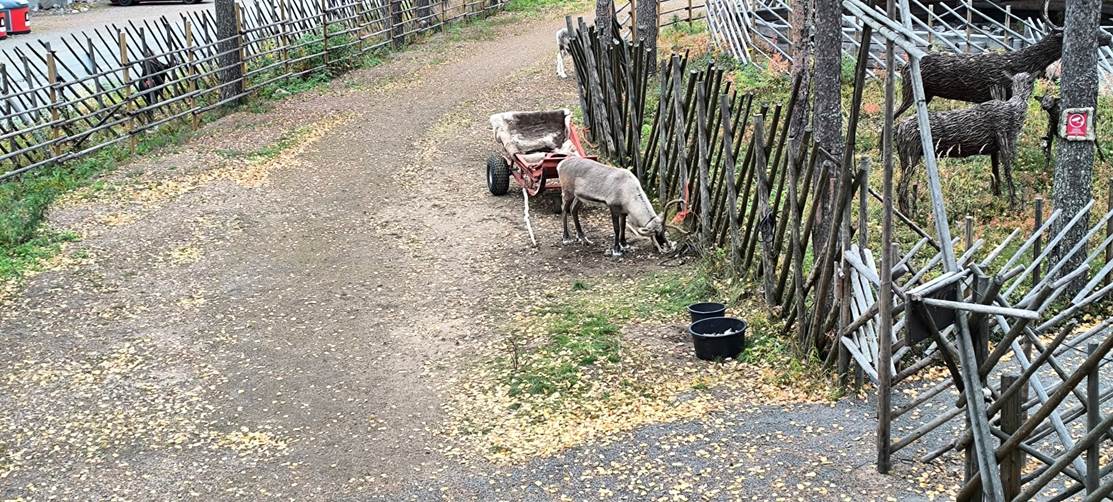
Thoroughly disappointed (although I fully expected that) with the village, I took the public bus back towards the city but via a longer route, which allowed me to hop off and walk across the Kemijoki river and up the hill on the east side of the city to get some drone shots just out of the restriction area of the airport.
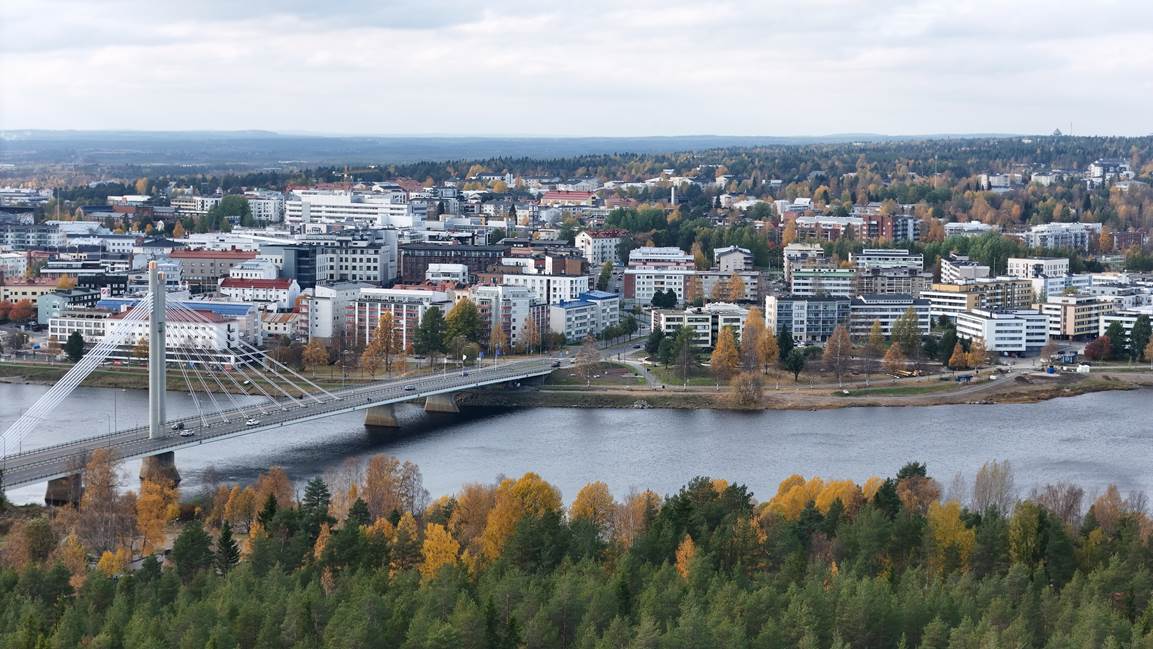
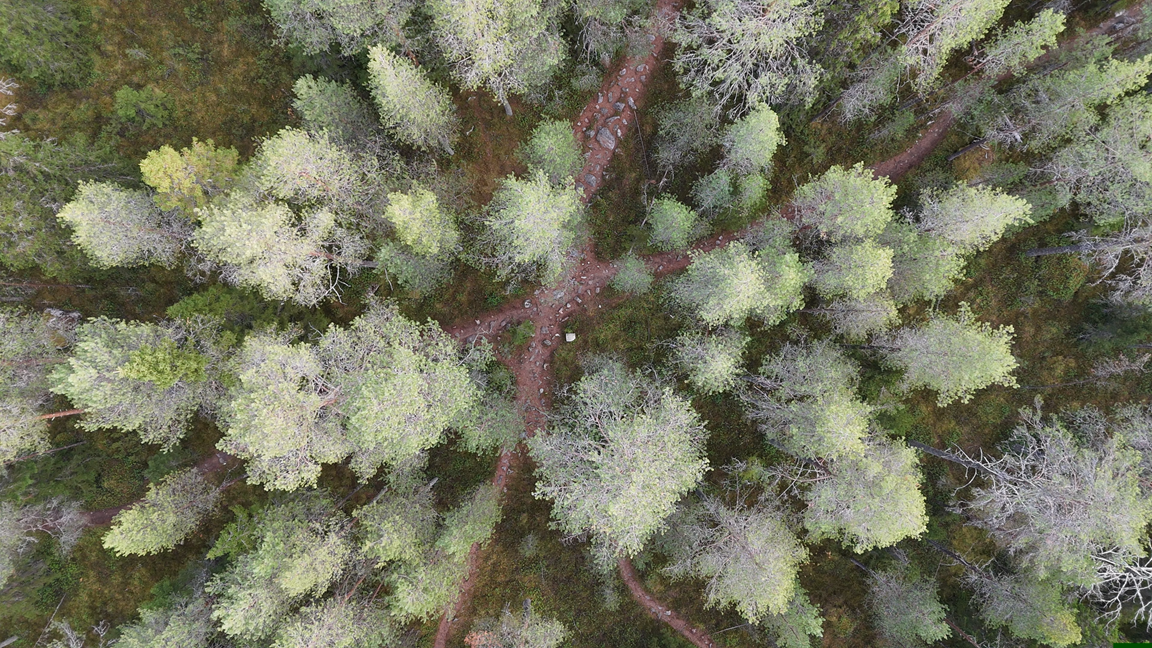
I got back down in time to catch the 15:35 train to Tampere. The train journey was nice, but unfortunately it was dark for most of it, and it arrived quite late, at around 10pm.
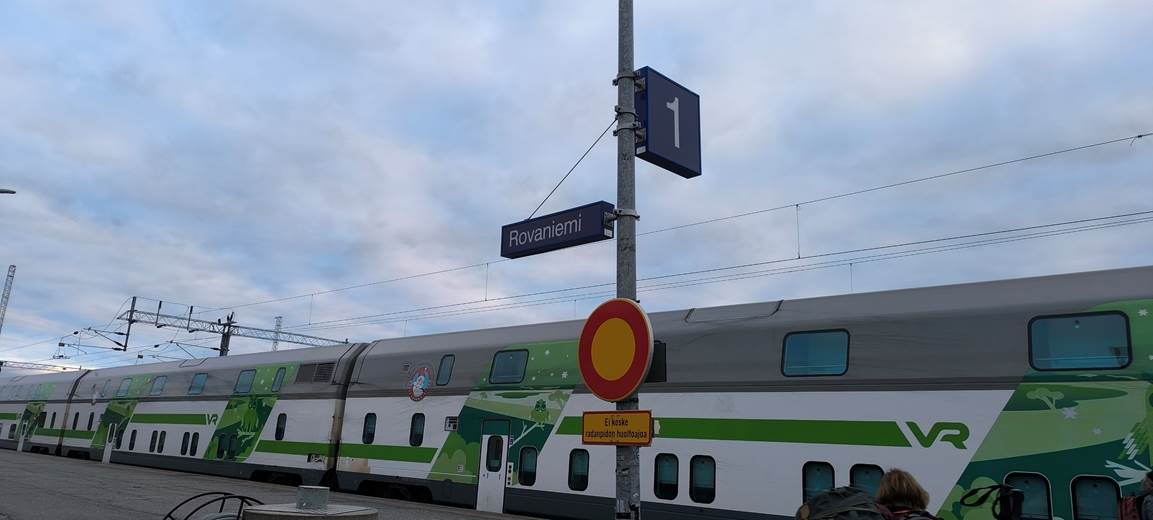
Tampere was a pretty great city. I don’t think there’s anything particularly special that I found on my one day there, but it’s just got a nice layout, isn’t too small, and isn’t too large.
The view from the hill just West of the train station is decent, and the city is nice and walkable. There’s a nice mix of old and new, and I didn’t see any blight. I saw lots of squirrels and birds. It’s the second city of Finland so that has advantages, but it’s also not far from Helsinki.
After walking around for the day, without a backpack – so I did end up carrying my pasta sauce in my pockets and the mince meat (which I had decided to treat myself to) in my hands for about an hour as I wandered the city (probably looked a little strange thinking about it :D) – I cooked a bolognese actually with meat, as well as a little pre-grated cheese, for myself, as a sort of congratulations for surviving so far. If you find yourself in Finland, I’ll recommend his city, maybe just for one full day.
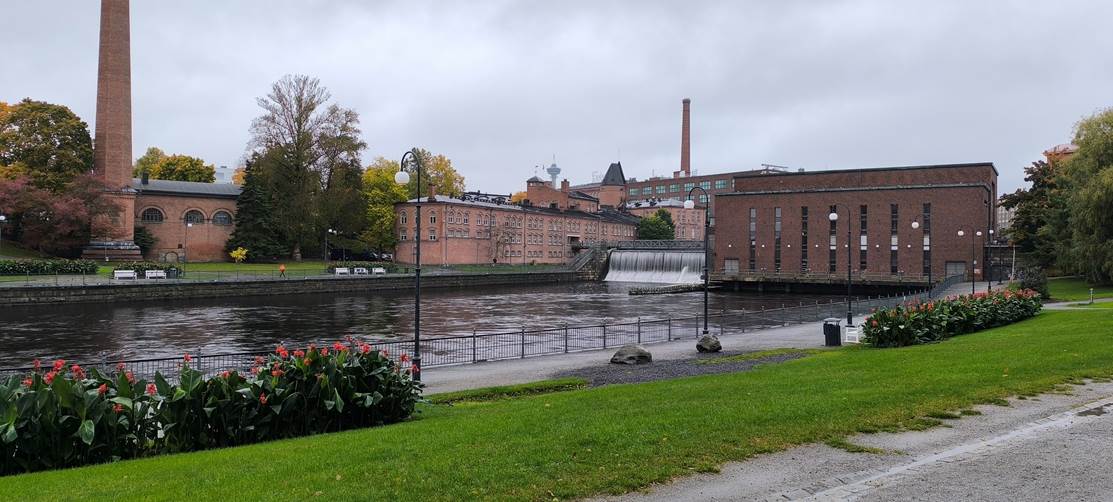
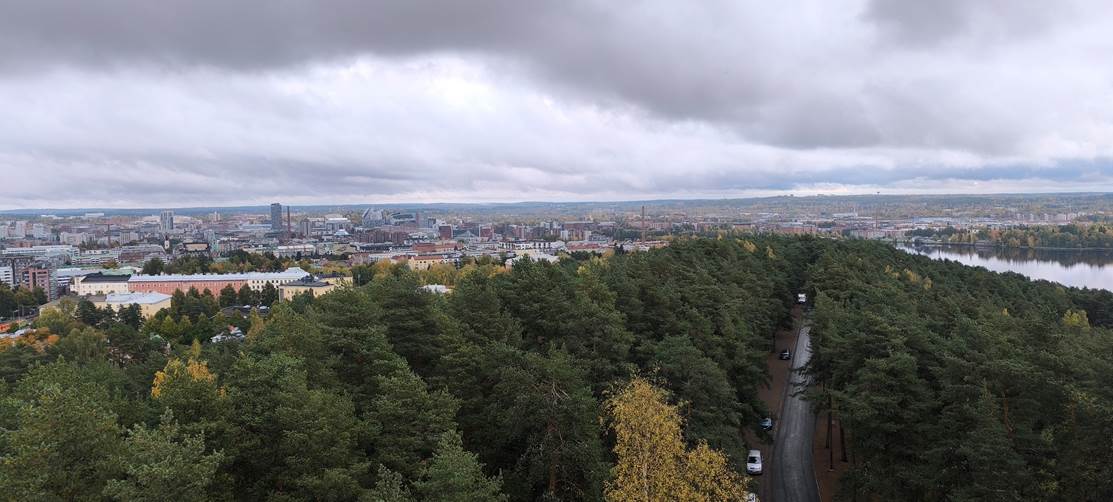
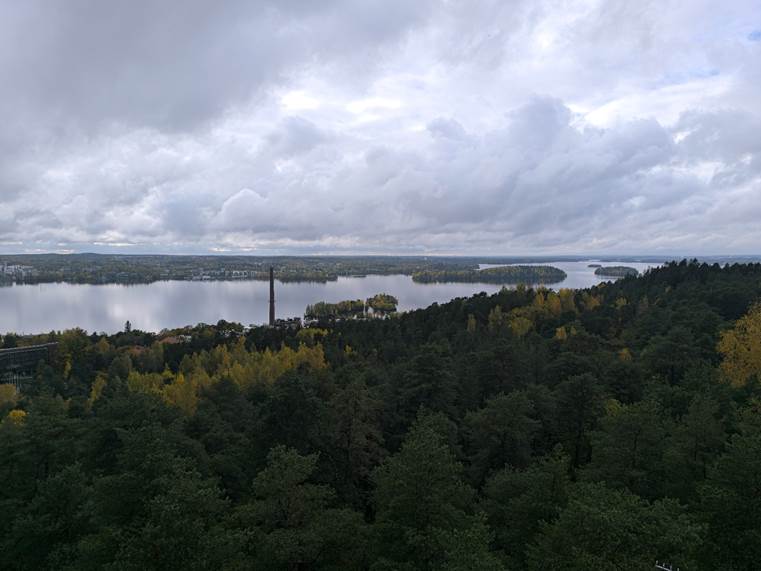
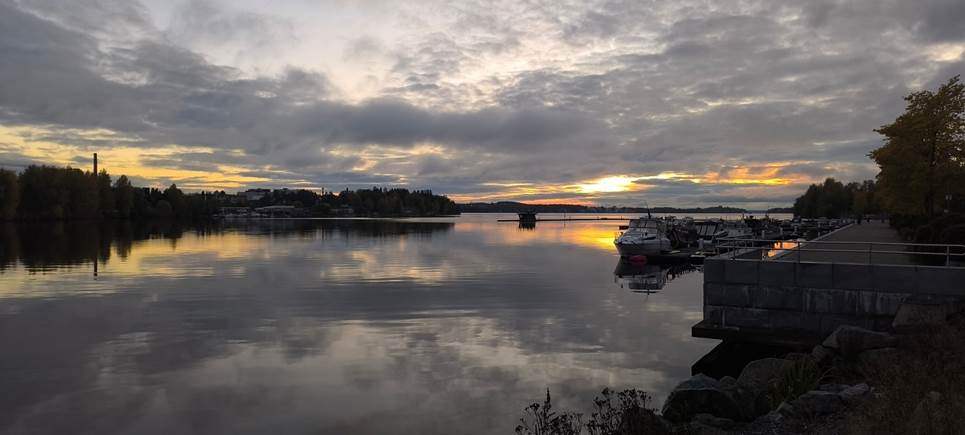
My next destination was Helsinki (only a short train ride away), where I would stay for one night in a hostel, then meet my parents the next day, travelling to Tallinn together.
Helsinki was just OK. The southern part is more walkable, but there is quite a lot of traffic nearby the centre (like surrounding the train station), and it just didn’t have quite as nice a vibe as Tampere. Glad I didn’t skip it since there were some nice parts, but I definitely didn’t need any more time there than the day I spent there.
On my first night, I just took a walk down the south tip – there’s a nice park stretching along the coastline – then back up to the beach at Hietaranta.
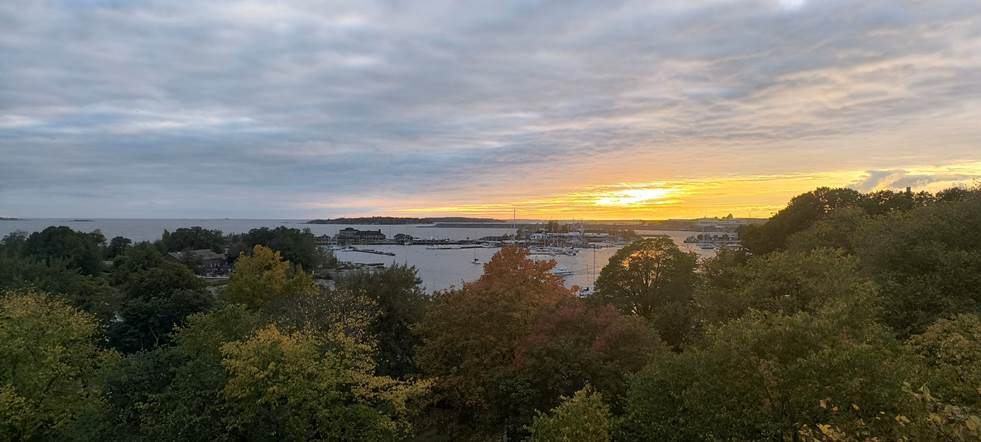
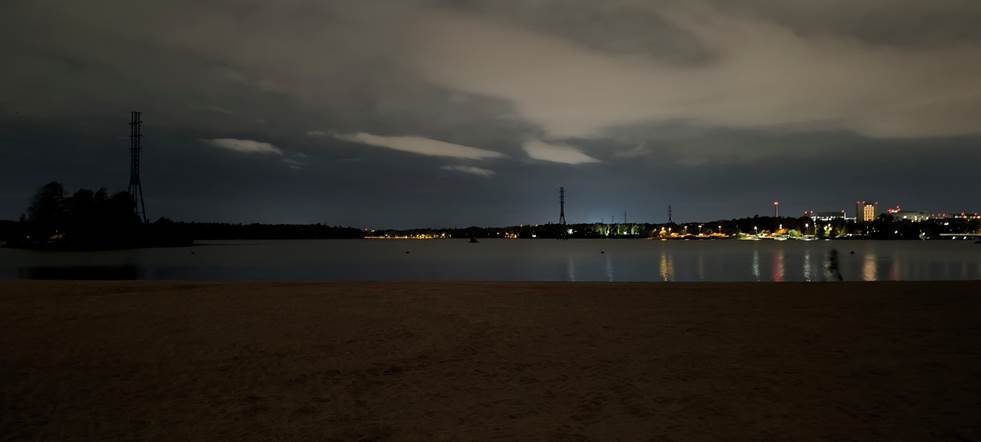
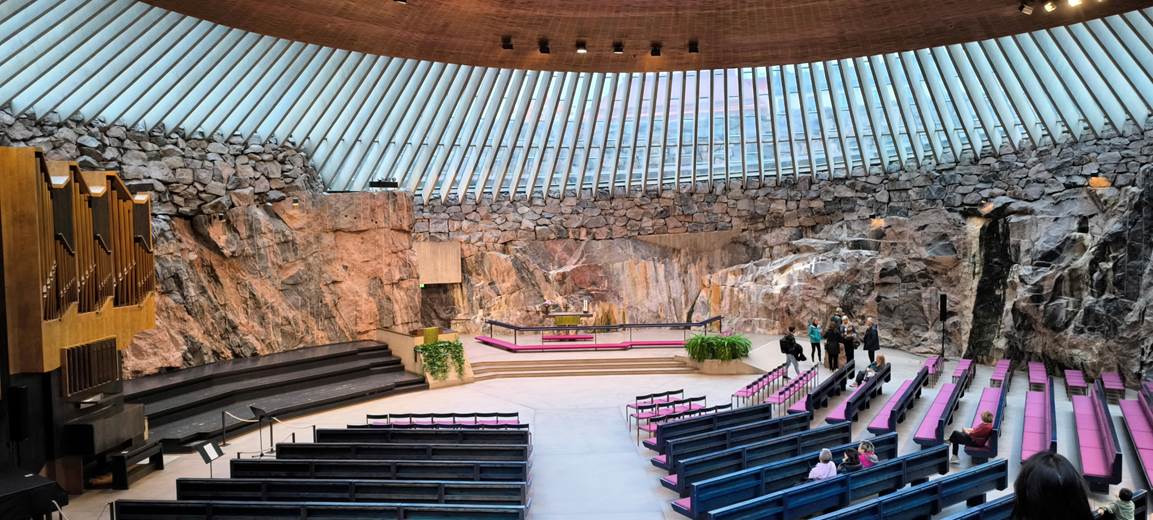
I met my parents the next morning, and we went to an interesting church, before catching the ferry over to Tallinn. The journey took about 2 hours, but it felt longer – I guess there’s no scenery to watch to pass the time.
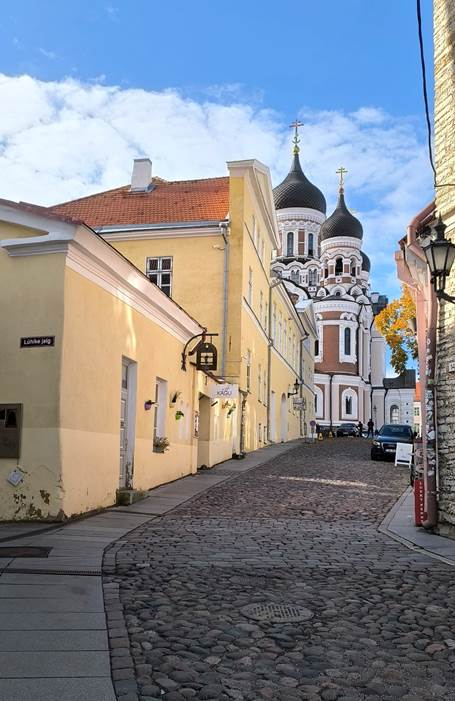
We arrived in a rainy Tallinn, but despite the rain, it still felt like it was quite a nice city just from the brief walk through. We spent the following day exploring the city. Like many European cities, the centre is clearly old and well preserved, converted for modern purposes. It was also the first Eastern Orthodox country I would pass through on my trip, which meant more churches but slightly different now.
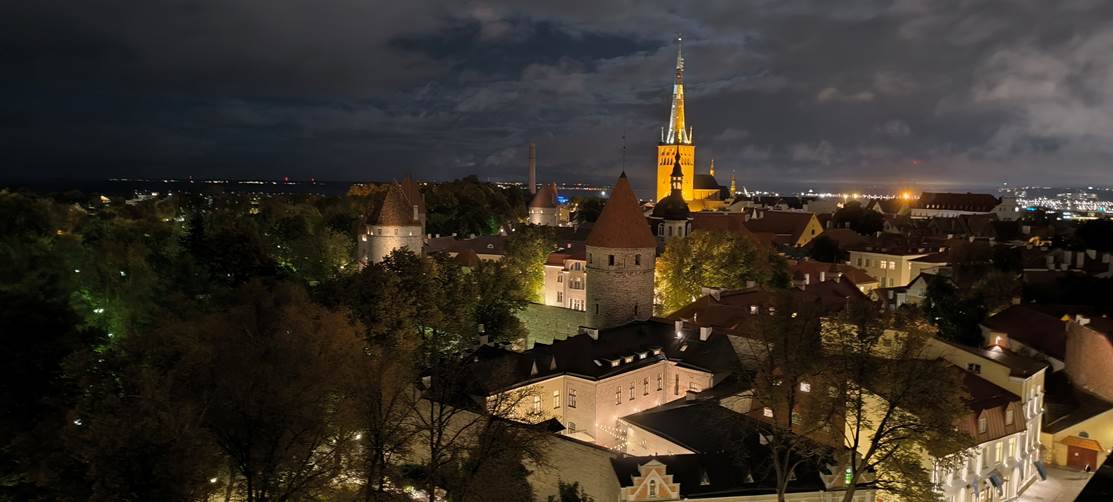
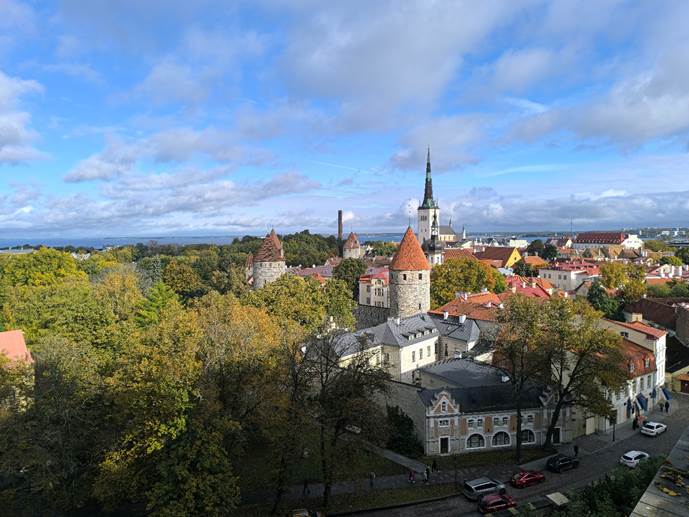
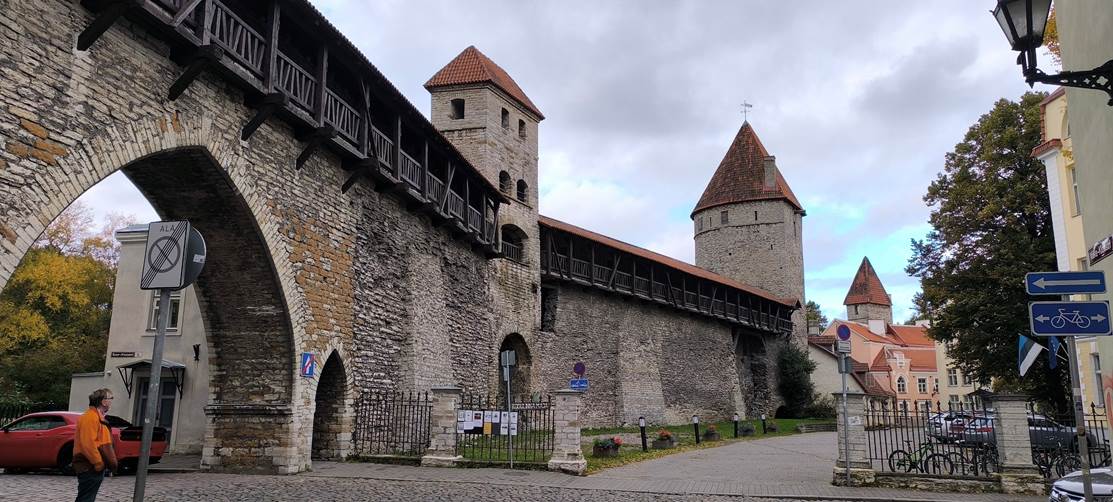
I had originally planned to stay in Tallinn only one day, and then continue south. However, I decided to join my parents for another day. We hired a car and drove out west of the city. Possible by train, slightly annoyingly, but not in the time we had available before they had to return the car to the airport for their flight home.
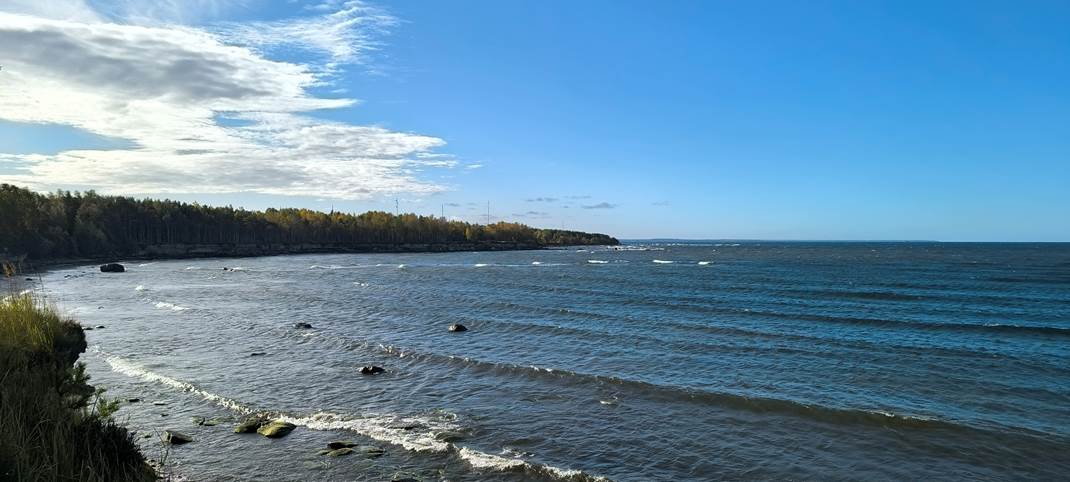
We stopped off first on the northern coastline at some sort of abandoned building. Interestingly, there seemed to be potentially a school trip down to the coast right next it, but I’m assuming the building was off grounds to them.
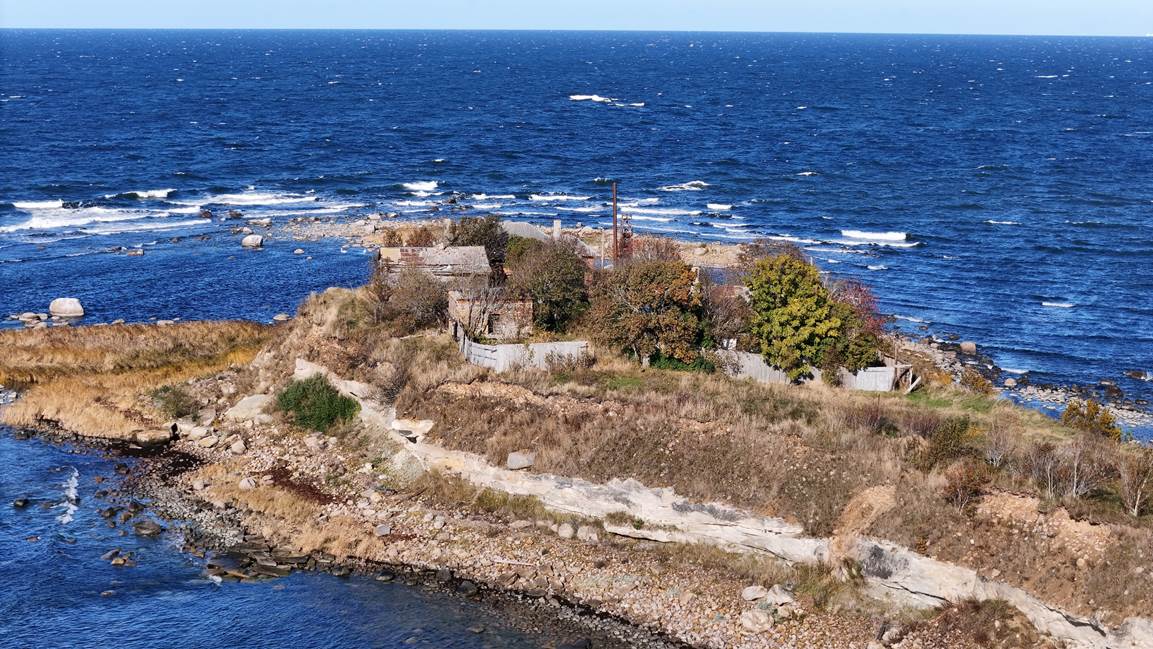
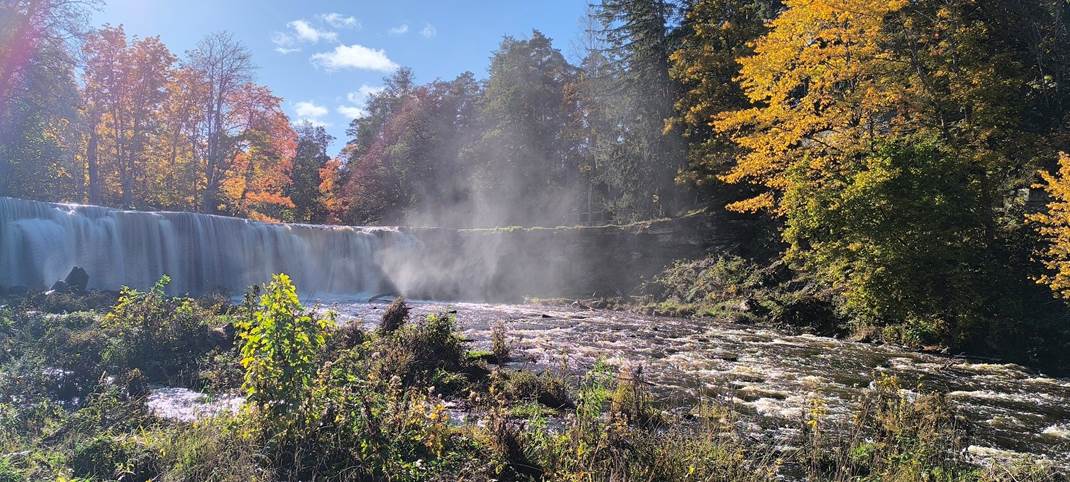
We drove on a little again, and stopped at the nice waterfall at Keila-Jou.
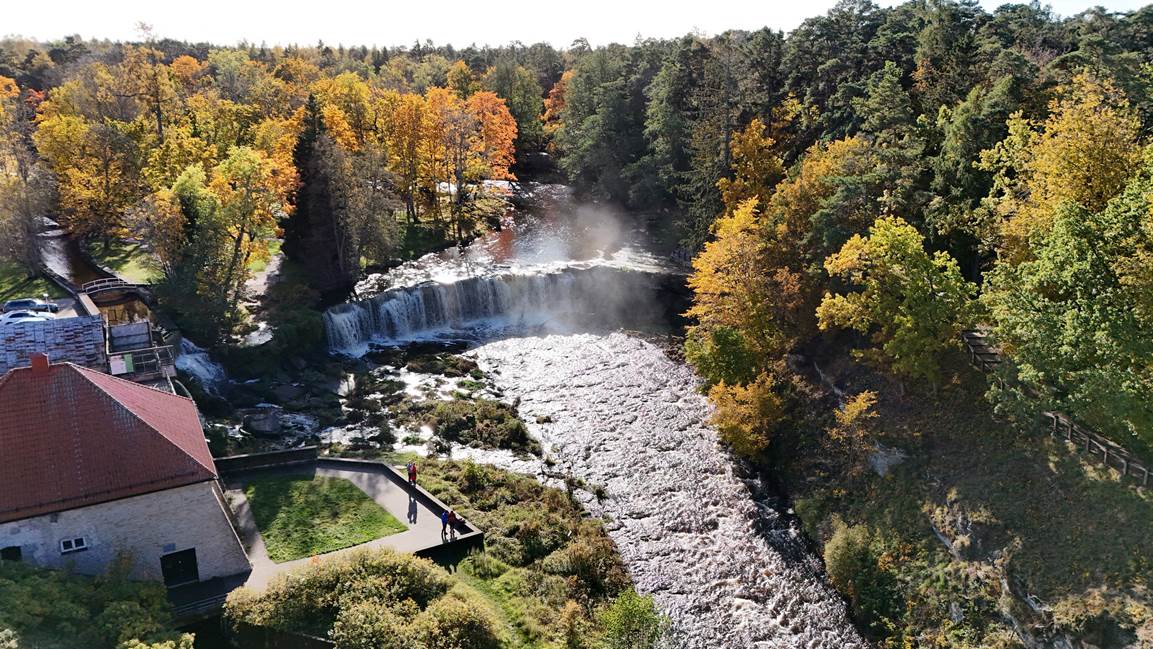
We walked there around there for a little while, then carried on to Paldiski. We didn’t spend long in Paldiski – it feels like a remnant of the old world with absolutely no one around and a long stretch of unmarked tarmac road stretching along the coast northwards, adjacent to the wall of the shipping/ferry terminal. And the lighthouse at the end, which was the true target, was closed.
Having time left over since there was nothing at Paldiski, we drove on to Rummu. Rummu is strange place, an old, abandoned quarry with an artificial lake now filling the hole, and the spoil from the quarry dumped on one end creating a weird artificial hill (water erosion creating a unique appearance over the years) overlooking the lake and the decrepit buildings which have been flooded with water. Apparently, the place is quite popular in the summer, and there’s some leftover makeshift deckchairs and pontoons with small buildings, looking like they’re used as shops in the high season. It makes for a nice view from the hill. If you’re travelling through, I would say it’s well worth the 1h 15min bus journey from Tallinn (each way).
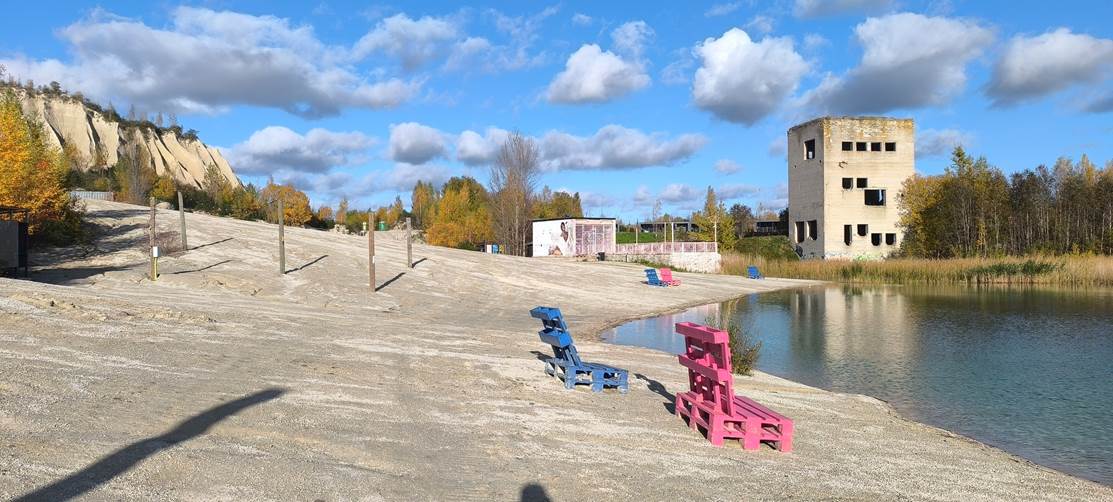
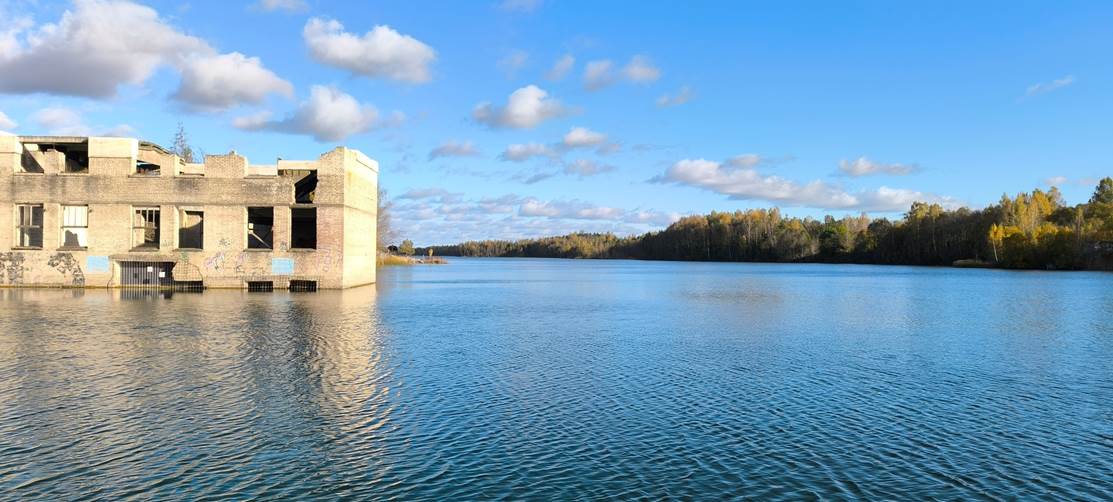
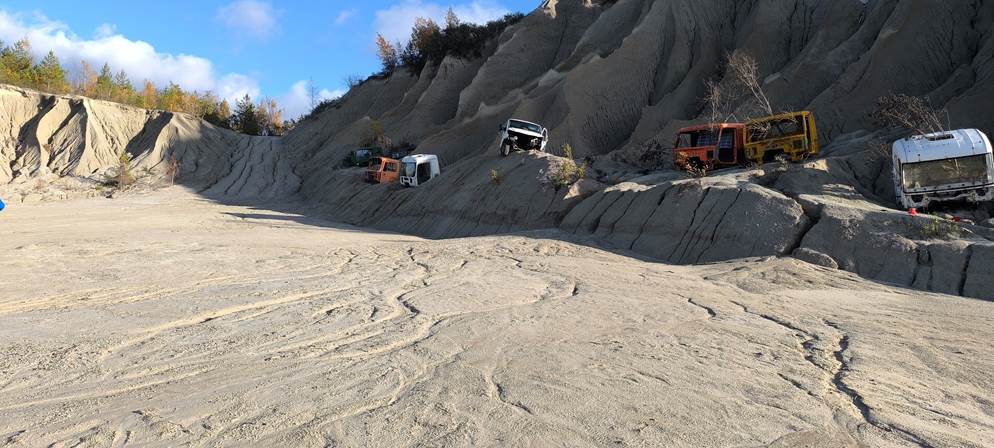
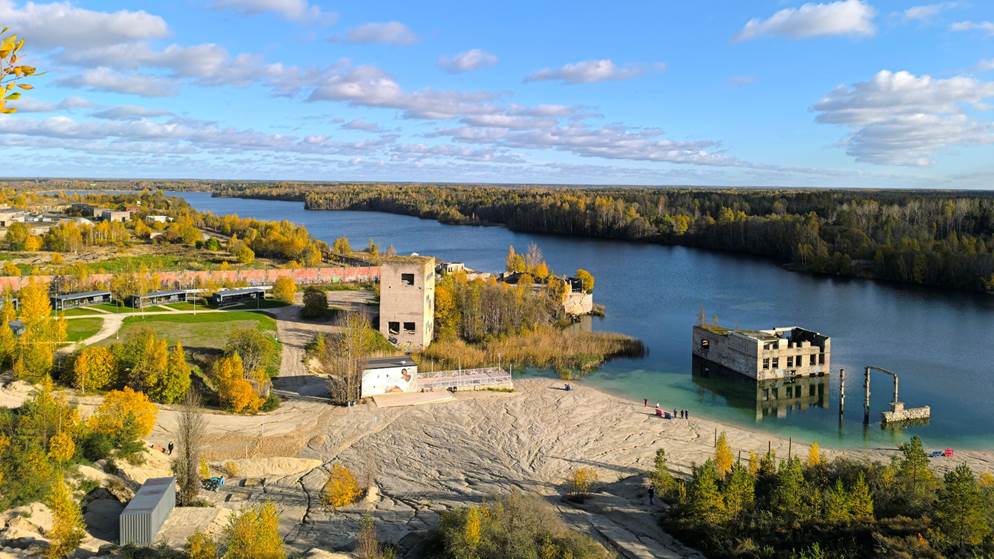
Perhaps at this point you might feel like you’ve somehow seen this before…
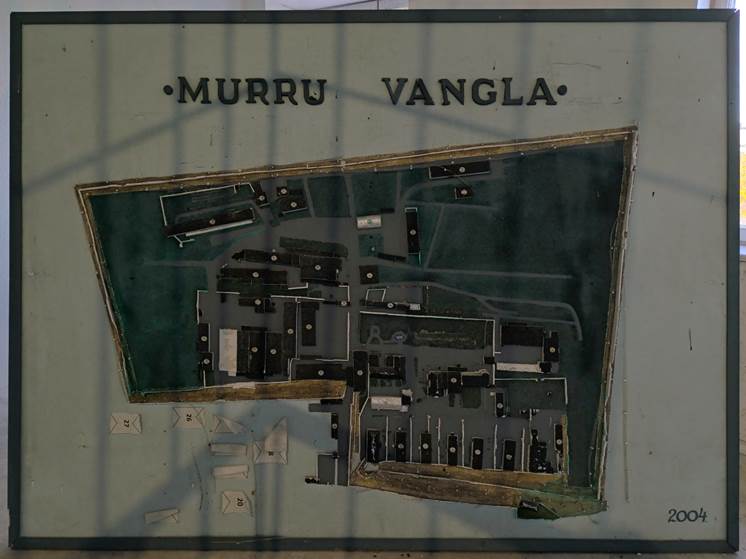
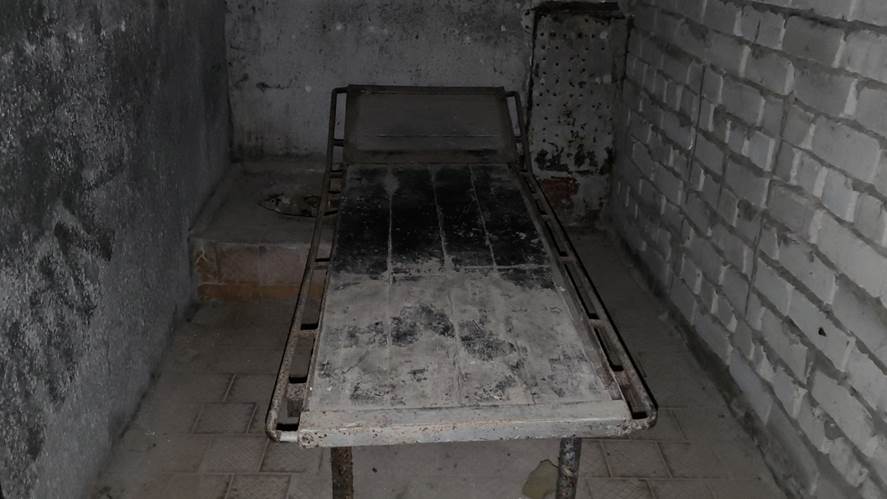
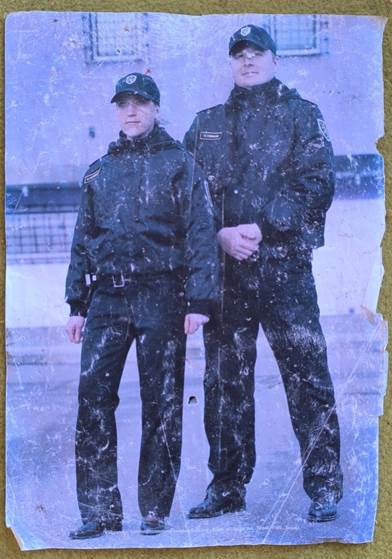
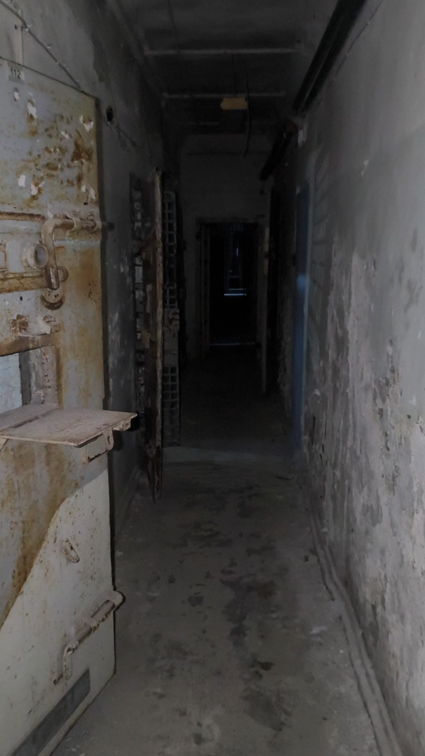
Adjacent to the quarry, and included in its entrance fee in the off season is an abandoned prison, open to the public without tour guide, and with – let’s just say, at least when we were there – a very relaxed attitude to security.
The prison was opened as Murru Prison in 1938. In 1961, part of the prison was separated and renamed Rummu Prison, which existed separately until 2000. In 2011, Harku Prison merged with the prison, preparing for their closure in 2016, when all prisoners were transferred to other prisons nearby.
It’s a very interesting place to explore. Despite not being abandoned for that long, it had obviously fallen into disrepair whilst the prisoners were still incarcerated there. I had been wanting to do some urban exploration for a while, so this seemed like a good place to start – properly abandoned and with original leftovers untouched and unmoved, almost totally free movement, but with some feeling that it wasn’t totally unsafe, despite the crumbling staircases and dangling (I’m assuming isolated) cables. A very small part of the prison is a museum, but even there, there was no staff. The rest of the prison was almost totally empty – we saw one worker standing outside, and one other couple exploring the prison. It was easy to access areas that apparently weren’t supposed to be accessible, as the signs had gone missing from entrances – so when you walked to the other end of the corridor and turned around, only on that end was a ‘no access’ sign, also mostly torn off the wall.
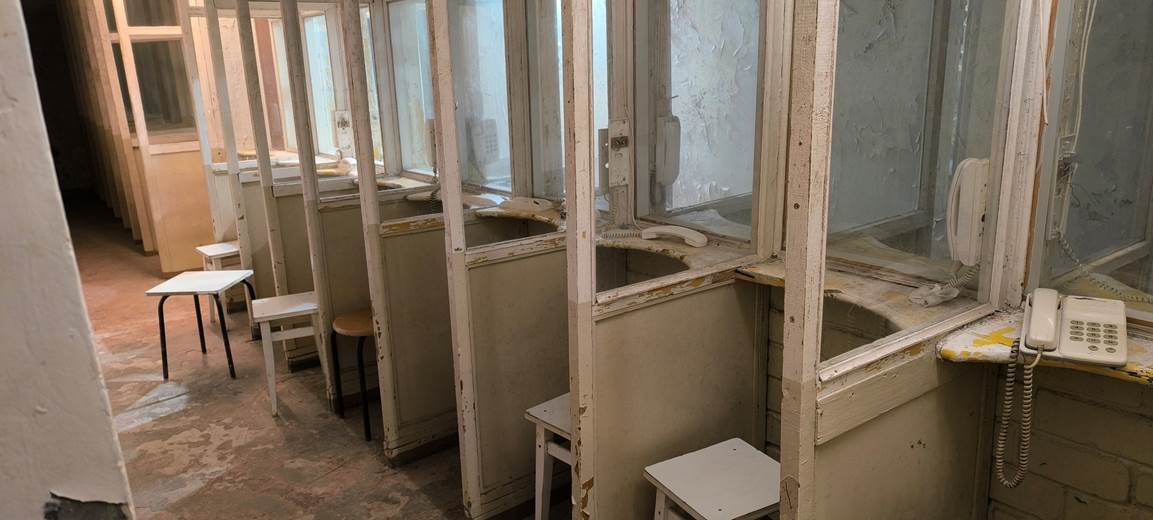
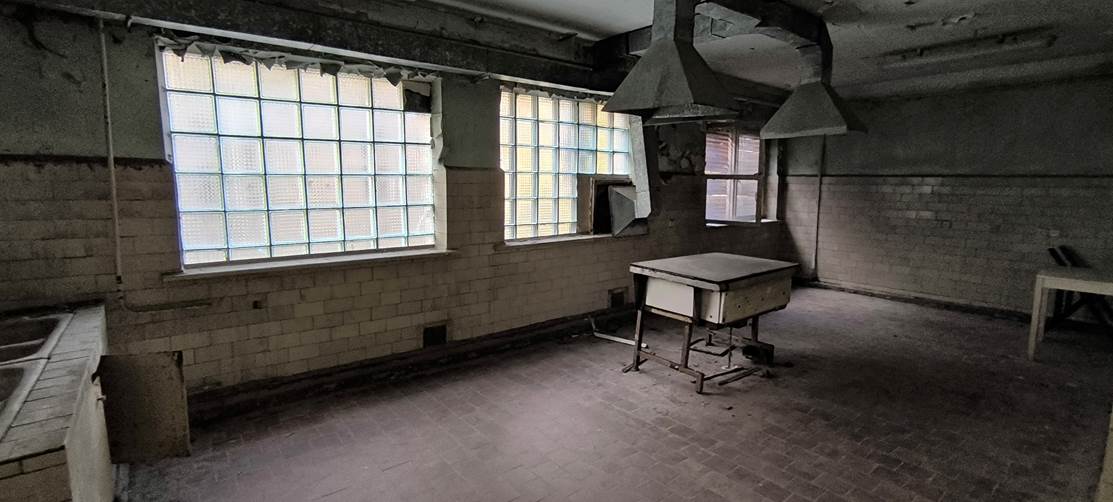
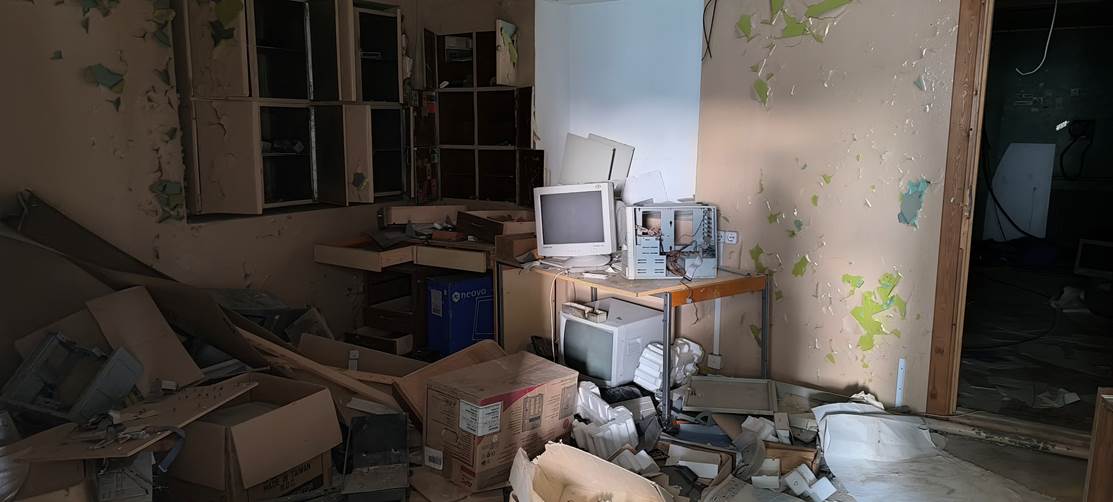
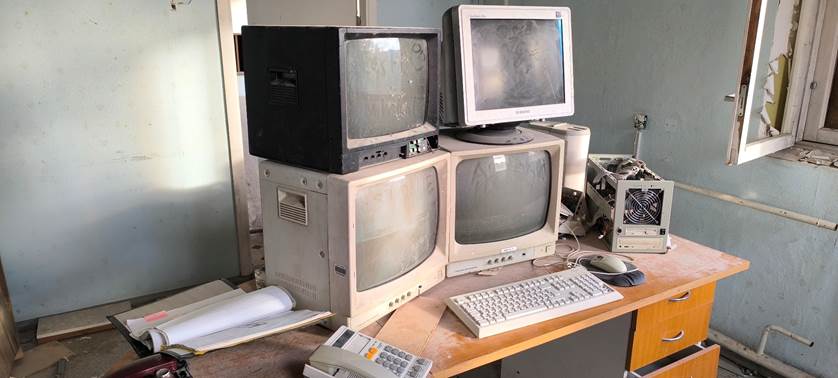
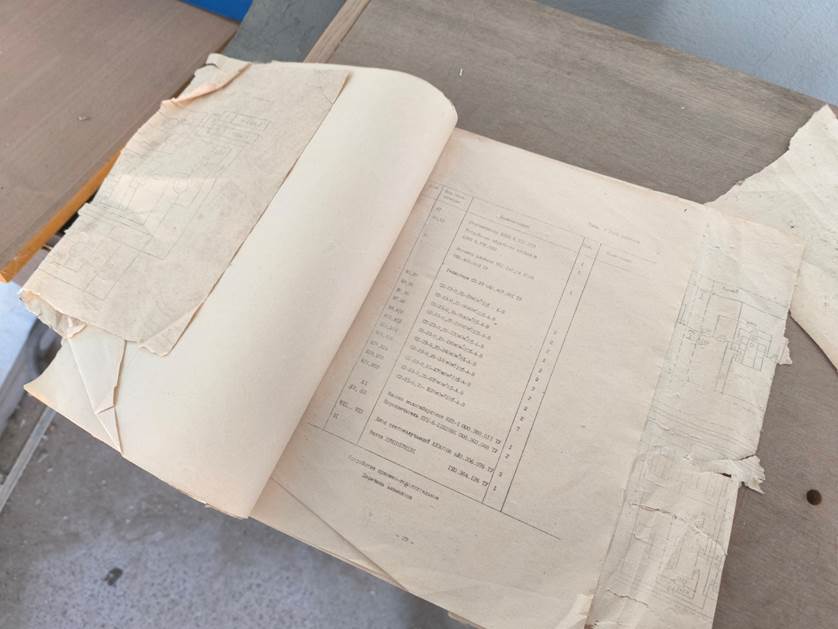
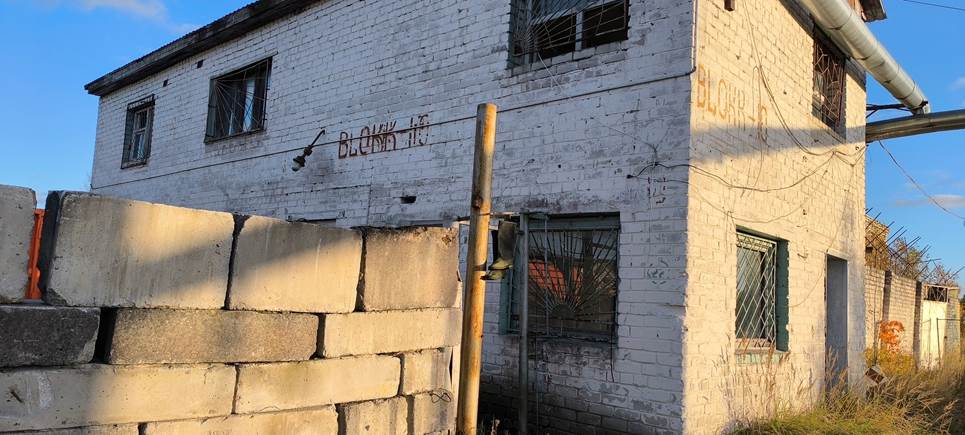
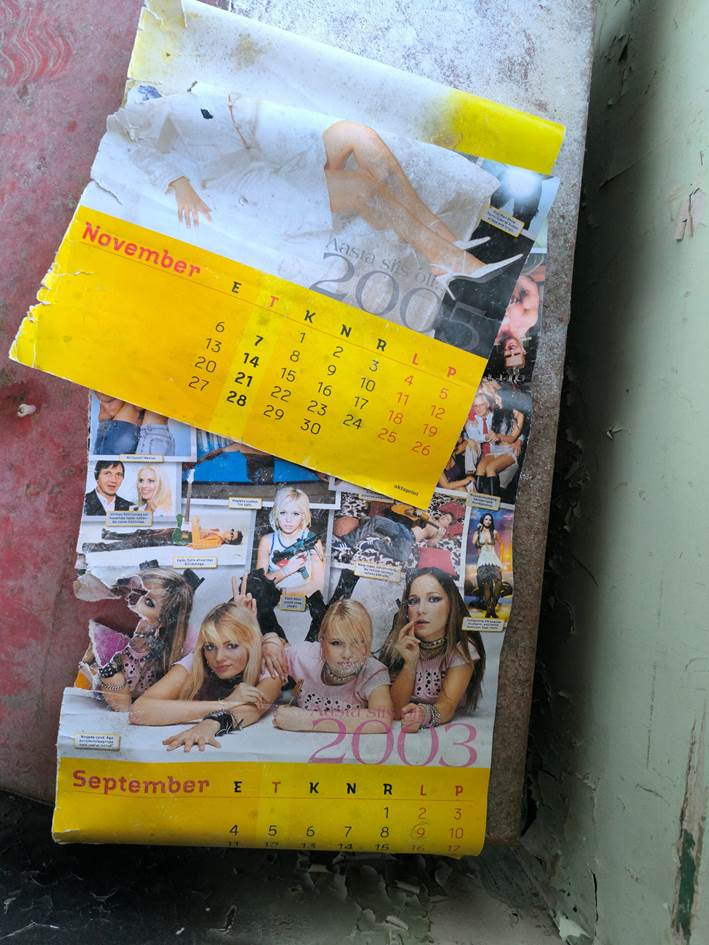
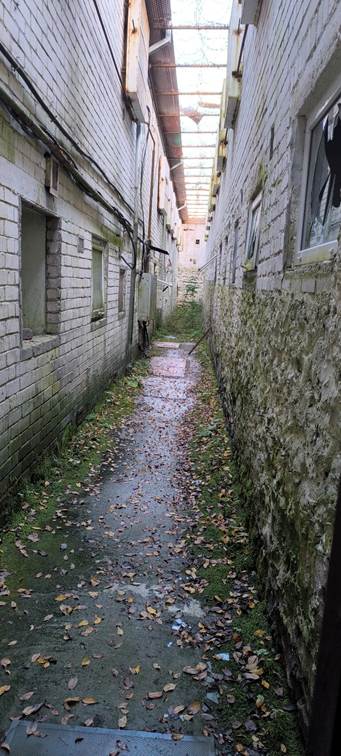
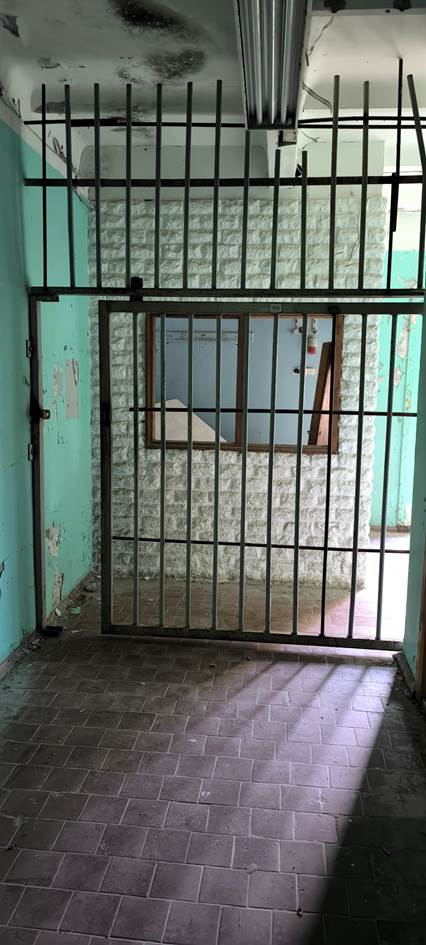
It was after we left the prison – heading back to the airport where we would drop off the car and I would wave goodbye to my parents as they headed back home – that I found out that the music video for “Faded” by Alan Walker was filmed in Paldiski and the Rummu quarry and prison. After watching the video, I could recognise places we had been (such as the long empty road in Paldiski), and wished I had looked it up before so that I could’ve attempted to recreate some of the shots of one of the most viewed and liked videos ever uploaded to YouTube.
After saying goodbye to my parents at the airport departures, I made my way back into the city. Not wanting to cook with the substandard kitchen in the hostel I had bought a room in for the night, I made the bad decision to just go to McDonald’s. Being a McDonald’s employee in the UK, I’m used to apologising to customers for long waits. But 54 minutes was unexpected.
I had an early 10:10 train the next day. From here, the trains would now slowly funnel me back into the main European railway network in Poland via the Suwałki Gap. Luckily for me, the train service in the Baltics had recently improved – indeed it was almost perfectly timed for my travel purposes, although one train a day through Tallinn – Riga – Vilnius, then one a day Vilnius – Warsaw – Krakow still isn’t particularly a lot.
In Estonia, the trains are operated and owned by the national operator. Then there’s a guaranteed cross platform transfer at the border with Latvia (Valga). From this point, the train is owned by LTG Link of Lithuania, but operated by Vivi of Latvia whilst in Latvia (with no other changes necessary). Then there’s one more guaranteed connection at Mockava where PKP takes over on standard gauge into Poland. Easy.
If you want to spend a day in Riga, that means about 24 hours and 15 minutes – you just catch the same train the next day. Then, you’re basically forced to spend a night in Vilnius, so you might as well spend a whole day or two, and a morning, there as well since it’s a nice city.
Although, as I’m writing this, it looks like the service will improve from Vilnius into Poland from… today! That’s the 14th of December. One hour less travel time from Vilnius to Warsaw, and two hours less from Vilnius to Krakow, plus dynamic pricing and new trains. So safe to say, things are looking up for the Baltic rail network (and of course, at some point, Rail Baltica might arrive).
Back to the actual trip, I left Tallinn in the morning, and arrived 6 and a half hours later in Riga.
Riga was unfortunately a little disappointing. The old town centre is quite nice, but quite small and it’s unfortunately not helped by traffic surrounding the centre, turning a relatively nice riverside walk into something quite loud. Still a nice city worth visiting, but unfortunately the worst out of the Baltic capitals in my opinion. But it’s got some nice buildings, and I met some people in the hostel.
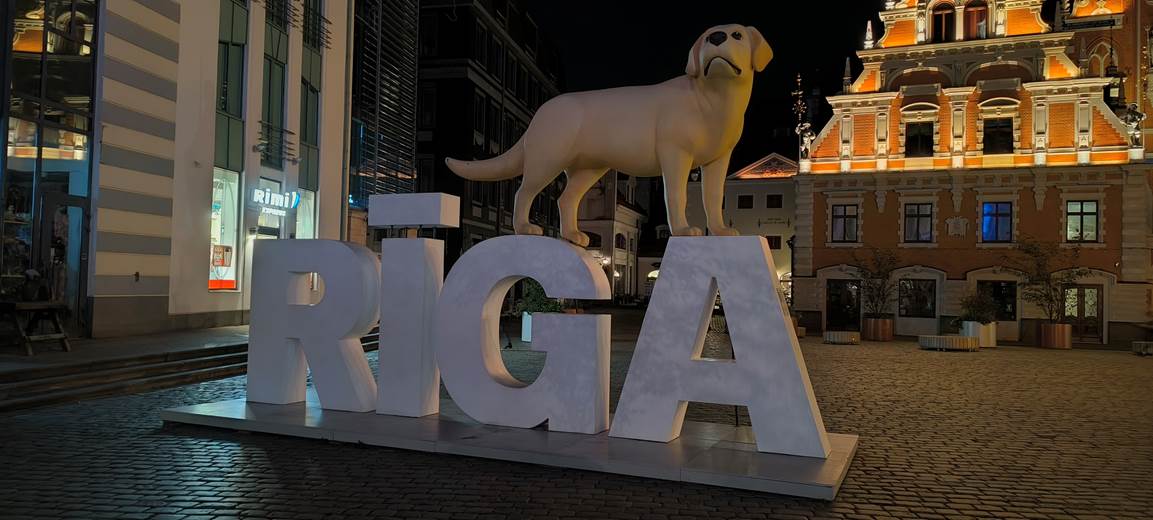
On the morning of the next day, I explored a little more of the city, going up the tower of the St. Peter’s Church. I then walked along the canal and around the parks just to the north-east of the old town, and ran into some sort of filming.
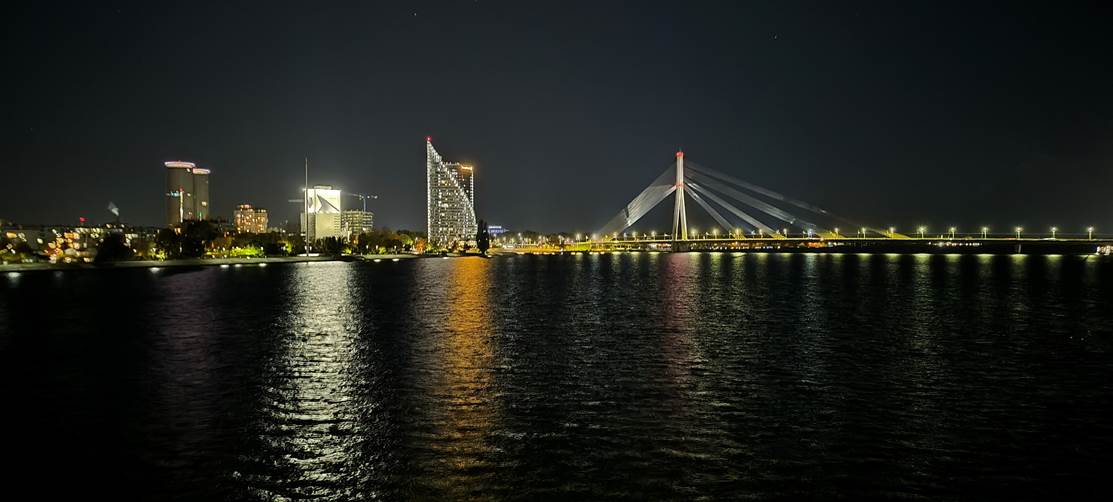
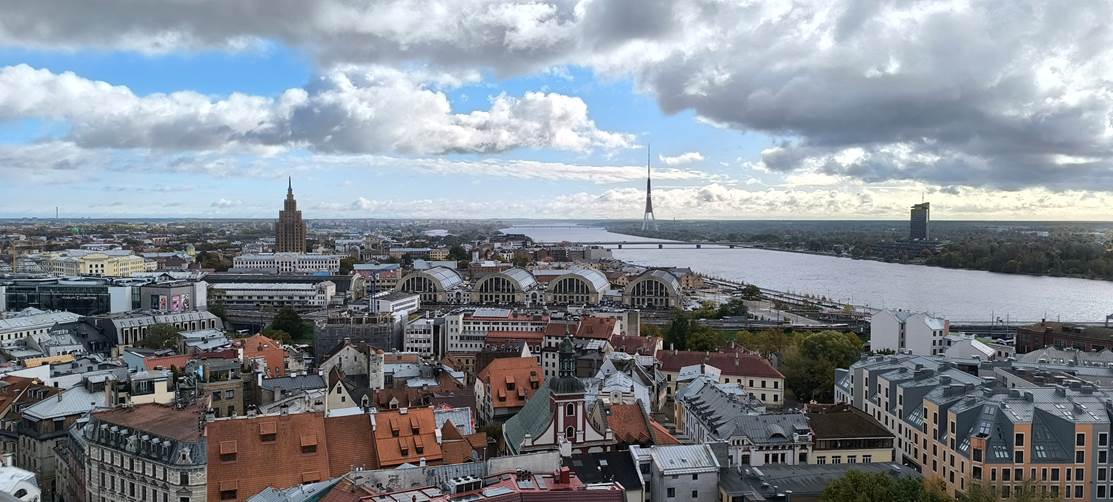
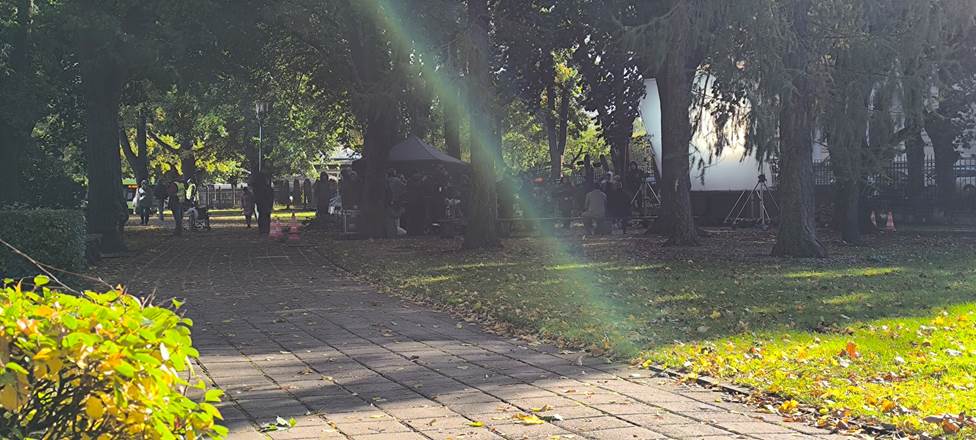
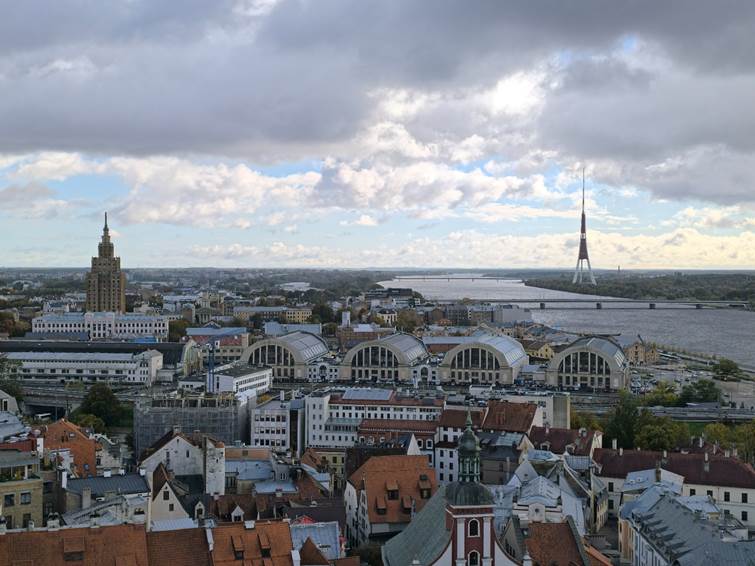
Next stop: Vilnius. I was tempted to go via Daugavpils, but my understanding is that trains don’t run from there to Vilnius.
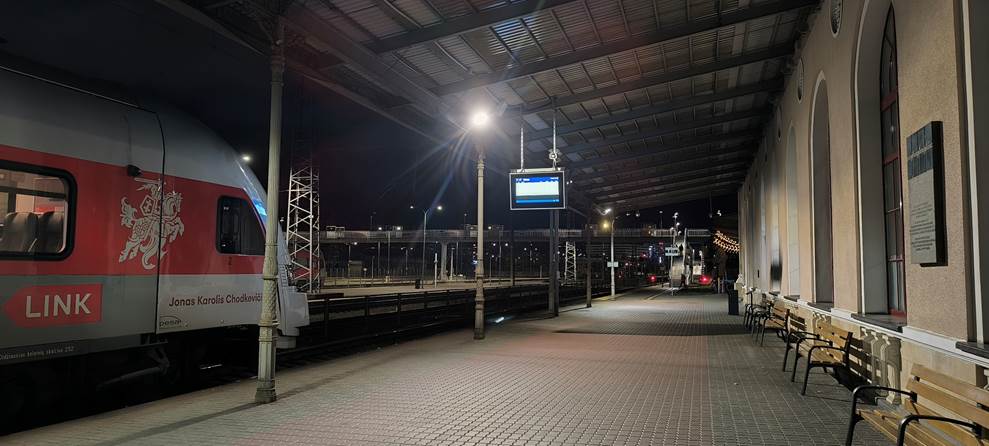
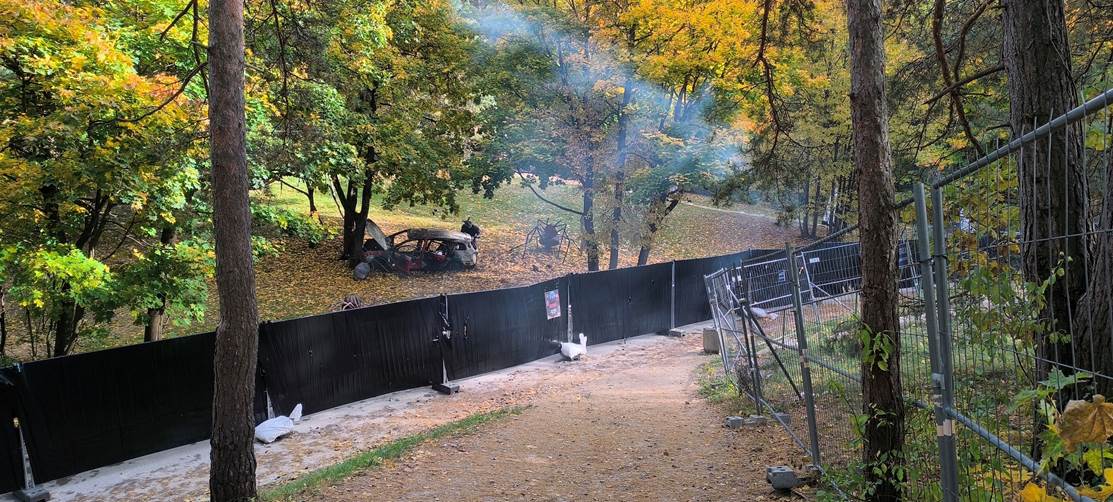
Vilnius was a nice city. After a walk through the quaint ‘independent’ Užupis ‘republic’, I walked up a hill in the middle of the city to see some sort of film set with smoking cars and giant spiders to the Three Crosses Monument. As I walked up Gediminas’ Hill, there was a massive downpour for about 10 minutes, making sure I wouldn’t have a dry bench to sit on for the rest of the day.
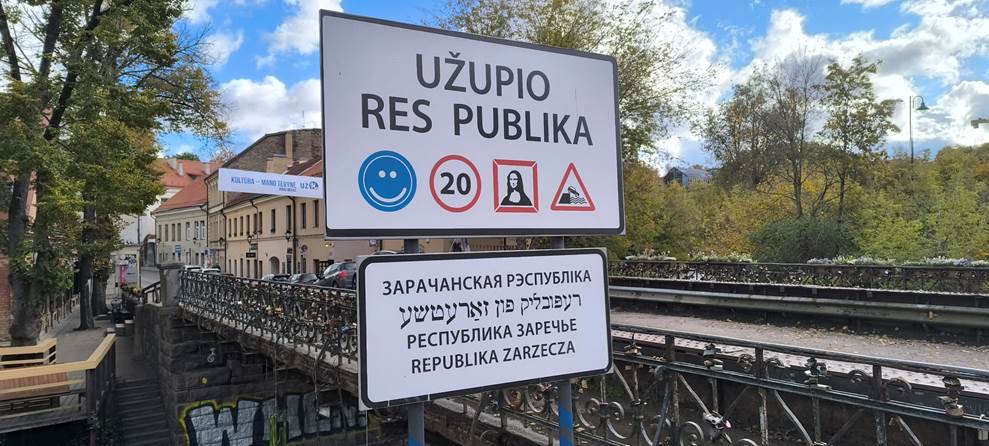
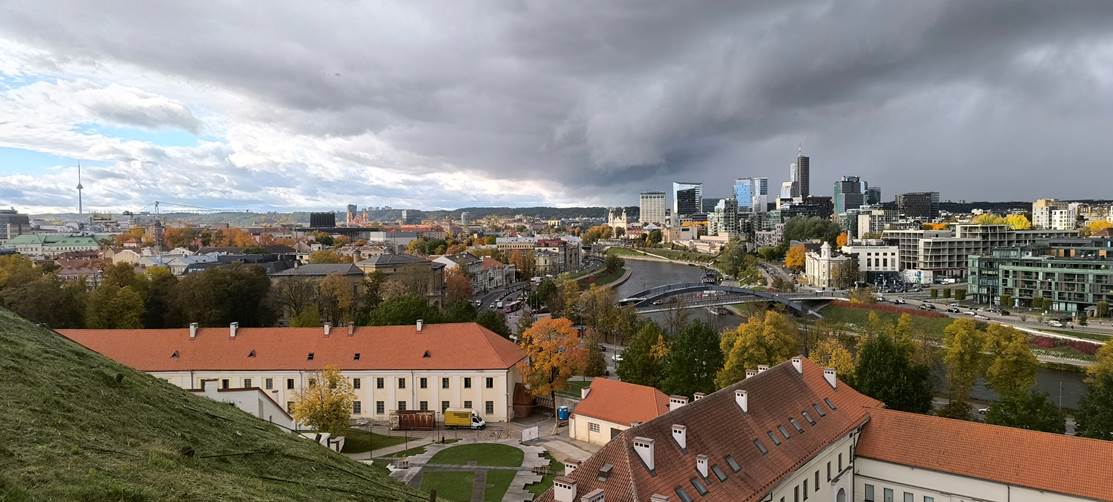
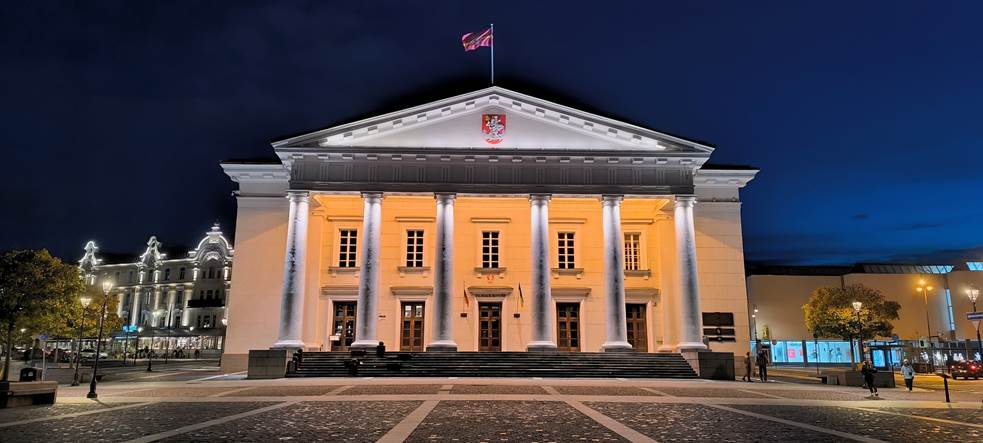
Vilnius is one of the only cities I regret not spending another day in. With another day, you could visit the picturesque Trakai Castle apparently easily accessible, or spend time exploring the eastern part of the city.
However, at this point, I had decided on a very rough route through Europe, carrying me south to Montenegro. To access Montenegro by train, the route is from Belgrade via a relatively famous route. More about the route when we eventually get there. However, at this point, I knew of impending trouble in Serbia. On the 1st of November 2024, the train station canopy outside Novi Sad train station had collapsed, crushing 16 people and injuring another. Quickly, it was realised that this had occurred due to negligence by the Serbian government and China, who were very involved with the recent renovations. China has a huge influence in Serbia, and are currently constructing their high-speed rail line from Budapest to Belgrade. This line has been pushed back and pushed back and pushed back again.
Since then, there had been regular huge protests across Serbia, mostly organized by student groups, who’s aim is to remove Vučić, the Serbian president, from power (as he is seen to be ultimately responsible for the negligence, among other things). The most major of these involved 400,000 people protesting in Novi Sad. The Serbian government shut the rail and road networks citing a made-up bomb threat. This was ultimately a failed attempt to reduce the number of people travelling to and from Novi Sad and Belgrade – people marched on foot across the country instead.
The 1st of November 2025 would mark the one-year anniversary of the collapse. There was a big gathering (strictly in remembrance, not to protest) planned for Novi Sad. I knew there was an almost 100% chance that the Serbian transport networks would again shut down for the days leading up to and after the events. So, I wanted to not be in Serbia from the 31st of October to the 4th of November if possible. We shall see together how that turned out.
What this meant is making quick progress through Europe to exit Serbia before the 31st, as if I entered after the 4th, I would not have enough time to complete what I thought could be the remainder of the trip. Therefore, I chose not to stay any longer in Vilnius, as it was already the 14th as I left. Whether this was the correct decision, I don’t know. Maybe in the end I would’ve just missed the exit day anyway if everything went to plan. Luckily, it’s not as hard to revisit in future as Nordkapp.
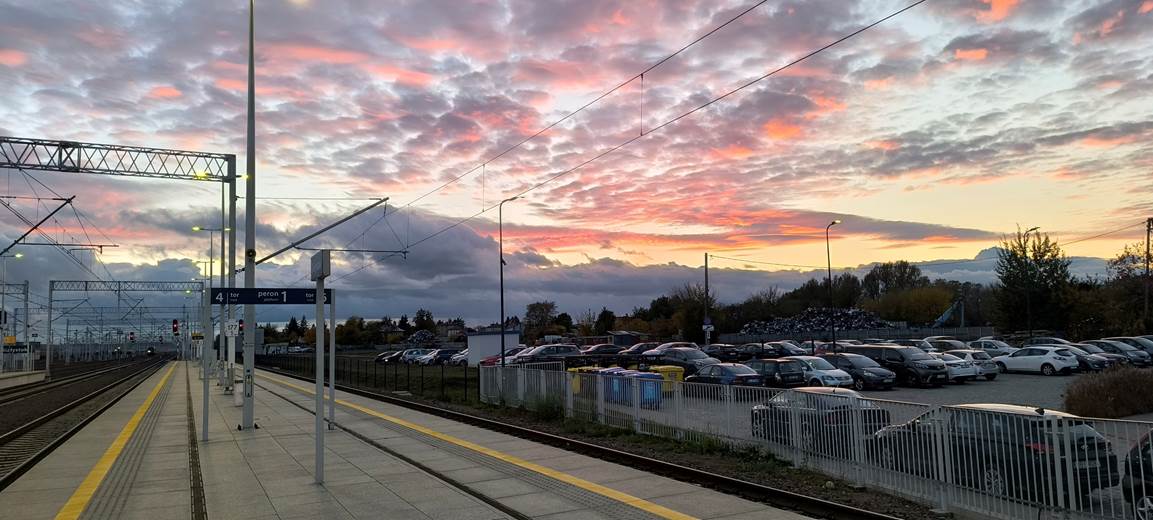
So, after a nice stay in Vilnius (and handily back in the land of the Lidl bakery), I set off for Warsaw. It was a long train ride, 8h 30mins. At least there was a decent sunset where the train stopped for a while at Białystok.
As we drew into Warsaw, I heard the guy behind me ask someone else on the train something, which I can’t remember anymore. However, it was obvious that he was also solo travelling, so we walked towards our hostels from the train station together. He was from Helsinki as it turns out, a little younger than me, and also solo travelling for the first time. I think he was using the bus through the Baltics, as he wanted to preserve his 4 days of Interrail travel for more expensive trips, which is a good idea.
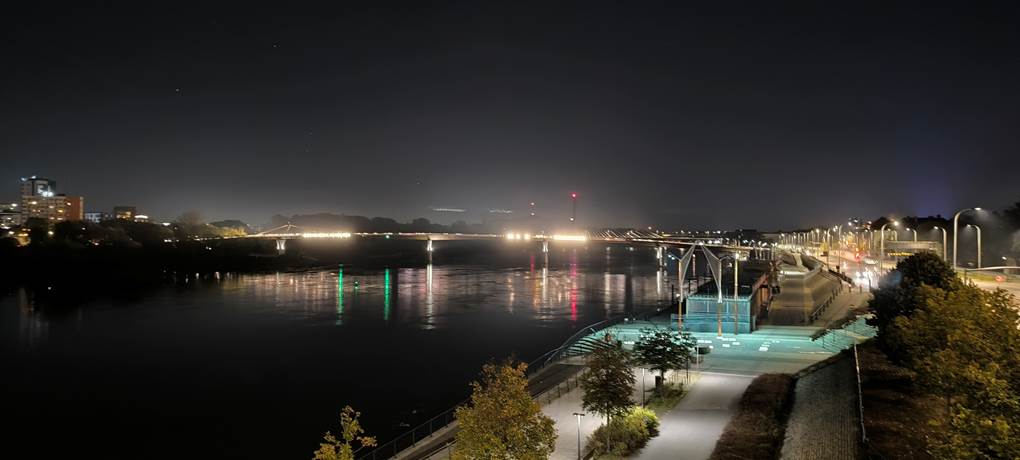
The next day we walked around the centre a little, along the river then into the centre, before going our separate ways.
In the centre there was also filming going on for some TV show, involving horses. The pavement and road were covered with sand and there were some quite complicated barriers everywhere.
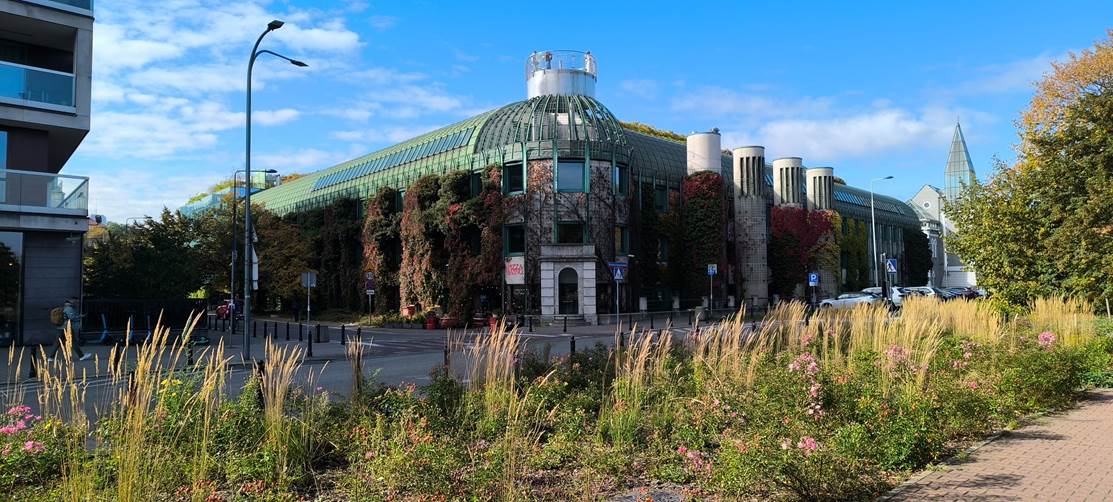
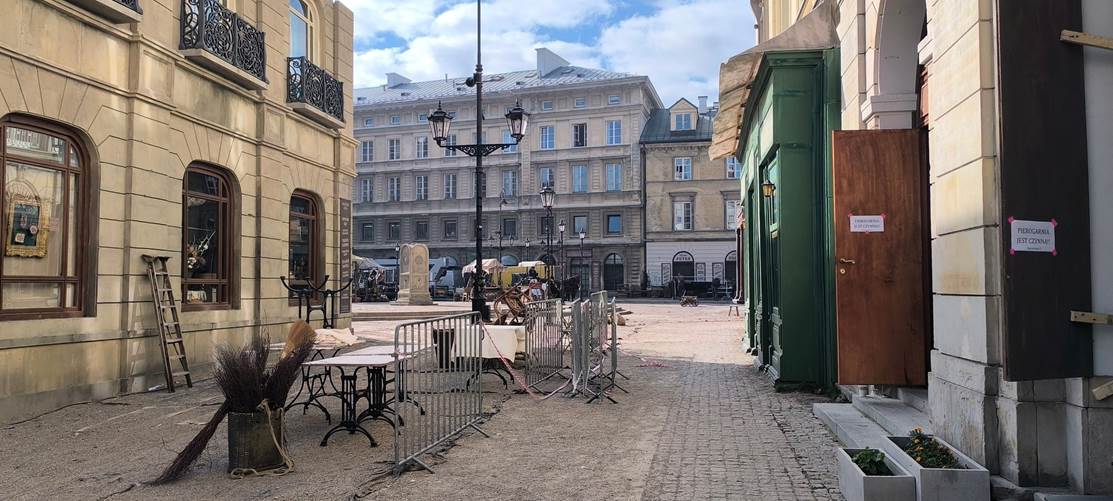
Warsaw was a little large for being easy to get around on foot, but it was a nice ‘big’ city. The big palace in the middle of everything looks nice and makes for a good (although expensive) viewpoint. Unfortunately, the city is quite busy with cars apart from the small old town, which is a little way from the modern centre and train station.
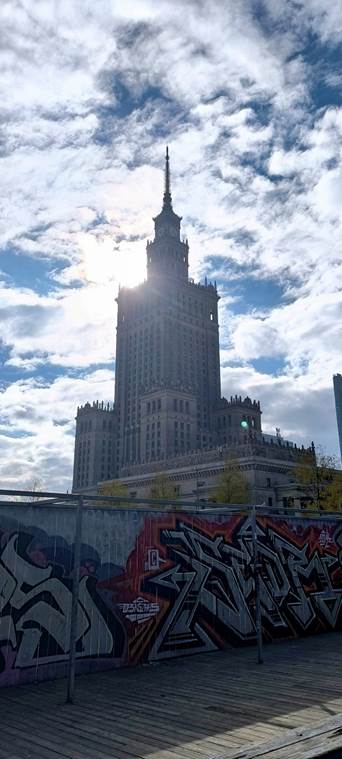
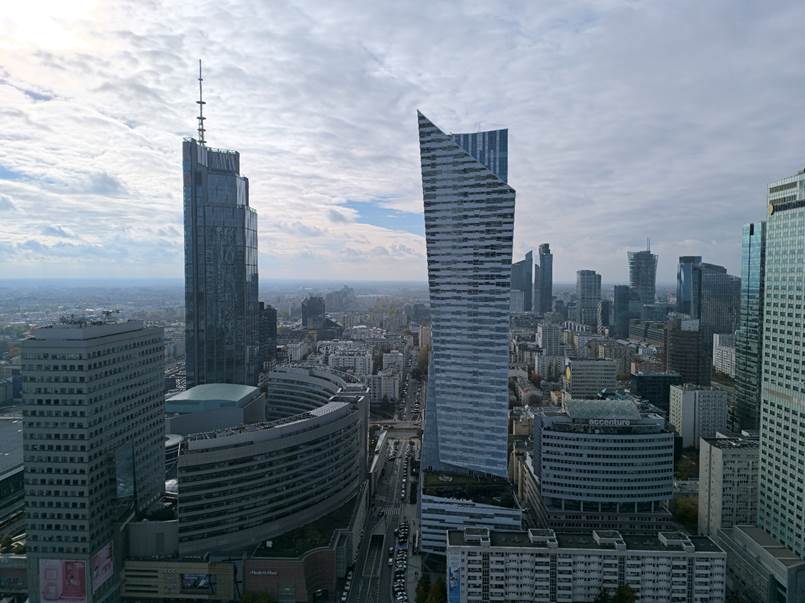
I walked to the Royal Baths Park then back again, before proceeding to get lost in the central shopping centre looking for a supermarket. As much as I would like to say that didn’t happen before or again, it did. A lot of them could use better wayfinding.
Then before my train left in the morning, I walked around the old city, then took up residence on a wooden hammock in a park near the station. The Żabka shops/cafes dotted everywhere serve very good and well-priced hot dogs – a very nice and enjoyable breakfast that I took advantage of throughout Poland.
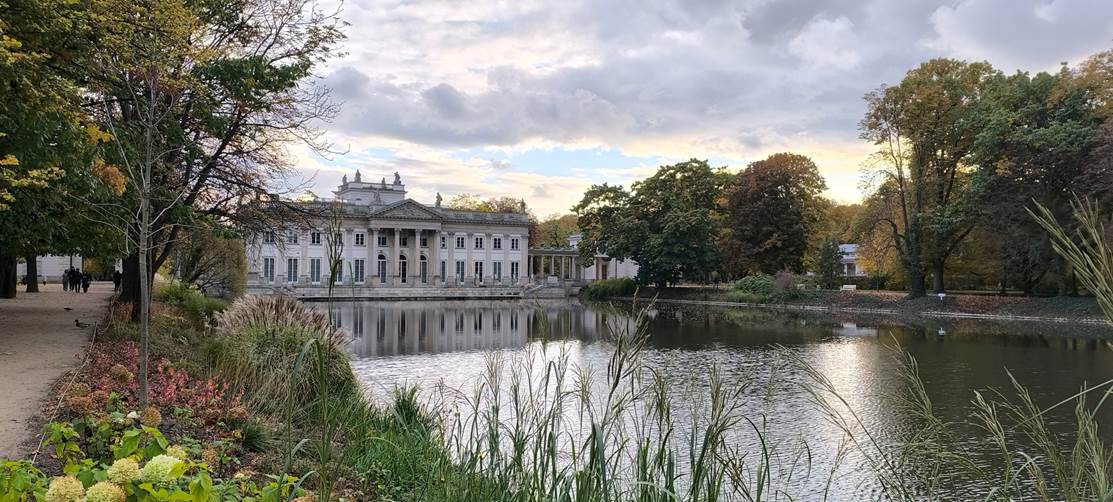
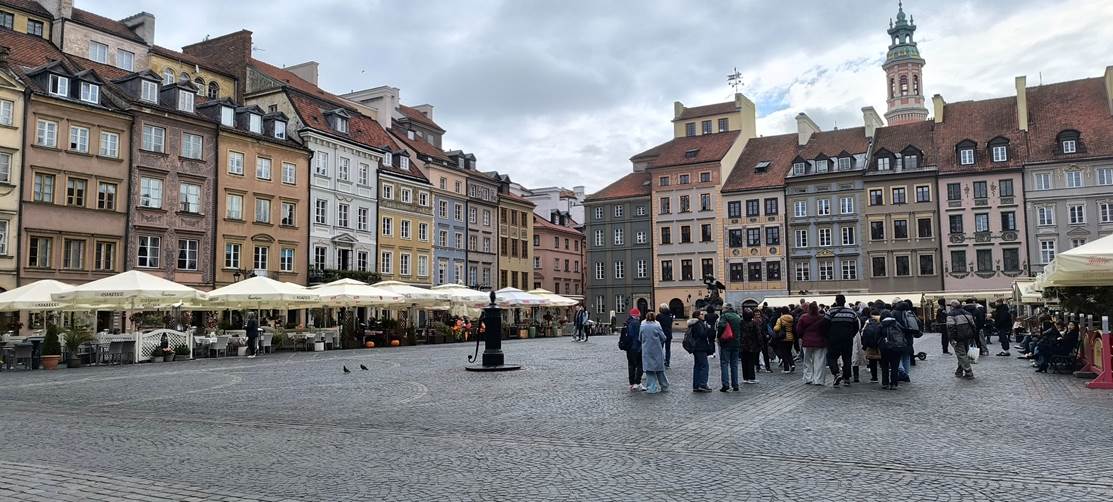
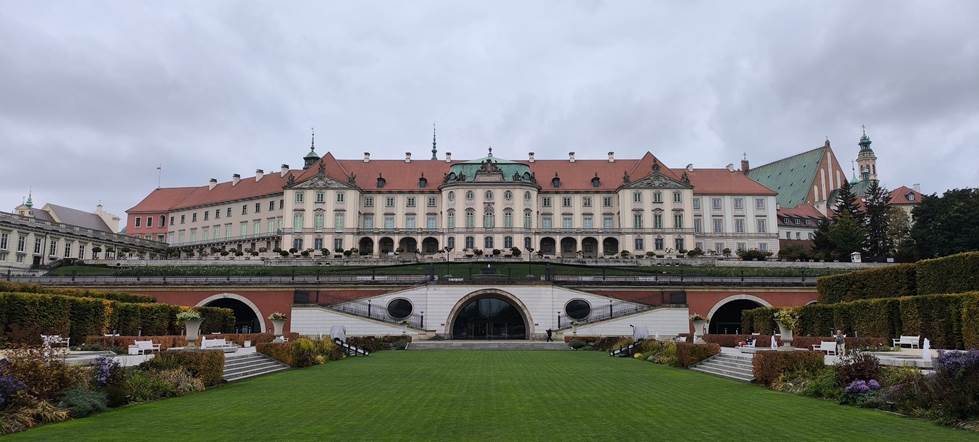
The online reviews are mostly accurate it seems – Warsaw is nice enough but is certainly built as the capital of a country, its economic centre. Not necessarily its tourist centre. I guess very few cities around the world manage to be both.
My next train would finish the run of long distances and relatively high speeds, and take me to Kraków. A city which I would get more comfortable with than I expected.
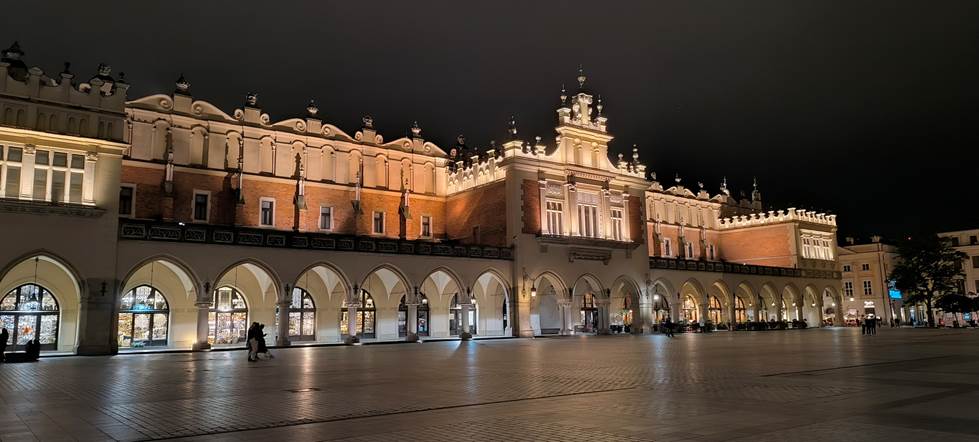
I spent my first morning doing laundry, in a self-service laundromat/café. As I was eating my pancakes, and I still can’t figure out why, a woman in her maybe 60s or young 70s walked over to me and forced a 20-złoty note into my hand. I attempted to kindly refuse, first in limited English (which of course I didn’t expect to work), but having no effect other than her forcing it into my hand even more and talking to me about something I wish I could understand in Polish. Then I tried two words of poor Croatian which I (somehow correctly) guessed might be similar or at least understandable in Polish – “no understand”/“nie rozumiem”/“ne razumijem”, causing her to respond, of course with (in Polish), “you do understand, you do understand”. I gave up eventually and thanked her profusely. I still don’t know why she took pity on me, I was simply having some food whilst waiting for my clothes to be washed, but I guess I just looked slightly out of place (a feeling which you’ll get used to if you solo travel).
I spent the rest of the day exploring the old city, and eventually deciding to get the bus to Kopiec Kościuszki, which offers a fairly nice (and of course, pricey) view of the city – when it’s not foggy. Then I wandered through the dusk to the interesting and scenic Zakrzówek Park, before shopping for dinner at the Kaufland then taking the tram back into the city.
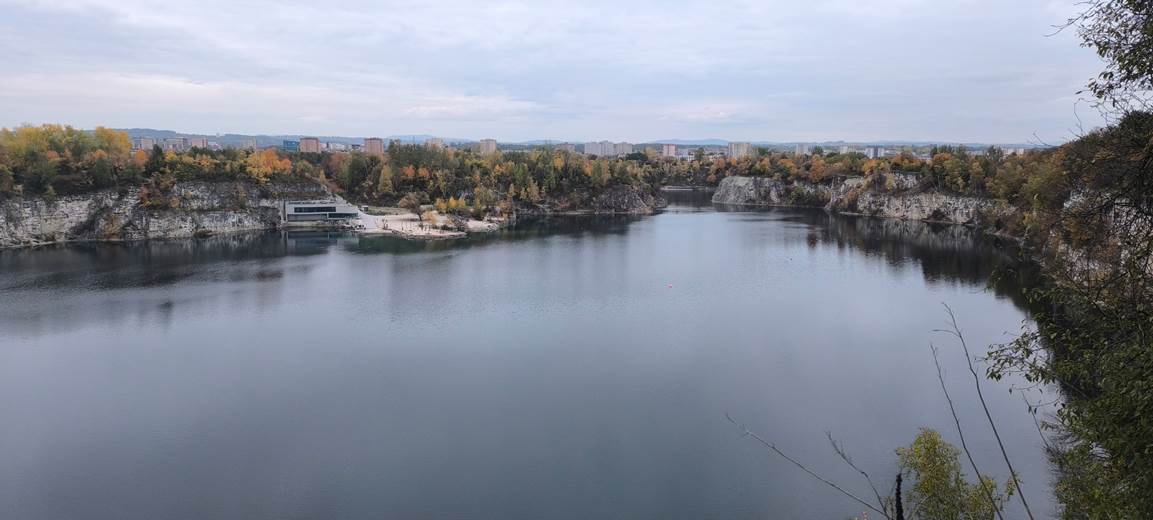
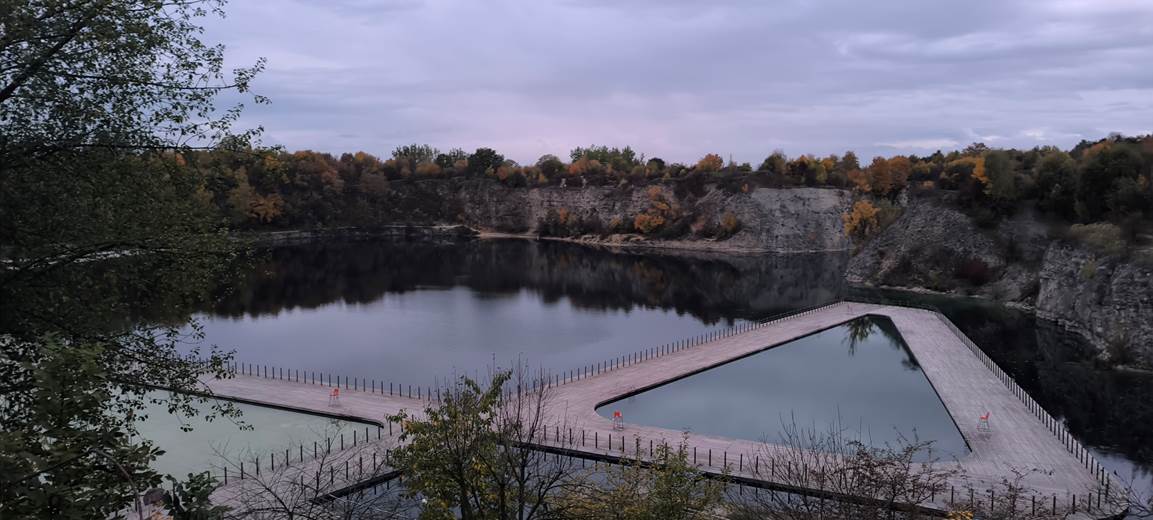
As I cooked that night, I decided I would spend another day in Krakow and pay a visit to Auschwitz.
Having talked to some people at the hostel, I realised that this might be difficult, as online tickets sell out a long time before (not helped by unofficial tour operators purchasing non-tour tickets, then lumping their group onto an Auschwitz provided guide), and on-site tickets sell out very quickly. My backup plan was the Wieliczka Salt Mines – a much more touristy affair that I wasn’t really massively looking forward to after the review by a certain trainhopper, but had a small fantasy of escaping the group into the depths of the mines (as demonstrated by that same certain trainhopper).
- Tip: Avoid tour groups like this, especially unofficial ones. For example, Auschwitz on-site tickets are actually free, if you can get them.
So, the next morning, I headed over to the train station to take the train to Oświęcim. I arrived at the station a little too early, so I walked around for a little while trying to find a waiting area with free seats. After following the signs which appeared to be non-sensical for far too long, I decided to walk down some stairs whilst looking at my phone to remind myself of the train time and see if there was a platform allocation yet.
- Tip: You know those things your parents told you not to do but you always did without a problem? Don’t drink from the cold tap in the bathroom. Don’t run with scissors. Don’t attempt to walk down steps whilst on your phone. Well, that last one suddenly makes sense.
In my defence, the stair edge colour wasn’t very well contrasted against the stair colour itself.
I missed the last step, and fell quite badly on my ankles, twisting the left one quite significantly into a position that it was not really made to be in, moving the whole left foot so my sole faced my other leg while the left leg stayed mostly straight and did not bend to accommodate the twist.
Thankfully, there was no one else around to see my fall so I brushed off the embarrassment quickly and made a brisk hop to the seating area – which of course was now in a very obvious location.
Deciding that the pain was manageable, I decided I would not change my plans despite the long day of walking ahead.
Boarding the 45-minute long train to Oświęcim, I found myself a seat. Arriving in Oświęcim, I decided to take the free shuttle bus to shave off a potentially vital few minutes. I did indeed manage to get a ticket for Auschwitz, but only for 4 o’clock entry. Confusingly, the salesperson said to go to the second site first, at 3pm, and they’d let me in. That didn’t seem quite right, and there was no point hanging around here, so I walked over to the second site. Asking them, they said they could only let me in at 4pm, and recommended I did the first site first. So, I walked back along towards the first site, taking a small detour to see the Judenrampe, which is along an unsuspecting residential road along the train tracks and doesn’t seem to be included on the organised tours. Walking back towards the centre, I decided I might as well wait in a nearby café or something to take the weight off my foot, which was becoming gradually more painful.
(I’m not going to put a picture of Auschwitz, or at least what I managed to see of it, or the Judenrampe here. It’s not a tourist trip.)
As it turns out, taking the weight off allowing the swelling to increase drastically, causing the pain to soon become pretty bad to the point I could no longer really put any pressure on that leg at all.
I decided that unfortunately I would have to go to get it checked out at the hospital in Krakow. Getting to the train station was going to be difficult though. Thankfully, some kind people saw me struggling to stand up and gave me a lift in their car to the train station, only a couple of minutes away. As I hopped up and down the stairs, damaging the other ankle, which I would feel as the other eventually healed, I made it onto the next train back with a few minutes to spare.
Arriving in Krakow, I tried to lookup a hospital to go to – but maybe my Google Maps skills weren’t up to scratch or I needed to be searching in Polish. I first got a taxi (at this point I was unable to walk virtually at all; getting out of the station to the road was a huge chore) to what I thought was a hospital with some sort of clinic – it wasn’t an emergency so I didn’t want to go to an A&E equivalent, something like a Minor Injury Unit (which is what we have in the UK) would’ve been more suitable. It wasn’t. One administrator kindly pointed me to a different hospital, so after another taxi ride, I arrived there.
Had it been the UK and the NHS, I probably would’ve been sitting in the waiting area of the combined clinic/A&E area for the whole night into the morning. Being a much more efficient country though, it didn’t take too long for me to get checked by a doctor, get some X-rays, get confirmation that I had sprained it with a rotational injury rather than any sort of break or snap, and get discharged with advice to rest for a few days, keep it elevated, and use a cold compress and anti-inflammatories if the swelling persisted. In the end I think it took two hours. One of the registration people was not very helpful at all, and got extremely annoyed very quickly that I didn’t see the triage ticket machine tucked away in a corner. But a paramedic who just happened to be in the non-emergency area helped me out, and the second person behind the desks helped me through the Polish forms.
- Tip: If you’re British, get a GHIC. If you’re an EU or EEA citizen, get an EHIC. Bring it with you. Both are free and entitle you to necessary medical healthcare across the EU, EEA, and UK/NHS under the same cost and conditions as a national resident. And be extremely thankful that a lot of Europe has free healthcare at the point of use (like in the UK and, as I learnt, Poland). In the end, despite being a Croatian national, I used my British passport as I had the GHIC card but no EHIC. Also get travel insurance, it’s not a replacement. Who knows how much that would’ve costed if I didn’t have one or I was travelling in the USA. Saved my bacon.
I would like to say I haven’t walked down any stairs whilst looking at my phone since – that would be a lie. If it worked for 19 years, why shouldn’t it work for 19 more :D.
After suffering to get back to my hostel and into the top bunk, I realised that there was now a big chance I would no longer pass Serbia in time, so might as well follow the doctor’s orders and take my time – and hope that the mysterious Serbian bombs wouldn’t fall twice.
I spent the next day getting to a pharmacy, then to an AirBnB, then just doing nothing. It was still quite painful, especially when walking, but the swelling had gone down, and it seemed like the swelling was the cause of the worst parts of the pain. I went for a short walk in the evening to see how it was.
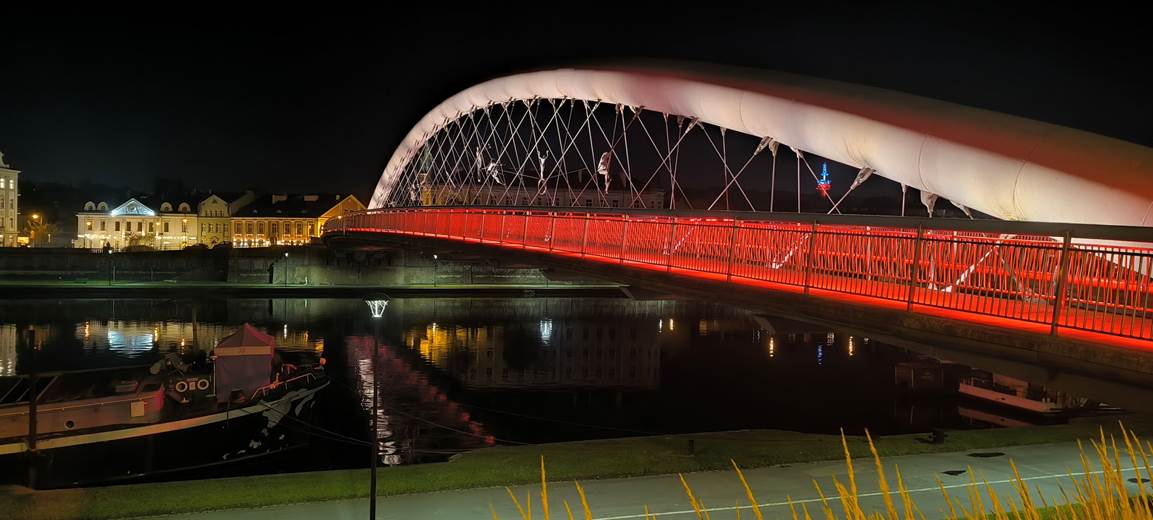
Anyway, the day after, a lot of the pain was gone, and I could walk on it a little more comfortably. I knew I needed to move on; however, I felt as though I should try to visit Auschwitz again. Unfortunately, I arrived half an hour later than two days earlier and all the tickets were sold out.
Therefore, I went back across Krakow to the Wieliczka Salt Mines, and took a tour on the Tourist Route. Looking back, I should’ve done the Miners’ Route, since it was the same price and I think would’ve been more interesting. In the end it was a little expensive and I didn’t really like the way you had to do it in tour groups, but it was a cool place to see nonetheless. Lots of the routes that were available a few years ago, such as a short minitrain ride and a short boat ride a while before, are no longer offered, and our route was also diverted so we didn’t get the opportunity to use the old refurbished mine elevator.
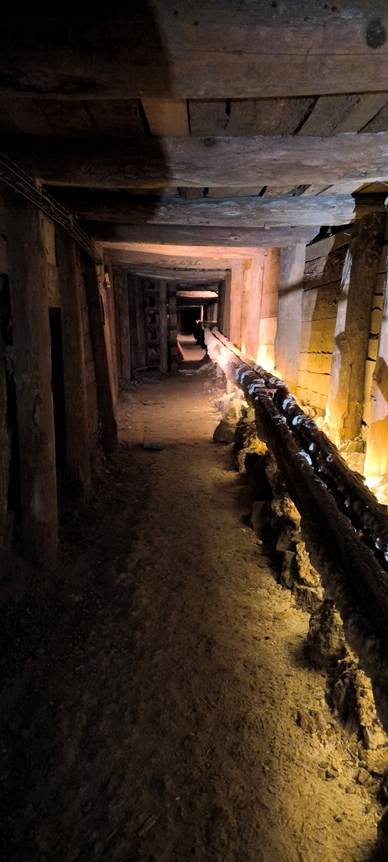
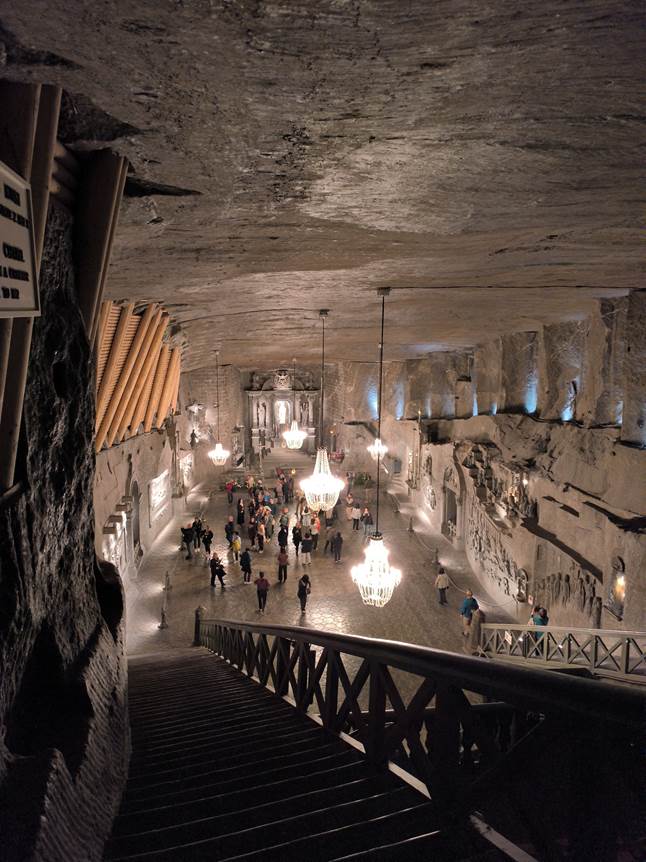
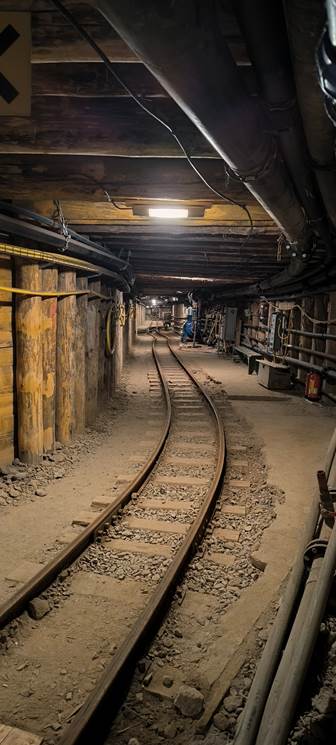
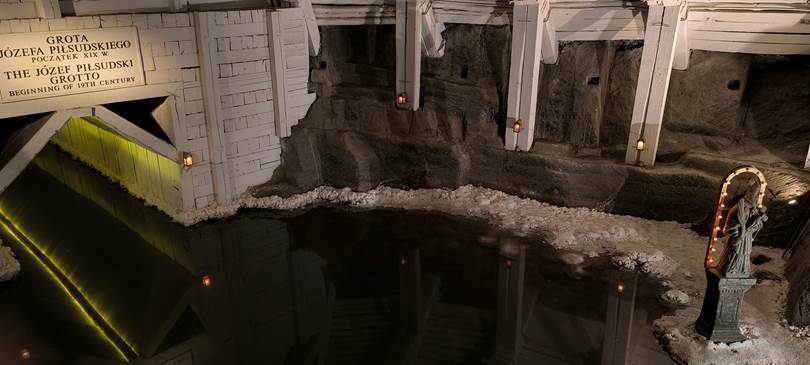
The next day, the 21st, I finally left Krakow for my next destination, Brno. At this point, I knew that there was absolutely no chance of me timing correctly Serbia correctly, so I just hoped for the best. I was originally planning to go to Olomouc for a morning or evening before arriving in Brno, but in the end, I decided my feet couldn’t handle the heavy backpack walking around the city for hours.
Annoyingly on this train, 1st class was at the back of the train, where I tried to stand (outside of the seating area, in the area where the doors are, so causing absolutely no disturbance to anyone nor using any 1st class facilities) to take some videos out the back of the train. Unfortunately, the conductor here was not as chill as the others I met along the way and instructed me to return to 2nd class immediately or pay a penalty.
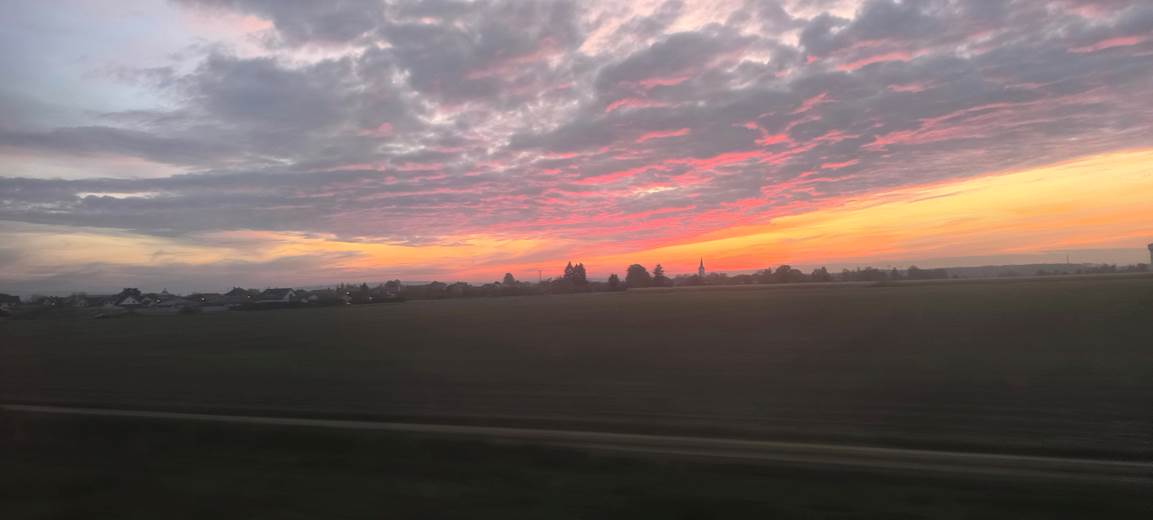
The train arrived at Břeclav on time, and I was supposed to have an 18-minute connection on the train to Brno – plenty of time. In the end, it was delayed by a little while, maybe 30-40 minutes.
On arrival in Brno, I immediately got disoriented by the train station layout (the compass in my phone points in the wrong direction quite often). After figuring it out, I found my way to my accommodation. To say “hostel” would be to do a disservice. I won’t lie, it was the last option available on the Hostelworld app and in my Google searches – but I’m glad I did it in the end. Although one night would’ve plenty to experience it.
The hostel is actually part of a converted nuclear bunker, the 10-Z Bunker.
Inside this nuclear fallout shelter, resistant to weapons of mass destruction, a total of 500 people could be housed for three days. Under Czech army control until 1993, it had been classified top secret.
To this day, it is still apparently capable of protecting its inhabitants if the need arises. It’s tucked under lots of concrete and Earth, so there’s no signal inside, and the Internet coming in through the only remaining connected telephone line (there’s a switchboard inside) is quite slow, not helped by the thick walls disrupting the Wi-Fi signal.
But apart from that, the bunker offers a very authentic experience. You are not given a duvet cover – you are issued a standard military sleeping bag and a very simple foam mattress. There is no natural light at all. The air is slightly cold. The bunk beds are a raw construction, without ladders to access the top bunk and without any protection to stop you falling out of the top bunk – you’ll have to make do with stepping onto a crate at the foot of the bed and hauling yourself up and over the rail that is present at the foot and head of the bed for some reason. The corridors create a maze for you to explore. The showers are activated by a pull chain that releases tepid water only as long as you hold it down.
But – it is indeed an experience. Worthwhile, I think, if only for one night; I swapped out the provided sleeping bag for my own on the second night and avoided the shower. It also comes with free access to the museum part of the bunker, which is worth a visit even if you’re not staying there. This BBC video sums it up pretty well: https://www.youtube.com/watch?v=N4Y74g9umRI.
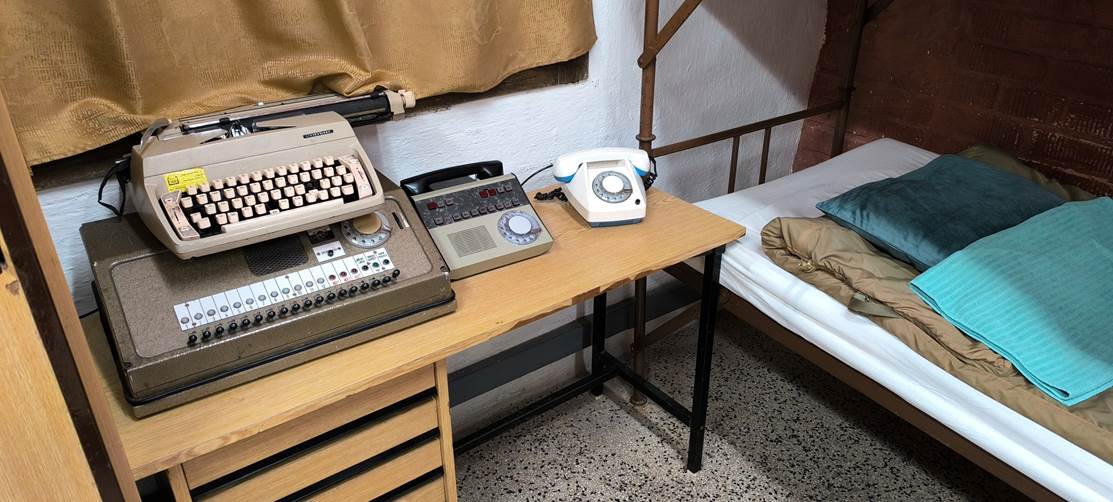
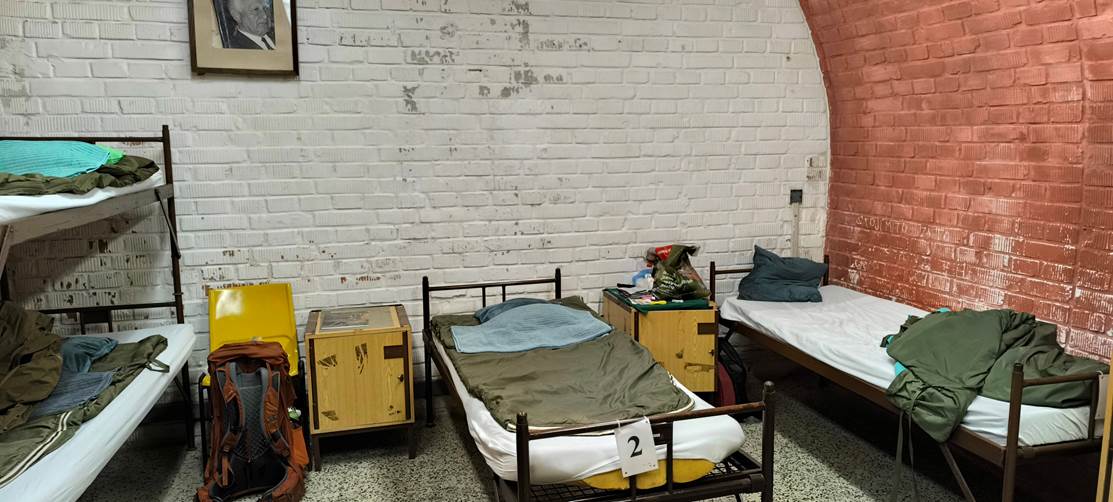
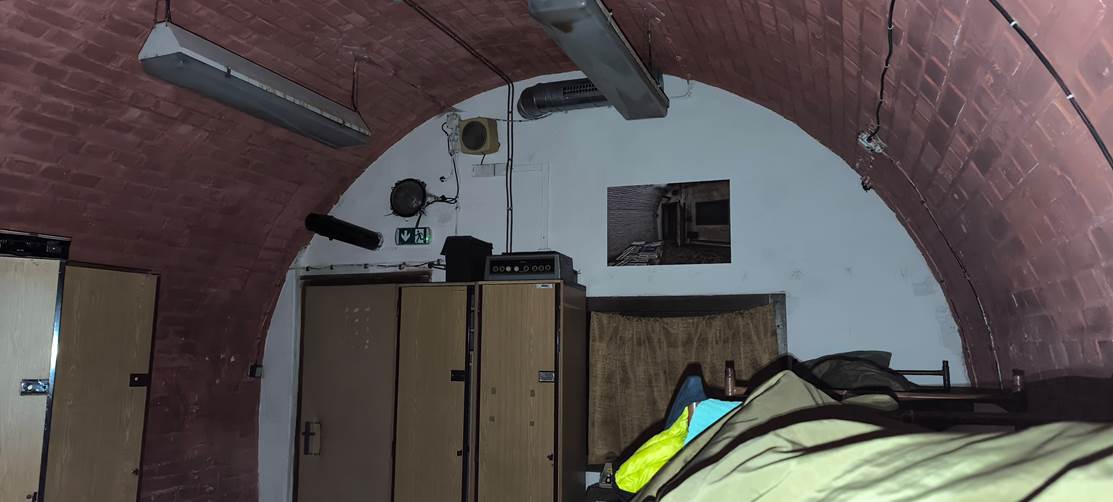
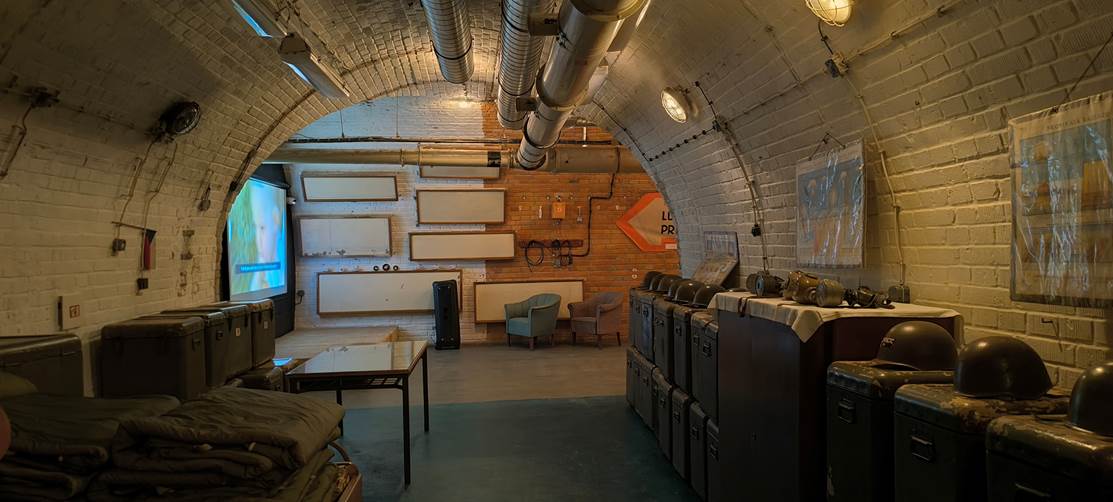
Brno was an interesting city to explore otherwise. The centre was not too interesting, but the areas surrounding the centre were nice. There was an interesting Gothic Catholic cathedral, and some castle grounds above the bunker. I did go out of town a little on the tram and bus to try to get some drone footage, but unfortunately the visibility was too poor.
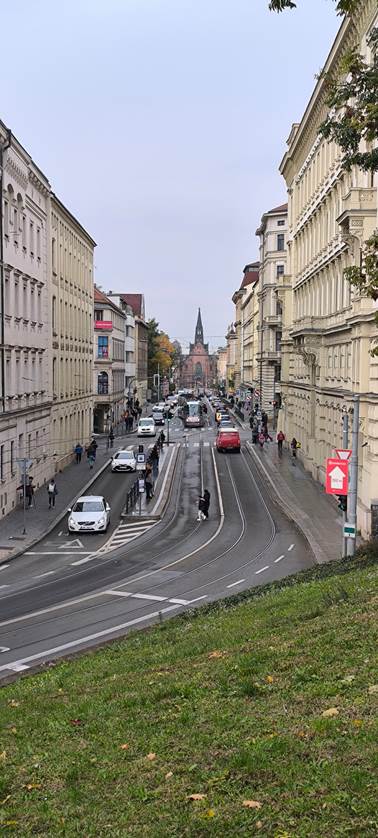
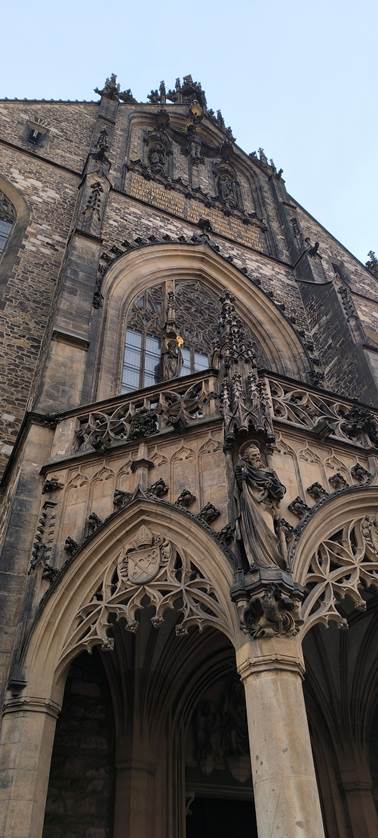
The next day, I decided to spend a couple hours at the Břeclav junction on my way to Vienna. There was another delay, about 30 mins again, but I guess it was due to some railway works somewhere on the line. And when travelling relaxed like this, with freedom from deadlines, delays don’t really matter so much. I walked half an hour from the station to where it was allowed without restriction to fly my drone and just get some hopefully nice shots of the railway, a railway bridge, and Břeclav itself.
- Tip: check https://www.zugfinder.net/ for your train if you’re wondering about punctuality.
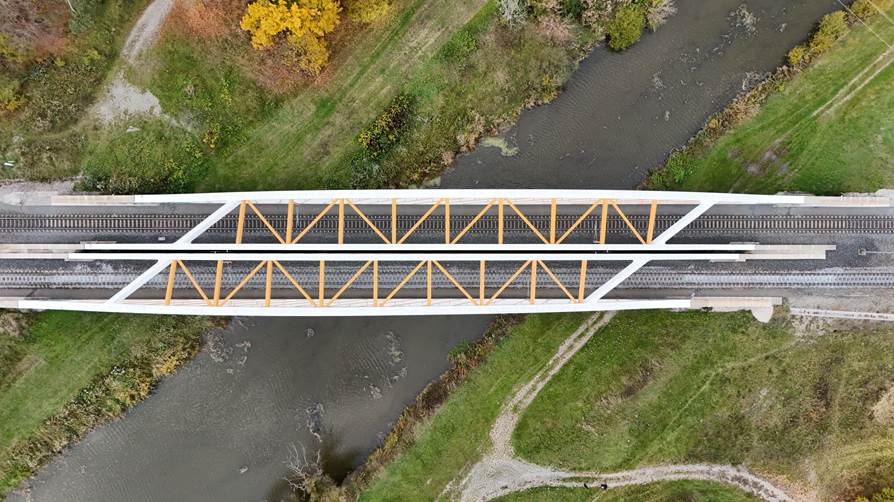
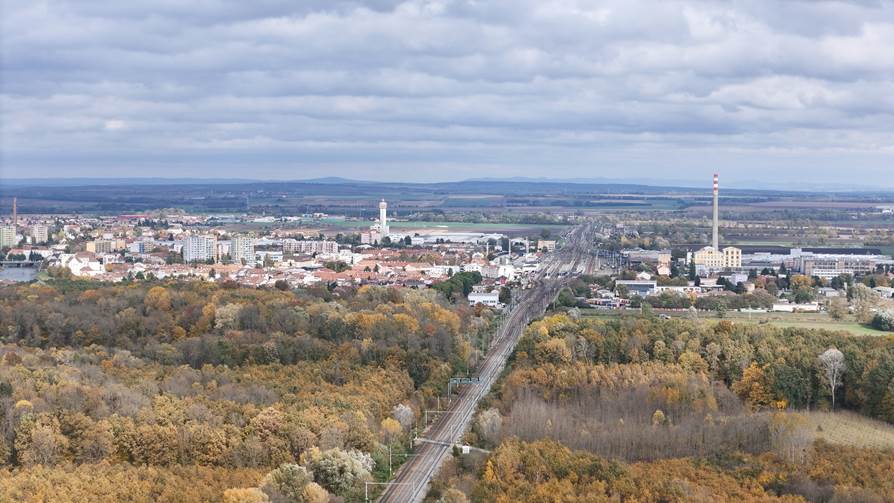
I arrived in Vienna with enough time to wander to my hostel and make plans to go out. Just as I left, possibly the heaviest rain of the entire trip decided to fall. Not prepared to get my clothes soaked since they were my last wearable set and I needed to wait until Bratislava to do the laundry, and thinking that waterproof overalls weren’t quite appropriate, I decided I would try again the following night.
The next day. I noticed in Vienna for the first time that I was back in a proper tourist city where there seemed to be a noticeable number of tourists around compared to locals. And there was some sort of ongoing event in front of the parliament, there was a police helicopter landed and a lot of barriers and flags. The banner on the parliament was advertising an open day in the next couple of days, so maybe it was that? It’s a shame I wasn’t here a while before; it would’ve been interesting to see the first World Tramdriver Championships!
I wandered my way across the city, eventually making my way over to the Donauterm in time to watch a deep sunset over an aesthetically pretty nice city, then catching the train back into the centre. I think that another day in Vienna would be nice, just to explore a little more since it’s fairly big.
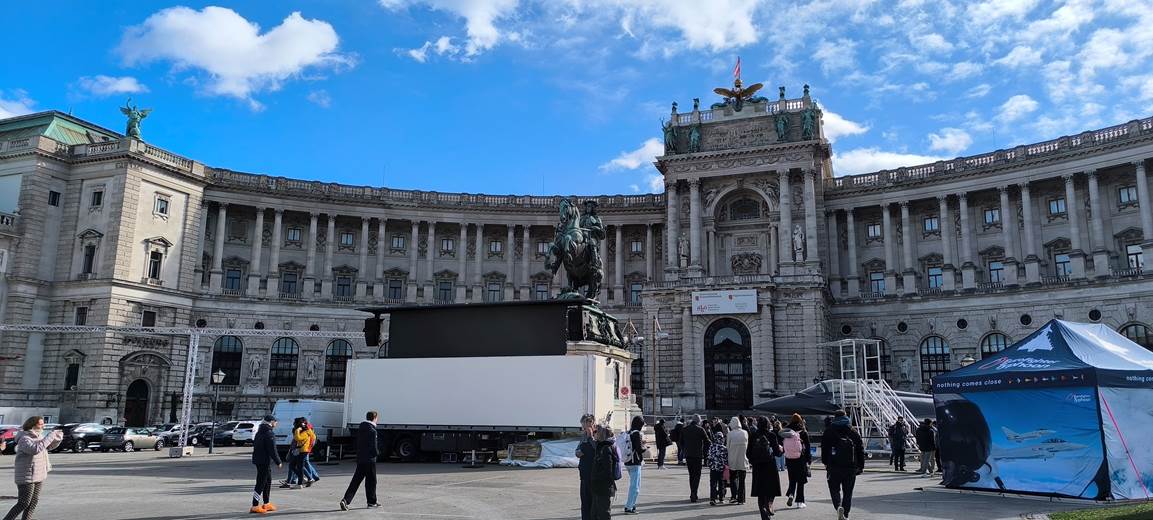
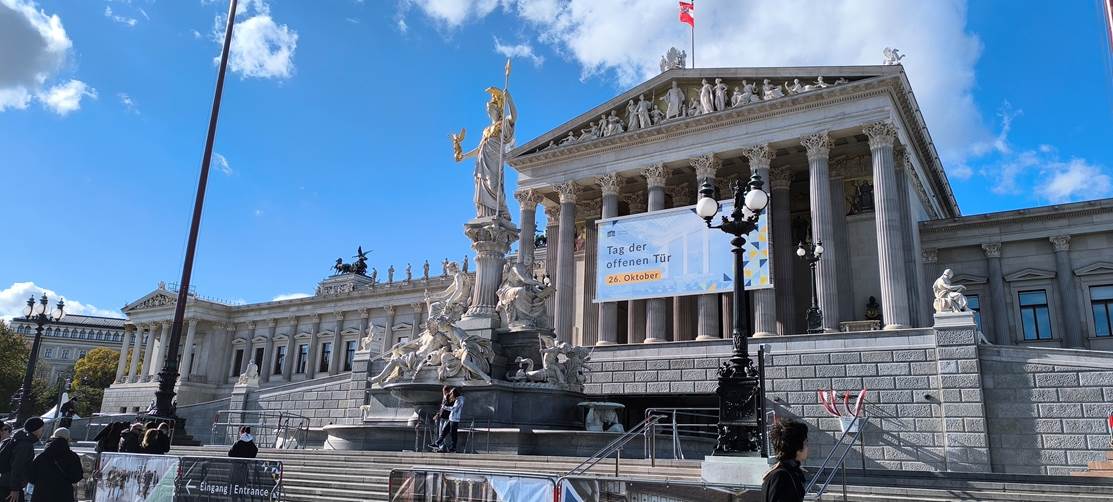
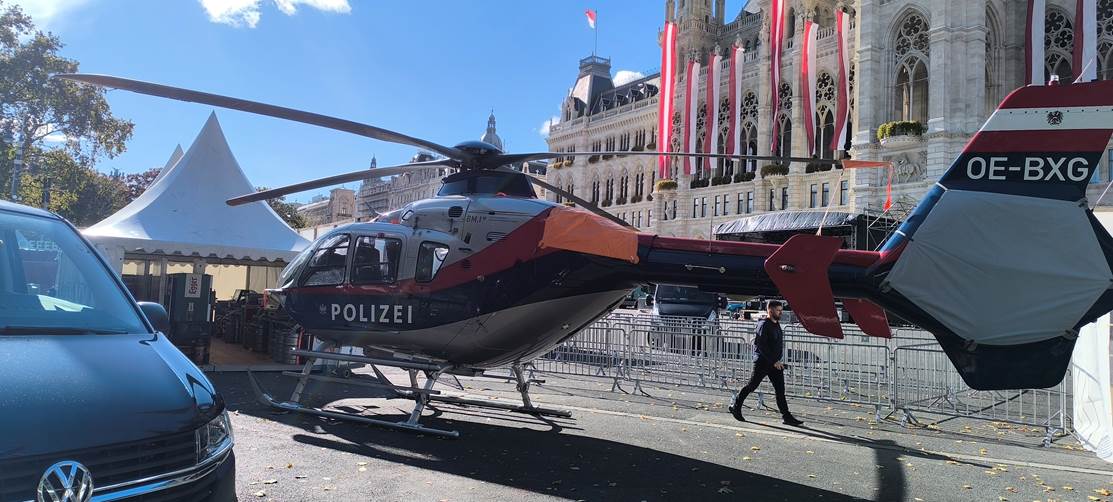
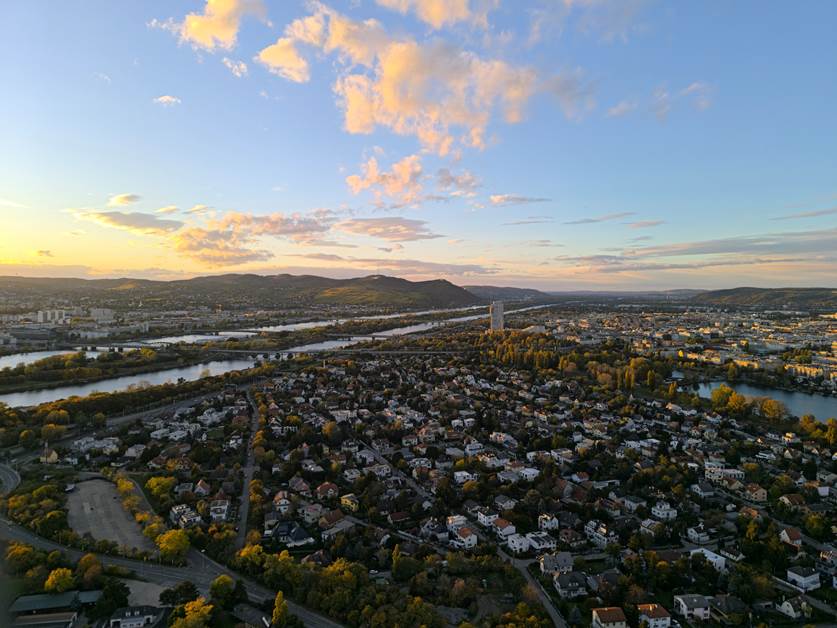
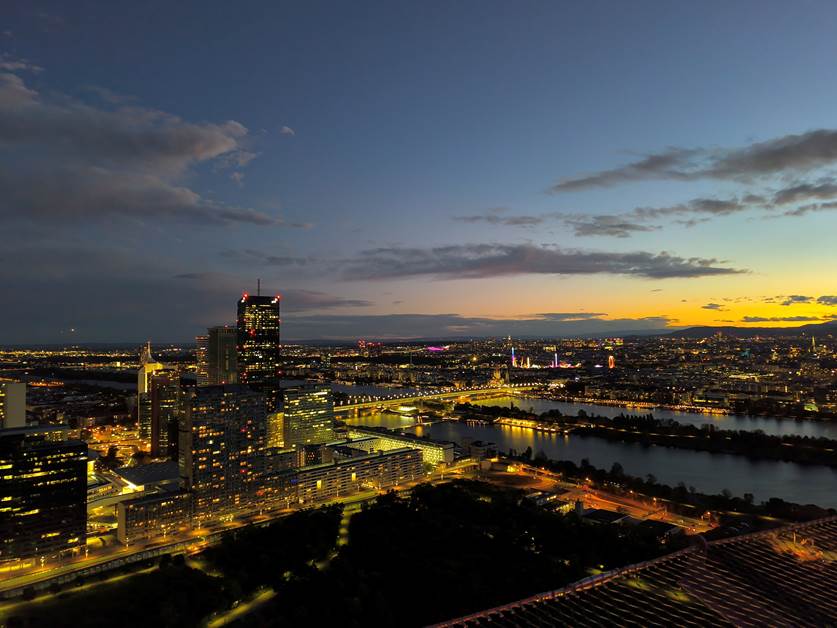
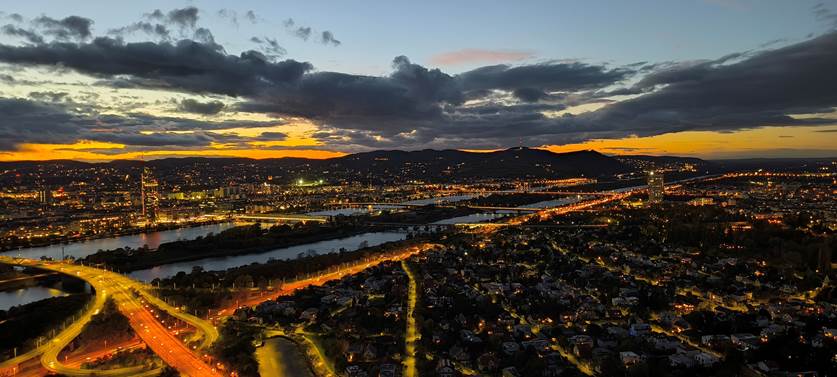
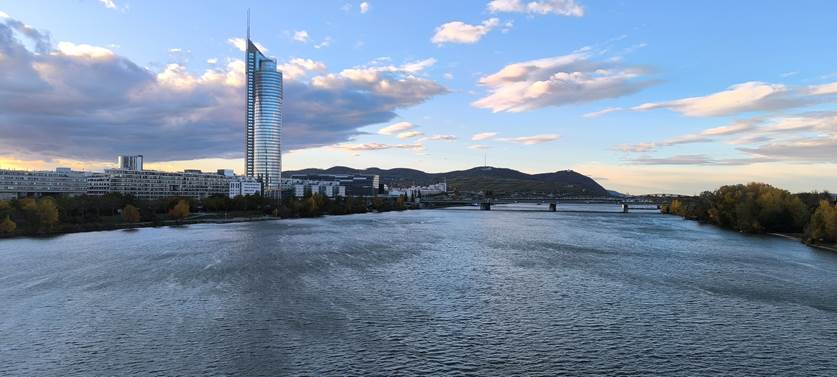
The next day, my train wouldn’t leave until a little later, so I travelled a little out of Vienna to the west, just past the air traffic restrictions, again to try to get some nice drone shots – they weren’t bad, but the hill was in the way a bit.
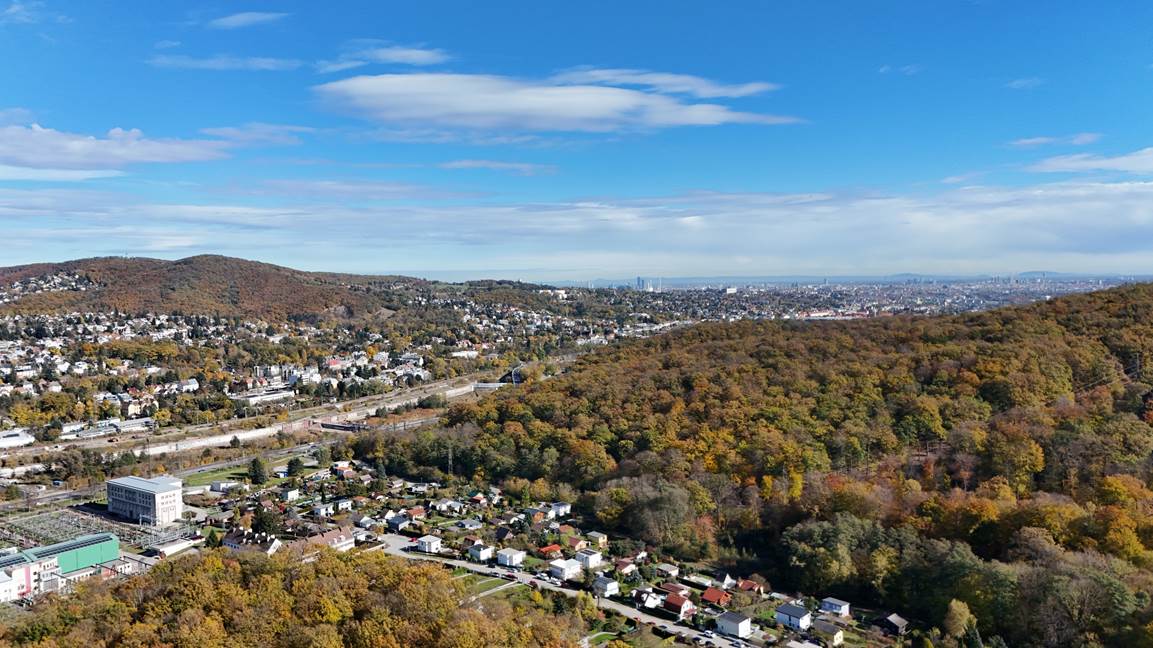
After having lunch at Ikea – honestly, it’s a pretty good price for the food quality, a nice change from my usual diet, and very accessible directly attached to the Westbahnhof station – I decided to take the (from what I gather) less travelled southern route to Bratislava-Petržalka, both because it lined up with the timings a little better and because I could go from Wien Meidling (which is more accessible from Wien Westbahnhof) – there was also some track works at Marchegg, but I’m not sure if that would’ve affected me.
Leaving Vienna, this was the first time I realised that I was closer to the end of my trip than the start – and I was pretty happy, and to some extent, proud, of what I had done so far.
Arriving in Bratislava’s second station on the south side of the river gave me the opportunity to walk the less touristed parts of Bratislava. Petržalka is apparently the most densely populated settlement in Central Europe, with around ~110,000 people living in 28 sq km, mostly in mid-rise buildings constructed of large pre-fabricated concrete panels, known as ‘panelák’ colloquially. The path to the centre led me along part of EuroVelo 13, then across the UFO/SNP bridge.
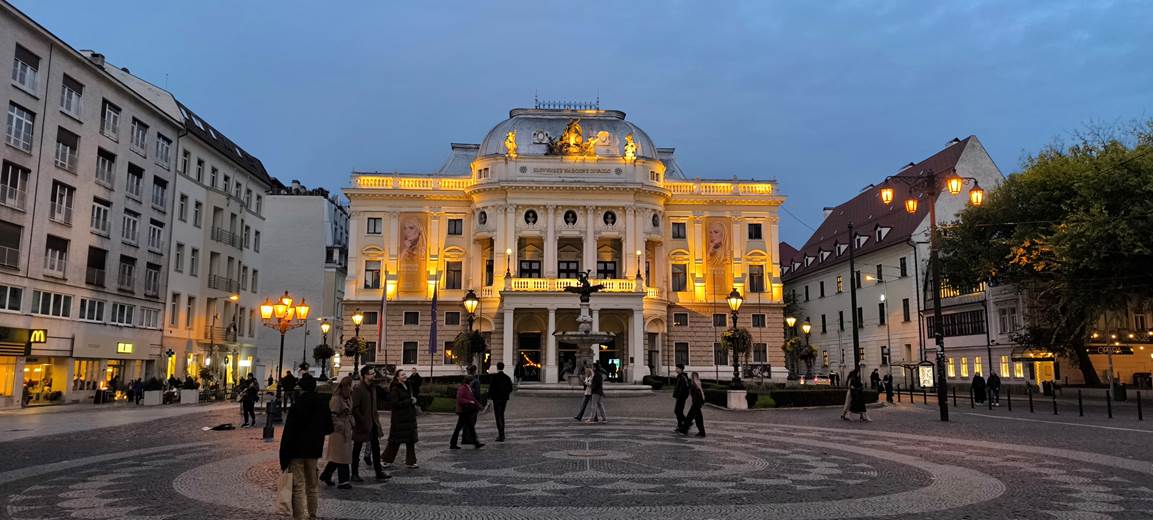
The next day I walked up to the Slavin memorial, where 6,845 Soviet soldiers are buried, having died in World War 2 (which by this point on my trip I was realising seemed to be inescapable) while liberating Bratislava from the Germans. In the afternoon, I did my only free walking tour of the whole trip. It’s hard to say whether I regret not doing more – it was interesting, but I now can’t remember most of what the guide talked about, and although it’s 100% worth it, tipping 10 or 15 euros gets expensive if you’re doing it frequently. Although it did do what I primarily hoped for in the end: allowed me to meet someone and get a little boost in self-confidence.
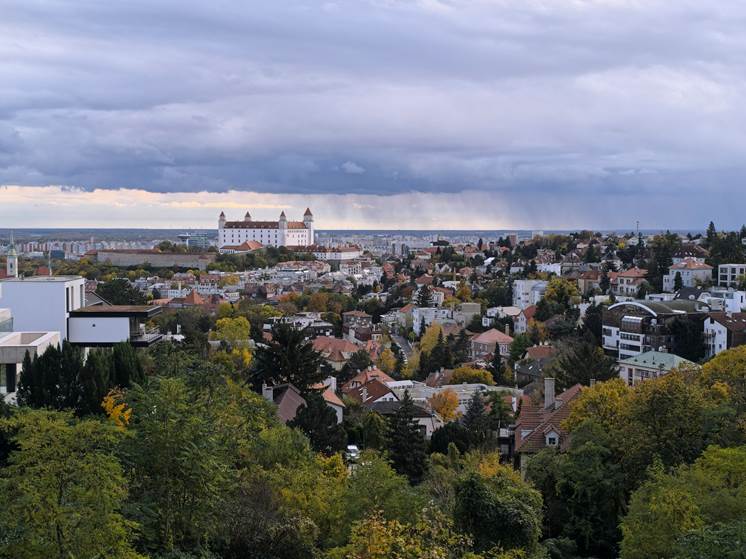
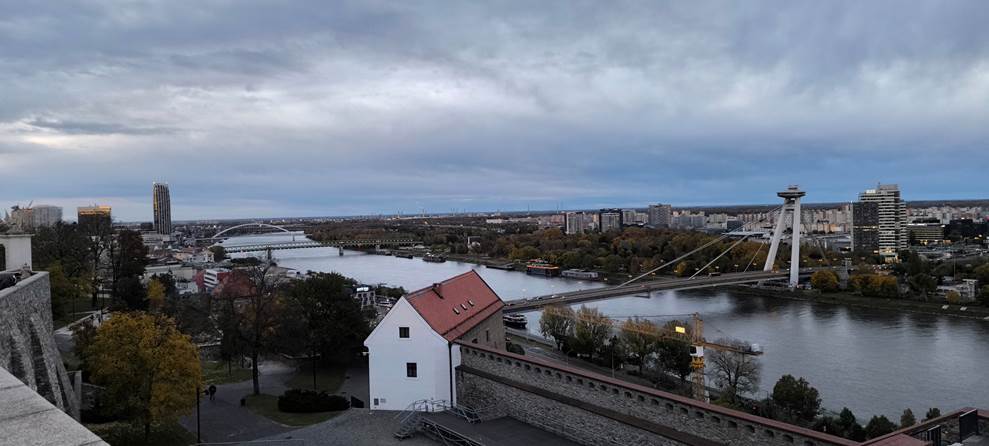
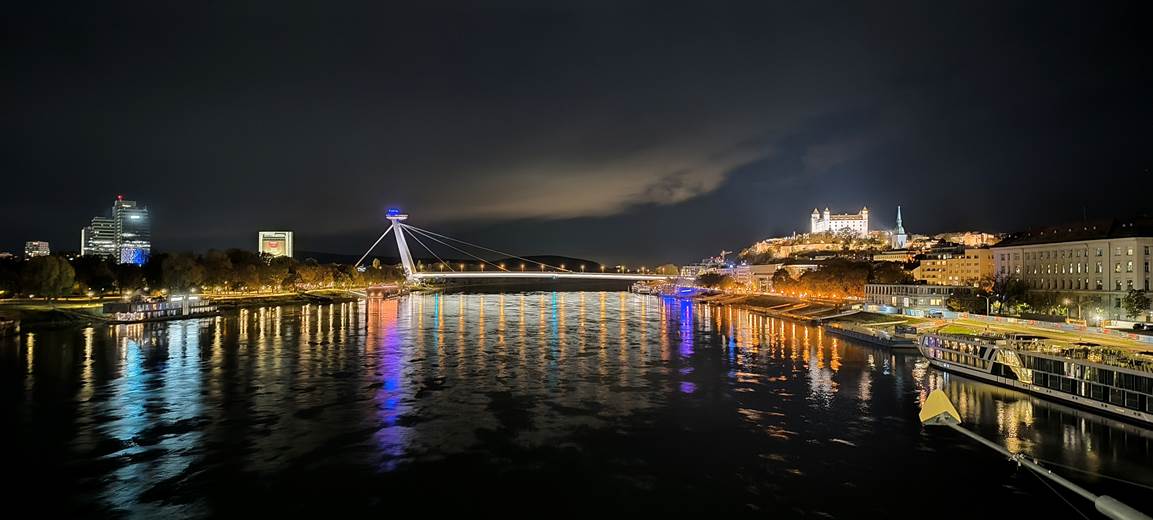
After doing a Lidl bit of clubbing (seriously, apparently Lidl has some apparently pretty powerful speakers, which created a very memorable shopping experience as they blasted club remixes over the store), I cooked and joined another group at the hostel for a while.
My train the next day would leave for Budapest in the afternoon, giving me just enough time to get some laundry done – literally just enough time after I realised quite suddenly that time had passed faster than I expected. If the train hadn’t been delayed, I would’ve probably had seconds to spare. But, as my luck would have it, it seems all the trains going to and from Brno via Břeclav (which is where this train would come from) were delayed. If only I had checked Zugfinder, I needn’t have rushed so suddenly.
Departing Bratislava, this time from the main station, the train ride was quite scenic, especially once it started traversing the valley of the Duna river into Budapest. As I expected, I was totally fine with the almost too-slow travel time and delay, and sat back in the 6-seat compartment and relaxed as I watched the sun sink behind the hills.
I had decided to spend 2 days in Budapest, because I felt there was a lot to do. I explored the centre of the city mostly by doing walks in the later afternoons and evenings, which left some time to actually do things.
One of the bridges across the river, the Széchenyi Chain Bridge, is a scaled-up version of the Grade 1 listed Marlow Bridge, which is only around 8km from my home in the UK.
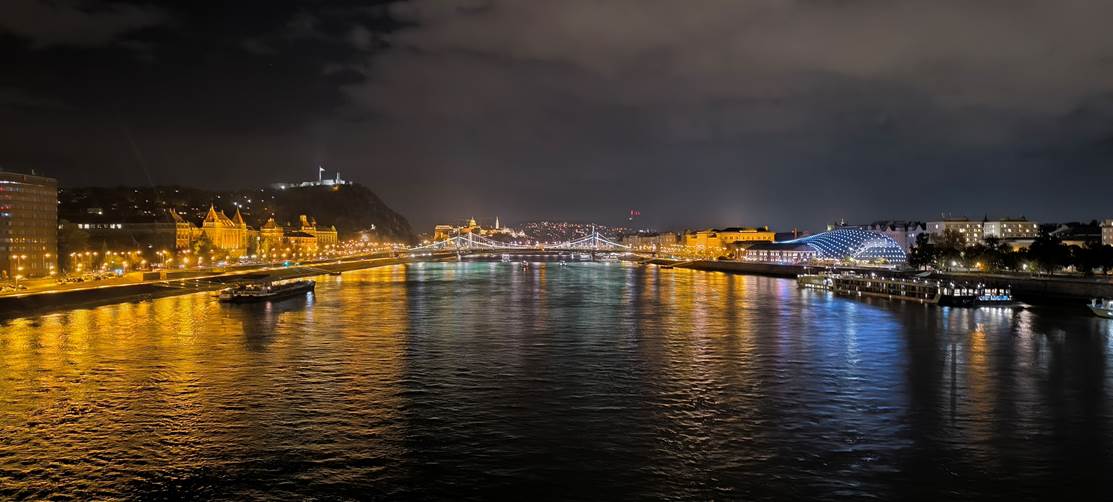
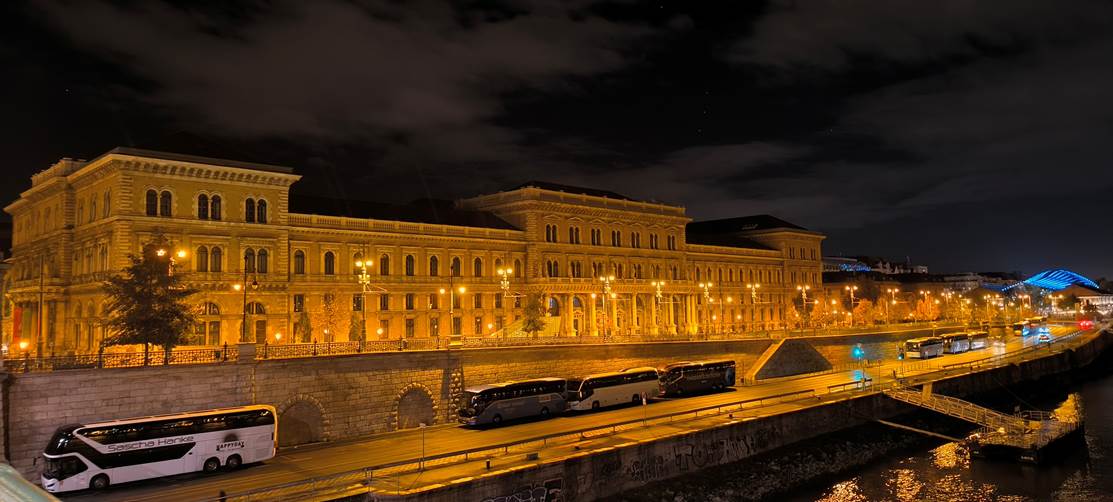
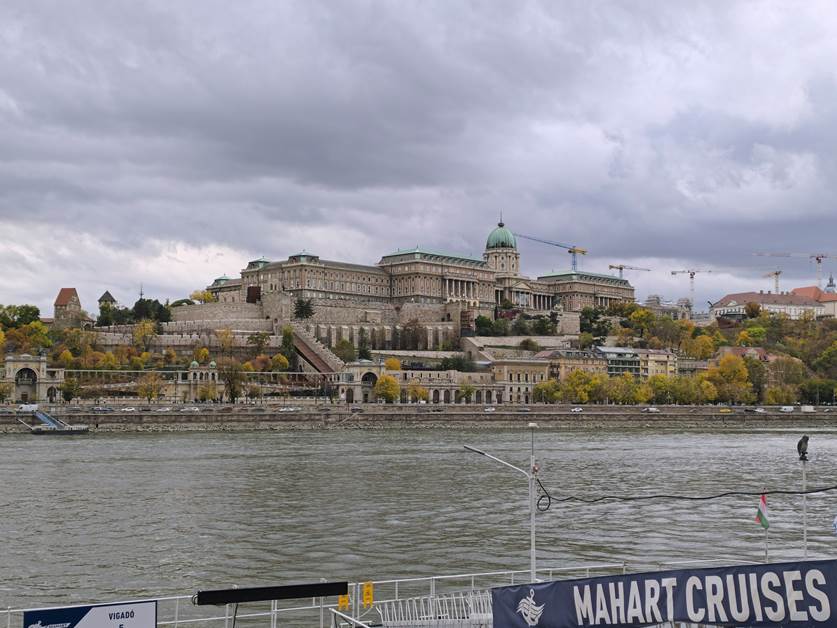
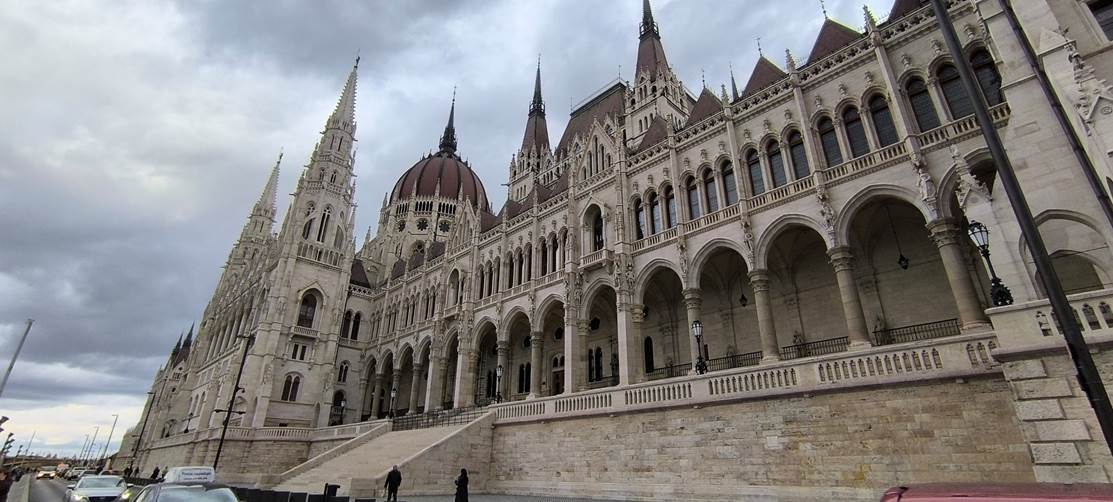
On the first day I decided to do something a little different and went to one of the famous natural thermal baths in the afternoon. I had made the decision to pack my swimming trunks, just in case, and I was glad for that decision (although of course, it’s probably not that difficult to buy them in Budapest). It was an interesting experience to do alone, and I spent the first hour feeling a little out of place. But the hot water eventually plays its tricks, and I soon began to relax a bit more. Of the 3 outdoor pools, one (the swimming lanes) was closed, and the others were at slightly different temperatures, one more intended for a bit of fun with a big whirlpool and the other just intended for relaxing. I would recommend a few hours there if you’re in Budapest – I spent about 2 or 3 hours in the end.
The next day I took the tram and the bus, and raced the sunset on foot up János-hegy, the tallest peak in Budapest at 528m (starting at 280m). I arrived a little sweaty after walking up the cable-car slope, but in perfect time to see the best part of a pretty sunset.
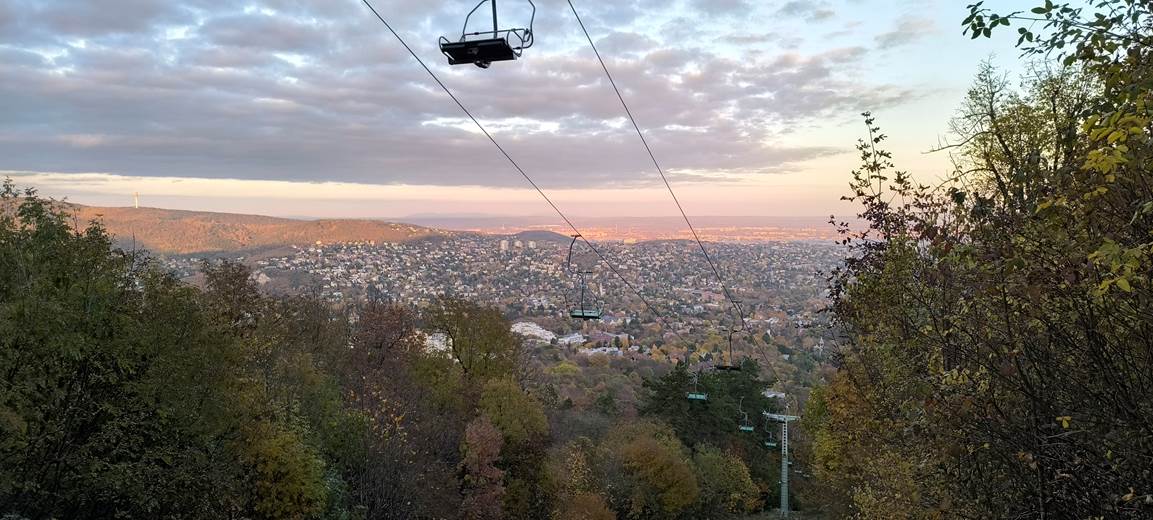
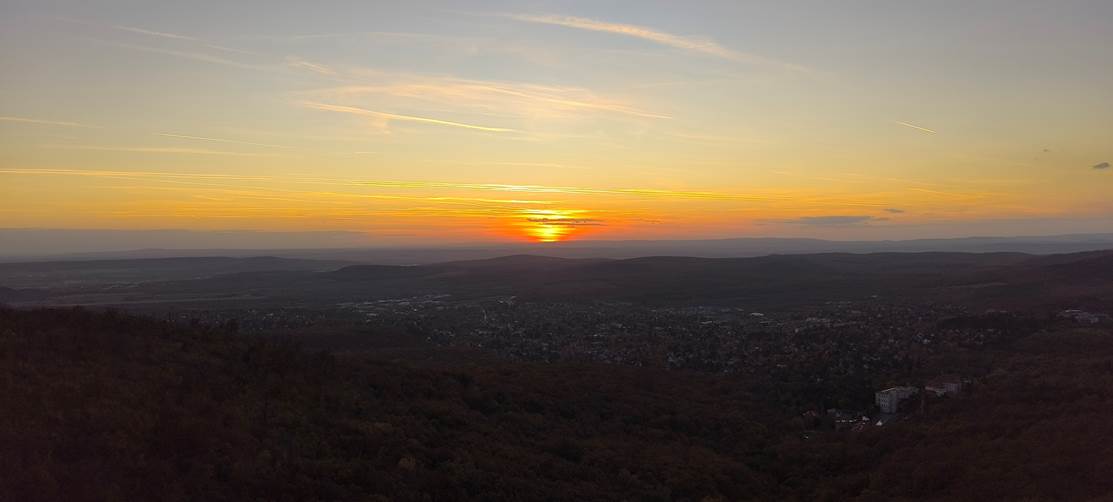
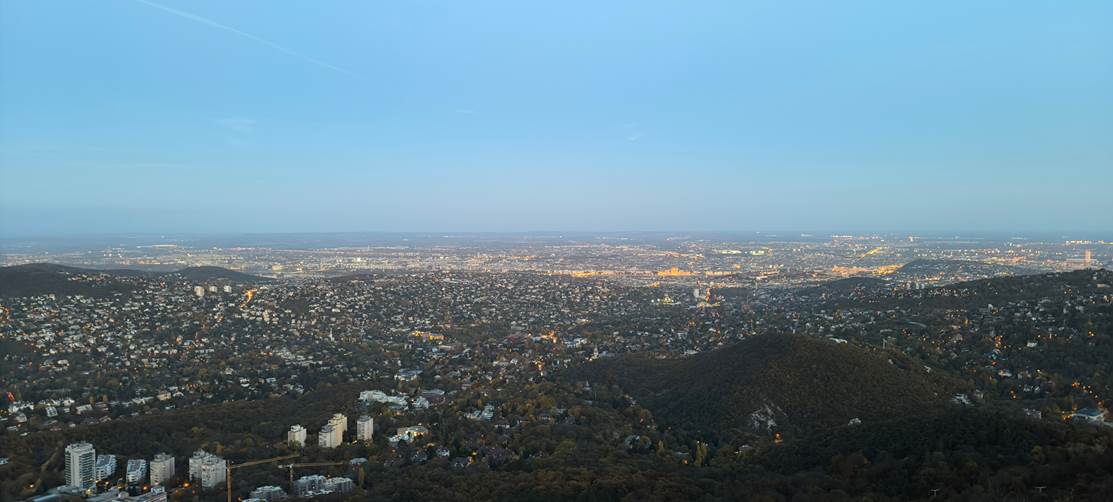
After walking down a different path in the dark (luckily, I had remembered my torch, somehow), and returning back to the centre, I took residence on a park bench for an hour, lying down and just staring at the sky until I got bored and used up some of my data.
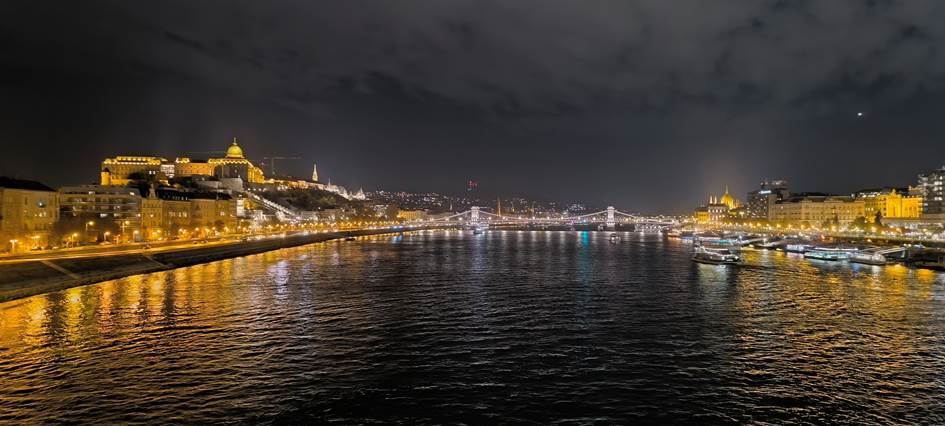
- Tip: at least for UK operators, if they offer an extension for European roaming, they’re really overpriced. When you’re buying a new SIM or plan, try to get one with a decent European roaming allowance (at least 25GB). iD Mobile aren’t bad for this. If you don’t have one, or you need more data, avoid eSIM providers if you can. Although they are convenient and work well, if you’re on a budget, you can often do better. For example, if you do a little digging, Telekom Montenegro offers a Western Balkans (excluding EU) eSIM for tourists at not a bad price (https://telekom.me/privatni-korisnici/tourist-regional). Because the non-EU Western Balkan countries are in a roaming union, if you can get your hands on a non-tourist one (which usually have additional restrictions somehow), it might work in the other countries for free. I timed it about right, and used some luck, so that my plan started on the 1st of the month and I just about used all my included roaming as I entered Serbia, so I didn’t need additional EU roaming. (Interestingly, I think I actually went over the 30GB fair usage limit, but nothing happened).
The next afternoon, my train departed Budapest towards Szeged. Interestingly, it had a built-in beer opener on every table 🙂
In Szeged, I would have a short transfer before crossing my first Schengen exit border of the trip into Serbia. If they let me in. Szeged train station was small but had a tiny museum cabinet in to look at to pass the time.
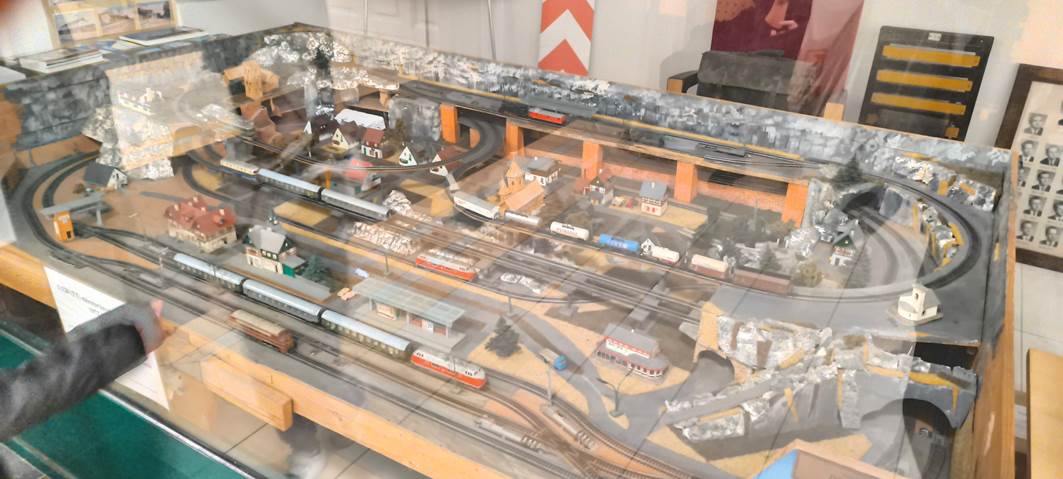
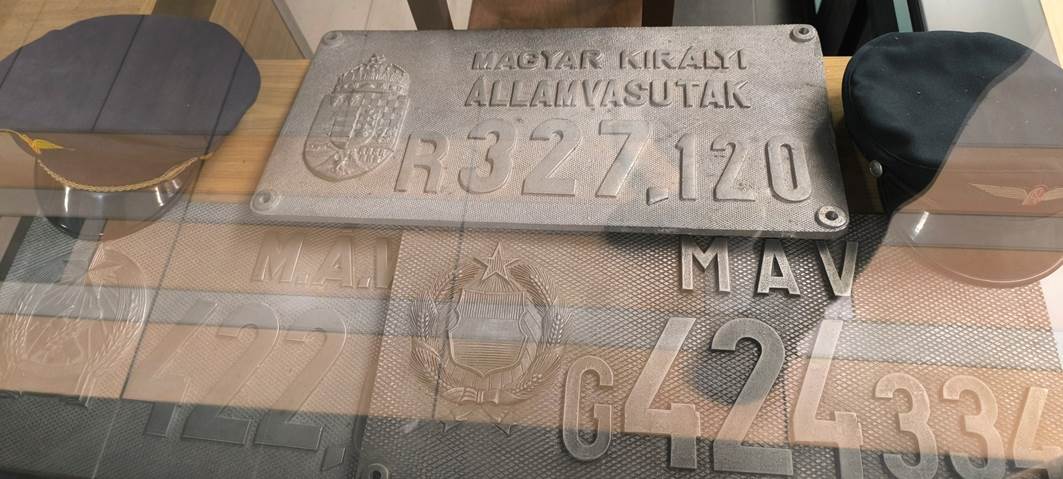
Soon enough, the train to Serbia pulled up. A little unexpectedly, it looked sort-of modern on the outside but still somehow beaten up and a little not-quite-actually-modern. That was explained by the little plaque inside next to the train doors which informed its passengers that it was made in Russia. I was a little surprised that Russian passenger trains were allowed to be running inside the EU.
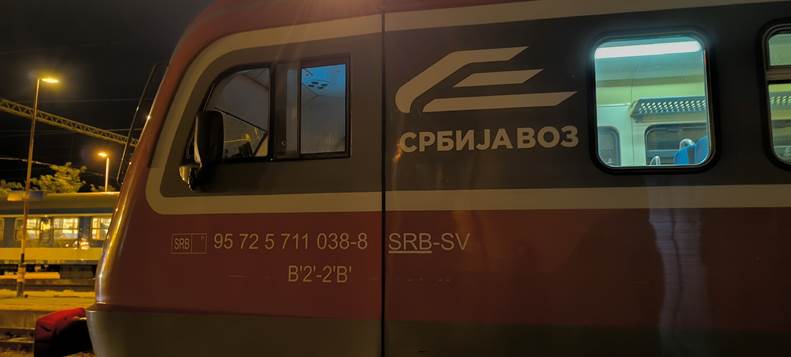
As we reached the border station, I will admit I was a little worried. It was the 30th of October, and I was very close to the centre of the events planned for just two days later. I was also of student age. And I definitely didn’t have an undeclared drone with me. I decided it was probably best to just say nothing at all and not reveal what language I speak or didn’t speak.
After finally getting my first stamp in my Croatian passport (my British one is still empty), completely revealing that I probably knew a little of the language, we were through.
Into the land of brotherhood and unity, and a couple of wars and genocides.
Part 3: “Pa kako nema ništa?!”
Luckily, I’ve heard that phrase enough times to be able to remember the essentials of it, and it’s similar enough in Serbian that public-facing workers don’t get to feel immediately superior to the Western foreigner when I respond with it. Although I’m sure it’s just a worse impression once they realise very quickly after that I’m not very fluent 😀
My first destination in Serbia was one not far from the border, but one not frequented by those travelling through.
Palić is a small town near the border. It has a nice-ish lake, a nice zoo (which always seemed larger on the inside than the outside), and not very much else – except warm and fuzzy childhood memories. I had grandparents living in Novi Sad for a long time, so when I was younger, we used to visit this area fairly frequently. Having no Internet installed in their house, the days out to the waterpark “Petroland”, to the zoo at Palić, and even just to Novi Sad and Petrovaradin to get some Internet or do some geocaching, were nice breaks. Breaks from the heat and boredom of the house and fields, and the crazy driving of my Deda (who even needs seatbelts, or even to drive on the roads?) who drove my brother and I to the shops most mornings to get the best fresh white bread and those chocolate banana sweets, while Baka made fritule to have for lunch alongside copious amounts of sweet homegrown watermelon.
I aimed for here because I wanted to find somewhere near-ish the lake and the memories to hang my hammock.
It felt very different to my memories as I walked to the lake after finding a pizza to eat. Later in the year, drizzly (because of course pathetic fallacy does exist), dark, and alone. But I was glad I had revisited. It had probably been the best part of 10 years since I had last been here and I was happy to see I remembered some of it.
I imagine I looked quite suspicious as I walked to the lake late at night with my big backpack, and the one local which I did see stared at me as if I fell from Mars. But as I walked around the lake and into the fields and tracks, I tried to stay more covert as I hunted for a sleeping spot.
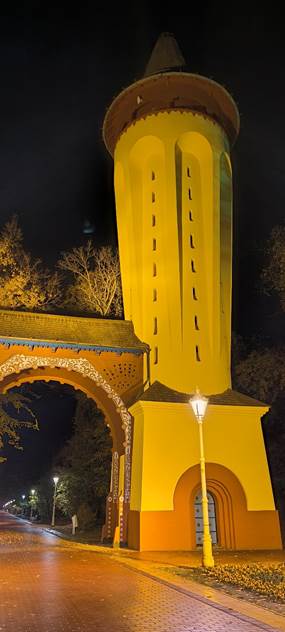
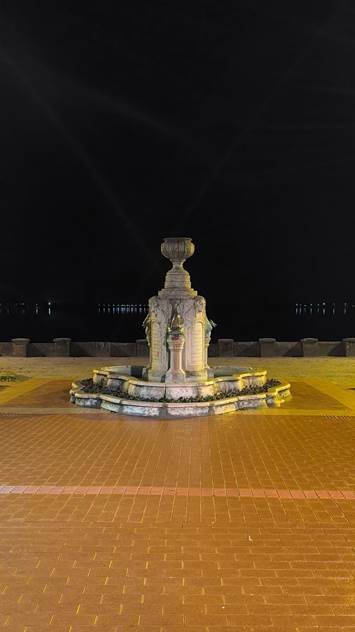
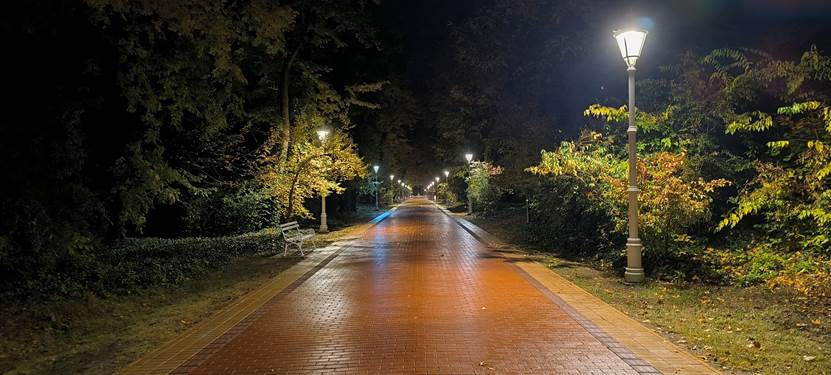
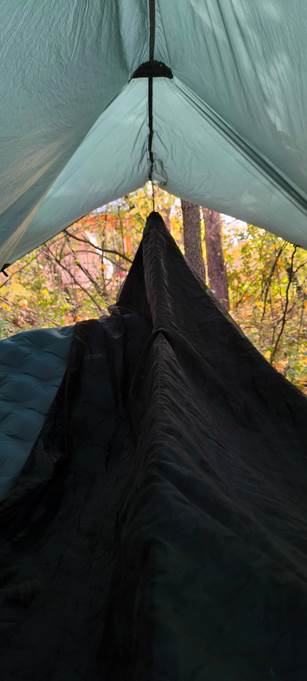
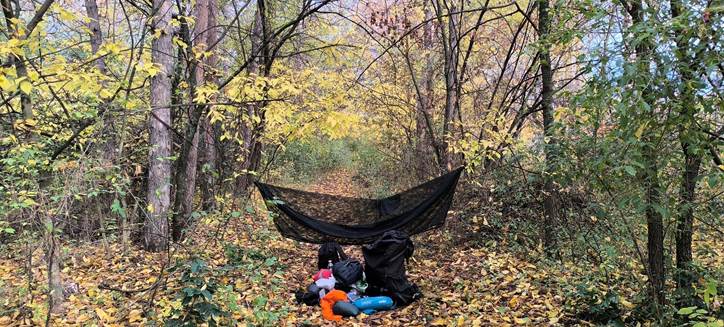
I slept well enough. I awoke in the morning slightly later than I hoped. But I was off a path off a track off the road around the lake, so I hoped I was far enough away from anyone wanting to cause problems. In the end, some people came very early to the field next to me to continue construction on their house, and I’m sure their dog made them aware of me in the hedges off one side – but they and their dog left me alone.
I unfortunately didn’t have time to revisit the zoo in the morning, but I did walk past it. The entrance certainly hasn’t changed from how I remember it. A very small entrance with a single ticket office.
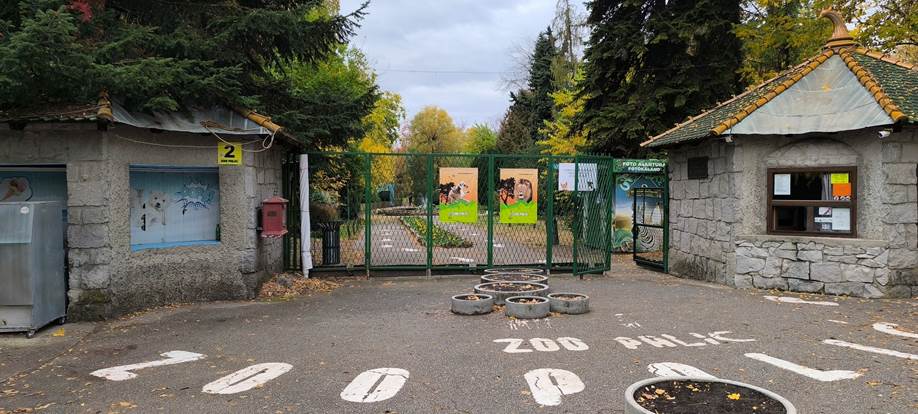
Today was the 31st of October – I had perfectly lined up with the times I wanted exactly not to be entering the country :D. Having quite a bit of hope, but also a large dose of realism, I wondered whether I would be able to reach my intended destination.
As I walked to the train station, I considered my plan and took in my environment. I was back on EuroVelo 13, which was unexpectedly well signed. As I progressed through Serbia, I would find that some EuroVelo junction signs had quotes on them in Serbian and English, if they didn’t have a progress marker. Some were quotes from attributed sources, but the one in Palic had no owner: “Living on Earth is expensive, but it does include a free trip around the Sun every year.”
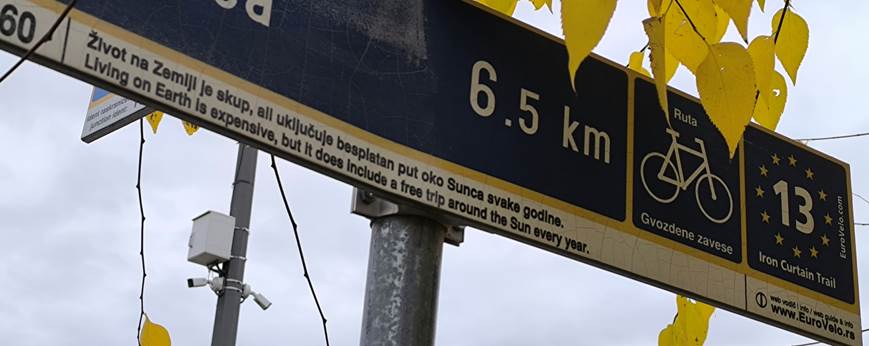
I had planned to move to Novi Sad that day, taking advantage of the new trains to spend the day there (arriving in Petrovaradin due to the disaster then hopefully taking the free transfer bus to the centre), just wandering around and maybe going to visit my grandparents house on the outskirts. Then I would take the new train to Belgrade. (Yes very nice, yes very fast, but yes, also very China).
My first train out was to Subotica to change onto the mainline (where the line from Budapest might eventually enter the country). After utilizing my poor language skills and forcing the nice station lady at Palic to do the same, we had figured out what additional reservations I needed, and I had purchased the ones necessary to get to Belgrade. She assured me that there were no bombs planned for that day – that they knew about.
Interestingly, Palić station looked like it had been recently renovated. Indeed, it had. The line was only reopened in late-2023 after 8 years of no service – so perhaps we can estimate that the next international transfer will open in the Balkans in 2031.
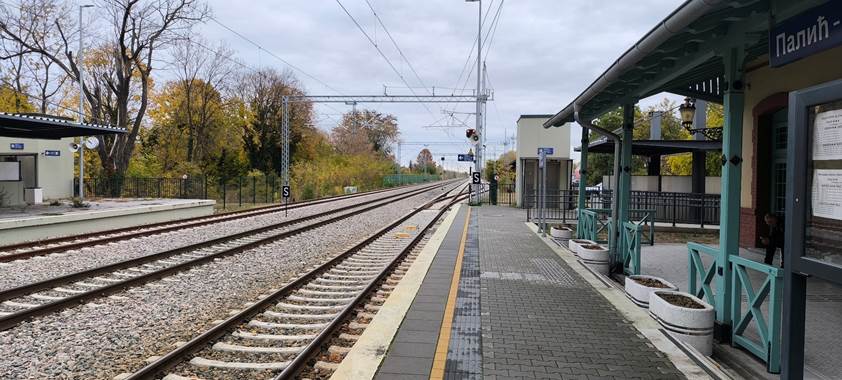
The train to Subotica took 10 minutes, and I had a 50-minute wait there for the train to Novi Sad, enough time to walk into the centre, grab something to eat, then head back to the train station, train ready in the platform. There was an interesting notice (in English) posted in a window.


We (there were a few locals there also waiting for the train) realised something wasn’t quite right as the minutes past the planned departure time ticked by. Eventually, the train guard told us we wouldn’t be going and refused to tell us why. We knew why. That’s why there were so few of us.
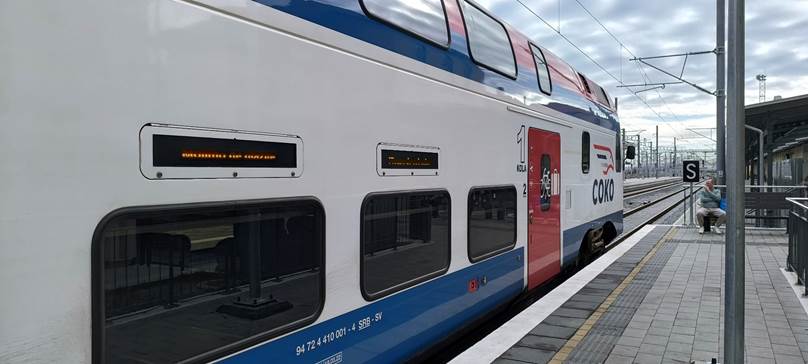
Unfortunately, the government had again let the population down. After asking the station security guard what was happening, his response with a wink was “nothing’s happening”. Eventually I got the train guard to tell me (using Google Translate on my phone) that there were bomb threats, so nothing was to move.
That evening, Srbijavoz would release a statement: “a call was received containing an anonymous tip that explosive devices were placed on all trains and tracks”. If you ask me, that’s very believable, and warrants just shutting down the whole country’s rail network instead of going into a national state of emergency due to some apparently very capable malicious actors.
The ticket sales people in the portacabin outside Subotica station weren’t so nice as the person at Palic. Whilst they gave some people cash refunds, and others refund forms, they flat out refused to give me anything, even a piece of paper stating the reason for the cancellation, perhaps not willing to deal with some unknown ticket. So, after slamming the window in my face and walking off in a random direction, we were left to make our own way onwards. (Interrail later also refused a refund).
I’ve never been on a train between Novi Sad and Belgrade, despite travelling by bus (both fast and very slow) between them many times. So, it was a bit of shame – but I can’t lie and say it was unexpected.
What I didn’t realise at the time was how new the line was. Had the bombs not been dropping, I would’ve been able to ride this line, opened only around 30 days before at Subotica! https://www.subotica.com/vesti/svecano-otvorena-deonica-brze-pruge-subotica-novi-sad-id52656.html – the comments also make for good reading)! Hey – perhaps this is a more fitting or interesting story.
But I bring more good news:
He pointed out that he expects the Belgrade-Budapest railway to be put into operation for freight traffic within two months, and for passenger traffic at the end of February or beginning of March next year.
– At the end of February or the beginning of March, we will go directly to Budapest. Now we have to solve many mutual issues, due to the delay at the border due to the European Union, to see how to solve these problems in the best and simplest way possible, so that we can actually arrive in Budapest in two hours and 45 minutes. Which is twice as short, more than twice as short as it currently takes to get to Budapest by car – said Vučić.
Of course, my reality on that day couldn’t have been much further away from all of that. At least the busses were still running, at least for now – there were rumours of the government telling the bus companies to stop running some services previously.
I had a difficult decision to make. I could try to stay put, and risk getting completely stuck if they shut down the bus networks. I could move to Novi Sad as planned, and have somewhere to stay but be completely isolated for 3 – 4 days. Or I could move straight to Belgrade, and expect a couple days minimum stay there – and hope that the international train wouldn’t be cancelled for as long as domestic trains. I had to decide quickly as the bus station was only a short walk away and I didn’t want to wait any longer than necessary if I decided to move.
I decided to scrap my plans in Novi Sad and go straight to Belgrade. It was too risky to try and enter Novi Sad with the expectation I would be able to leave before the 4th. In the end, the bus did of course stop at Novi Sad central bus station, with the metal rebar sticking out of the train station walls visible out of the bus window whilst waiting at the station.
I was back on the E75 – it felt a little like I had revisited a long-lost friend who had changed in inexplicable ways in the meantime. The bus above the Arctic Circle was the last bus I had taken, and now I was back on the bus, back on the same road.
From here, you could travel north, around 3,500km by road, along only one road, the E75, to a so-called ‘blood road’, far above the Arctic Circle. You might never realise what happened on the road on which you find yourself. You might continue, innocently, to a place far, far away, isolated from the rest of the world, at the end of the world. And you would be closer to where you started than you realised.
From here, the locals could travel north, around 3,500km by road, along only one road, the E75, to a so-called ‘blood road’, far above the Arctic Circle. The road built by their great-grandfathers, only 83 years ago. The last road that their great-grandfathers ever saw, only 83 years ago. The road next to which their great-grandfathers were buried, only 83 years ago. The E75 links the present-day form of ex-Yugoslavia to its historical form.
I headed south.
We arrived in Belgrade later that evening. Although, because of course nothing could ever be straightforward in the Balkans, the station we arrived at was the new bus station next to Novi Beograd train station, a little distance from the centre.
My first experience of the tram network should’ve warned me not to depend on it for the coming days. I don’t know if it’s always this bad, but it was not good, and it got worse and worse during my stay in Belgrade. Just like the traffic in the city – I don’t know if it’s always like that, but it was awful. It’s lucky the public transport in the city is free.
After eventually figuring out how to get to the centre, I arrived in time to have some long awaited ćevapčići (I’m getting hungry again just thinking about it), put on some washing and plan my next few days.
I took a walk around the neighbourhood. An interesting mural painted on a wall – I think here might have been more text on the other side of the wall which I missed: “The bed bakes my body like bread filling a handful of dreams… and when opening my eyes pity upon the walls how vast the hunger”.
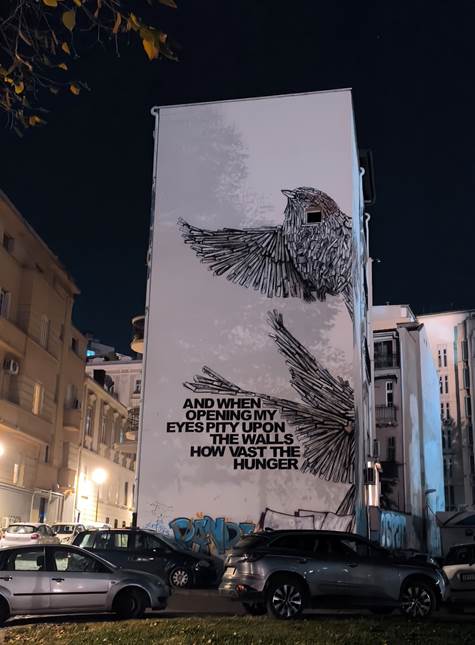
I was now stuck in Belgrade for however long it took for this to blow over, so I might as well try to enjoy it. There was absolutely no chance of any train moving the next day (the day of the events), and an incredibly small chance of any trains the day after, so I basically had two guaranteed days.
On my first day, I decided just to relax a little then walk around the city and explore the fortress. Although I’ve been to Belgrade airport many times, and transferred busses somewhere in the city, I had never actually seen Belgrade centre. It was also surprisingly warm for this time of year; I think it was 23 degrees.
Belgrade, like many other cities in this area of the world, is interesting. There’s new developments and new money rising up to compete with the old blocs and only money over the skyline. At the same time, blight is never far away, but neither is green, empty space.
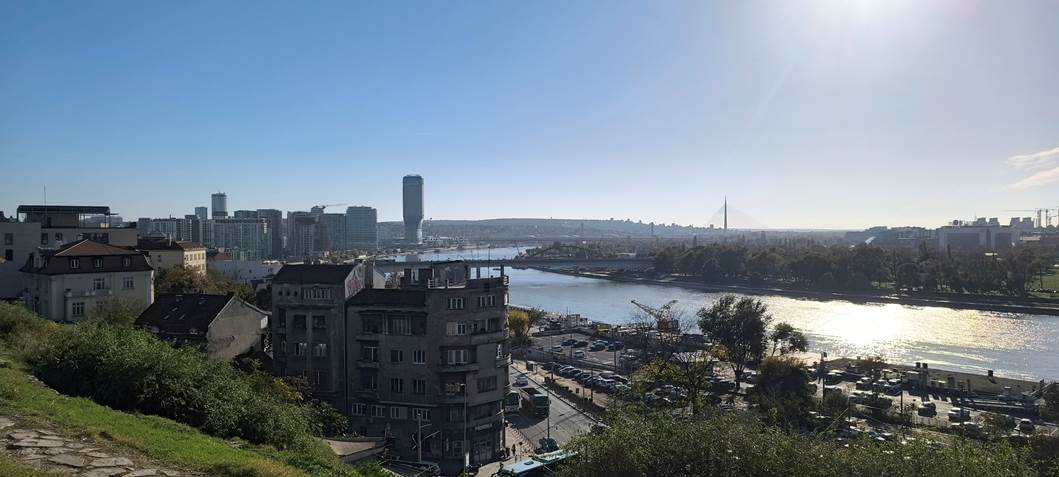
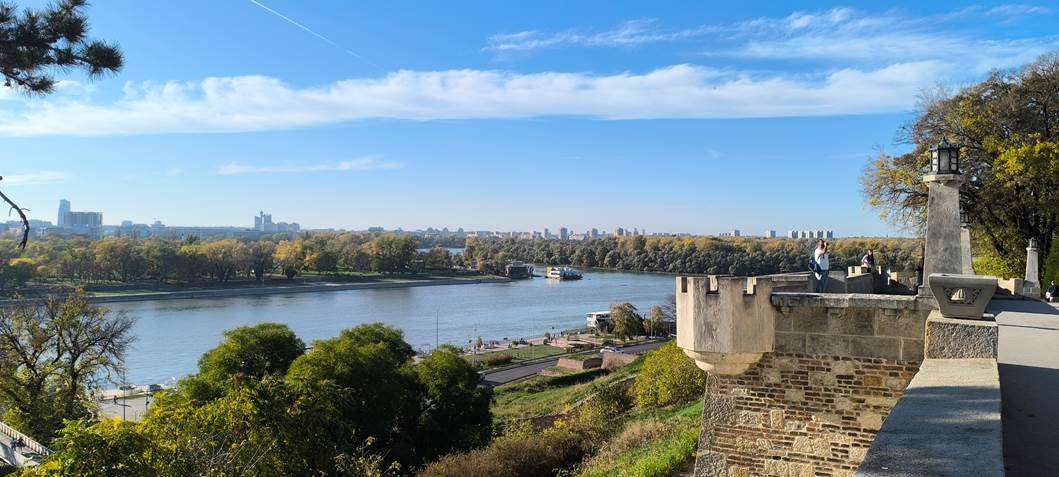
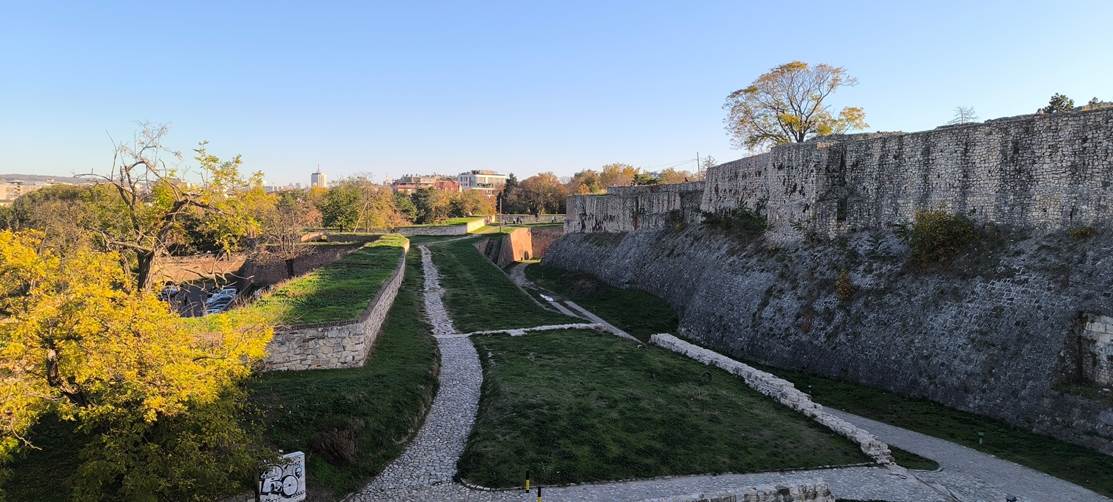
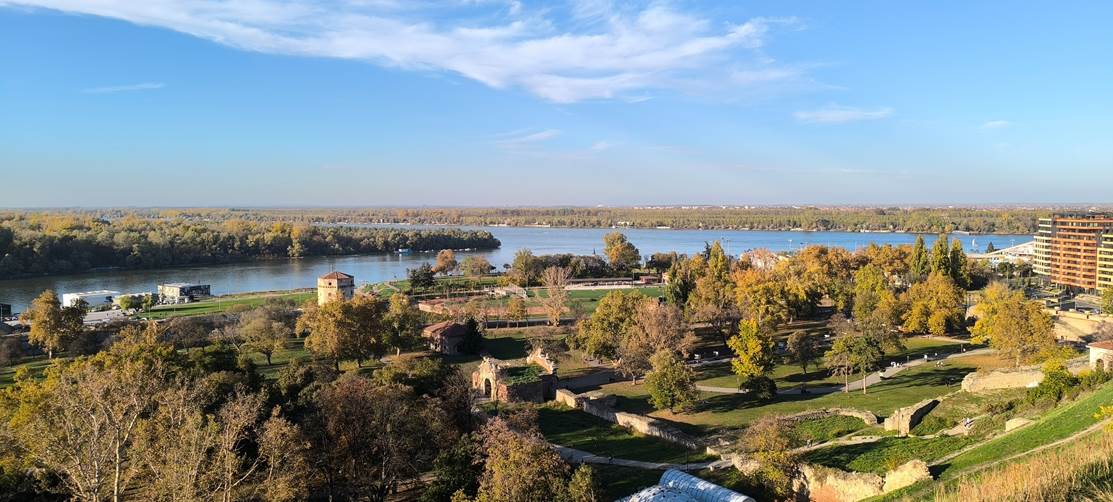
In the late afternoon, I was given a task by my family to head to the city cemetery. Skipping out the attempts at public transport, then eventually giving up and walking, I arrived with some light in the sky left to help me navigate. Some family members on my mum’s side (a long way back) were supposedly buried here, having died during World War 2 between 1941 and 1945 when Yugoslavia was invaded. We knew one was buried here and had a very old picture of the stone plaque from 2010 (I don’t know why or how), but we didn’t know where it was or whether the others would be there.
After a bit of detective work from the pixelated image I did have, I did manage to find all the plaques, together in one corner of the war section as the sun began to set leaving a nice orange hue in the sky.
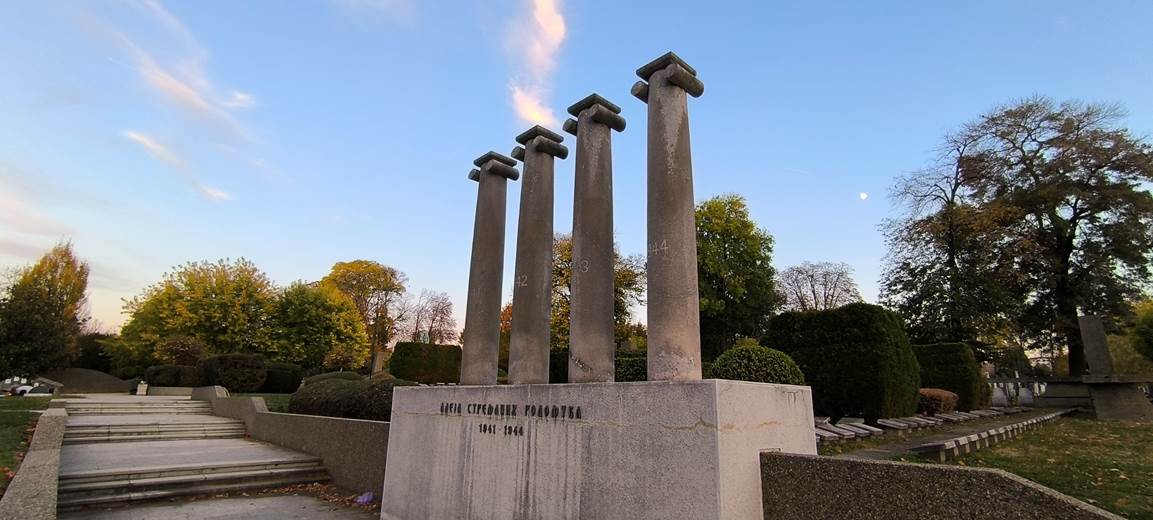
On my way back to the centre, I stopped off at the train station (colloquially known as Prokop after the area it’s in), just to see what was going on. I knew there would be no trains running, so I just wanted to see what it was like.
Prokop station is the new station of Belgrade, with the old station now abandoned. Until the mid-2010s, it might have been possible to catch a train to Moscow via Ukraine from the old station. It may have also been easier to navigate the Balkans by train from the old station.
After completely failing to navigate Mostar junction on public transport, I walked on foot to the rear of the station. From the back, the station still looked like it was under construction – indeed I believe it was only finished recently. There was no big entrance, but there was an inviting open door with faint light emitting from the tunnel inside. I don’t think this entrance is intended for public use, since it bypasses the ticket barriers and leads straight into one of the two platform connecting corridors, this one below the platforms. With some of the lighting broken, absolute silence, and huge ‘no photography’ signs along the entire length, it felt rather unwelcoming. The one or two electronic display boards that were working added to the feeling that I had missed an apocalypse, with every train just displaying as cancelled. The platforms were equally deserted. The speakers just repeated chimes and cancelled train announcements over and over.
As I tried to exit the tunnel, which I’m still not sure is in regular use – and if it is, then the wayfinding needs some help (or maybe it’s only intended for transfers?) – I went up onto the first platform with two workers sitting on the stairs leading up to, as I released when I looked closer, a police office. They were very helpful and, despite working for the railway, admitted that the bomb excuse was nonsense. However, they didn’t really mind (apart from being as angry at the government as the general population seems to be) since they were paid their normal rates just to sit at the station, have a chat, and drink coffee.
One of them was just finishing her ‘shift’ as a ticket inspector. Having travelled long distances cross-platform that day, she was eager to go home, but was happy to help me find my way back to the centre via the information desk.
The woman on the information desk was also about to finish for the day, and informed me that there was very little chance of trains running the next day (which I did already expect).
Then, she showed me the bus stop, which appeared to be the only working bus stop in the whole of the city from my experiences of that day, and got on the same bus. After a chat, she got off and I continued back past Mostar, into the centre.
I returned to the fortress that night, just to see what it was like in the dark and with no people around.
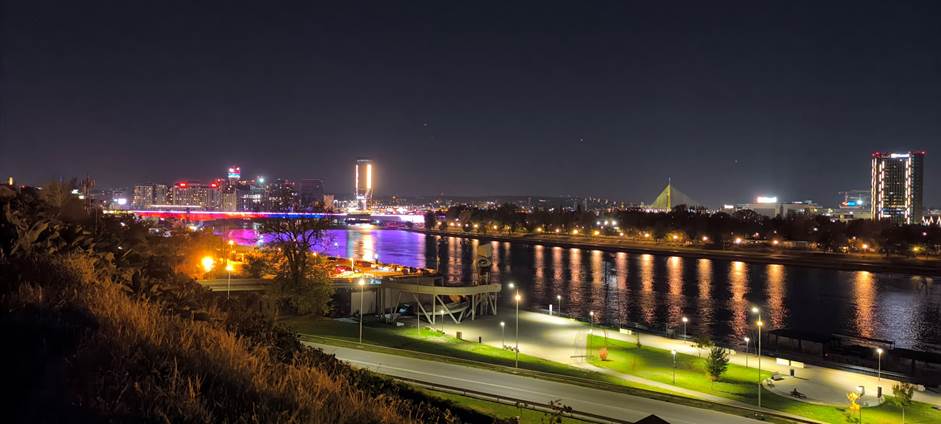
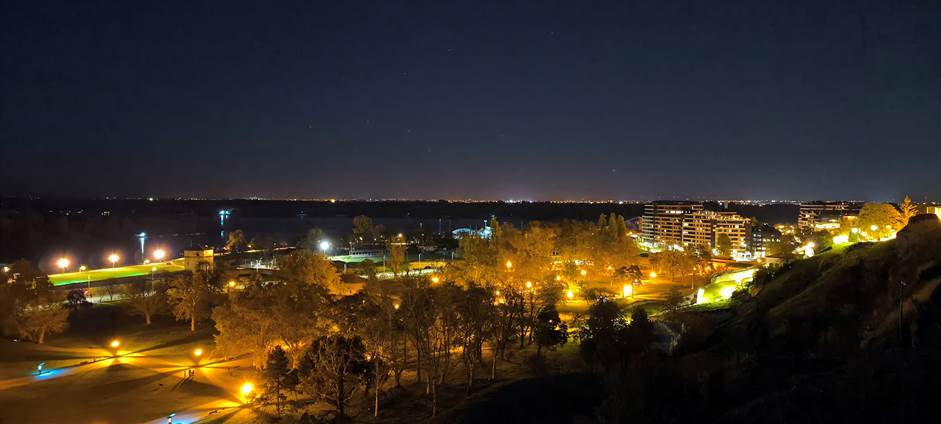
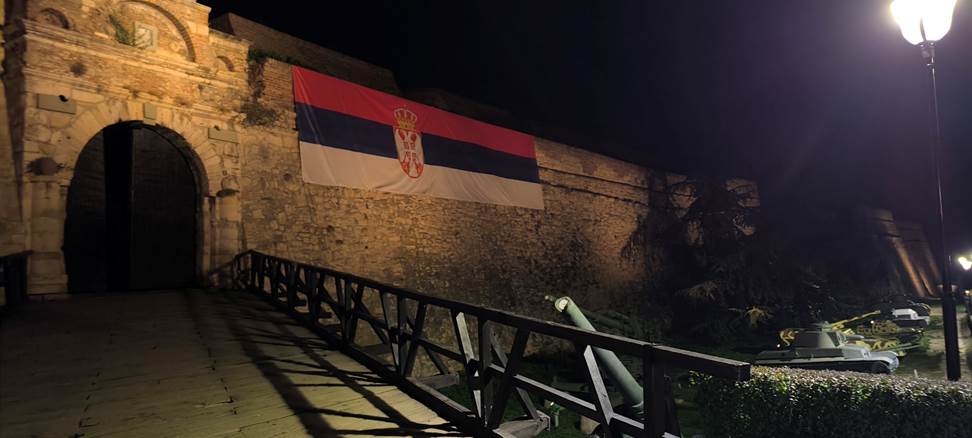
The next day, I planned to go to Tito’s mausoleum, and if I had time, his famous Blue Train. I made the mistake of not checking the closing time of the Blue Train (which I’ve heard is basically sat in an unassuming shed in the south of the city, with an old man who’s more than happy to guide the handful of visitors through the train) before I left, so missed the opportunity that day, since it closed at 2pm.
After yet again suffering on public transport, I got to the same bus stop that the ticket inspector had shown me the night before, and walked a few minutes up to the museum. It was interesting, with a big old map of Yugoslavia (interestingly seemingly showing railways) with physical height bumps and another reminder of Finland.
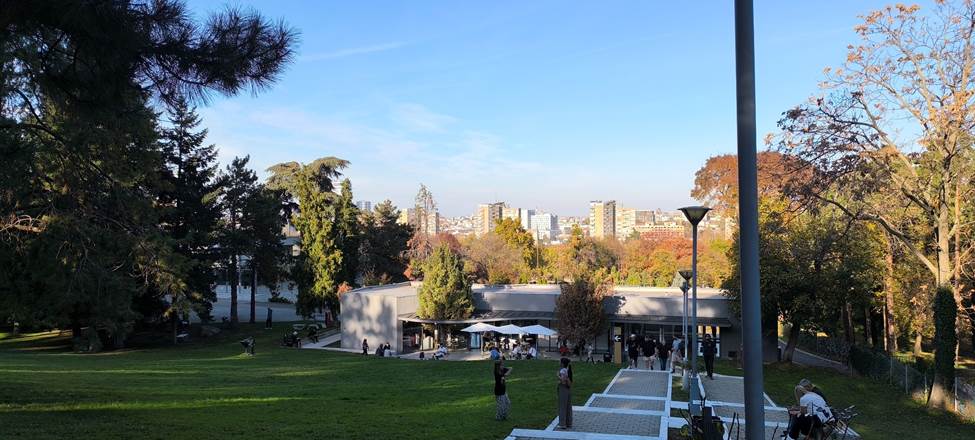
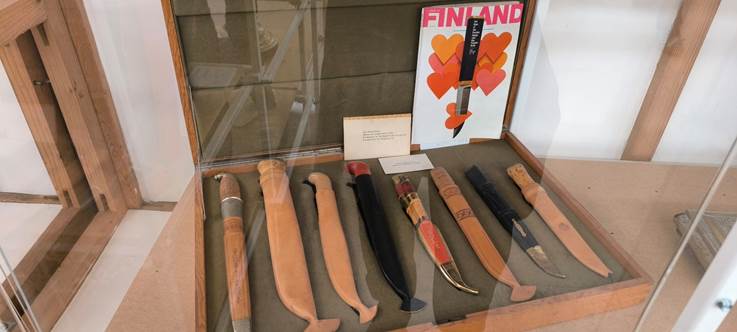
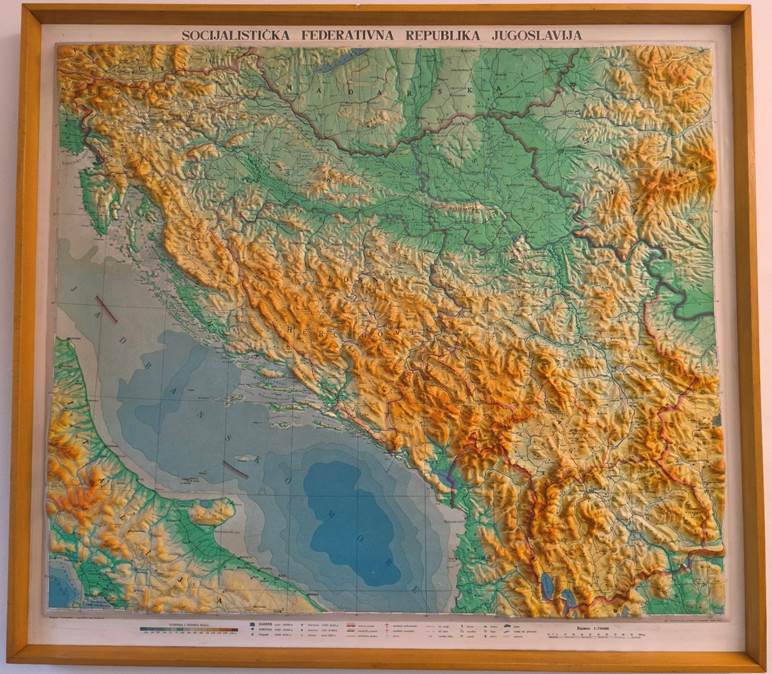
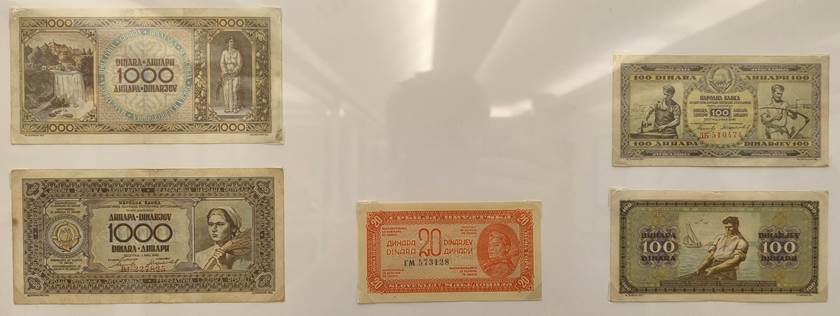
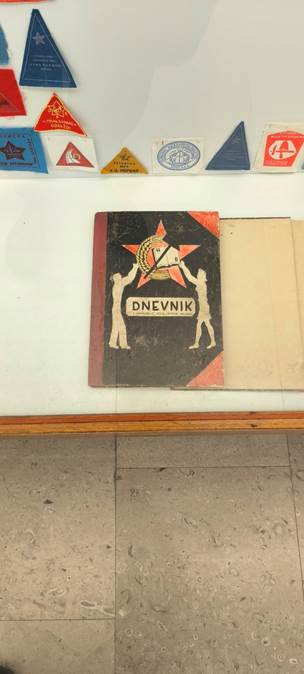
The museum was interesting, but the mausoleum was impressive.
Josip Broz Tito led Yugoslavia until his death in 1980. It is said by some that he was authoritarian, but by many that he was closer to a benevolent dictator. He led Yugoslavia on the concept of ‘brotherhood and unity’, and he did so by crushing all dissent. However, this policy did lead to improvements in the quality of life for much of his population, and so he is viewed positively by many of his subjects. Whatever your opinion of him, it is true that he led a non-aligned country. The Western bloc and the Eastern bloc were both equal friends and equal enemies. While his country had some capitalist characteristics, it also had communist and socialist characteristics. It is perhaps due to this political stance and influence that his funeral is considered one of the largest funerals of all time. Only a handful of countries did not send anyone, and 44 countries broadcast the funeral.
The inscription on the marble tomb in ‘The House of Flowers’ simply stated his name and his year of birth and year of death. It did not include any other symbols or words, including a lack of any emblem linked to communism.
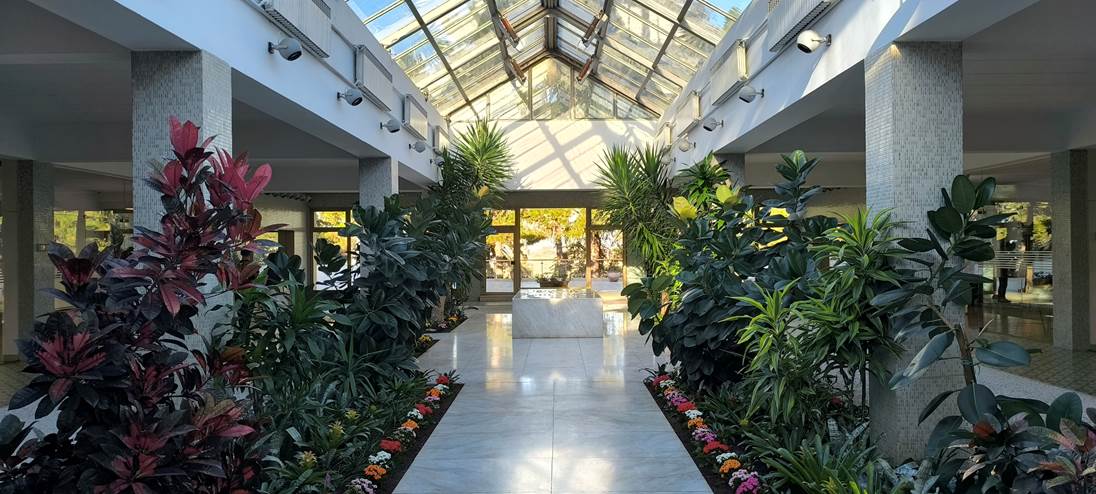


His death led to the start of the breakup of the country which he had ruled. His anti-nationalism policies were quickly forgotten. The effects of the war and genocide which followed are still visible today.
The man in the middle of the three in the image above (a frame extracted from the award-winning The Death of Yugoslavia documentary) placing the wreath on Tito’s tomb was Ivan Stambolić.
One of the last things to happen during the breakup was the downfall of Milošević, seen on the left in the image above. The huge protesting student population, fuelled by anger (and to some extent, the West), successfully caused him to leave his office on the 5th of October 2000 – the students created a popular slogan which appeared on thousands of stickers and as spray paint around the city: “Gotov je!” – “He’s finished!”.
Ivan Stambolić was assassinated under the orders of Milošević on the 25th of August 2000. He was assassinated in the hills of Fruška Gora, right above Novi Sad to the south. Milošević would eventually die in ICTY detention on the 11th of March 2006, whilst on trial for war crimes, crimes against humanity, and genocide.
After I left the museum, and had asked about the potential for trains the next day at the train station, and had ridden the bus back into the city (as far as it would go due to police roadblocks), I walked towards the parliament building.
I did not know what to expect. I knew there was a park opposite inhabited by government-supporting protesters (which are suspected to be paid for by the government due to the ‘type’ of people inside and the blind-eye turned by police). The last I knew, the protests in Novi Sad had ended peacefully.
What I did not expect was multiple layers of riot police and an active protest. As I walked around the park to enter the crowd of protesters (the police formed one entrance/exit and prevented the protesters from entering the park), I definitely did not expect to see a sticker which I had only ever seen in old documentaries. A black sticker with “Gotov je!” written in Cyrillic. They were plastered over several surfaces, lampposts, concrete barriers, and riot shields.
When I arrived, the crowd was slowly growing and the protesters were just getting started for the night. Apparently, the police and government had refused entry of a mother of a victim of the train station canopy collapse on hunger strike to the parliament building.
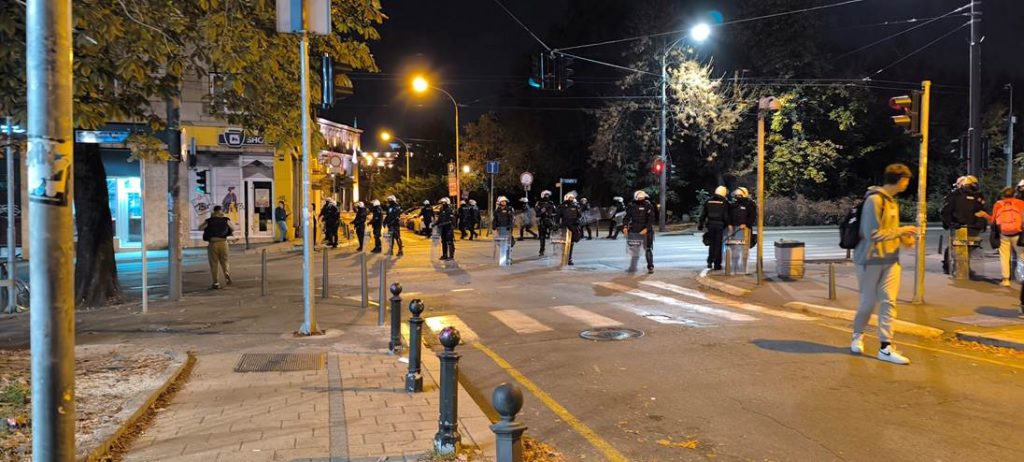
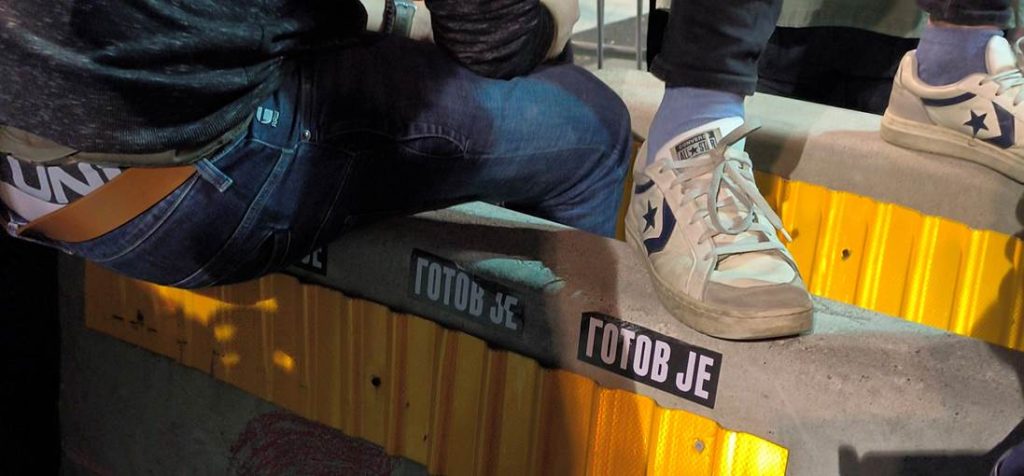
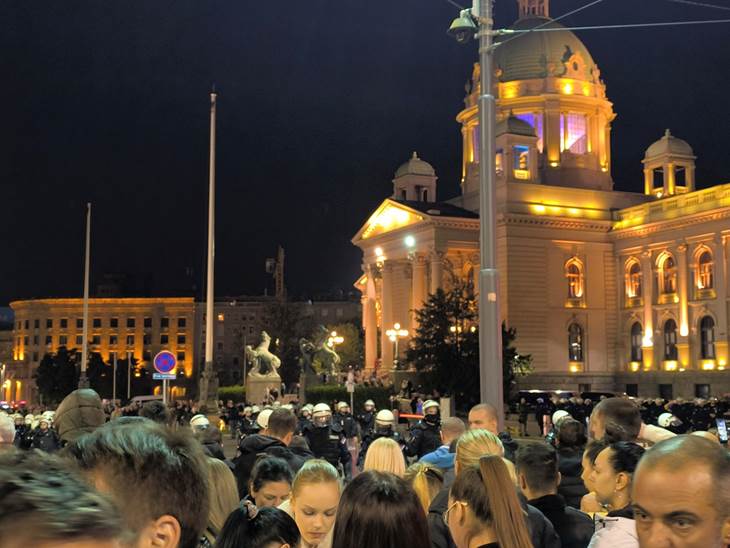
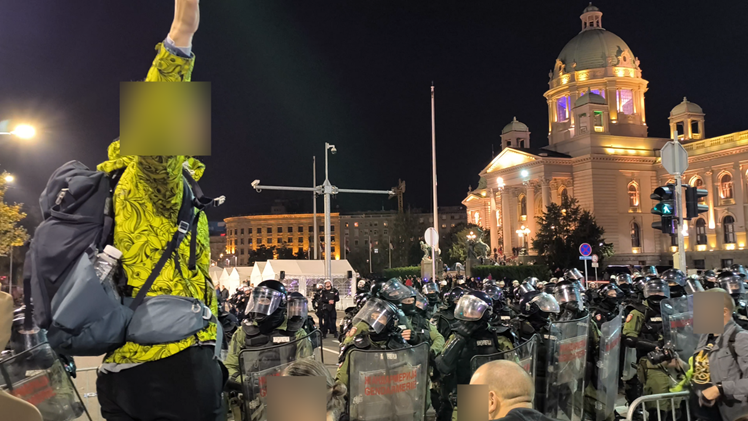
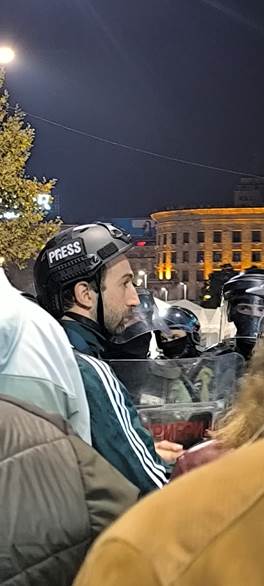
I stayed there for a couple of hours, the crowd slowly becoming rowdier, the occasional bang (like a firework, flare, or maybe stun grenade?) going off, and the occasional protester behind handled by the riot police.
I eventually left when things started to get a bit more out of hand just after 11pm. In hindsight, I wish I stayed, perhaps just a little off to the side, to observe and support.
In the morning, I woke up to the news (not from Serbian sources), that there had been multiple arrests and injuries that night. My plan was to try and get to the Blue Train before it closed, then spend the rest of the day at the train station until I had to make a decision whether to go with the bus.
My hopes for getting out of Belgrade that day were not particularly high. By this point I was in danger of being trapped for too long and not being able to reach my booked Eurostar in Bruxelles for the 15th, so I began some research for alternatives. The option was open to get a night bus to Bijelo Polje, a town in Montenegro, where I had been planning to get off the night train anyway. I would then wait for a later train, so I would be able to see the best and most famous part of the route in the daylight.
- Tip: Especially when the days are shorter, and especially if you’re doing a route for the route itself, make sure you schedule it so that you do it in the daylight.
There was also an idea to take an earlier domestic train to a station just on Serbia’s side, to see some of Serbia in the day, then switch to the night train in the middle of the night to cross the border, then switch at Bijelo Polje as planned. However, I decided that this was too risky and the chance of being stranded at some small Serbian town for a day too high. Although, that would’ve been an experience.
With a rough idea of timings and pricings in my head, I set off after a makeshift breakfast for the train station. On the way to the tram station, the city stopped. I had forgotten, but I quickly realised: the city was holding a 16 minute silence and blockade of major roads, one minute for each life lost in the collapse. That was a strange experience, as I decided to join in, just on the pavement next to a crossing. Unaware tourists (like I had been before realising) wondering what was going on around them, a single Serbian stall operator trying to talk them into buying something while explaining what was going on.
Once the silence was over, everyone continued as normal, but I quickly realised that this would not be an easy time to move on public transport, what with the road closures and riot police still in place.
Indeed, this was the worst the public transport had been in my days in Belgrade.
- Tip: Google Maps doesn’t have up-to-date info for Belgrade public transport
The first tram stop said that trams on my required route would be arriving with some regularity. But I guess all timings were completely messed up. After 25 minutes of no trams, I walked to another route. Same story here, another 25 minutes of waiting for a bus with no arrival. So, I walked to yet another route.
Here I did manage to catch a tram, which would at least take me to Mostar. The traffic, however, had different ideas. After 55 minutes on the tram, we had moved only slightly closer to where I needed to be. I think we had moved about 5km (not all in the right direction due to diversions).
The tram driver sympathised with those of us on the tram that had places to be, and let us off just in the middle of the road where we had been waiting for about 10 minutes.
On my 35-minute walk towards the station (the whole walk from the start would’ve taken about an hour), I decided there was no chance of reaching the Blue Train in time, so I just stopped walking at the station. Even walking was not easy in that amount of traffic.
In the terminal was a guy I had seen the days before. He was clearly mentally distressed (or maybe just drunk) and living at the station somehow. In the little bits of English that I could get out of him, I gathered he had no belongings, no money, and no passport. He was trying to get to England, or maybe France, or failing that, a European embassy in Belgrade. I don’t know how he ended up illegal and alone in Belgrade, but I felt bad for him. He had asked me for water the days before, so I offered to buy him some water. Of course, I was taken full advantage of, and a beer was purchased for him. I had not given help to someone who was actually in need of some financial help a couple days before to get back to Ljubljana by bus (he was apparently a few Dinars short, so I assumed it was a scam, but then realised it wasn’t after he said he didn’t want cash and then actually backed off quite quickly and went into the bus station), so I wasn’t best pleased with the guy for being the ill-suited recipient of help someone could’ve benefitted from.
Before I went on this trip, I would’ve said anyone asking you for anything financial who you’ve literally just met is almost certainly scamming you. After this trip, I would still say that’s a good way to initially think about these things to protect yourself – but I also realised that I could easily find myself in that situation, and I wouldn’t have helped myself.
I spent about 3 or 4 hours in that station, waiting and waiting. The woman at the info desk was the same person who was there on the first night I had been here, and the day before, and she was very surprised to see me persisting.
I also met another guy, who was in the same situation as me, also trying to get to Montenegro, and apparently had been waiting since the 1st as well. The woman at the info desk was also familiar with him. He was a ticket inspector (because of course he also was) working on Belgian railways, having a small trip. I learnt that apparently a lot of European railway workers get some amount of free travel on European railways, so he was also in the same situation as me, of having a free (or at least at the time of use) ticket but needing a supplement ticket for the night train.
The info woman couldn’t tell us yet if or when the night train to Montenegro might be running.
I shared my ‘split in Bijelo Polje’ idea with the guy, who agreed that sounded like a good idea. He told me that he had already purchased a bus ticket for the entire journey from Belgrade – Bar for that evening, but was waiting for the train because he wanted to travel that way if possible.
As we waited for our fate to be determined, tension slowly rising, he took a walk down to the platforms and came back with a smile on his face and a photo on his phone. There was one platform with a screen not reading “Welcome to Belgrade”:
That was a welcome surprise, and when we showed the woman at the info desk, she was also quite surprised and semi-jokingly told us that ‘she hopes we can leave tonight for her sake’. Clearly, we were making a good impression. She called someone, and said that while they couldn’t confirm yet, it was looking possible.
It was now half past 5, so there wasn’t exactly long left for the railways to make their mind up.
Then it happened. Just as we were again losing hope and preparing to ride the hellish public transport to the bus station, she came over, a big smile on her face and informed us that we were very lucky and they were indeed going to run the train “especially for us” (jokingly, of course).
She asked us to wait for a few minutes so they could check everything and allow the ticket sellers to update their systems.
Previously, the ticket sellers had been quite rude. Refusing to tell me the price for the supplement for the train, both when I asked in my best, most polite Serbian, and when I asked in English, just responding “Nema nishta” – or, there’s no trains, I can’t be bothered to look up the price, and go away.
When I approached them again, now that the train was confirmed, I was sort-of but not really surprised to get the same response. “Pa kako nema ništa?!” was my response, which did take them back a bit, but not enough to actually bother to check.
After asking the woman at the info desk for yet more help, she reminded us she would do anything to get us out of the station, and went over to talk to the ticket sellers, then told us to go back after.
After a few more minutes and a couple of Euros, I had my ticket. Then, the Belgian train inspector also had his. And we were set and ready to go.
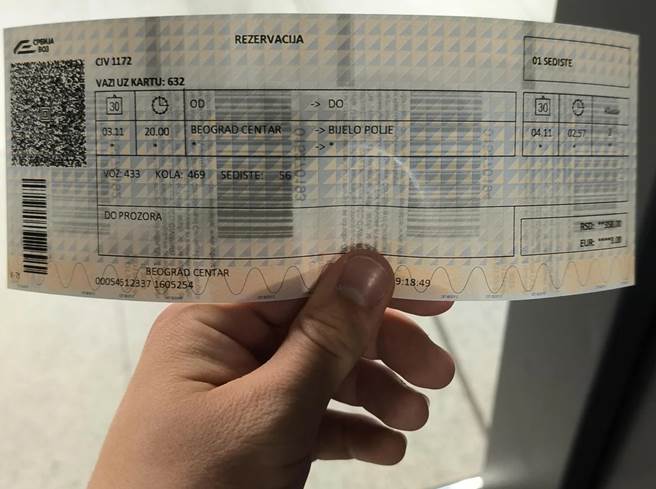
The perseverance and persistence had paid off. I was moving on my train – maybe a day or two later than expected, but moving nonetheless. This was a high point of the trip and I was almost as happy as the woman at the info desk.
After a small heart attack caused by the platform signs temporarily showing cancelled, we could not have been happier to see the locomotive pull the cars into the station.
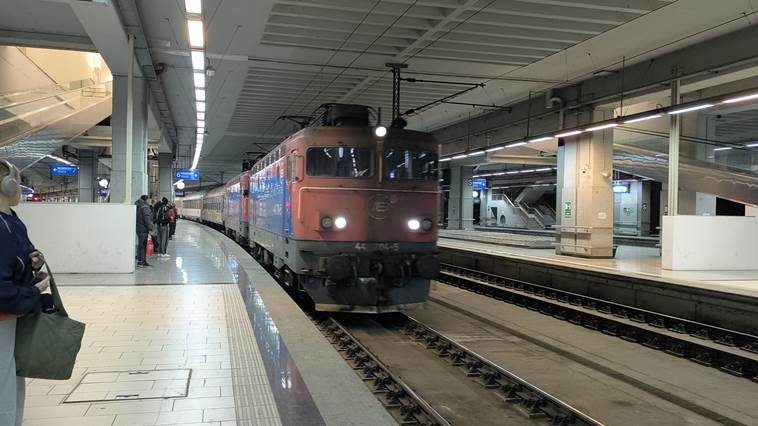
The woman at the info desk finished her shift, and came down to the platforms to wave goodbye to us, then bang on time (if that’s about 30 mins later than scheduled) we pulled out of the station into the darkness.
We were two of about a dozen spread out across the train, and in the end, he had booked a sleeper cabin while I booked a seat. Having about half a carriage to myself, I had more than enough space to spread out and relax, and enjoy the next 14 hours.
We were the only train to move in the country that night, and the only train to move in the country until the next evening when the rest of the national train network began to resume.
I left Belgrade & Serbia behind, and my bad feelings about it with it – maybe it wasn’t so bad. It’s a part of the experience after all.
Part 4: Just Head Back
The train bumped and shimmied as is slowly trundled towards the next countries. After a while it starts winding its way through the mountains, where the speed limit seems to forever fall towards 0kmh. Large sections are 30kmh or 50kmh – the bombing (although the damage has been repaired) and neglect have not treated this line nicely.
Apparently, if you’re very lucky and travelling on a Friday, you might be lucky enough to have one of Tito’s original Blue Train cars attached to the train as it travels across the line that was built for it.
It’s a shame I was doing this part of the ride in the dark, since it would probably be quite scenic, especially from Užice onwards. My last picture before sleep rolled over me was at minutes to midnight at Požega, the last city before Užice.
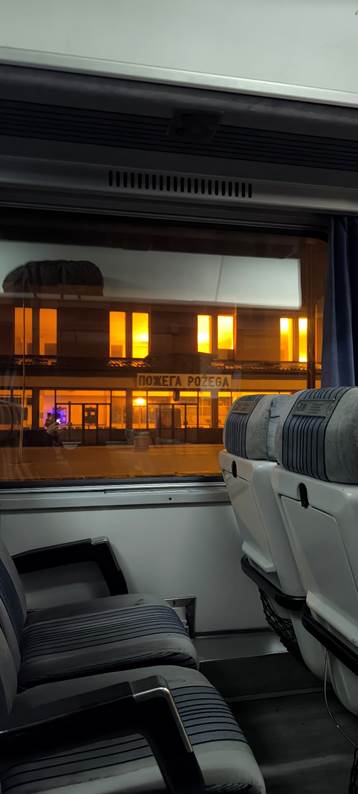
The sleep was alright. Out of the 3 night trains I’ve done (two on this trip, one on my trial trip), 2 have been done in seats. Both times, and especially this time, the seats were actually comfortable enough.
The first time, I was in a full compartment of 6 seats, which made sleeping more uncomfortable and difficult. But if you find yourself in one of those compartments where you can lay across 3 seats, that would be good enough. And besides, it’s kinda fun to be in and out of sleep, welcoming the newcomers, saying goodbye to the leavers (I was the only one in that compartment who stayed for almost the entire ride, which maybe says something), and silently laughing with a random stranger across the compartment as we watch scenes unfold outside the compartment. The inspector’s stare drills into the back of the woman’s skull who’s obliviously blocking his path. He becomes increasingly annoyed by bags left in the corridor. And at some time early in the morning, he shouts at the compartment next to ours for putting on some sort of call to prayer which he proclaims is music. It’s something I would recommend at least once, if you’re fine with not feeling the most rested the next day. All part of the experience.
In this case though, it was a standard 2+2 seating car, but old enough that it still had curtains and the seats were very comfortable (apart from the unmoving armrest at the window end, which is just something you deal with). Sleeping with your head exposed to the aisle (it seemed easier to fit across my two seats that way) can be a little odd but, as I’ve said, this train was so empty it was hardly a problem. A little cramped, but for a 2 euro fee with Interrail, I can hardly complain. One of those 2+2 seating with rows in alternating directions (each pair facing each other) with mini window table would be perfect I think – I was lucky enough to get this with half a carriage myself (except the ticket inspector) on the early morning service from Rijeka to Zagreb on my trial trip.
As I described, my original plan was to leave the train at Bijelo Polje in Montenegro to switch to a local train. However, when my alarm woke me up, we were still quite a way from there. I think we were in Bosnia. The train operates a short section through Bosnia and Herzegovina, but there’s no border controls – although I have heard that you can arrange for border police to meet you at the single station in Bosnia there if you want to get off the train and you ask nicely.
It is at this station in February 1993 that the Štrpci massacre took place. Members of a Serbian paramilitary unit abducted 20 people from the train (1 soldier, 1 ticket inspector, and 18 passengers, mostly Bosniak (Muslim)), beat them, then shot and killed them before dumping their bodies in the river. The leader of this operation, a Milan Lukić, was eventually sentenced to life imprisonment (possibly with a minimum term of 35 years?) for crimes against humanity and war crimes. He is serving his sentence in Tartu Prison, Estonia – the same prison that many prisoners from the former Murru & Rummu prison ended up at. A Croatian short film, “The Man Who Could Not Remain Silent”, about this massacre was filmed in Zagreb main station and won awards at the Cannes Film Festival and European Film Awards for the best short film in 2024.
These days, passengers sleep peacefully (if not comfortably) through the station on the night train.
When we did eventually pull into Bijelo Polje, I wasn’t sure whether to stick to my plan (my purchased ticket only took me as far as here) or just carry on. I got off the train onto the platform, intending to stick to my plan, before the border police stamped my passport – which I quickly realised is not what you’re supposed to do (and they don’t really anticipate non-regulars getting off the night train at this station), but they just asked where I came from and stamped me in anyway.
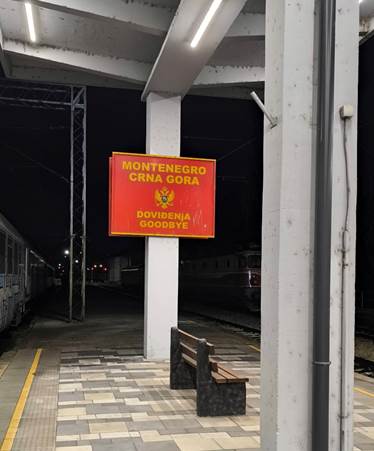
After realising that this train would probably leave the station all of 5 minutes before the train I had planned to switch to would, I decided to get back on the train. The sun was already rising anyway, and would be well up quite quickly.
The next part of the journey was the most scenic, and well worth waiting for sunrise.
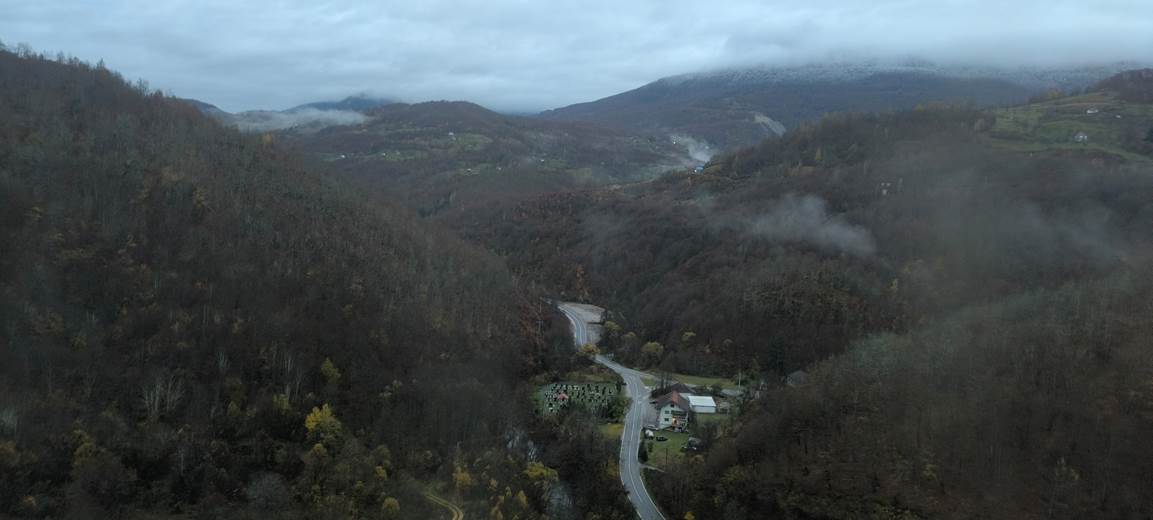
Along with the Iron Ore Line to some extent, this line is considered one of the most challenging in Europe in terms of terrain and geography. It crosses mountain ranges, and has its highest point above Kolašin, at 1,032m above sea level. After this point, it descends steeply at 2.5%. Therefore, the scenery is quite spectacular. And I got lucky with the early morning fog lifting as the views got better.
When you’re not in tunnels (which is a lot of the time – there’s a LOT of tunnels), you’re on one of MANY bridges or just trundling along the side of a very tall drop below and a high tall rock wall on the other side.
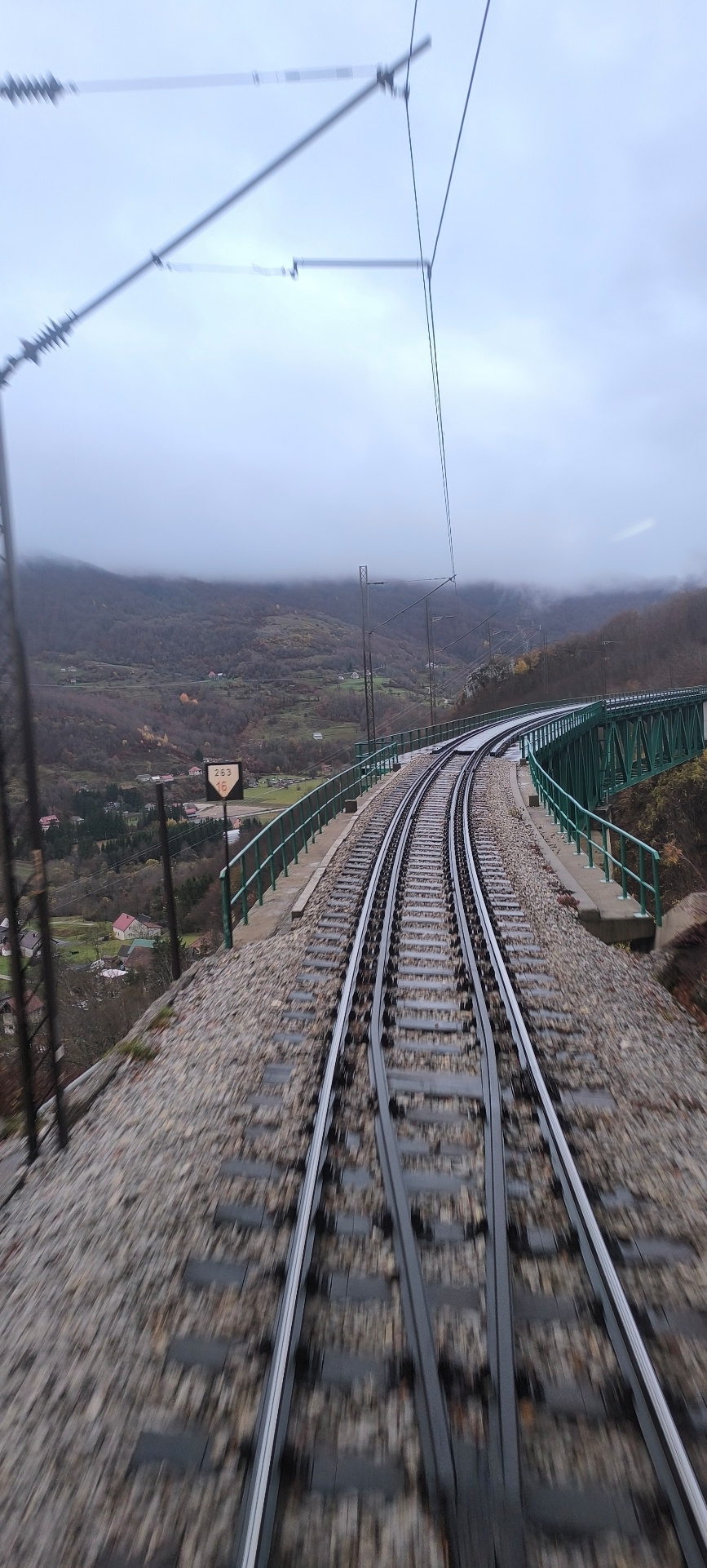
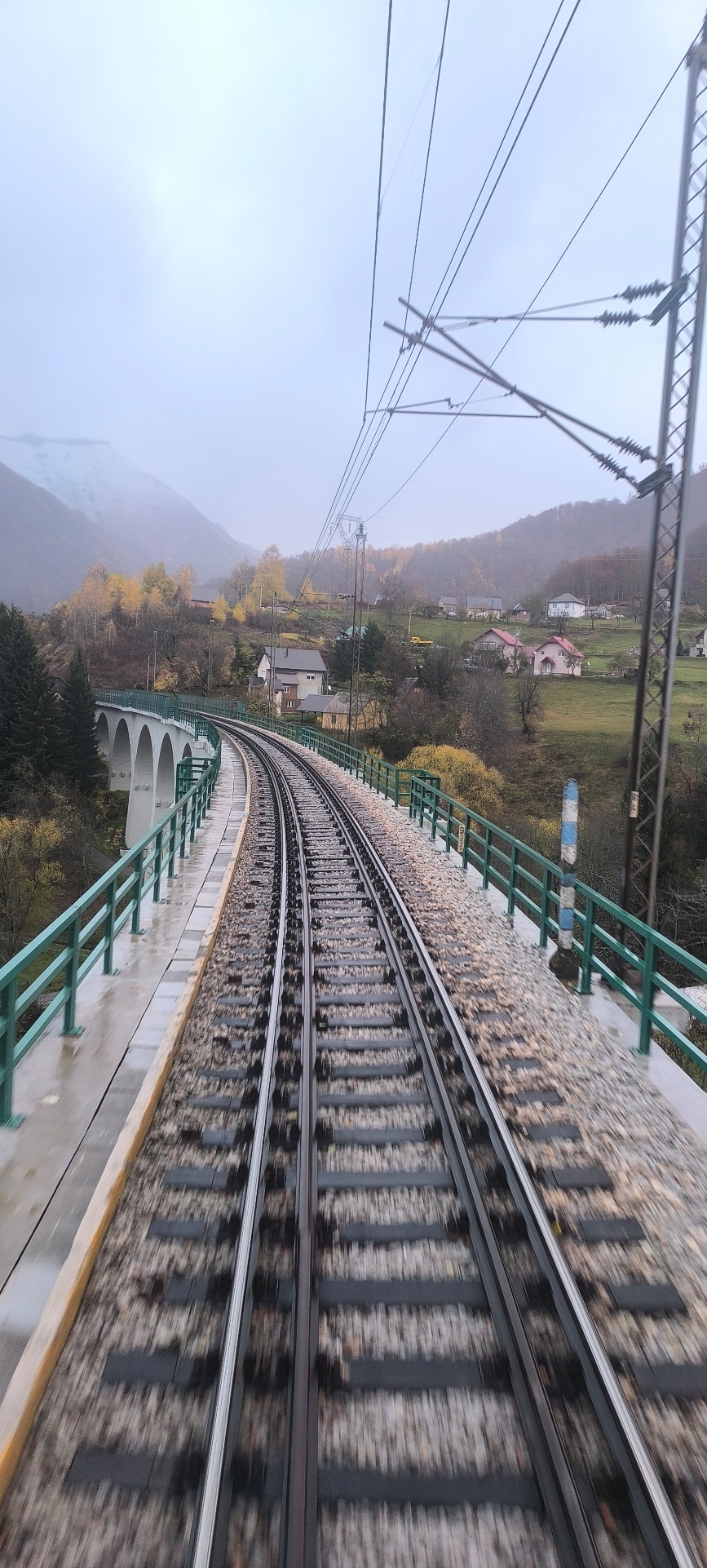
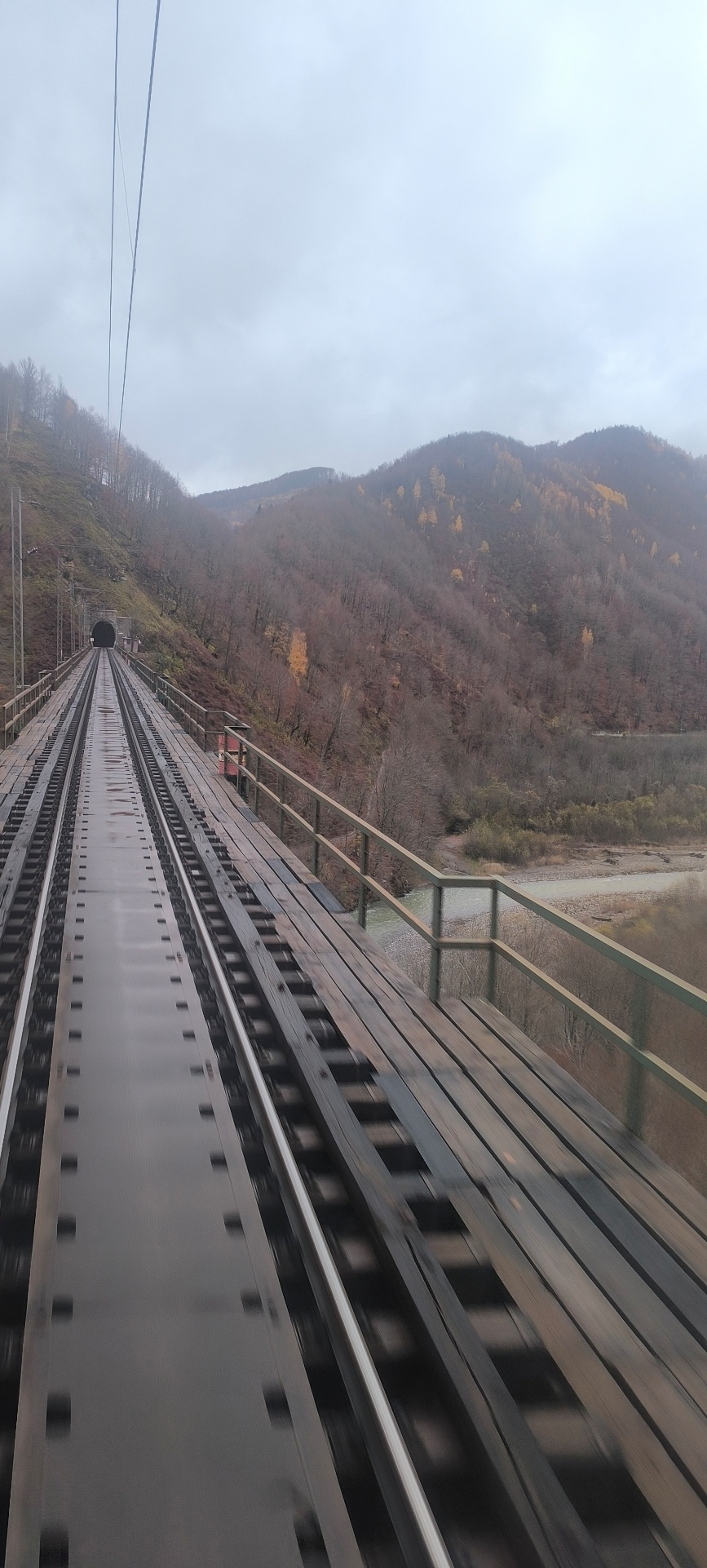
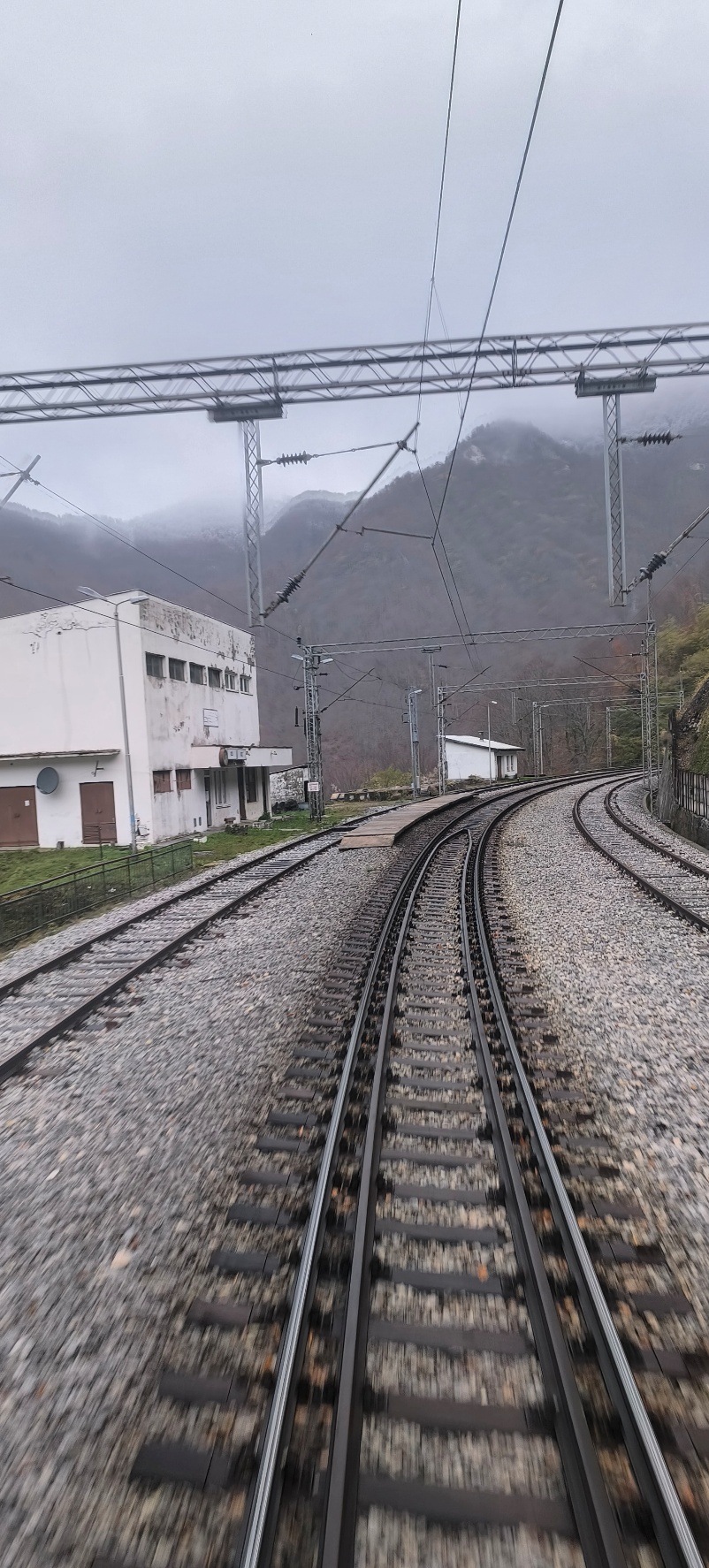
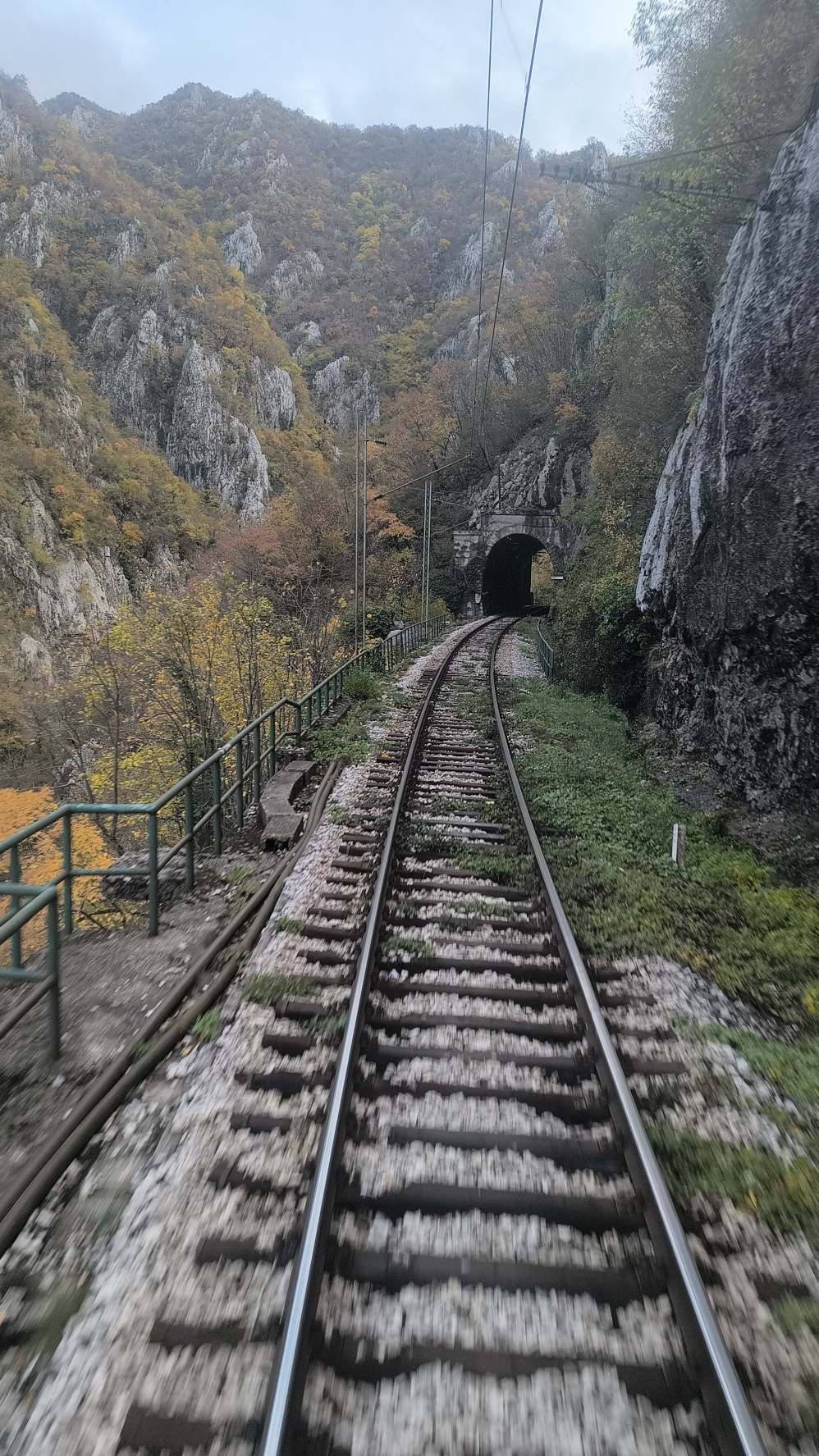
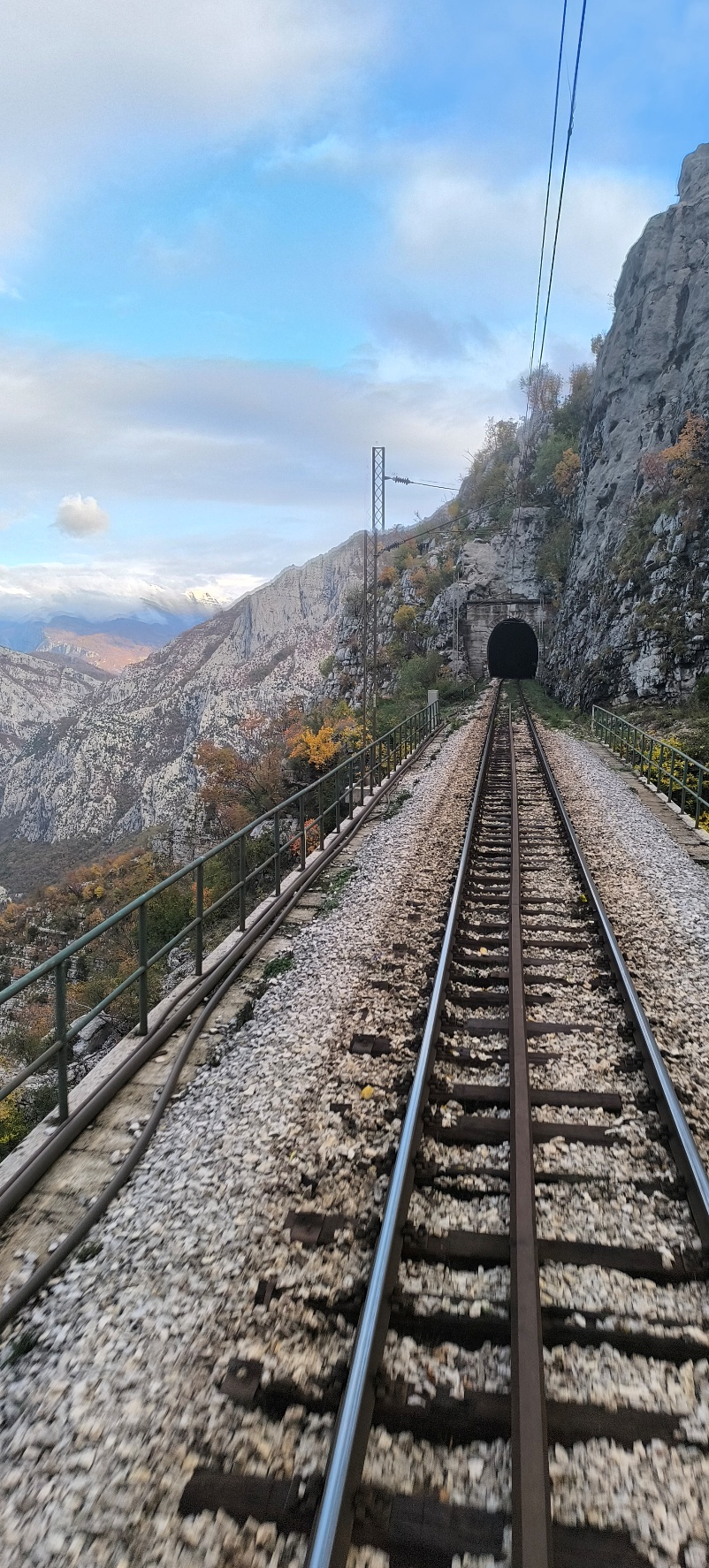
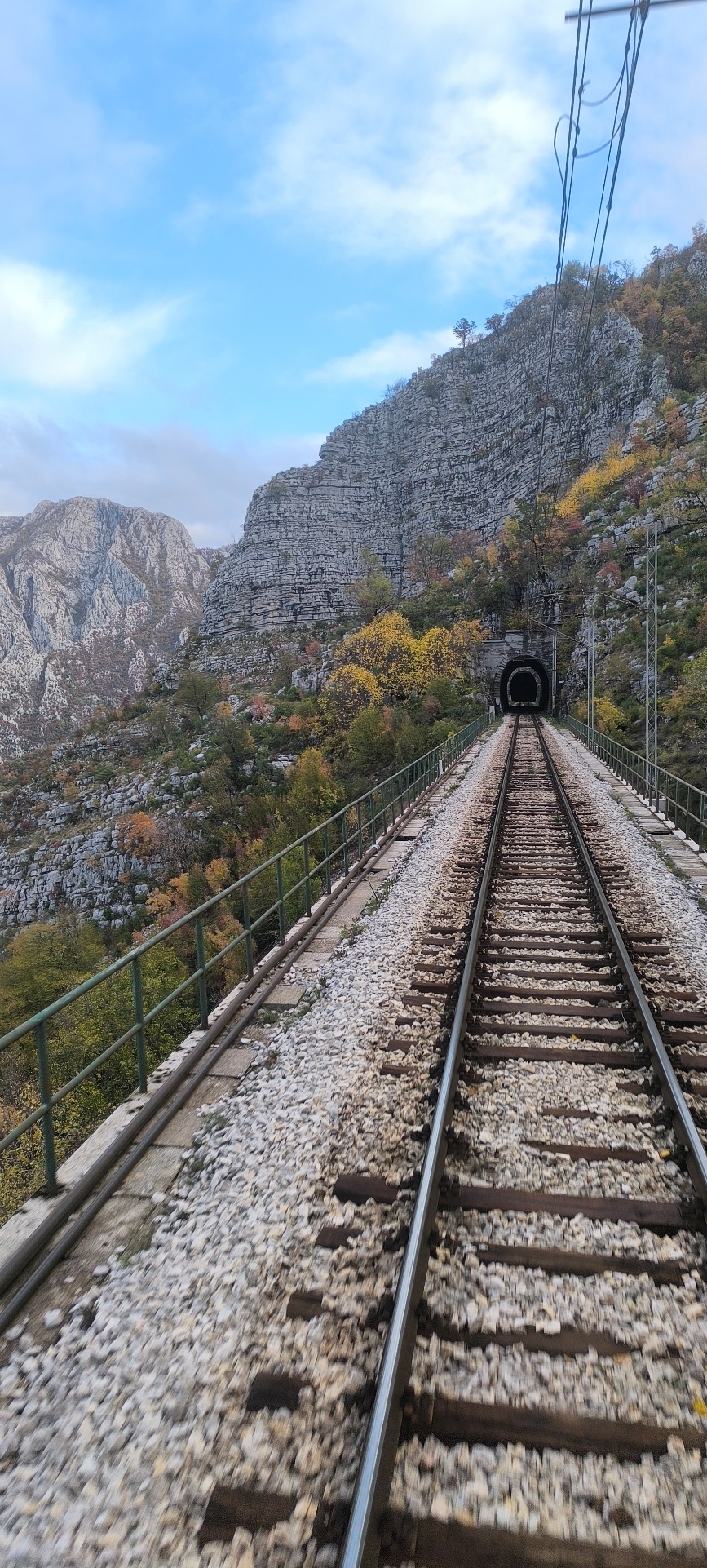
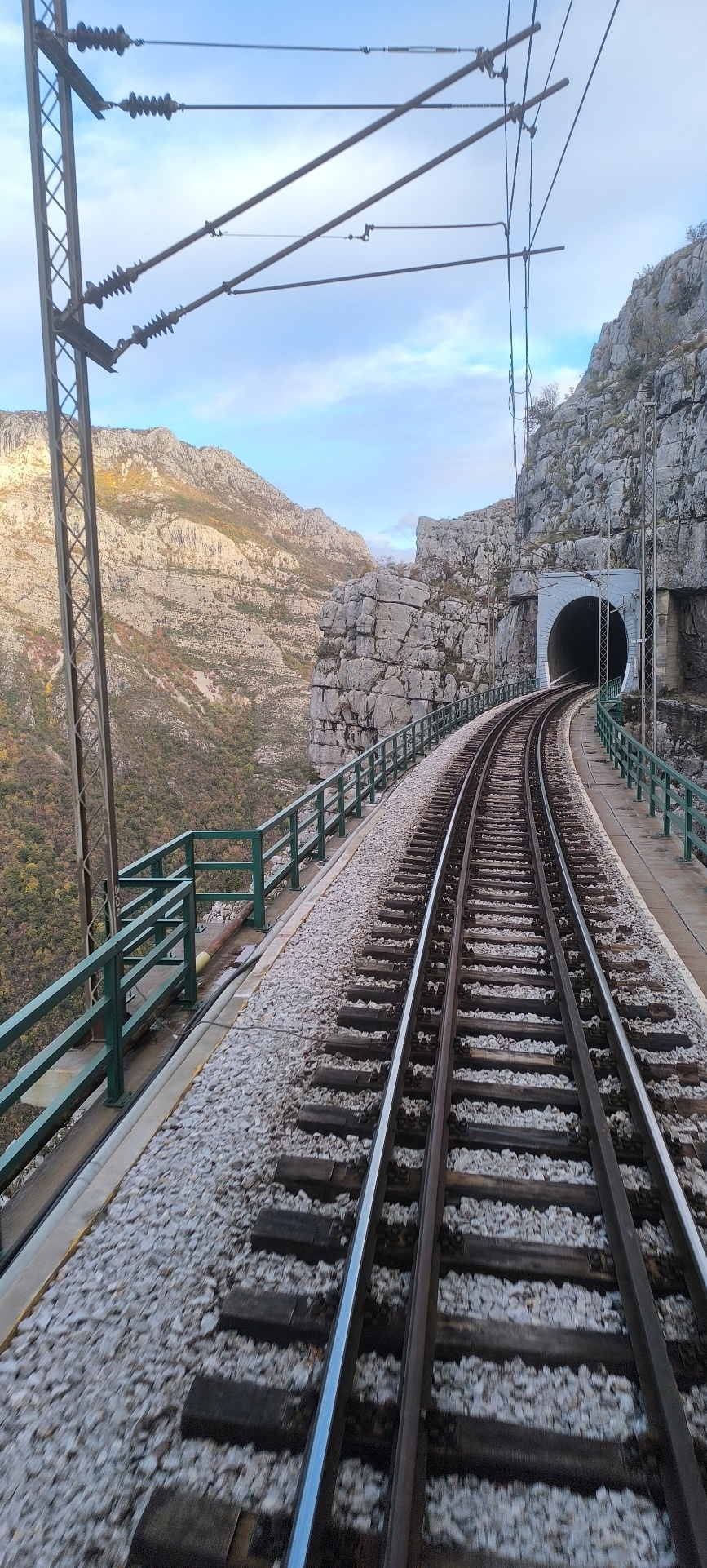
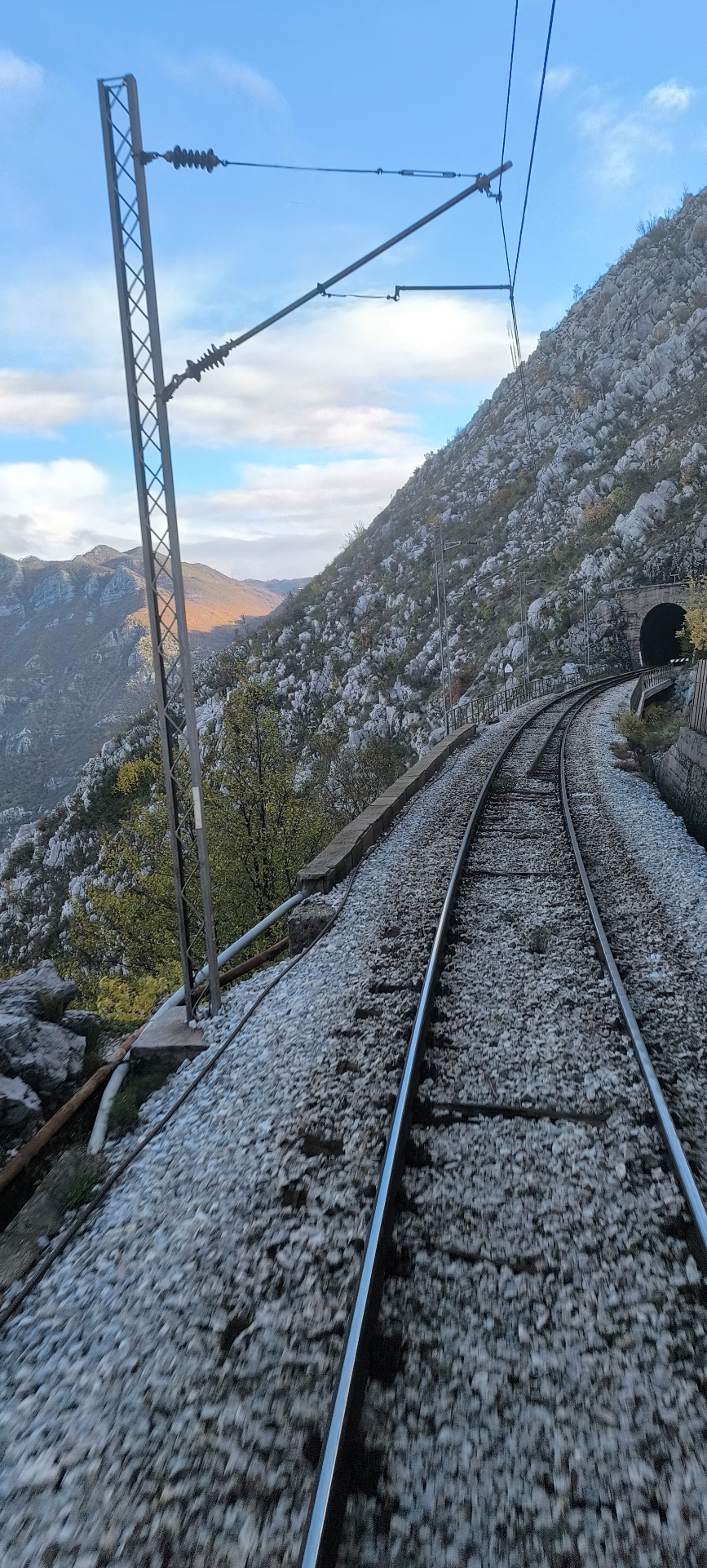
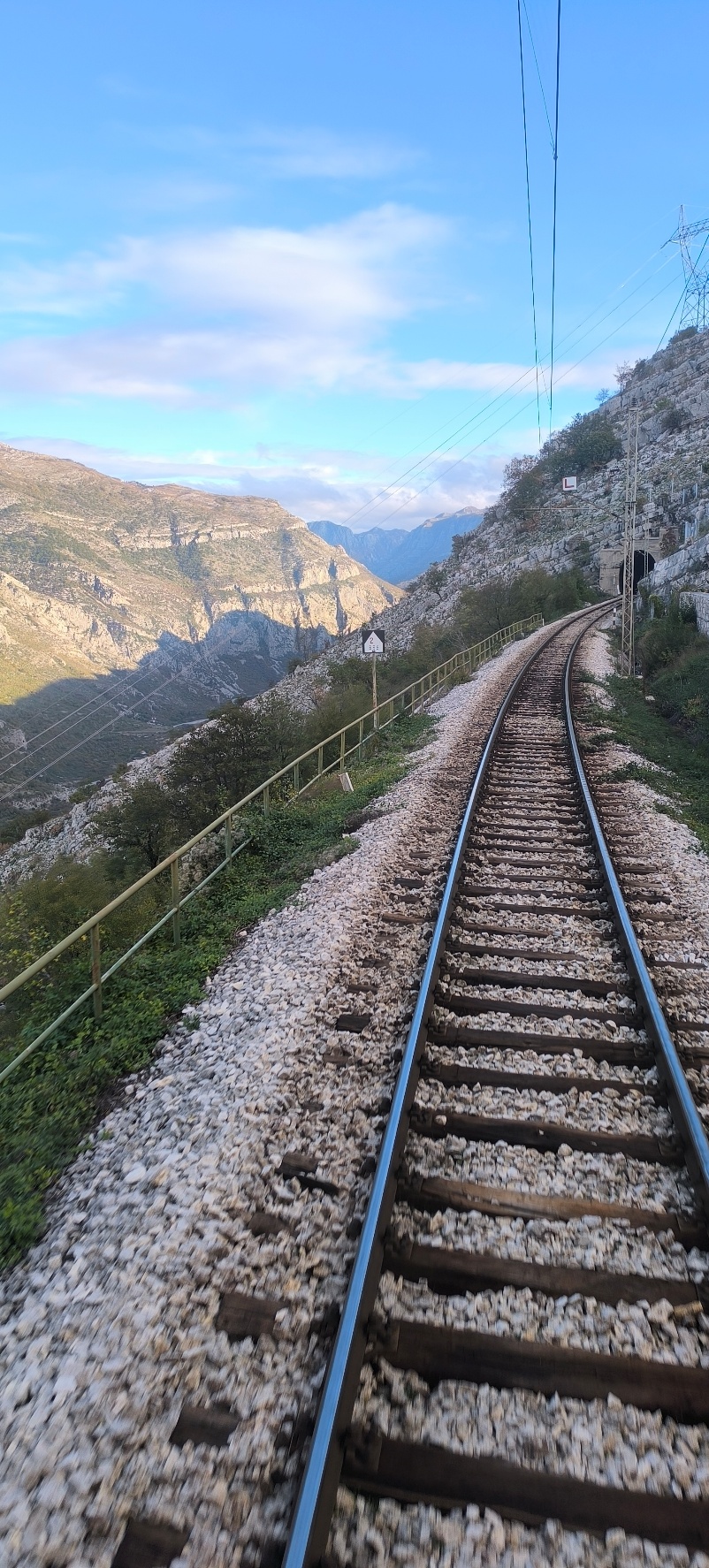
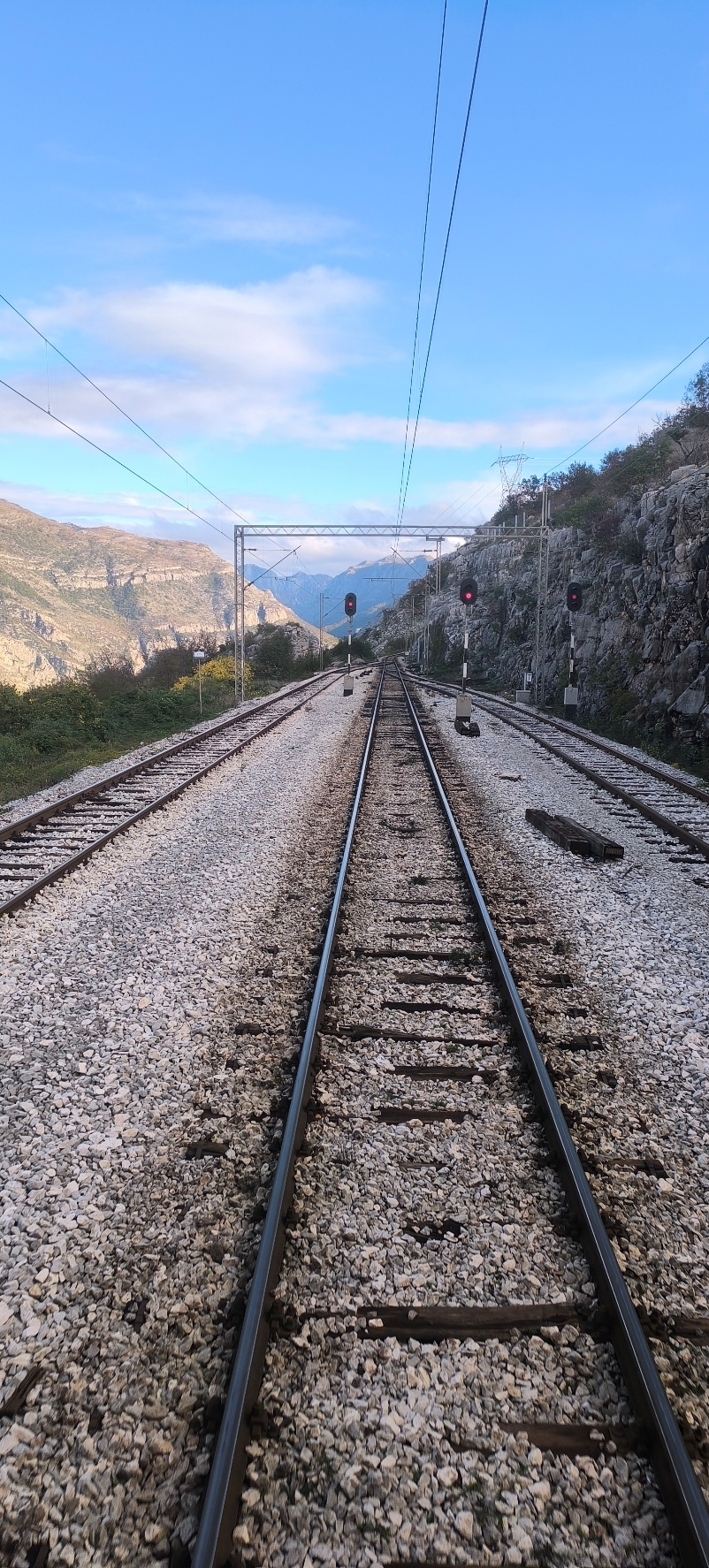
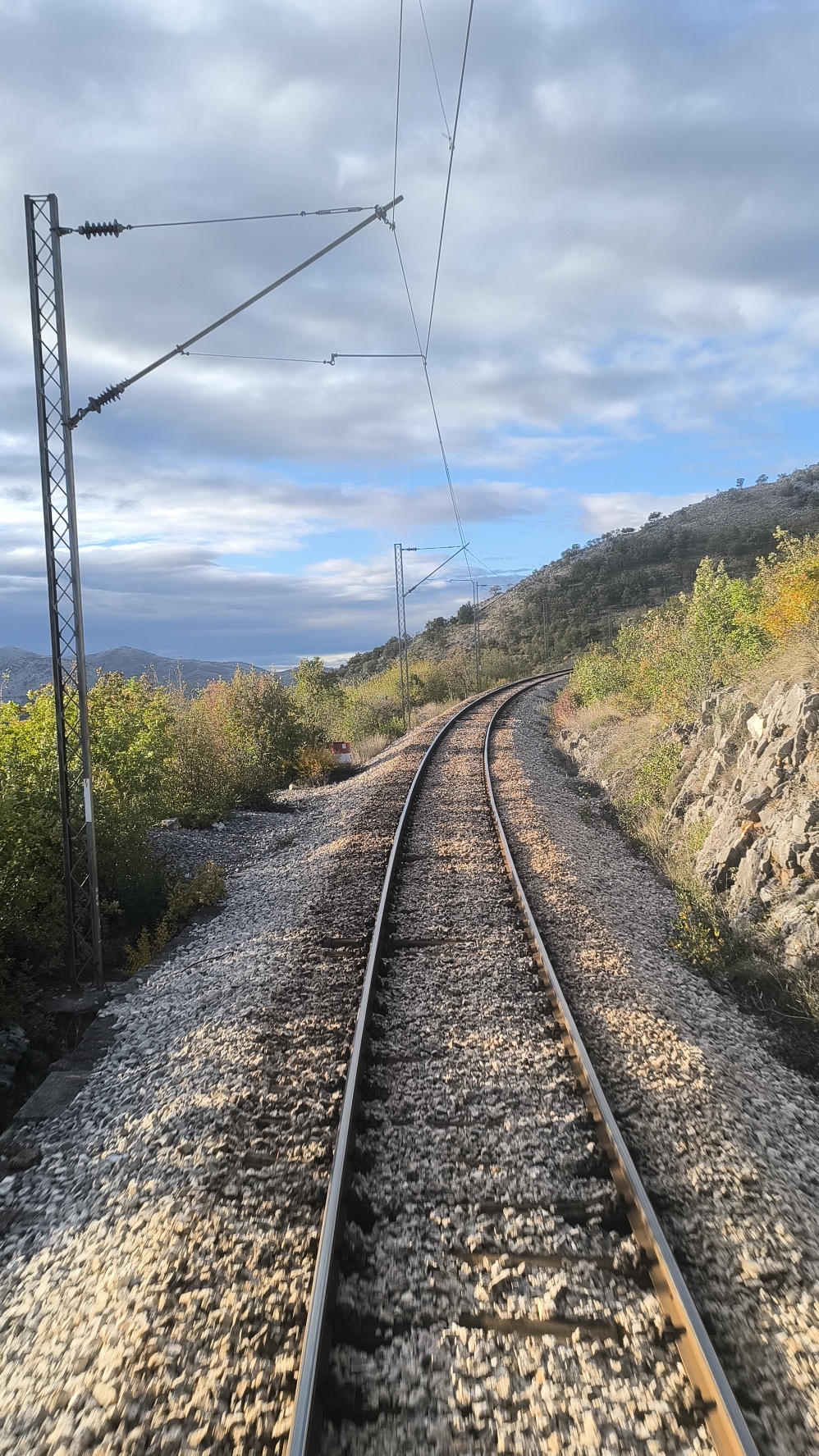
It crosses the Mala Rijeka (‘small river’) Viaduct, a truss bridge which is up to 200m above the surface below – once the highest railway bridge in the world when constructed, it still retains the title of highest railway bridge in Europe. It took China until 2001 to beat it, whereas the Yugoslavs did it in 1973.


As you descend into the capital, Podgorica, which was previously called Titograd (a designation which its airport still retains), you meet the main road and a very blue river.
Podgorica station is underdeveloped for the capital of a European country, but that’s to be expected. Its only international connection is this line to Belgrade, and it doesn’t serve any other domestic stations that aren’t along this same line to Bar, except for a short branch to Nikšić. Which is a shame – it’s not like the tracks weren’t ever there…
Freight trains apparently run into Albania, but there was never any passenger service along the route.
At Užice, trains used to run to Sarajevo. Part of this narrow-gauge line is now a little-known tourist line around Mokra Gora.
From Nikšić, passenger trains continued to Bileća in Bosnia. Then, the line continued to Trebinje. At Trebinje, it connected to a branch of the Gabela – Zelenika narrow gauge railway line, which ran to Čapljina to connect to the line from Ploče to Sarajevo. That line also had a branch to Dubrovnik and past Herceg-Novi (on the other side of the Bay of Kotor from Kotor). However, this was destroyed (such as by mining tunnels and dismantling tracks) during all of the wars which affected the region since the Austro-Hungarian times. Additionally, the construction of the standard gauge route to Ploče from Sarajevo in 1966 left the narrow guage lines isolated and based from Čapljina. All of the route was taken out of use in 1976, with some parts, like the branch to Herceg-Novi apparently stopped in 1975.
If I was doing this route in the 1960s, it would’ve been possible to do it all by train (with a detour back inland in Montenegro). It’s a shame that it’s deteriorated so much.
Back in the modern day, the line from Podgorica to Bar is also scenic, but much flatter and there’s a long tunnel which spits you out to the coast. I was in and out of sleep at this point, being one of about 4 or 5 total passengers travelling through to Bar, and the only one left in my entire coach. (The section from Virpazar to Bar replaces an old narrow-gauge railway as well which ran over the tunnelled-through hill, opening in 1908, then replaced by the modern line in 1955.)
We pulled into Bar station about 14 hours after we left Belgrade, at around 10am. The scheduled time for this journey is 11 hours. When the railway was new, the journey took only 7 hours.
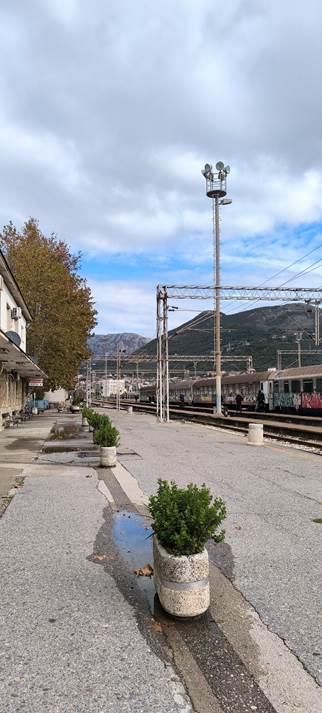

I had nothing to do in Bar, and planned to move onto Kotor later that day by bus, so after doing a shop and getting some cash for the bus out of the cash machine, I went down to the beach and hung my hammock. Along the way there was a very grand looking Orthodox church and a decent bakery to buy a pizza slice and “buffalo” at. The “buffalo” is not quite the right translated word, but it’s like a big bun somewhere between sweet bread and brioche with a jam (often apricot) filling. Very nice but often difficult to find somehow elsewhere.
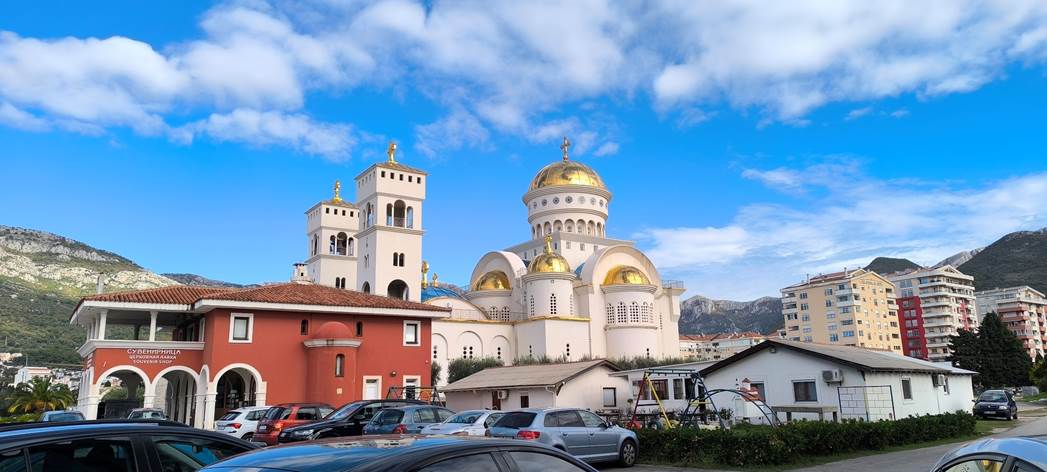
With a very empty beach, a nice 23°C heat, the sun beating down, and a hammock between the trees providing some shade, it felt like what I would imagine the Maldives to feel like – especially after 14 hours in the fetal position.
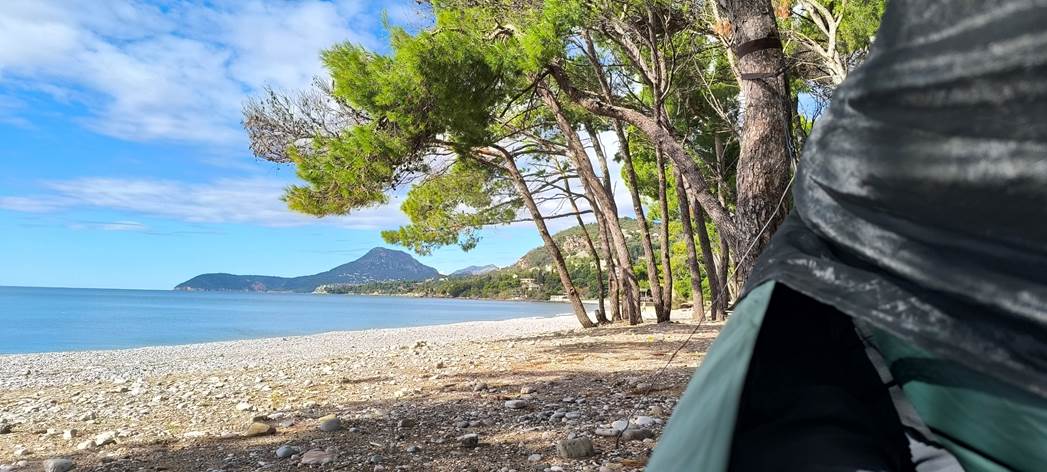
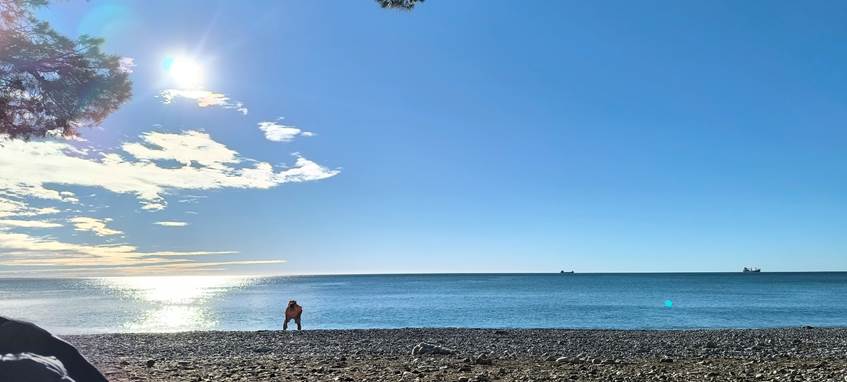
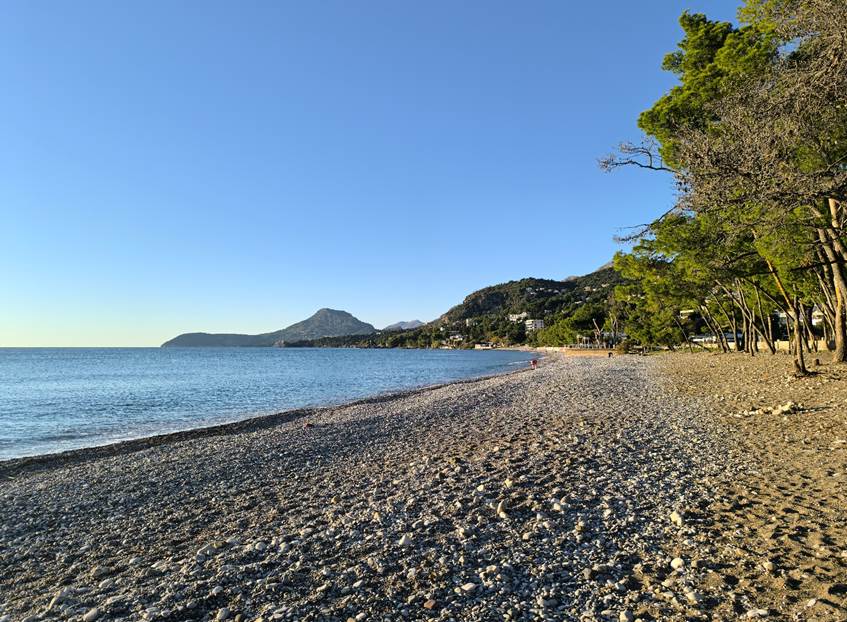
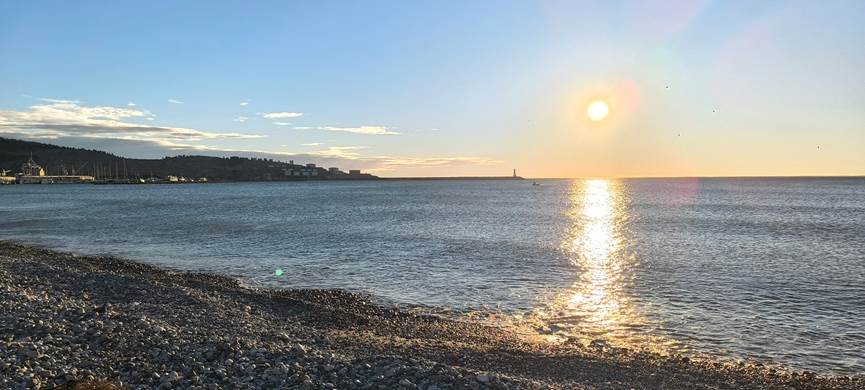
I stayed there for about 4 hours, before walking the 40 minutes back to the bus station just in time for the bus to Kotor, and just enough time to give the bus station’s black and white cat some scritches.
That bus ride was an experience. Between Budva and Tivat, there was a very long section of roadworks. But because there is no other road connection and the section is too long, they just send the cars, busses, and trucks basically off road into the construction site. So with the bus listing from side to side like a boat as it navigates on and off quite large longitudinal jumps from the tarmac of the finished and unfinished road to the unpaved, rough surface of the roadworks site, and the lack of lighting or clear signage about who is supposed to be where, it was not easy to navigate.
But after a couple of near head-on and rear-end crashes, we arrived unscathed in Kotor. My hostel here was within the castle walls, guarded by a seemingly endless number of cats – most more than happy for some affection.
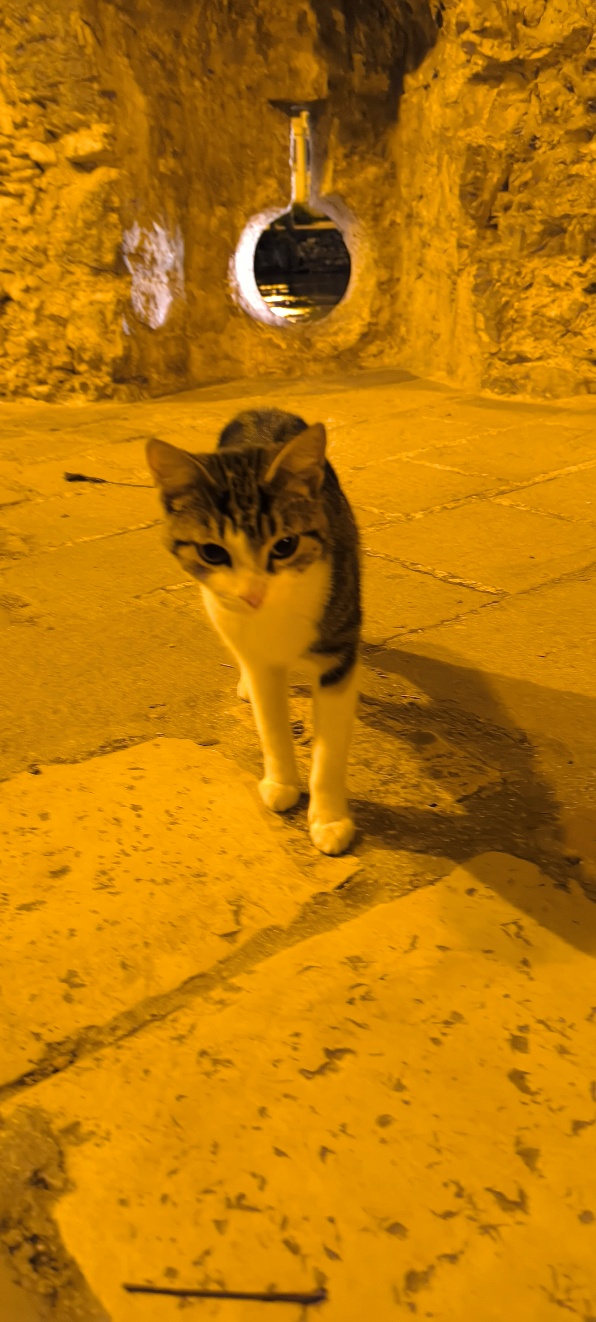
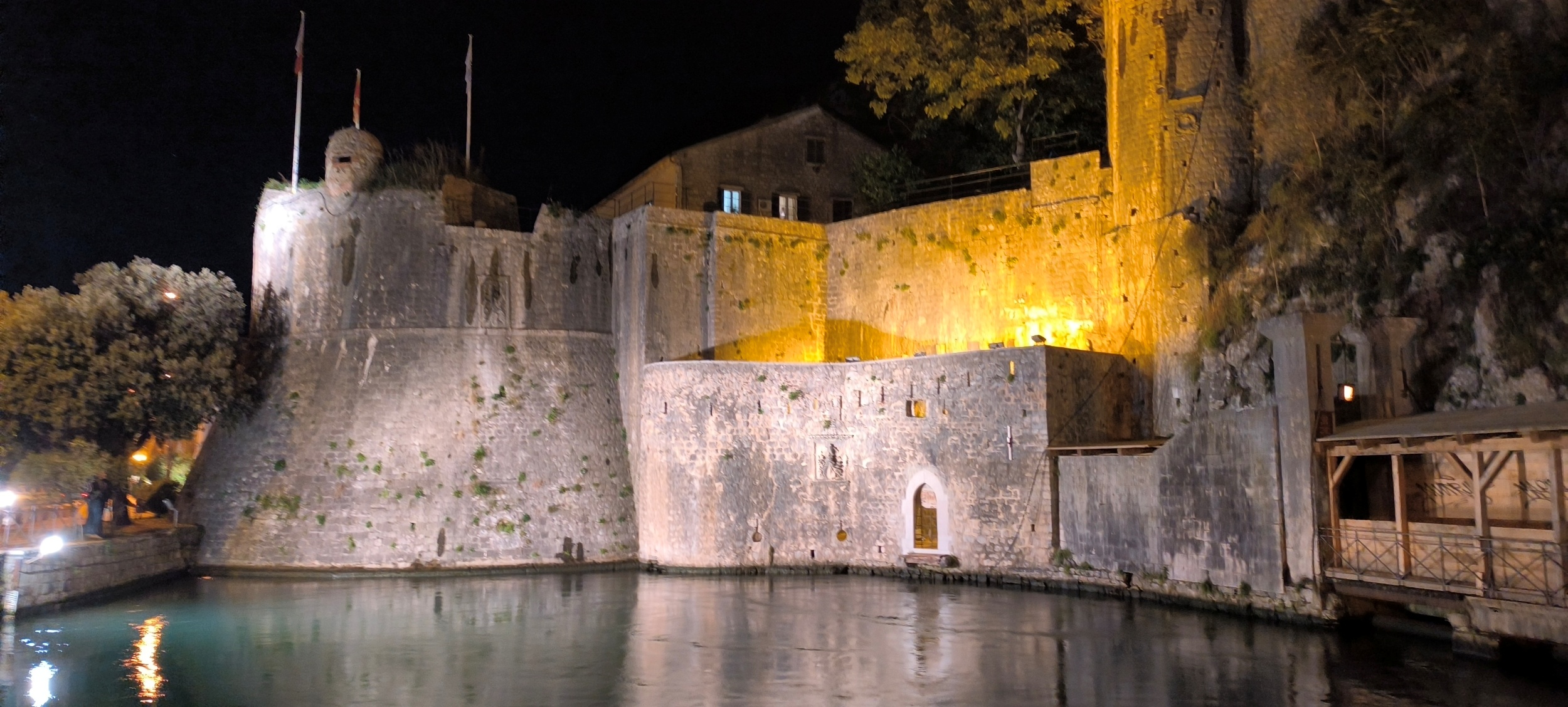
When I arrived, I wasn’t certain whether I should stay in Kotor for a whole day, given I only had 10 days left to get home. But as I paid for another night the next morning, I was very glad I had made the decision to stay for a full day – after all, I had slept off my tiredness from the night train past 11 o’clock and long missed the bus out to the next destination.
I took the rest of the morning and early afternoon to walk along the shoreline – there was only a small clearly defined beach (unlike Bar), but just walking along in the sun was nice enough. It felt like it was still summer.
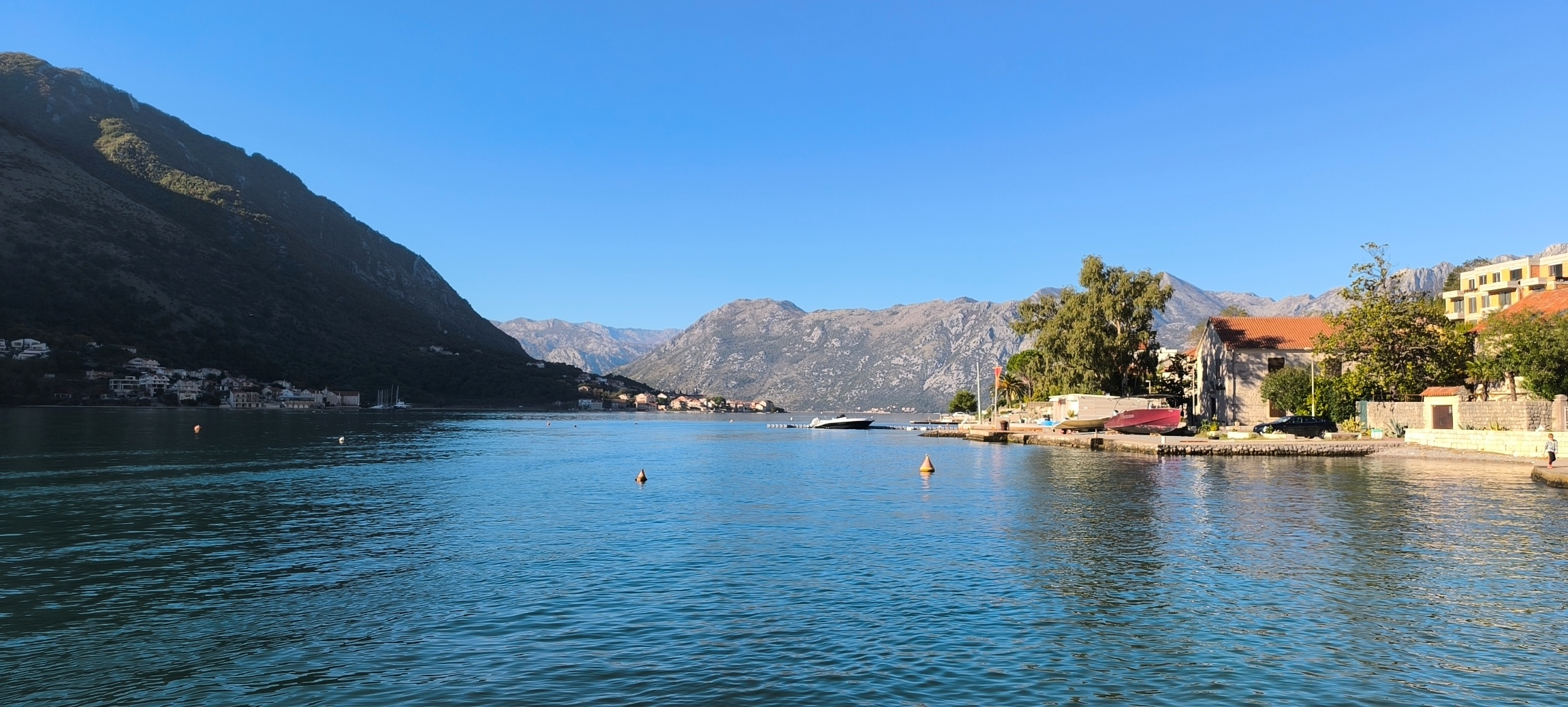
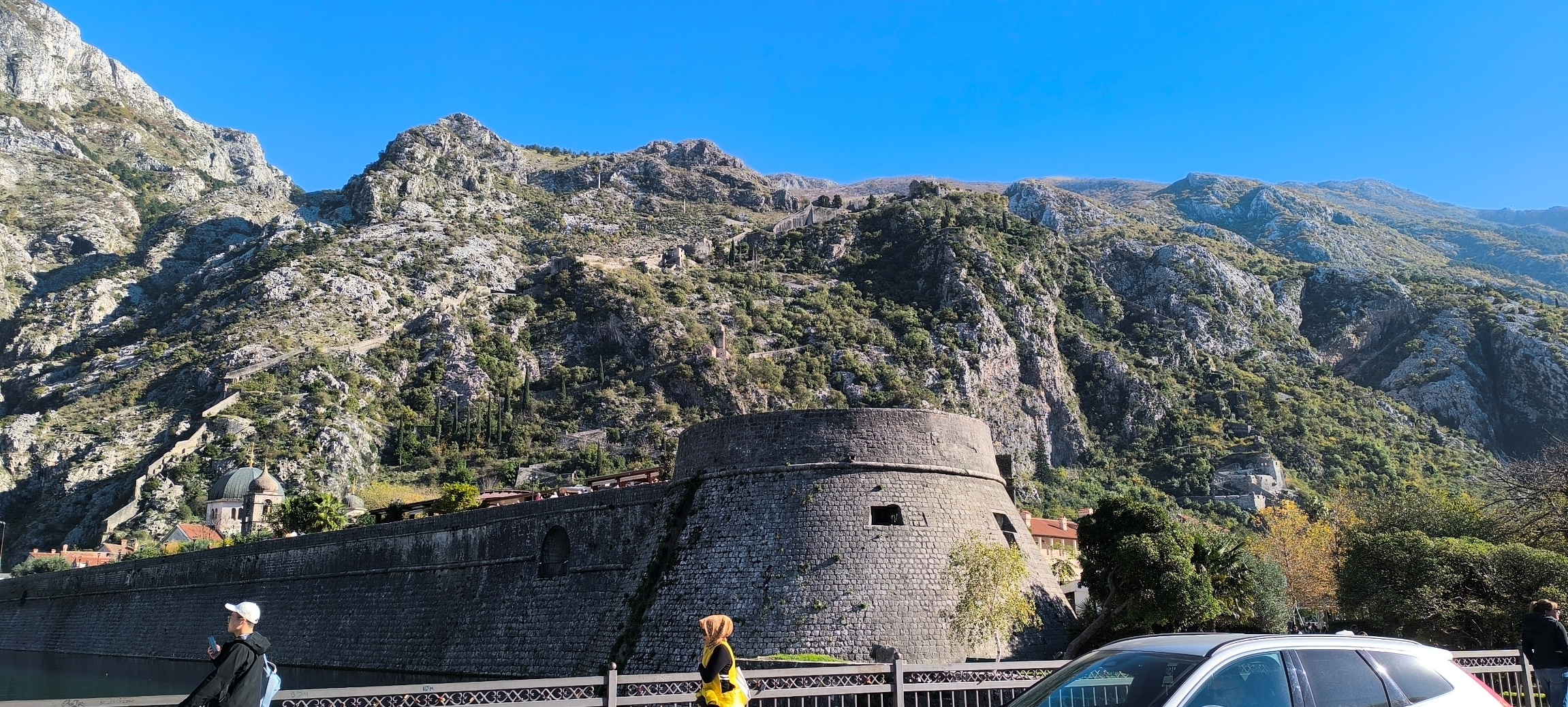
After having a pretty good kebab filled with ćevap for lunch, but waiting a little too long for it, I arrived at the start of the hiking path up the east side of the town around 3:30pm.
The path is apparently known as “The Ladder of Kotor”, because it zig-zags up the mountain to around 600m.
Having arrived at 3:30pm, and it being quite warm, I walked quite briskly up the hill. I was now racing the sunset to the top – as it set behind the hill on the opposite side of the bay, the sunlight progressively moved up the hill.
A familiar red and white marked trail (known as Knafelc blazes) led me up. (KT-7 stands for Kontrolna Tačka/Control Point 7, located at (42.403181, 18.822799), on the Primorska Planinarska Transverzala (Mountain Traverse), which runs from Bar to Herceg Novi. Krstac is at the top of the ladder of Kotor a little past where the climbing stops – I think 3h 30 is a little overestimated, although perhaps if you’re doing it with a heavy backpack then it would be different).
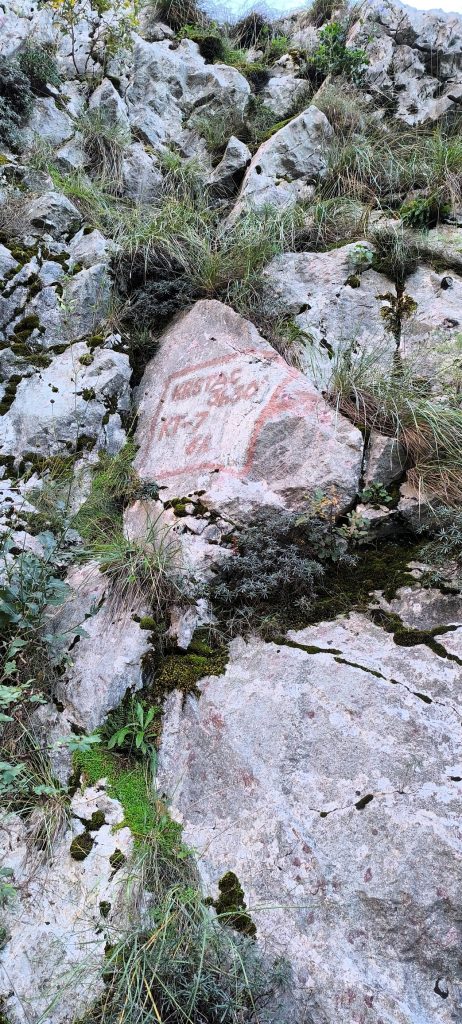
I’ve hiked quite a lot in Croatia, mostly in the summer, including in the extremes of summer heat – the most recent one I can remember was in 36°C hiking from virtually sea level to up around 800m on the coast, then traversing a difficult path made of sharp rocks that don’t provide any easy or obvious route. But the heatstroke (although more often than not it’s much more sensible temperatures or at least less exposed) is usually worth the view from the top – after I’ve given myself a couple of months.
But this was different – it was the first time I was hiking in this area of the world alone, rather than with my Dad. Luckily for me, it wasn’t nearly as hot – and whilst it was still warm, it remained pleasant.
The view as I climbed was also different from the views given by mountains along the Croatian coast – but it was no less spectacular. In fact, it was probably one of the best views I’ve seen.
As you climb past the small huts selling cheeses and wine around 250m up, the path becomes closer to the hiking path I expected rather than the nicely maintained path up to this point. Still not at all difficult, but with more uneven surfaces, some rocks, and vegetation narrowing the path. Most tourists stop by this point, or instead walk up the stairs on the fold one over, which has a nice (but apparently expensive) fortress and walls along it, and stop slightly lower down.
But the familiar red and white circles that are abundant throughout this region kept going, guiding me up, as I repeatedly walked in and out of the sunlight as I zig-zagged back and forth while the sun took the straight line up the hill.
As you walk facing north, it’s easier to stare at the landscape stretching out around you, which encourages you further and further up, in the hope you’ll get to that perfect equilibrium of position and light. It’s hard to describe the natural beauty of the bay of Kotor, so I’ll pop in some pictures instead.
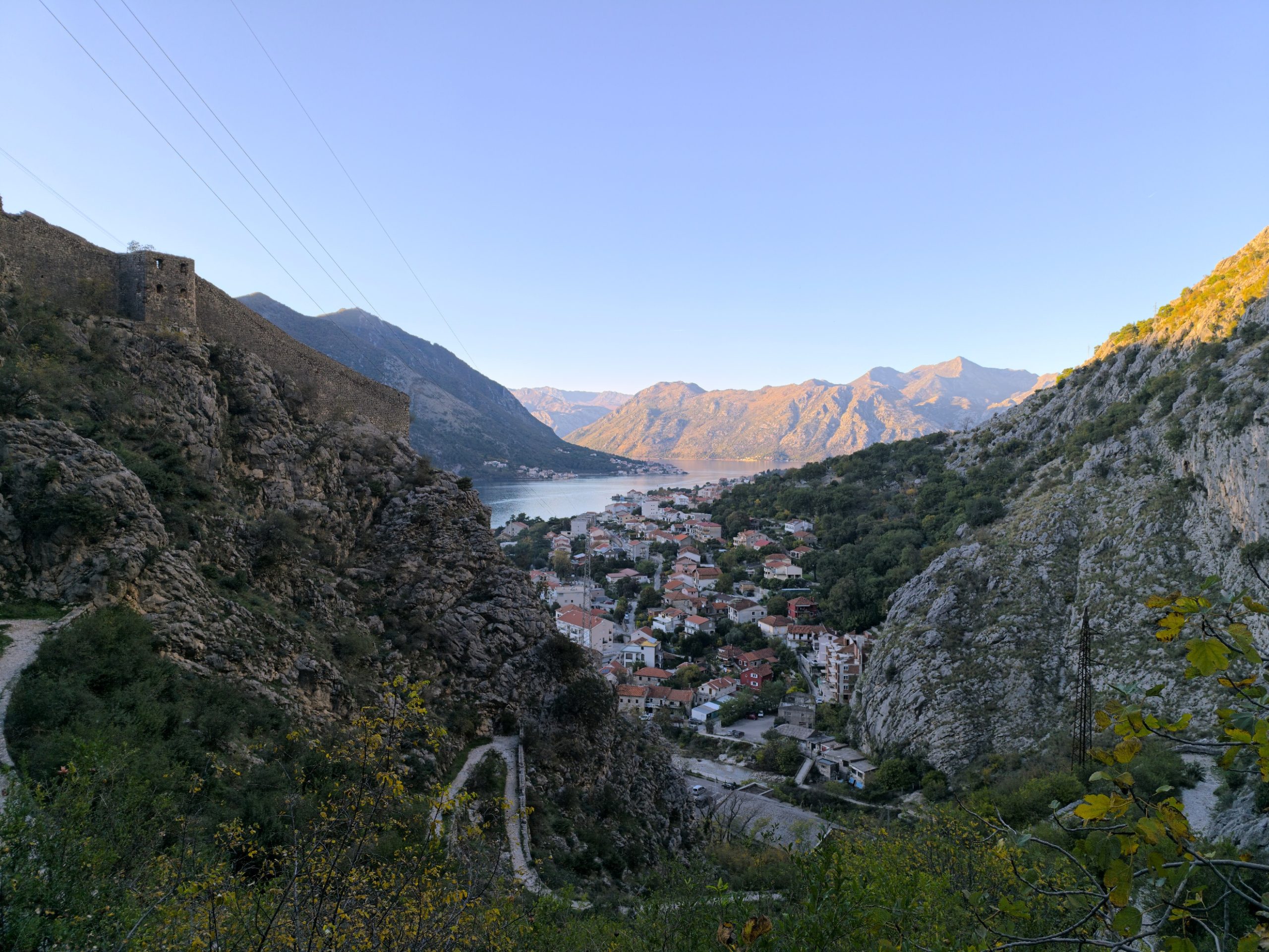
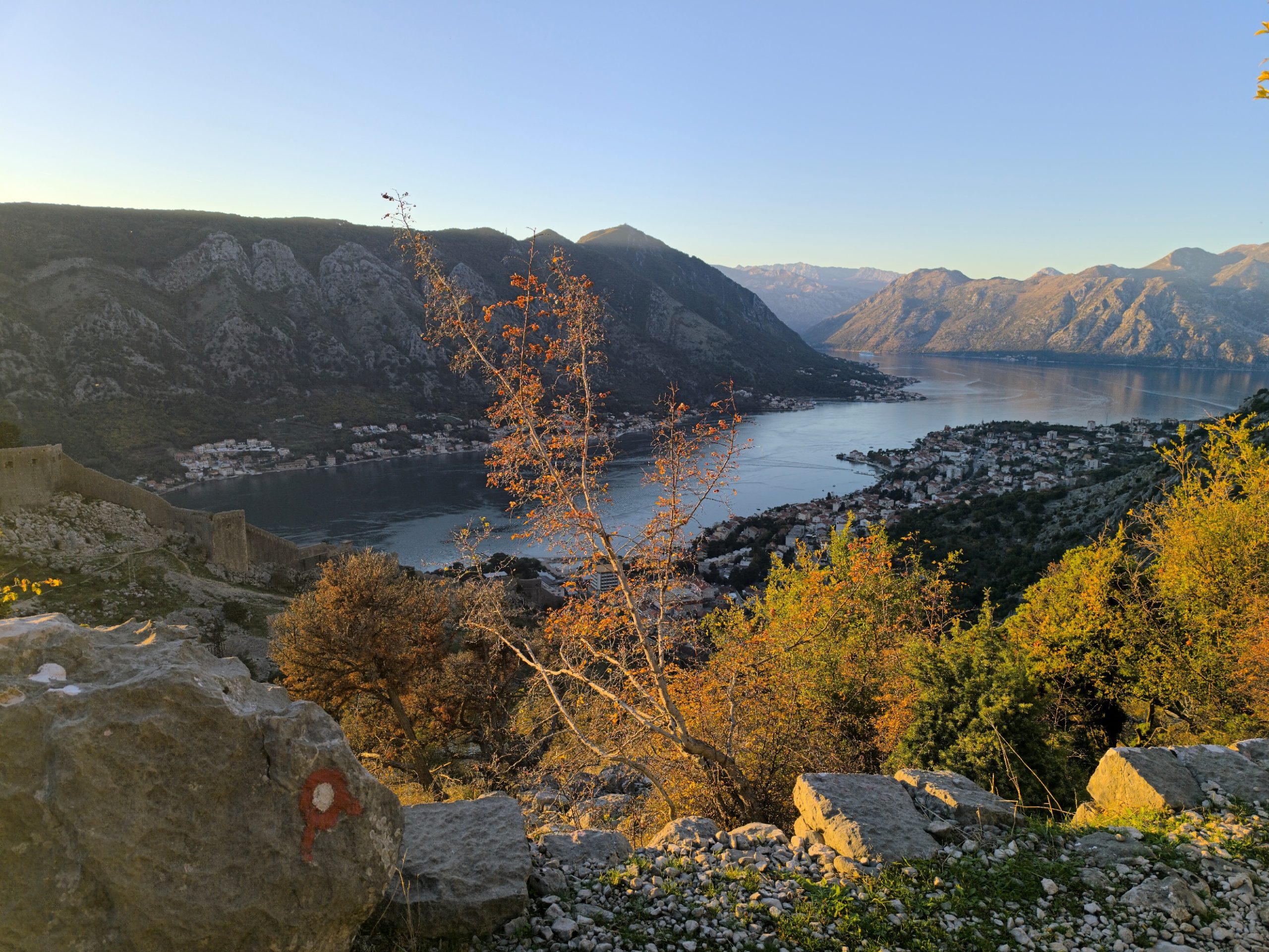
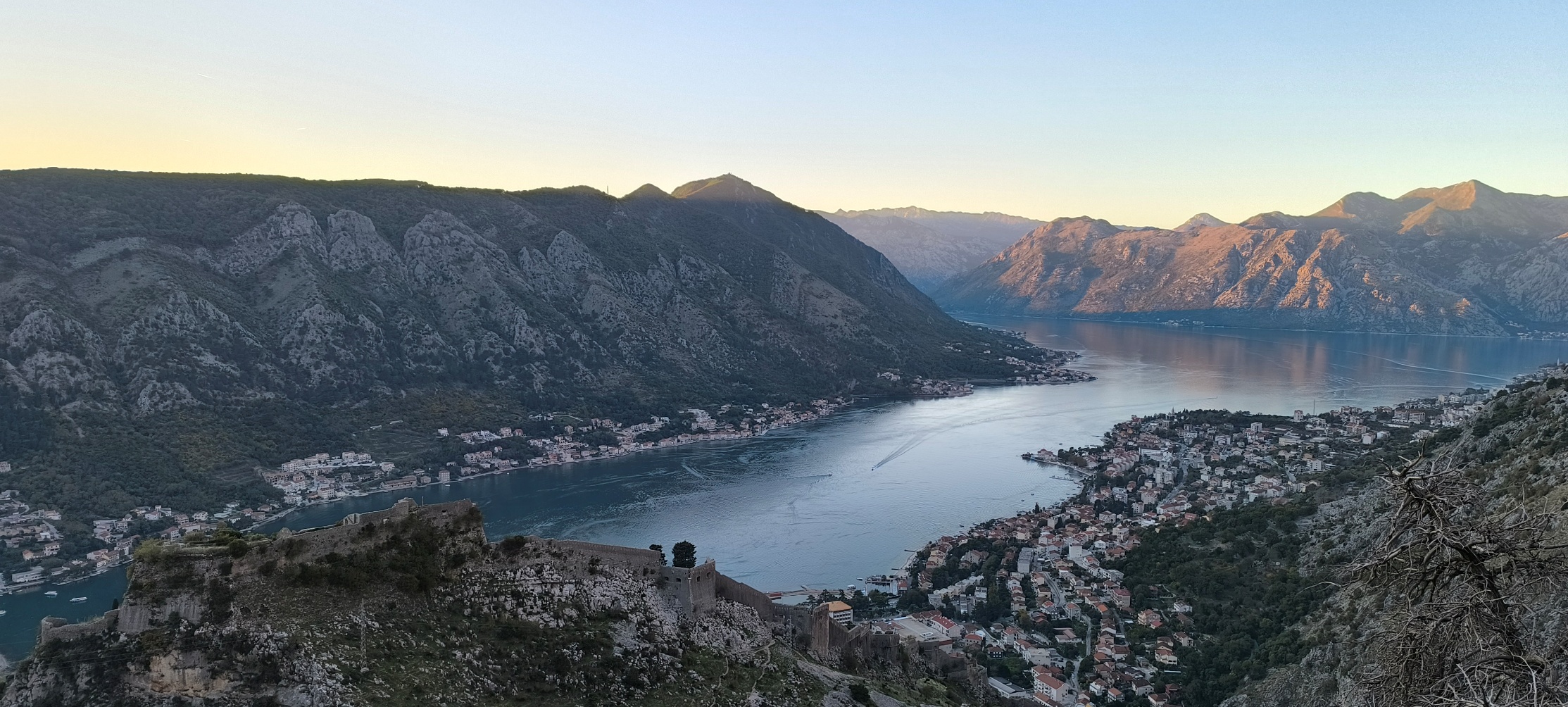
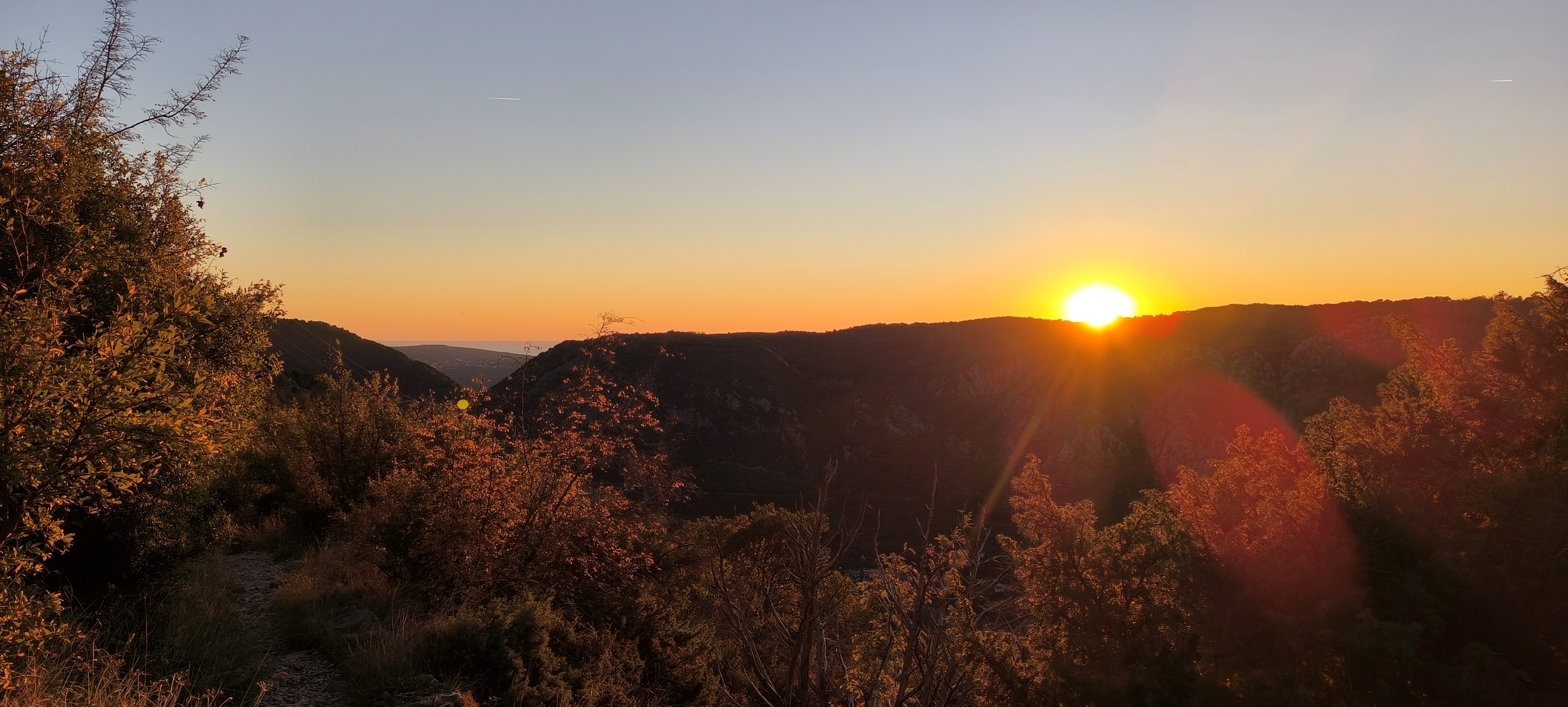
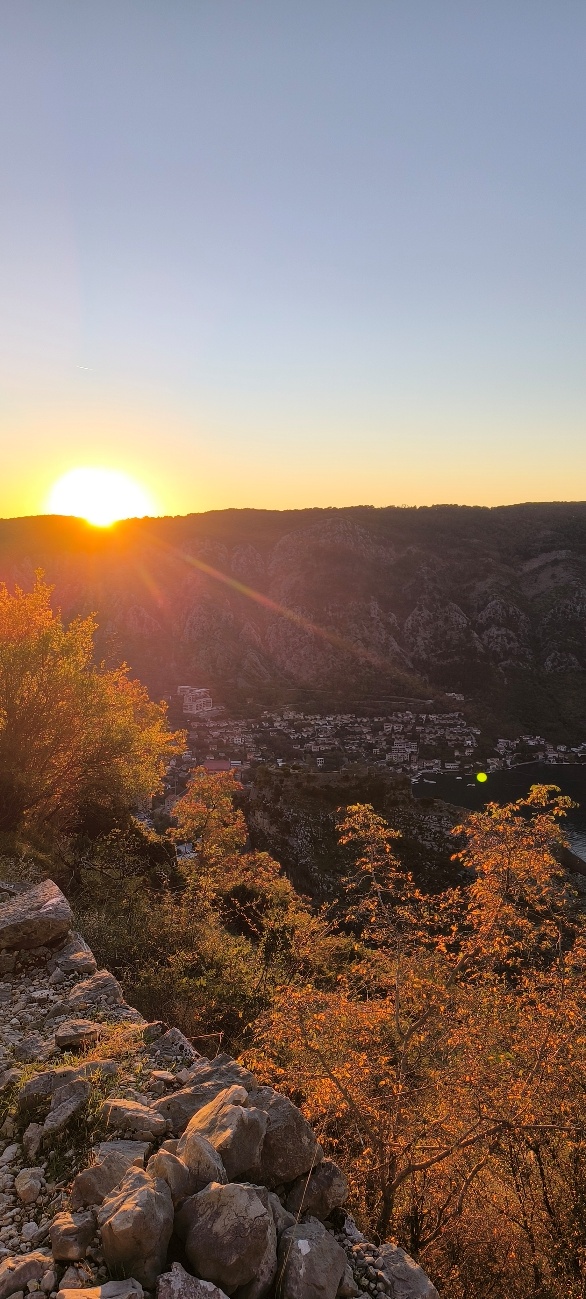
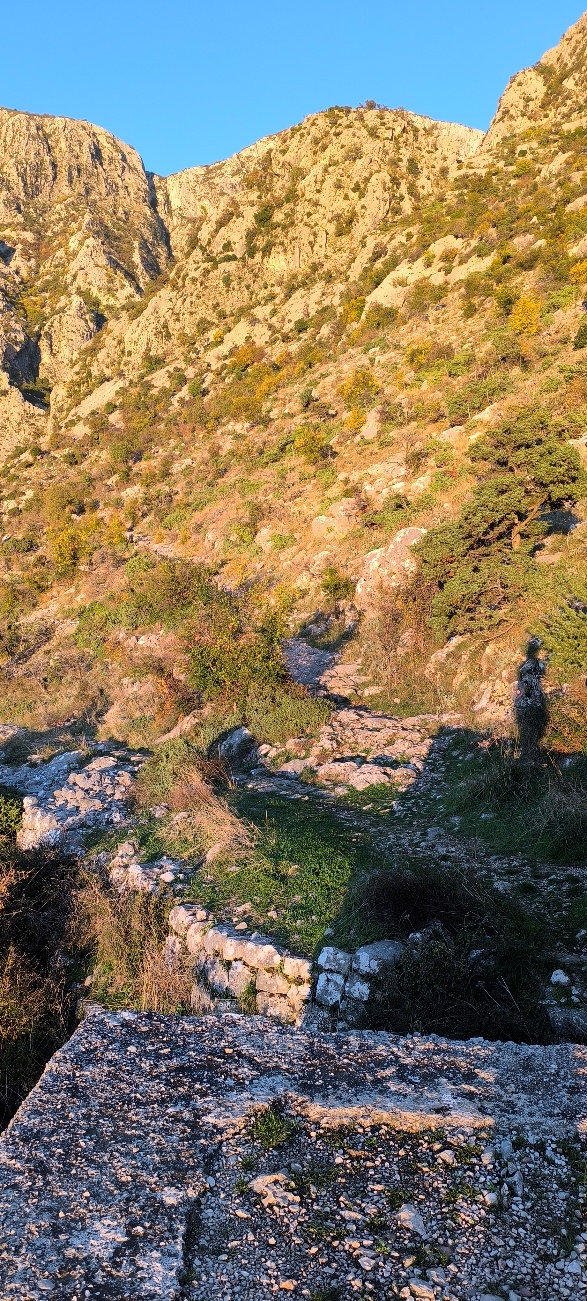
I was the only one walking up the hill past this point, except a local I crossed paths with further up, picking fruits from the plants near the path into big shopping bags to carry back down.
The view became even better as it got closer and closer to sunset. I was winning the race against the light up the hill at this point, so I could admire it for a little longer from a bit of a more elevated position (which I hoped would give a better view). As the sun finally went behind the hill opposite, it left an orange outline over the ridge, and perfect colour across the rest of the scene.
I stopped climbing around 500 (and a bit) meters, letting the sun overtake me. It wasn’t too much further to the top of the ladder, but I was happy here and didn’t feel the need to continue when I might miss the best time to just sit on the path, legs hanging into the plants off the edge and admire the sunset in the stillness and silence of the environment.
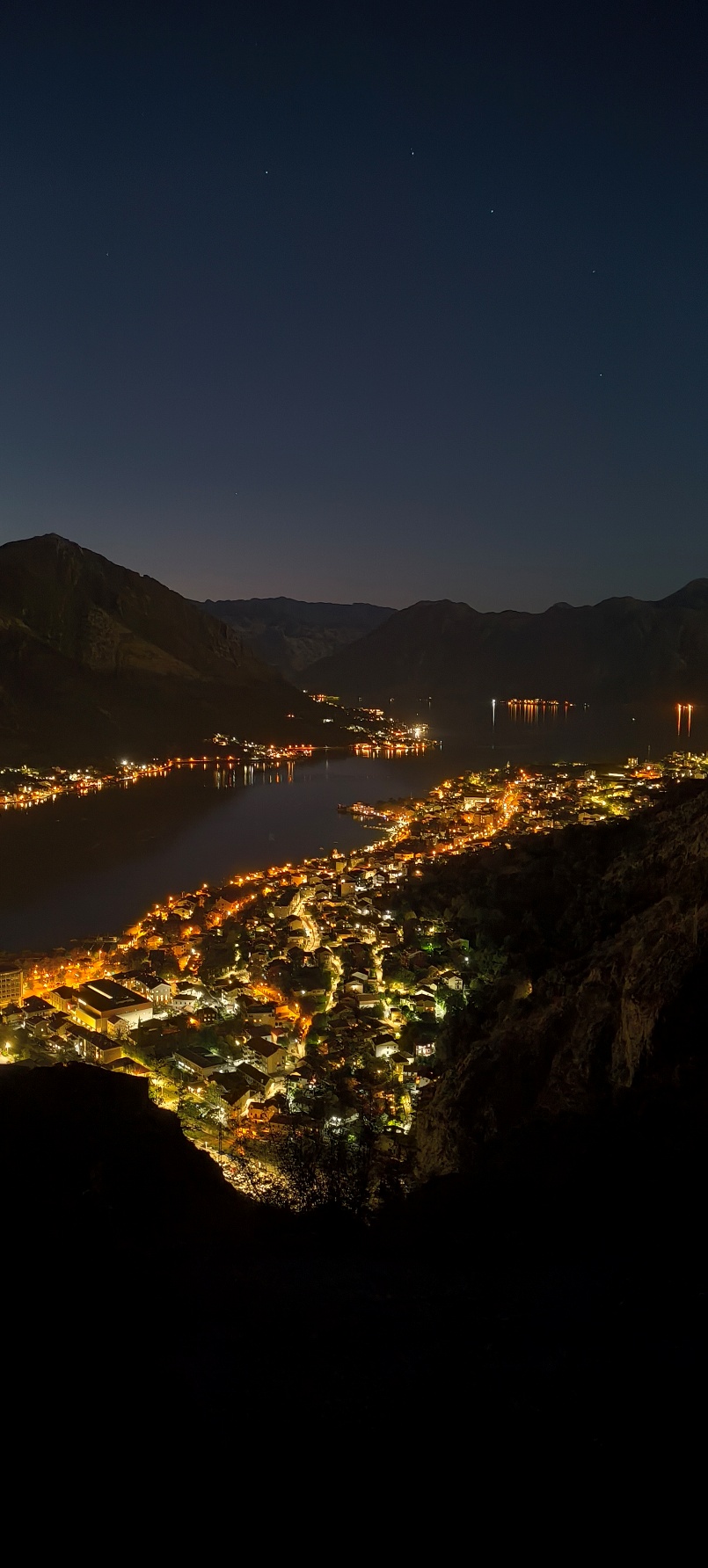
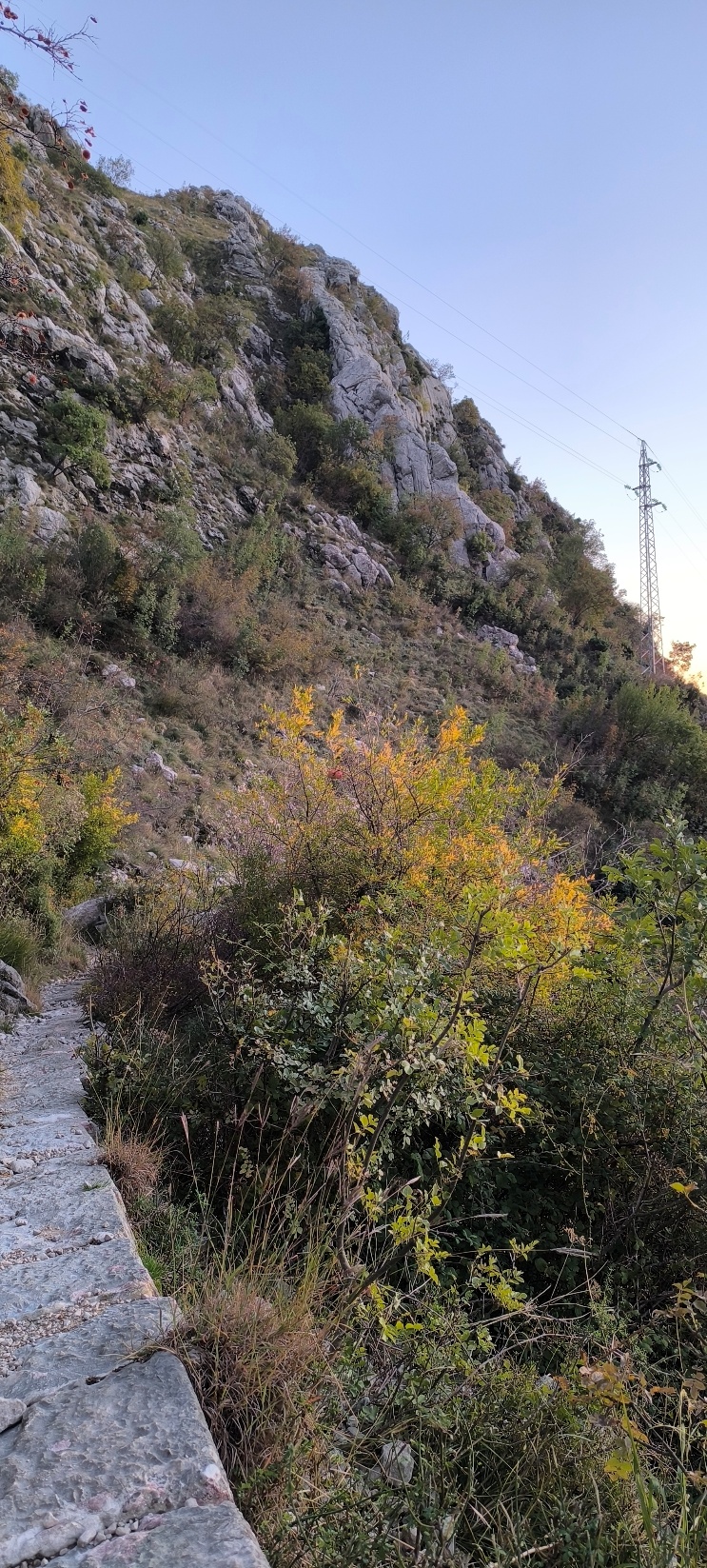
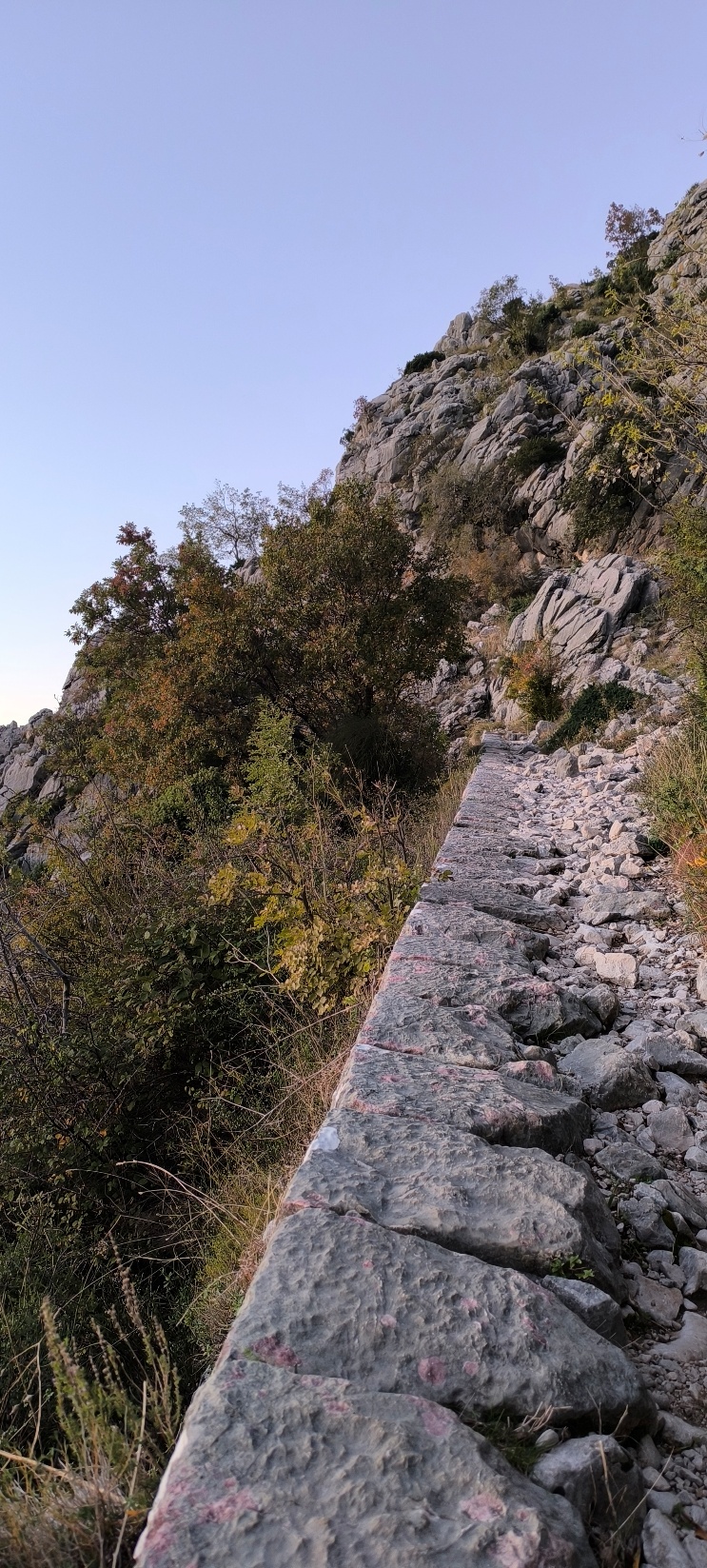
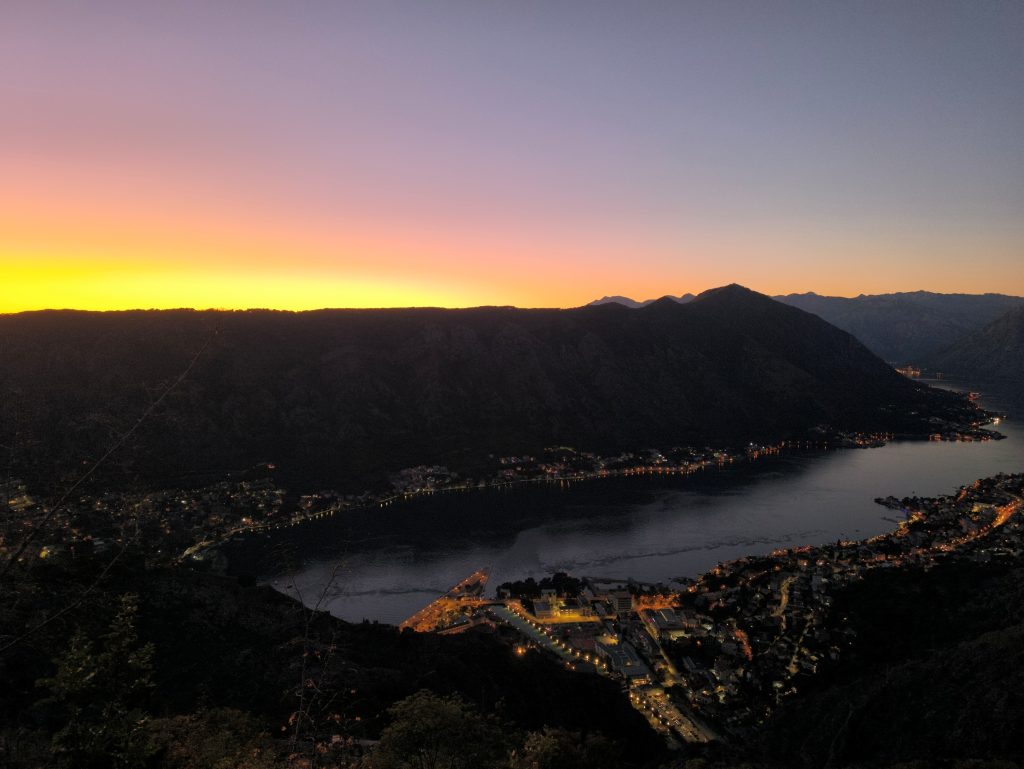
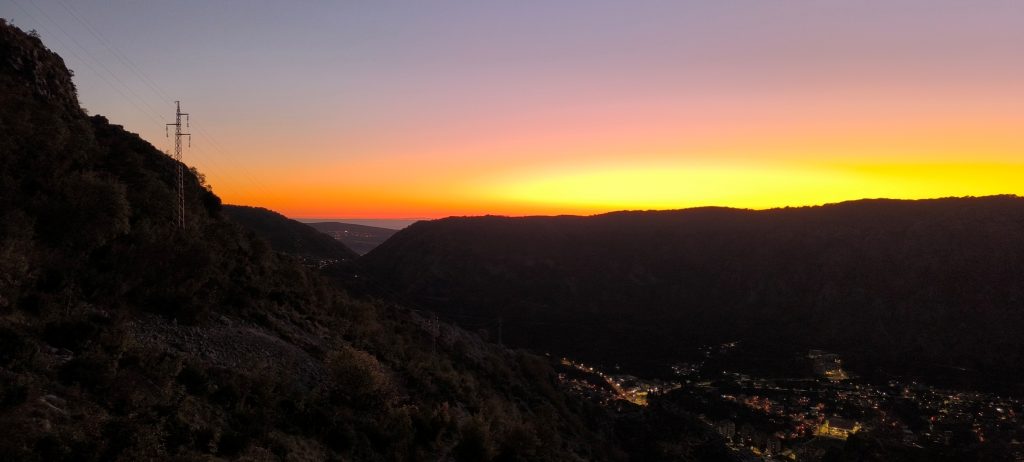
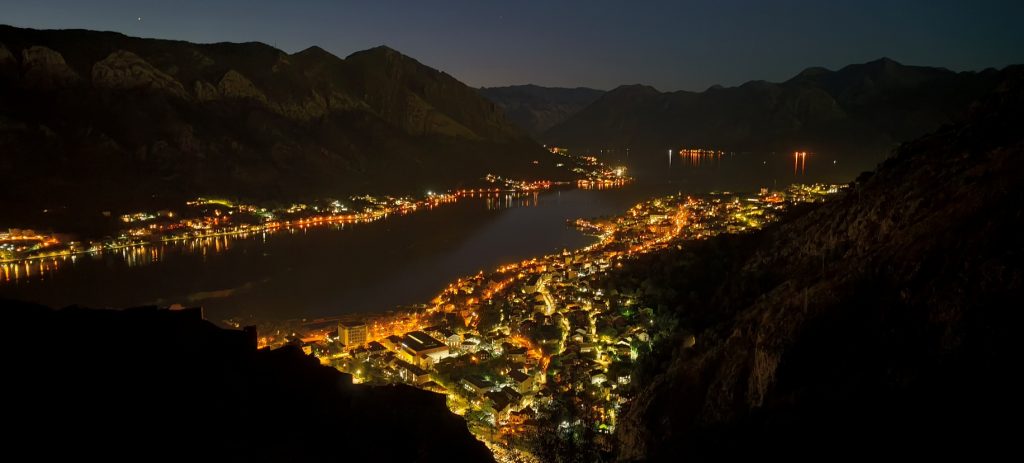
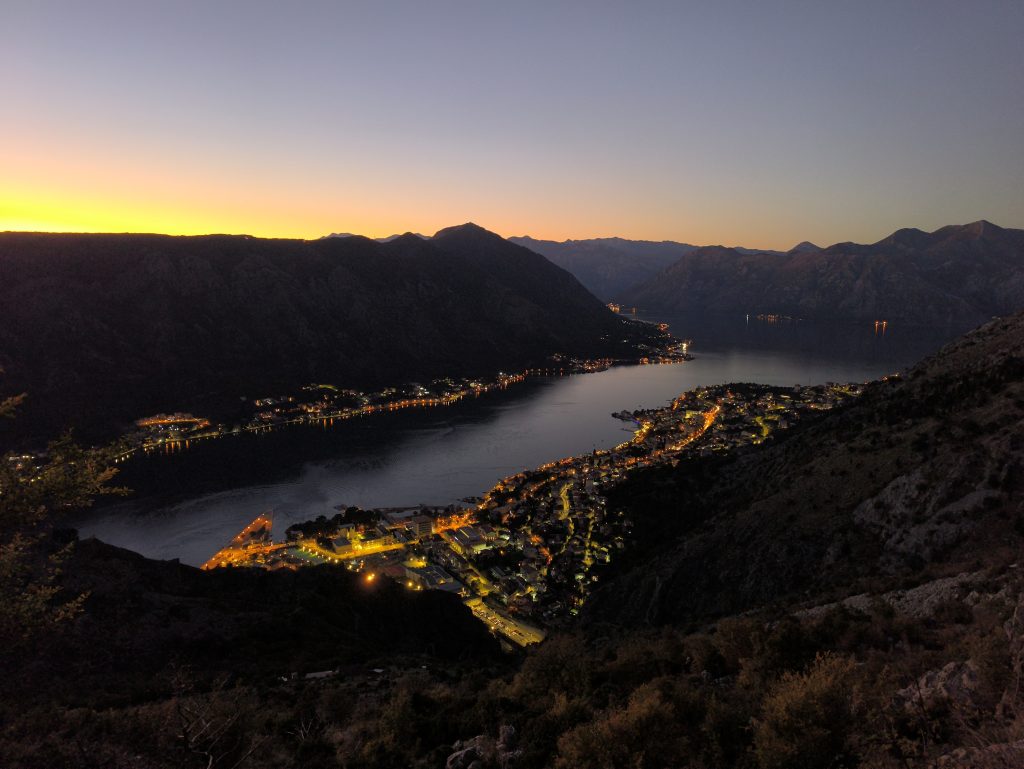
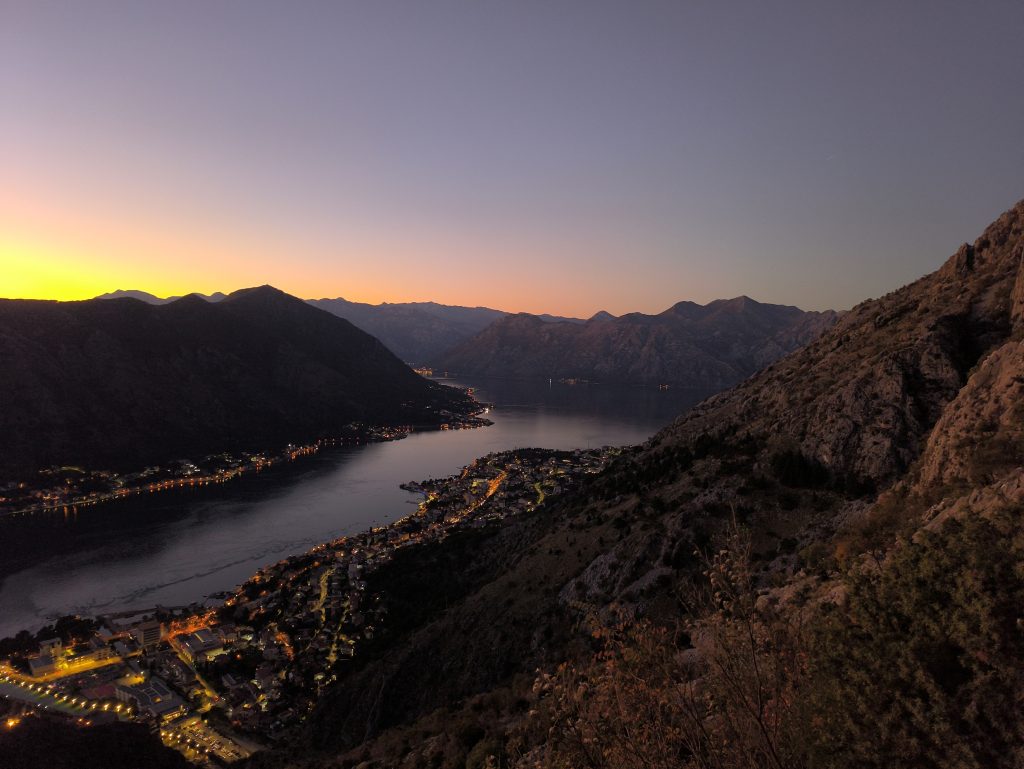
The last time I had felt anything close to this isolated was at the end of the world. I had come a long way since then. Whilst the scene was entirely different, and the setting was entirely different, and of course this didn’t have the impressive statistics, the feeling of not having any particular feeling was very familiar. I felt as if I could sit here in the warmth for a long time and not be found, gradually getting colder as the night inevitably set in again. It felt simultaneously like almost the polar opposite to Knivskjelodden, but also like it was unexpectedly similar. This was not extreme in the same way as Knivskjelodden, but I had still travelled here alone and in some ways self-sufficient and invisible. This became the de-facto second ‘checkpoint’ on my trip.
As it got darker in the town, it lit up with yellow lights, perfectly complimenting the dark orange and blue sky, outlining the bay and reflecting in it. I stare at the abyss of the black water in the centre of the bay, and I stare at the town called Kotor that surrounds the abyss.
The main road through the town is called the E80 on many modern maps. It extends from Lisbon to the border with Iran in Turkey, where it meets the start of another road, the Asian Highway 1, which extends to Tokyo. The road that I could see, plus only one other road, just out of sight over the horizon, could take me to Tokyo if I wanted. But Tokyo feels interesting and far-away, so maybe it’s a trip for another day. And I don’t fancy travelling through Pyongyang at the moment, so maybe it’s a trip for another day. So maybe I’ll look a little differently, for something more reachable.
Maybe you’ve seen another map, where the small, town-like road is called the E65. It extends from Malmö into Greece, via places like Brno, Břeclav, and Bratislava. Those places sound interesting and far-away (and alliterative). But, somehow, I’ve already seen those, a long time ago yet not so long ago. So maybe I’ll look a little differently, for something new.
The tarmac strip bears another name which is overshadowed by the grand title of the E80 and the less grand title of the E65 – the “Jadranska magistrala”. It does not stretch across the world. It extends from Slovenia near Rijeka in Croatia to Albania, via the beautiful Croatian coast and the beautiful scene which I look at now. This is how I see the road. Not as the E80 or the E65. It’s not a highway. Traffic is mostly local. But mostly because I look at the road, and its beautiful setting, and think that Tokyo, Lisbon, and Malmö could be in another world. Instead, for me, it points to a historical time, where this was all one country and the road didn’t have any border crossings. And it looks like familiarity and comfort – and looks like it takes me towards home… But, I’ve already seen a lot of the Croatian coast, and I don’t want to go home now, and that feels slightly too comfortable for having 10 days left. So maybe I’ll look a little differently, for something less easy.
Tomorrow, I’ll follow the Jadranska magistrala – not the E80 or E65 – for only a little while, then I’ll go onto a much lesser used road, which connects nowhere to nowhere. And I’ll go into Bosnia and Herzegovina instead – another new country for me. I don’t have long left, so I might as well make the most of it.
I descend in the darkness, watching the lights around the bay twinkle. I descend to a junction. Rather than continue down the way I came, I take a left, and start climbing a little again.
It’s not long before I run out of Knafelc blazes, and the path seemingly just ends. Except for a typical metal ladder leant unsecured against the wall of the fortress, perched precariously on some unstable rocks with a few meters fall below.
I found out that this ladder is apparently placed unofficially here, and is used by tourists to enter the fortress while avoiding the expensive fee to enter at the bottom and walk up the stairs. Apparently, some free walking tours even use this route, with the tour guide securing the ladder.
I’ve also heard that the fortress knows about it, and will randomly remove the ladder and close the hole in the wall. Then someone comes and tears down the metal and puts up a new ladder. Repeat. Certified Balkan moment. I don’t even know if the Knafelc blazes are supposed to lead here or if some avid local painted them.
But it was dark, and I had no-one else. So, I climbed up the ladder, trying not to think about what would happen if it slipped, into the crawl space of the fortress window, then jumped down the other side, into the fortress.
The fortress offered another view of the city, and a different route down.
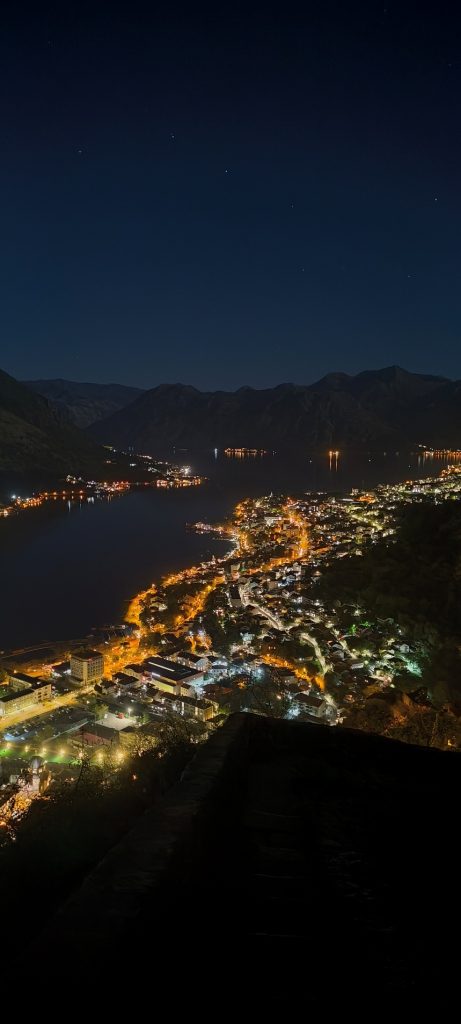
As I reached the bottom, I met the two guardians of the fortress – cats of course – and got lucky with the turnstiles at the bottom being left open and the gate unlocked – at this time it also seems you could enter for free.
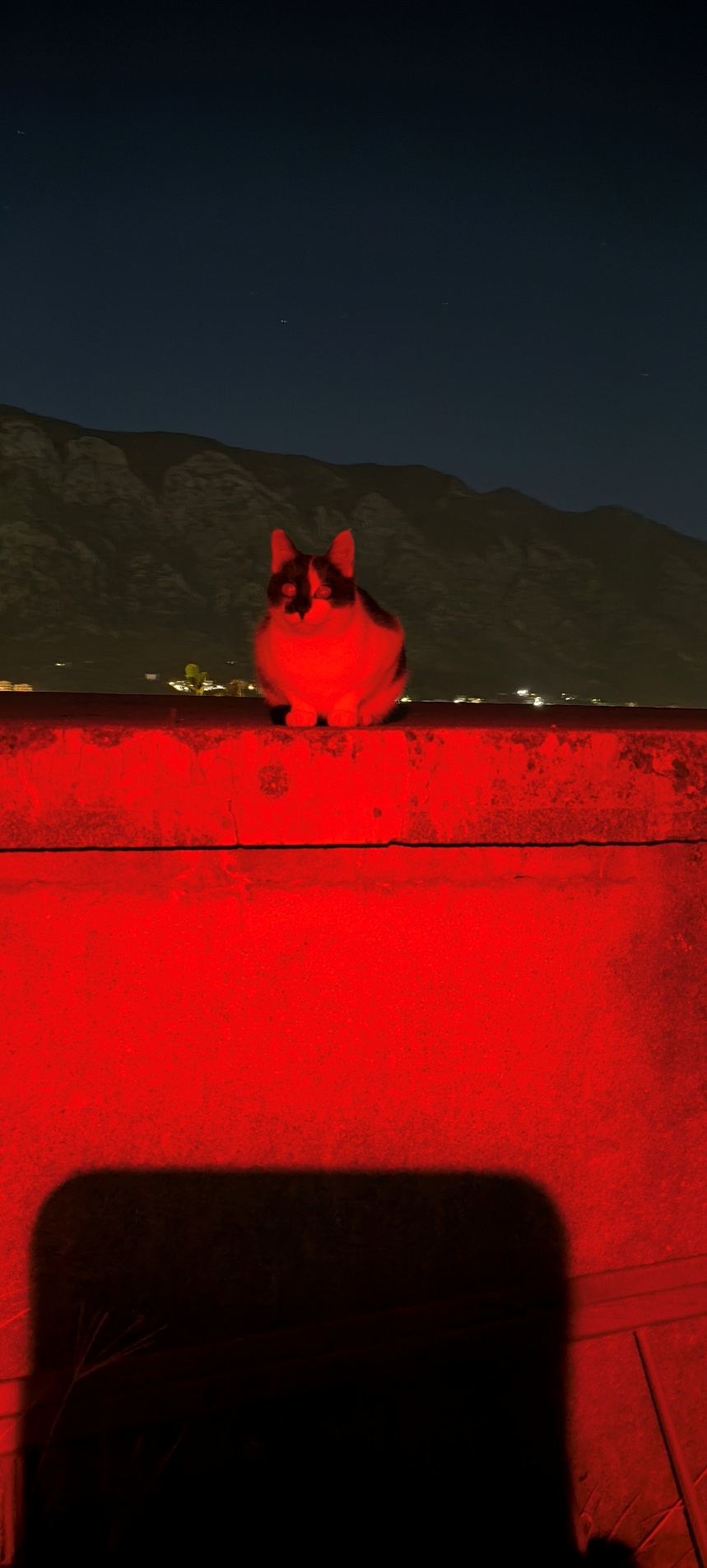
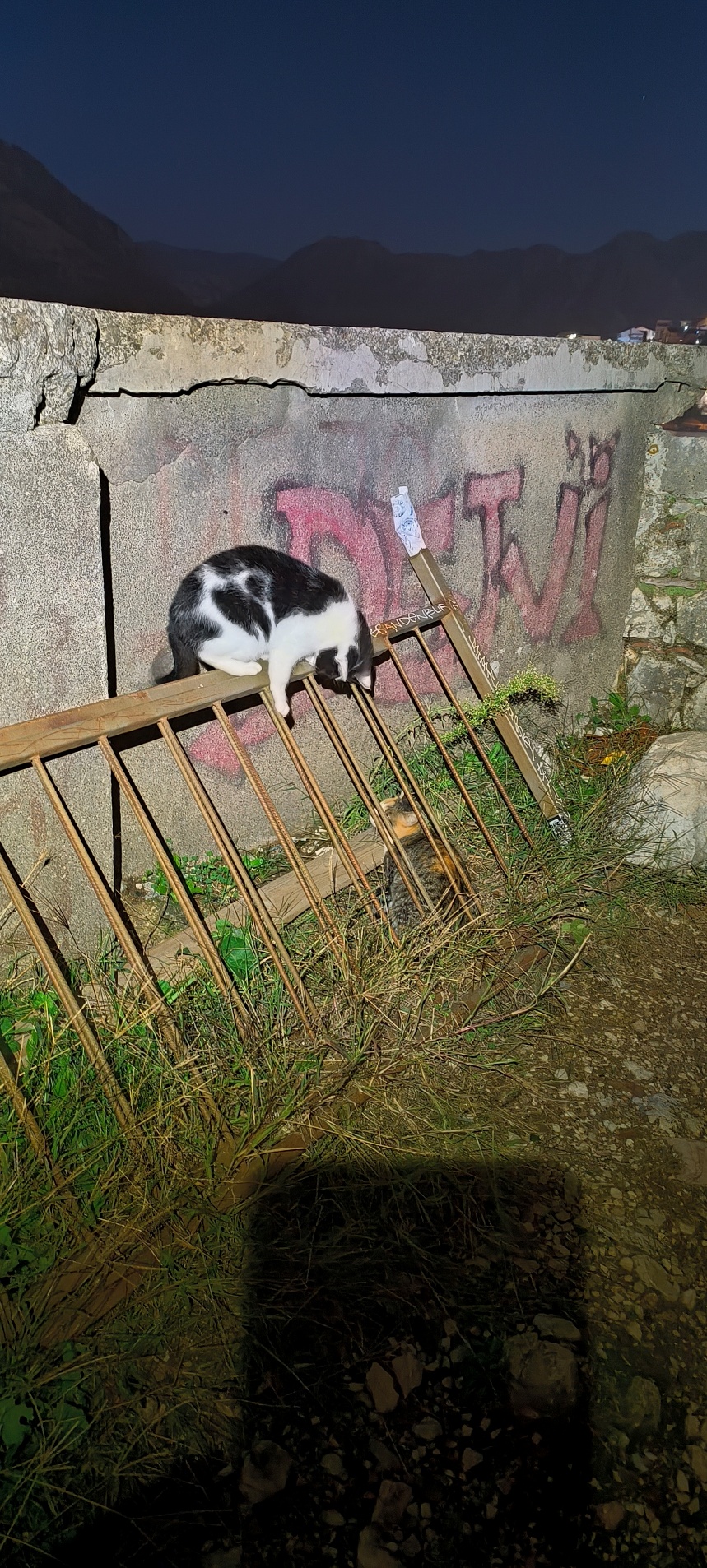
I walked around the old town for a while, getting a bit more disoriented by the maze-like layout than I would like to admit, but also finding an extremely friendly cat down one of the alleyways, before returning to the hostel to cook and eat.
The next I set off early to Mostar via a very long stop at the border. At least there was a nice view. Maybe not for the two people possessing a Pakistan passport that they were questioning. But they got back on the bus eventually, and we arrived after about 7 hours.
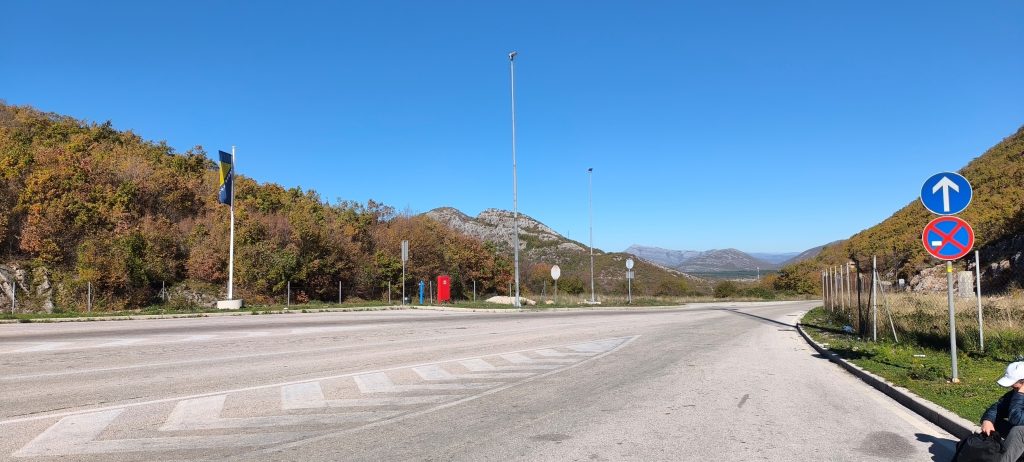
Mostar was an interesting city, and has begun to become a small tourist destination – because it looks nice and photos spread, but also to some extent because of its history. Although, I think there are many, many tourists who have very little idea about the history, which is unfortunate.
The “Stari most” (“Old Bridge”) is the primary destination – it’s a 16th century Ottoman bridge which at this point just looks like a nice scenic and relatively clean river used for leisure in the summer, but further upstream is considered the coldest river in the world and extremely clean and pure.
Unbeknownst to at least some of the tourists, the bridge as it stands is very modern, constructed and opened in 2004. The original was destroyed in November 1993 by the Croats, an armed wing of Croatian Republic of Herzeg-Bosnia which existed between 1991 and 1996. Because the Yugoslav Wars are anything but simple, the Croats initially fought with the Bosniaks against the Serbs, but then for a period in the middle of about a year and a half fought against some of their former allies, particularly in this region (whilst remaining allied in others).
The bridge itself does look nice and the view it gives is also pretty good, especially if you can catch it in the right light. It being out of season, I did manage to get some pictures of it empty not that late into the evening.
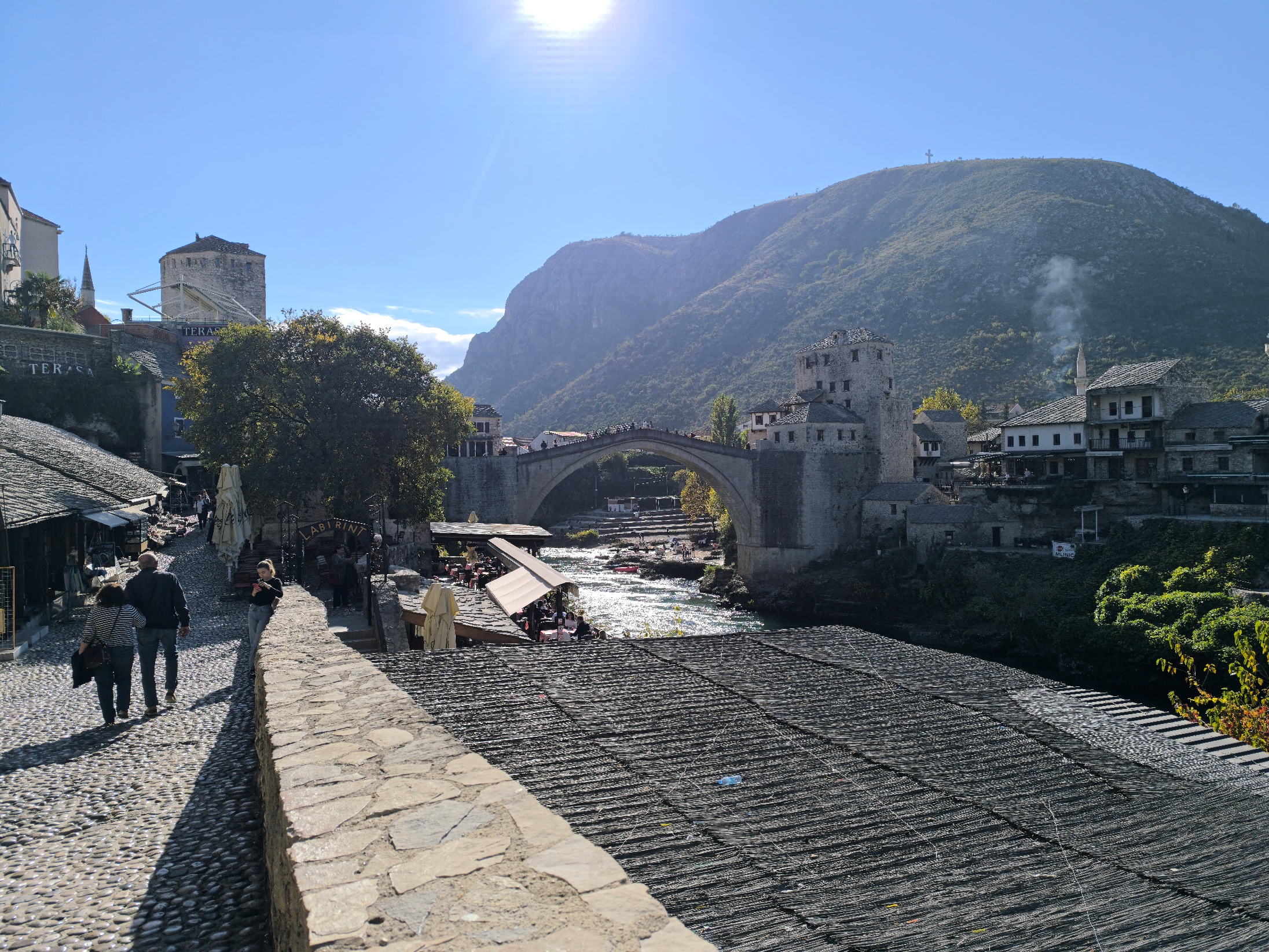
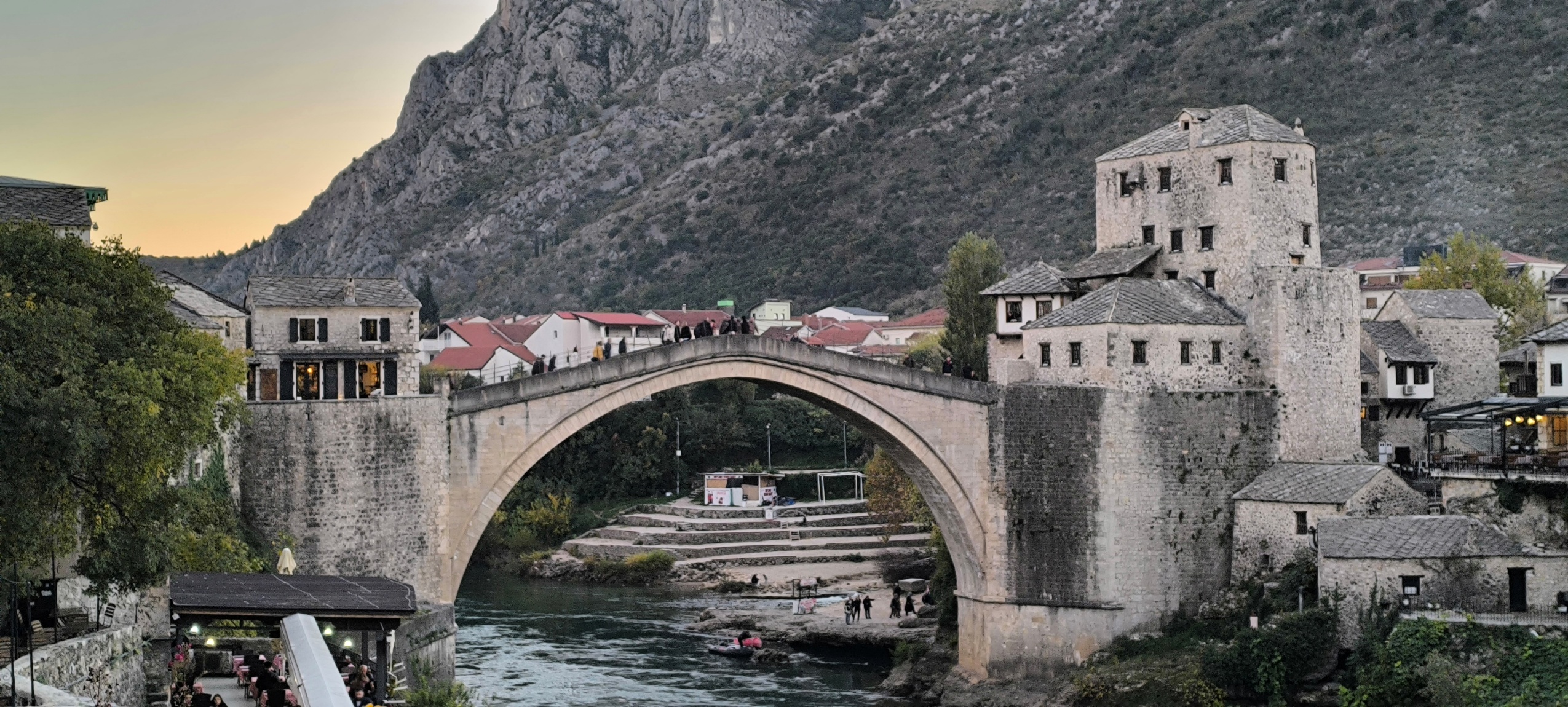
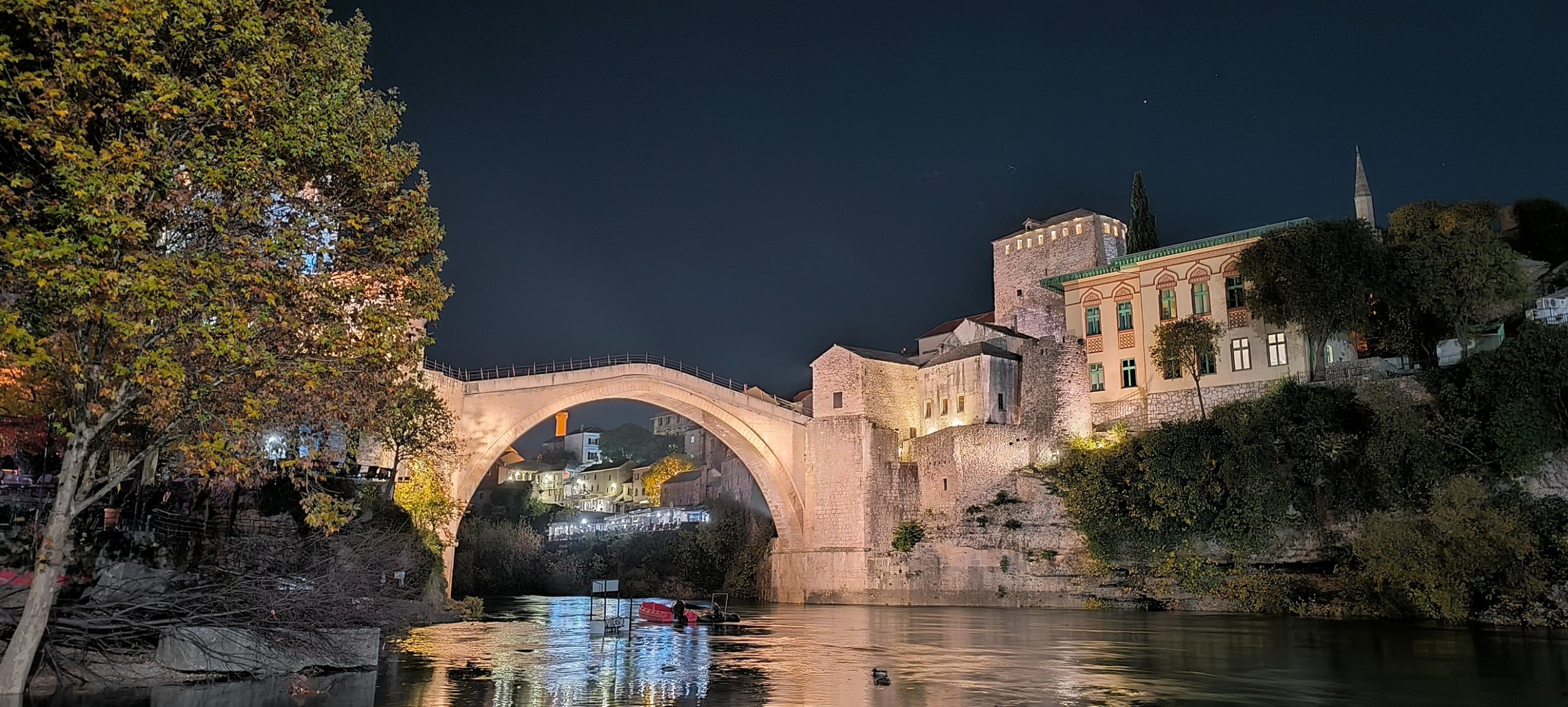
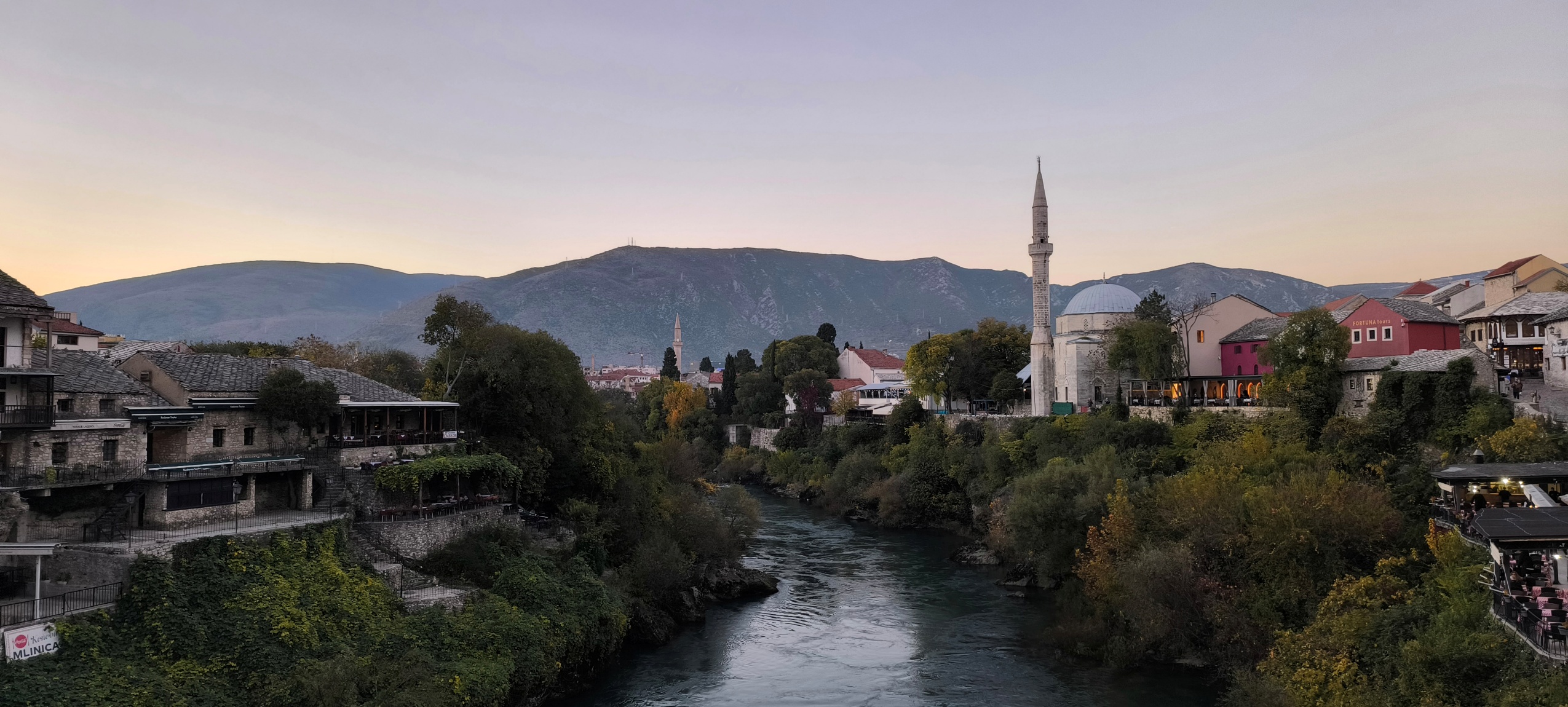
The next day, I took a local bus to nearby Blagaj, which is a scenic source of the river Buna (again very popular in peak season).
I first walked up a very non-frequented hill opposite the source, which is in a cave, to fly my drone to get some pictures from a bit of a distance from everyone else near the cave.
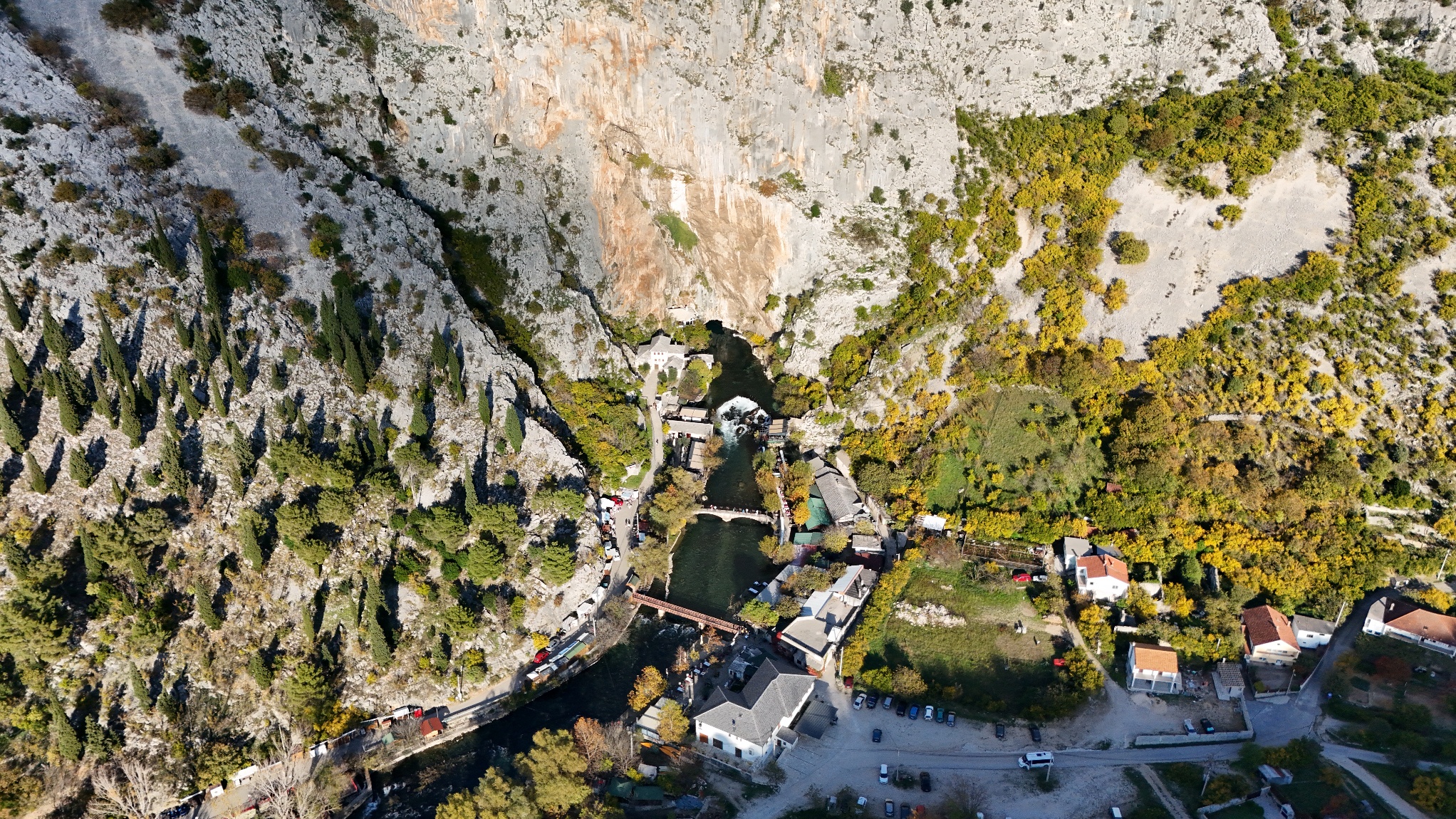
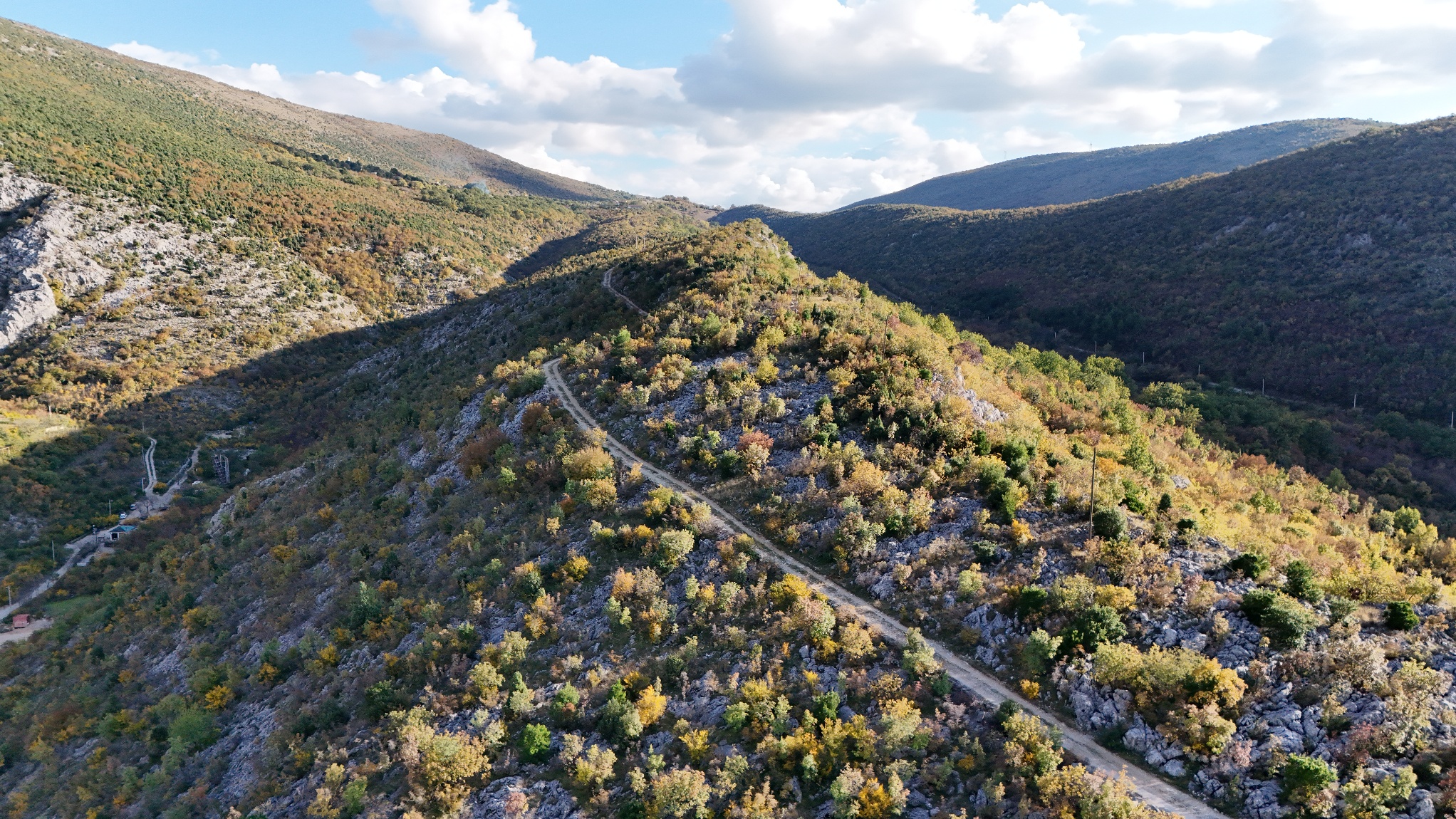
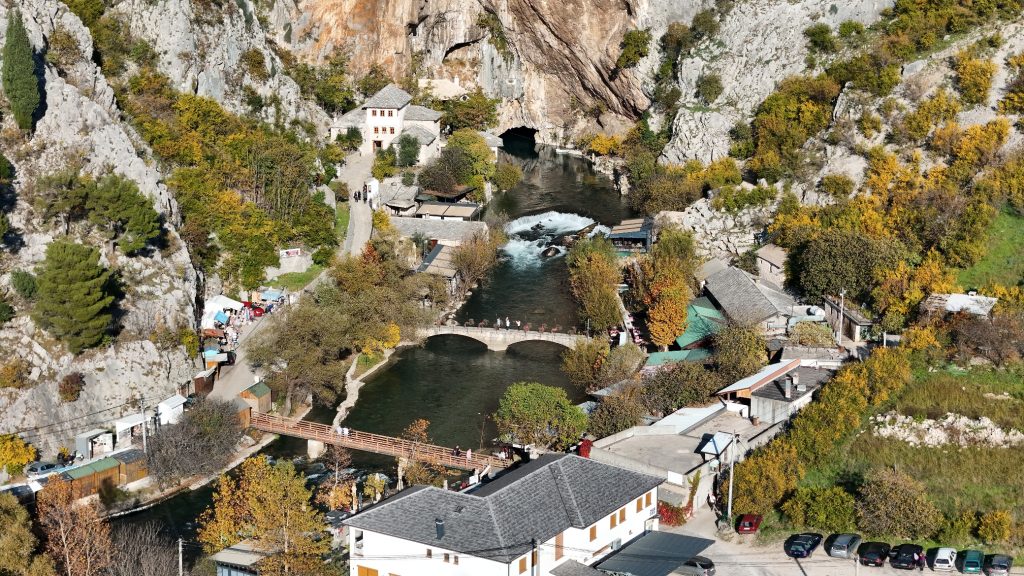
Then, my plan was to walk back to the cave, then try and walk up the hill above the cave from the south-west side.
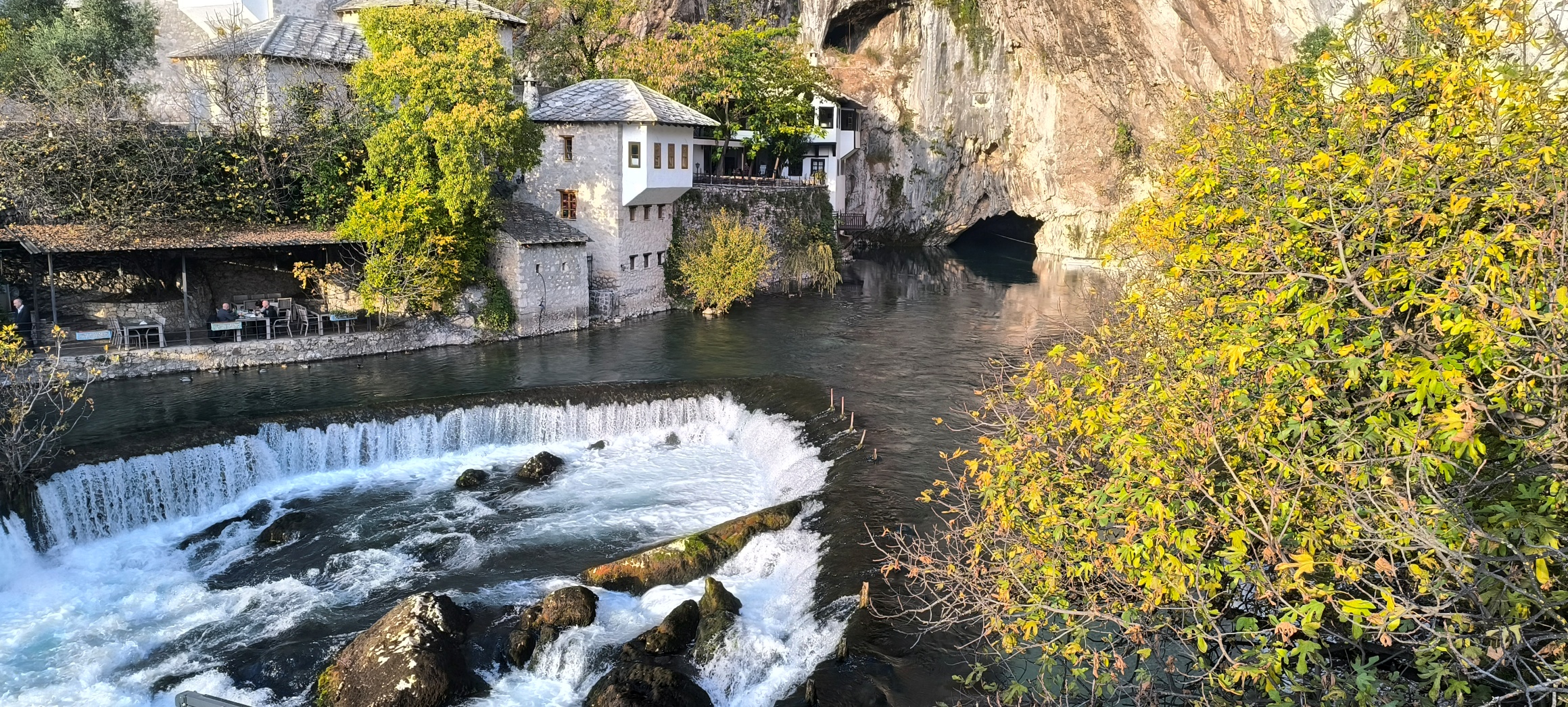
After snapping some photos from the cave, I started my ascent. Hindsight being 20/20, I should’ve given up immediately, but I scrambled up the initial scree section to a traverse.
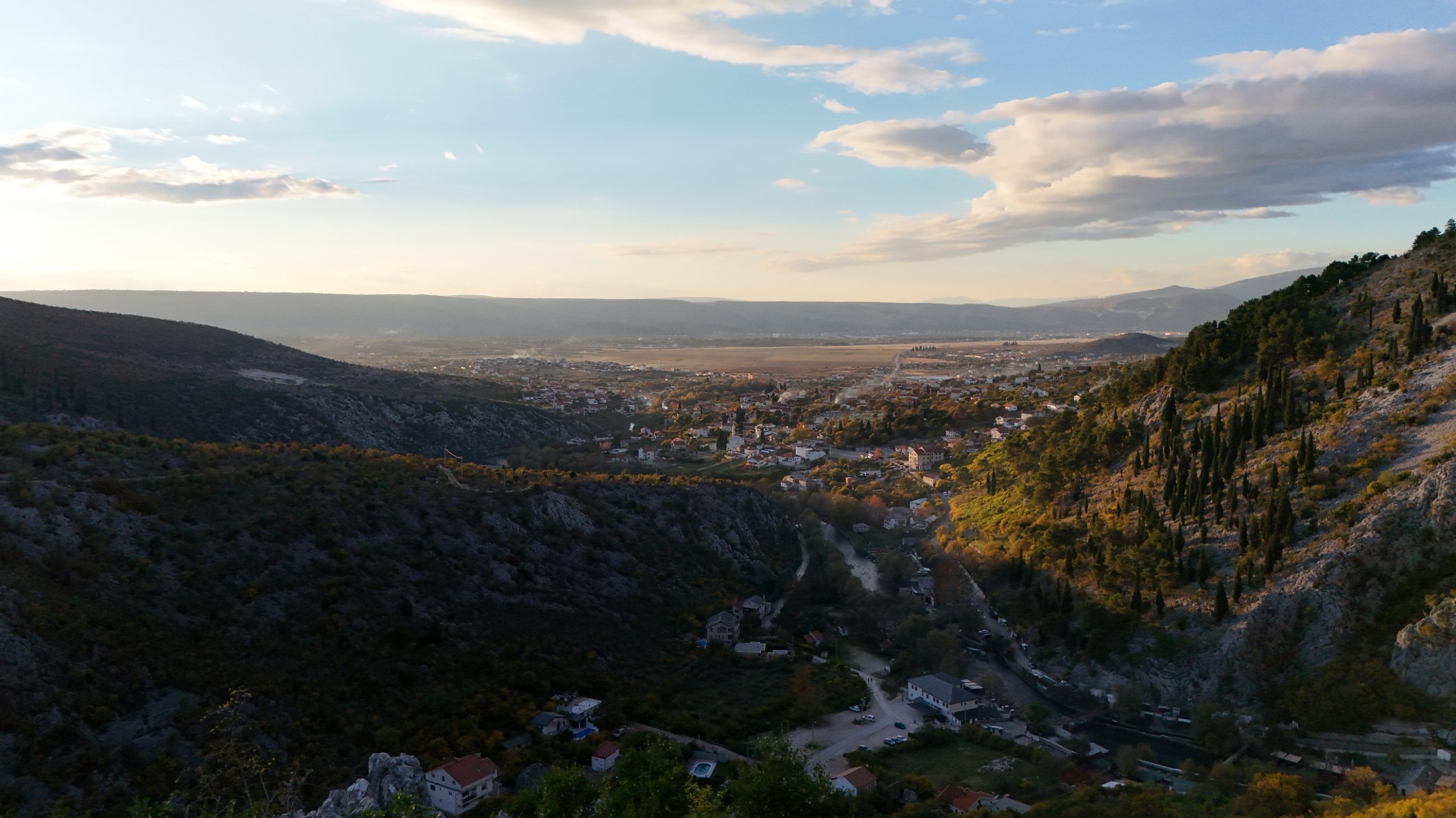
But not having a proper map, only an OpenStreetMap map, I had a lot of trouble trying to find the ‘path’ up the hill. There was a marked climbing route nearby the marked path. Otherwise, I couldn’t find anything and the old knocked over posts only indicated a route further along that goes to another cave part way up the hill. The sun setting, and not feeling happy to slide back down the scree in the dark, I went back to the cave entrance and village, and took the long way around on the road.
- Tip: This area, along with the rest of former Yugoslavia in the border areas particularly were mined in the wars. If you’re walking around in an area which might have mines, be extremely careful and only follow marked paths (if there’s a Knafelc blaze, it’s probably alright, but be careful not to wander off the path). Also, if there is an app available, use it – there is an app for Bosnia, search “BH Mine Suspected Areas”.
By the time I reached the car park at the bottom, it was pretty much empty except one campervan with a couple walking towards it. It was also dark.
For some reason, I made another bad decision and decided to take the direct straight line up the hill, which was marked as a path, but in reality, is just a utility run for electrics. That took longer than expected, as most of it was crawling on hands and knees up a 50%+ gradient, and slipping would’ve possibly been deadly with the loose surfaces, occasional sharp edge, and rubble. I lost both my drinking bottles and had absolutely no chance of going down to find them again.


After arriving at the top extremely thirsty and glad I hadn’t found out what the fast way down was, I entered the fortress which lies at the top of this hill and took a look around. There wasn’t much there to be honest, apart from a good view and somewhere to catch the last glimpse of orange in the sky before another night fell.
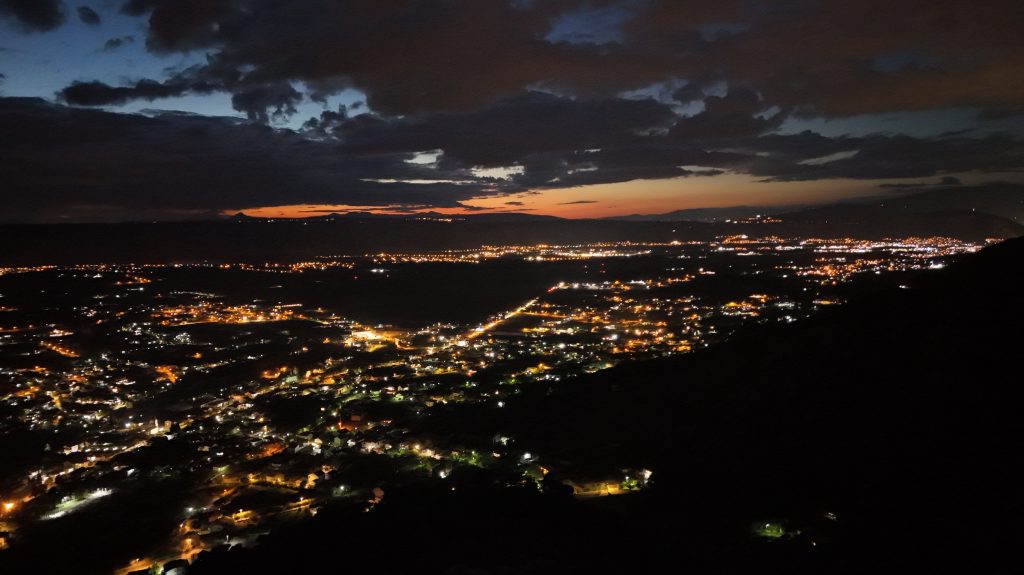
I took the much safer path down, then back along the narrow road to the village to catch the bus back into Mostar.
Unfortunately, this was the lowest point of the trip.
There were a couple of cats waiting at the bus stop, one an extremely small kitten who was sheltering from the encroaching rain in the bin at the bus stop. They did not seem to be particularly cautious of the traffic. Unfortunately, the kitten never managed to catch the bus. I waited for the bus for about an hour and tried to comfort the other cat as best I could, as it seemed quite upset and I didn’t want it to also get hit.
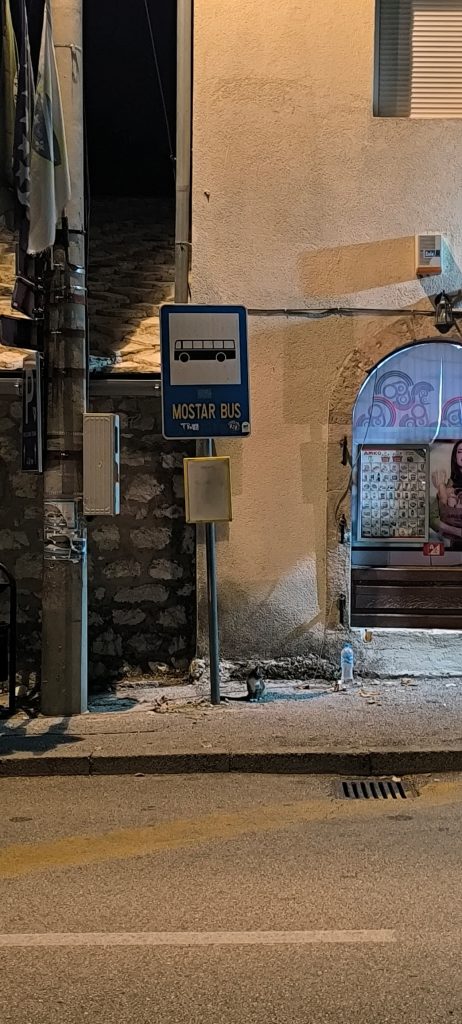
It was a difficult bus ride back and a difficult evening.
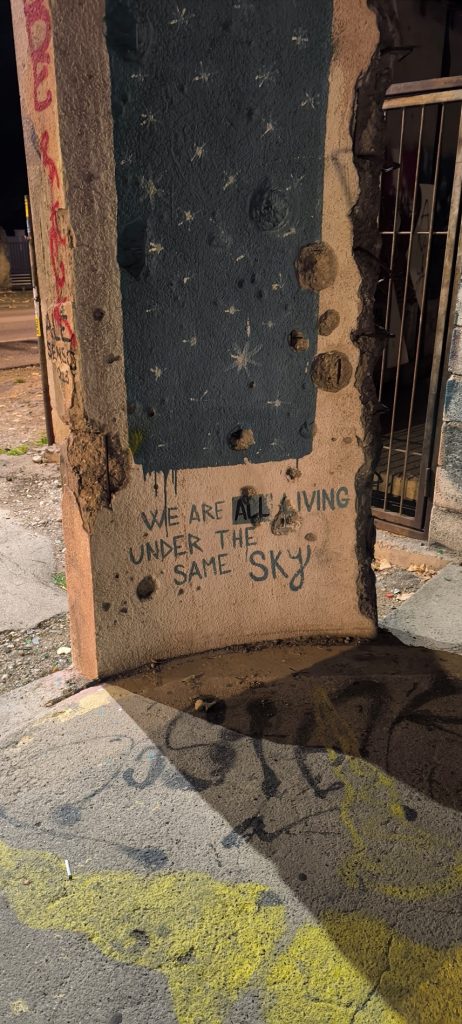
However, as I went back to the hostel for the night, there was two new people in the room which I had had to myself the night before. This turned out to be the bit of luck I needed – after a month and a half on the move, I had finally found people my age moving in the same direction. It took a while, but I had met and talked to a few other groups along the way, so if you’re reading this before your first time Interrail and wondering how sociable it ends up being – it’s a mix of luck, route, time of year, and how open you are to conversation. I’m also on the younger end of travellers, and most people taking a gap year to travel will be going further than Europe and using the summer to travel. Like me, you might think you’re bad at starting conversations with strangers, but when you meet other travellers, there’s a conversation starter straight away, which helped me a lot.
My initial plan was to take the very early morning train to Sarajevo the next day to do the route in the daylight – there’s only two trains a day and the second train does the route in the dark at this time of year. It’s supposed to be a beautiful route – so it’s a shame that somehow either my alarm didn’t go off, or I silenced it in my sleep. Either way, it didn’t wake up the others.
With my extra day (most of one at least) in Mostar, I just took the time to see the rest of the town, and visit the Museum of War and Genocide Victims.
If you’re interested in the Yugoslav Wars, I would recommend watching the award-winning 1995 BBC documentary series “The Death of Yugoslavia”, and then its sister documentary, “The Fall of Milosevic”. I had some knowledge before watching it, but it goes into just the right amount of detail and is fairly unbiased (other than the inherent bias of the West). Some scenes are hard to forget.
The museum was therefore not as shocking as it might have been if I wasn’t prepared. But it’s certainly a difficult place to visit – but necessary.
One of the things I remember from when I was younger was travelling in Croatia to the area where my grandparents grew up near Zadar. I remember driving down a gravel road with a fence on either side marked with little PAZI MINE! Signs, then a bigger one nailed to a tree with a scull-and-crossbones which was quite scary.
So the small section of the museum dedicated to mines was quite interesting.
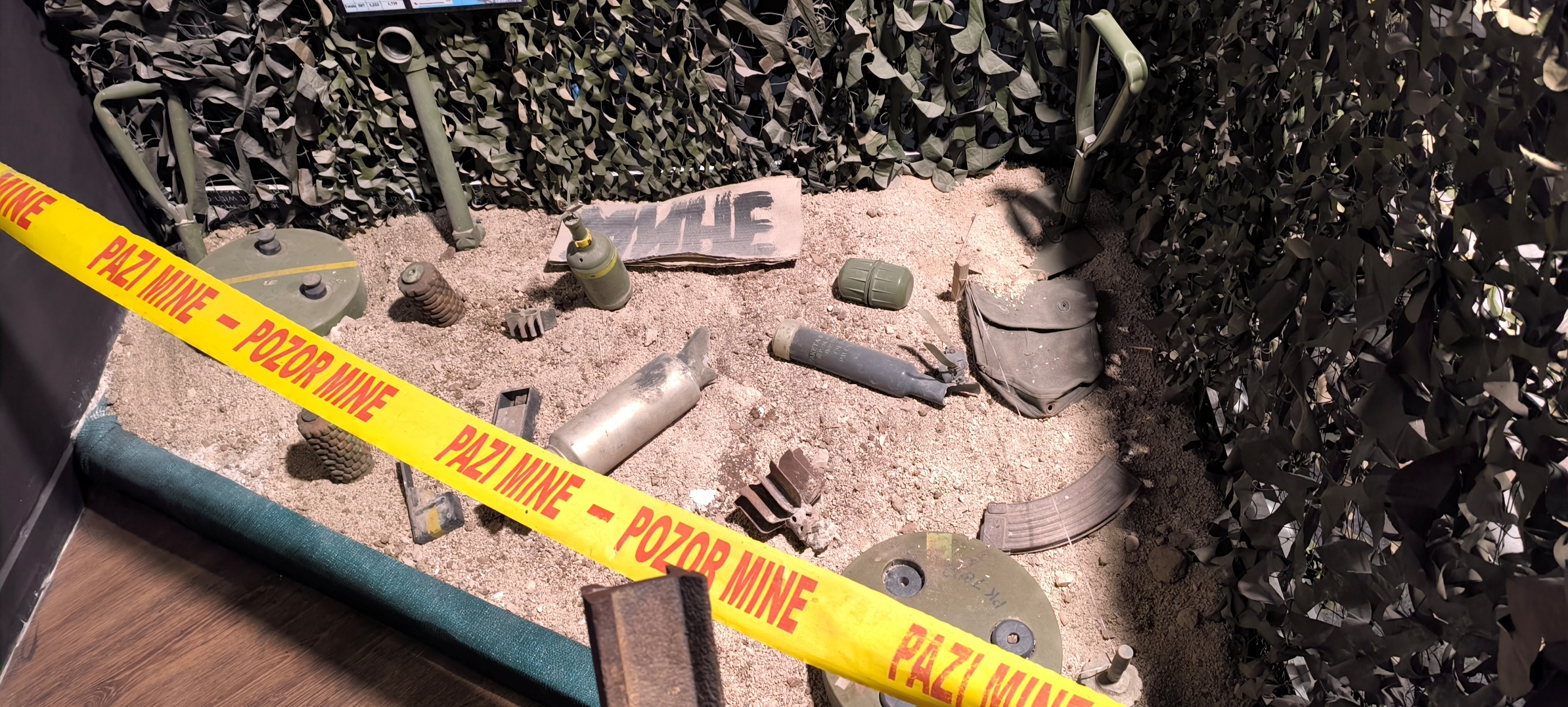
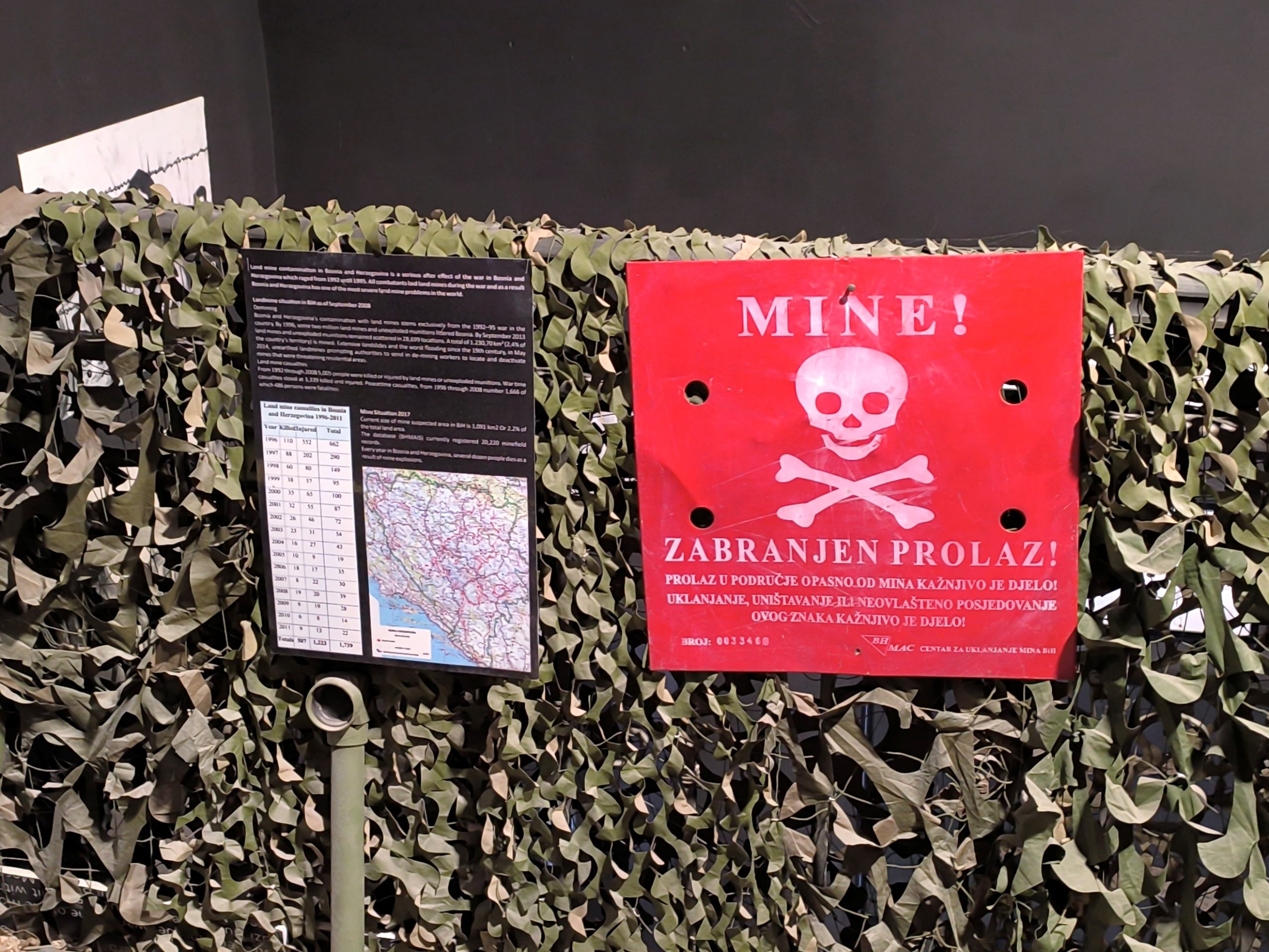
I met up again with the pair I met to take the train to Sarajevo. They were also from England but weren’t Interrailing and were instead taking a similar length of time but to do some volunteering work across the Western Balkans. After Sarajevo, they backtracked to Kotor, then to Albania then flew to Italy and took the train up into Austria.
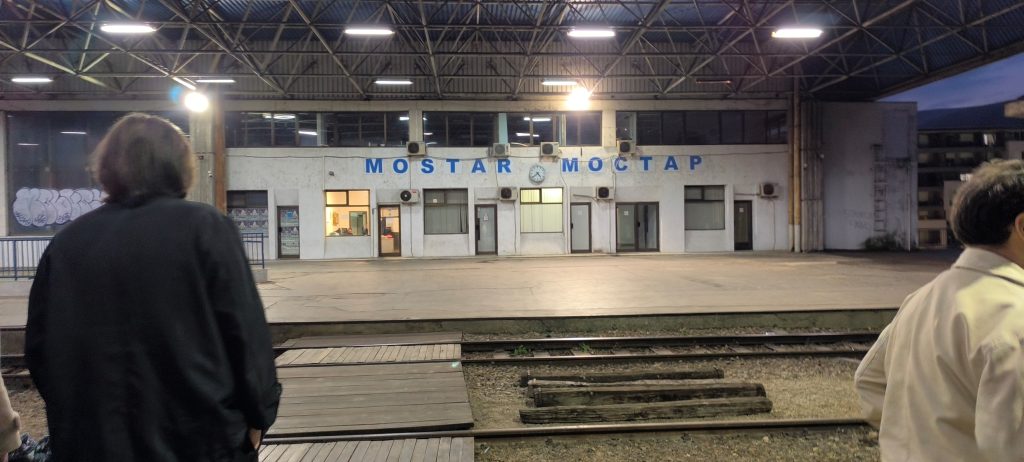
We were staying in separate hostels in Sarajevo, so after walking the 40 minutes from the train station to the centre through rather noticeable amounts of smog (fun fact, Bosnia has some of the cleanest waters but some of the worst air quality in Europe), we split up.
That hostel wasn’t particularly great – it was slightly cramped and the toilet/shower arrangement was interesting. But not too bad in the end – and I met another guy who was just taking a couple weeks holiday from his job working on HS2 in Birmingham.


So, the next day, the 4 of us met up at a café in the centre. Unfortunately, their grill was broken so instead of Ćevap, I had some not-so-good chicken nuggets. But after doing my part for the Balkans and pressuring them into trying a Cockta, we decided to hike in the fog and smog up the hill on the South side to the abandoned 1984 Olympic bobsleigh track.
It was a miserable day, foggy with maybe 30-50m visibility and raining, but we would not be deterred from taking the difficult route up the marked hiking path instead of the road. This area was heavily abused in the war, both mined and used as artillery positions by the Bosnian Serb forces, but appears to have been demined enough now for safe paths.
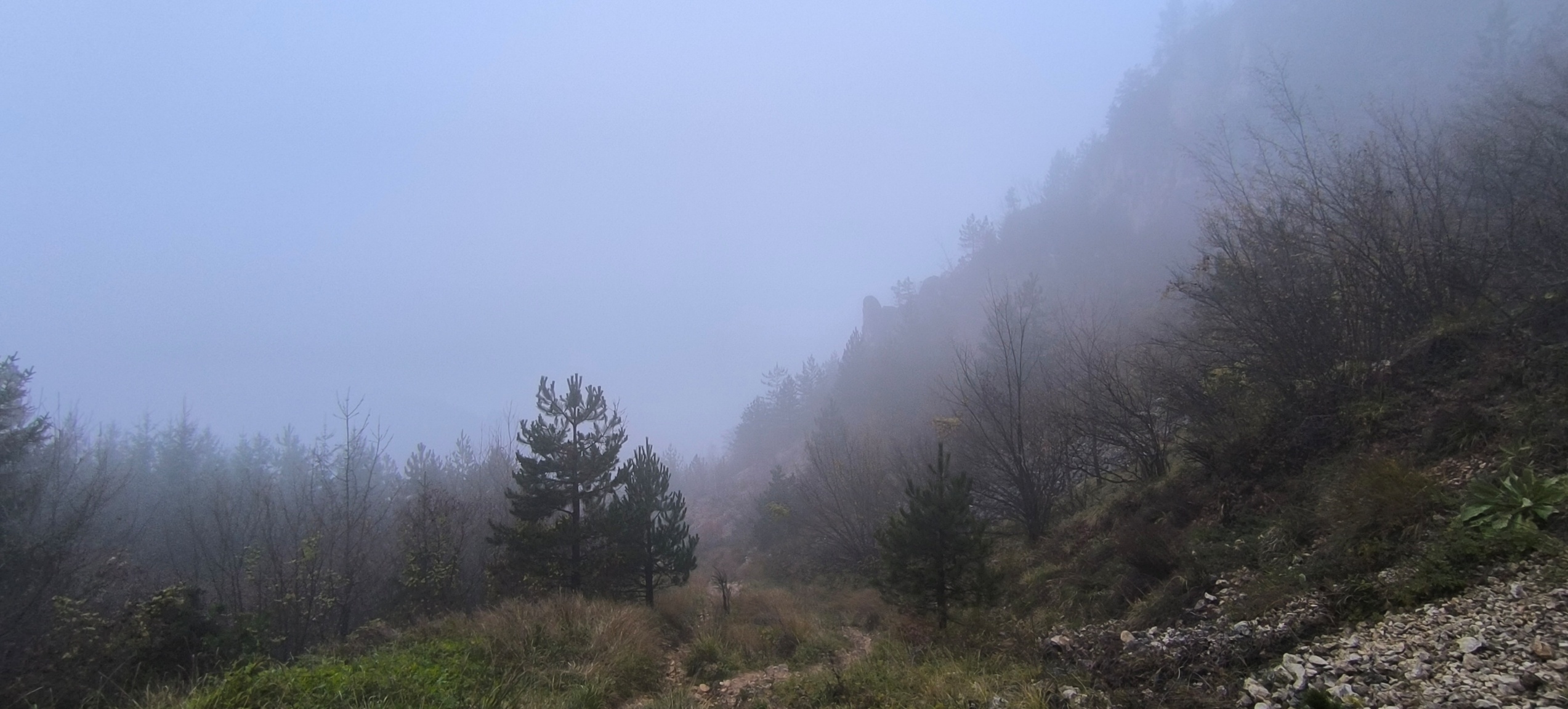
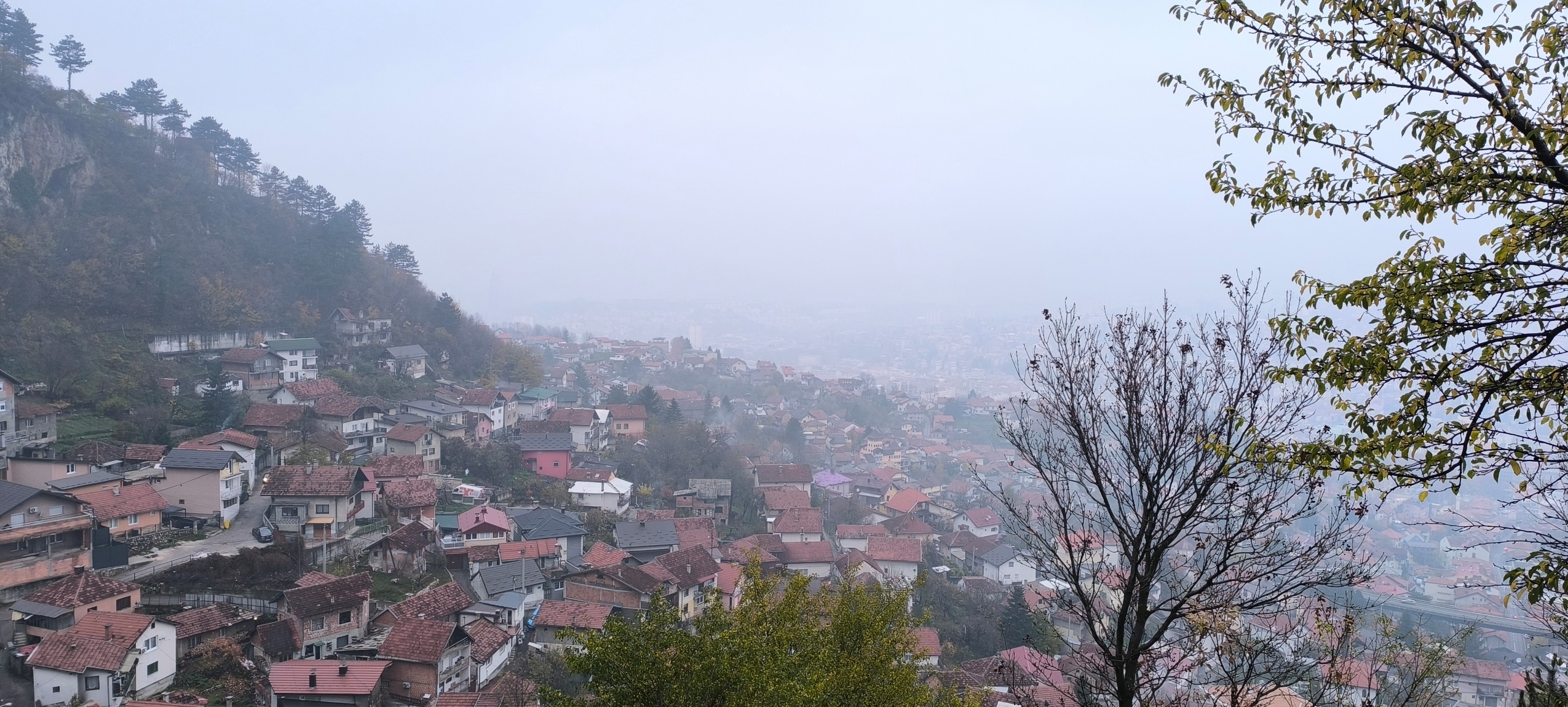
We progress with a reasonable pace for the very slippery conditions, eventually rising enough to catch glimpses of the cable car (which we would aim to take back down) dangling above the grey void, which was gradually darkening as the sun set somewhere far above.
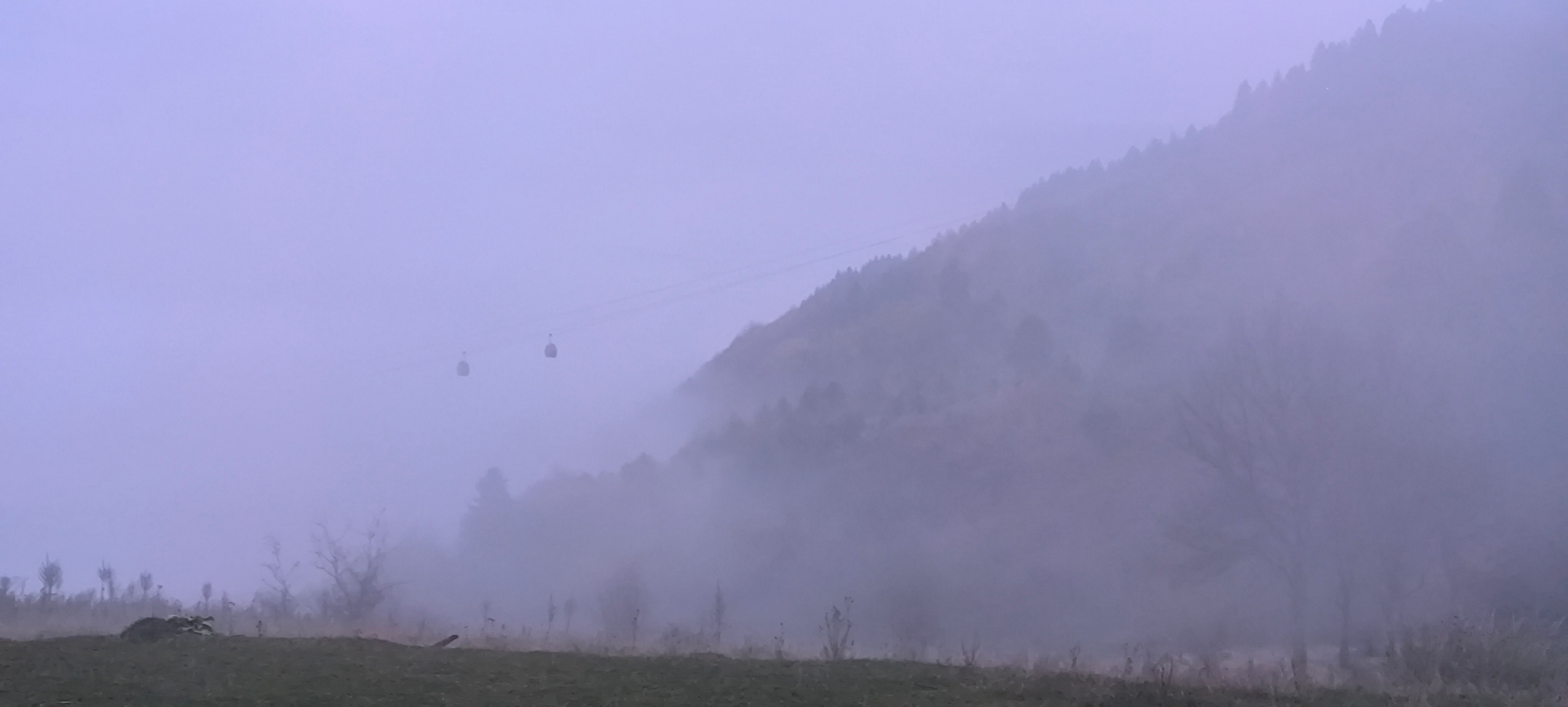
We also stumbled upon some abandoned buildings. Unfortunately, I can’t find what they were doing up here. Maybe related to the Čolina Kapa Observatory, which is nearby but we unfortunately missed on the map?
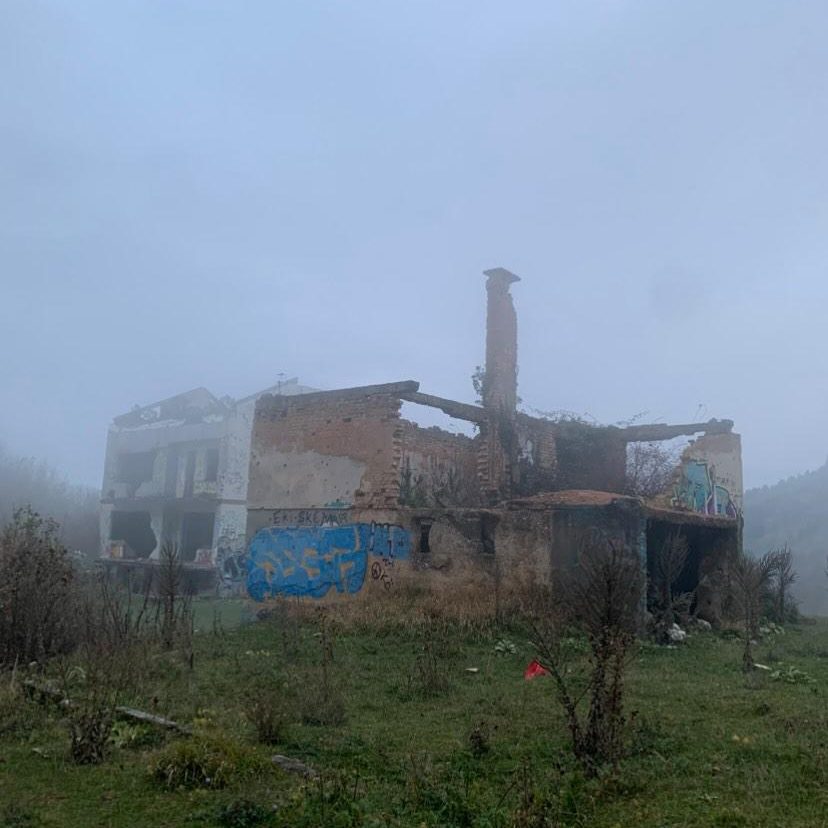
Eventually we stumbled on a crumbling concrete curve rising out of the woods – the old track. It’s covered in art and graffiti, some quite nice, some tags, and parts of it (apparently the start houses) have fallen away and buildings adjacent have crumbled and been overtaken by nature. The main track itself, however, is in good enough condition to walk along and explore in the fog and rapidly increasing darkness.
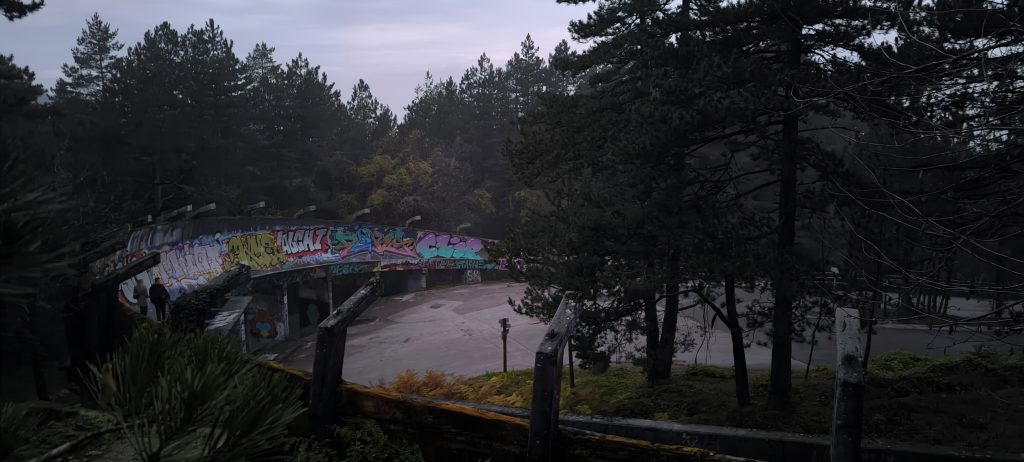
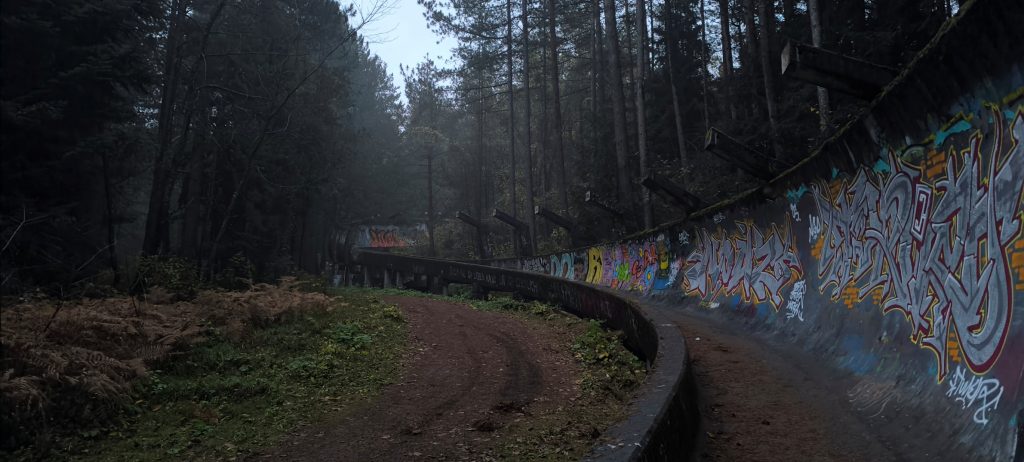
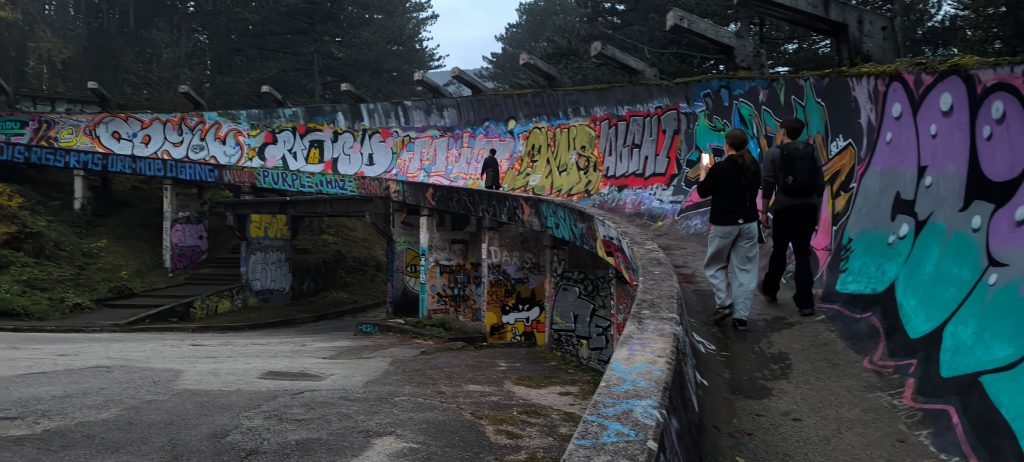
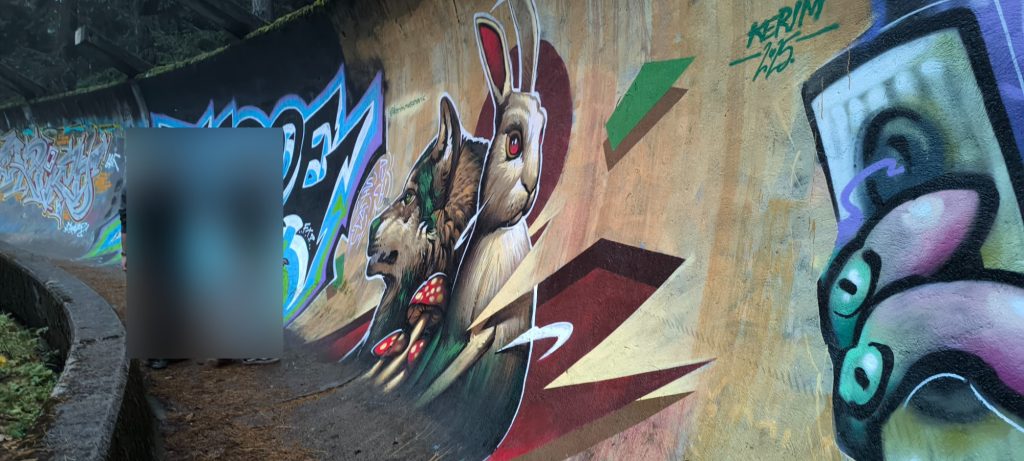
It was nice to do this with their company, and made a welcome change from exploring alone.
It got dark pretty quickly, which only added to the atmosphere.
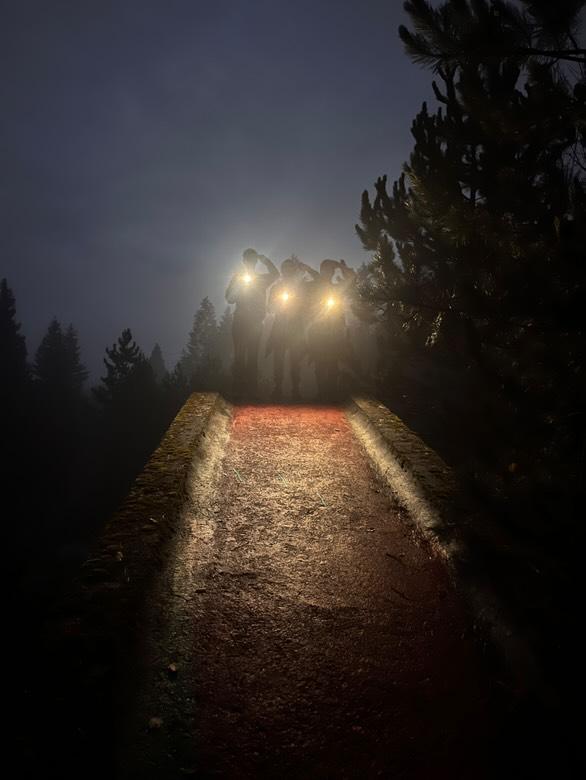
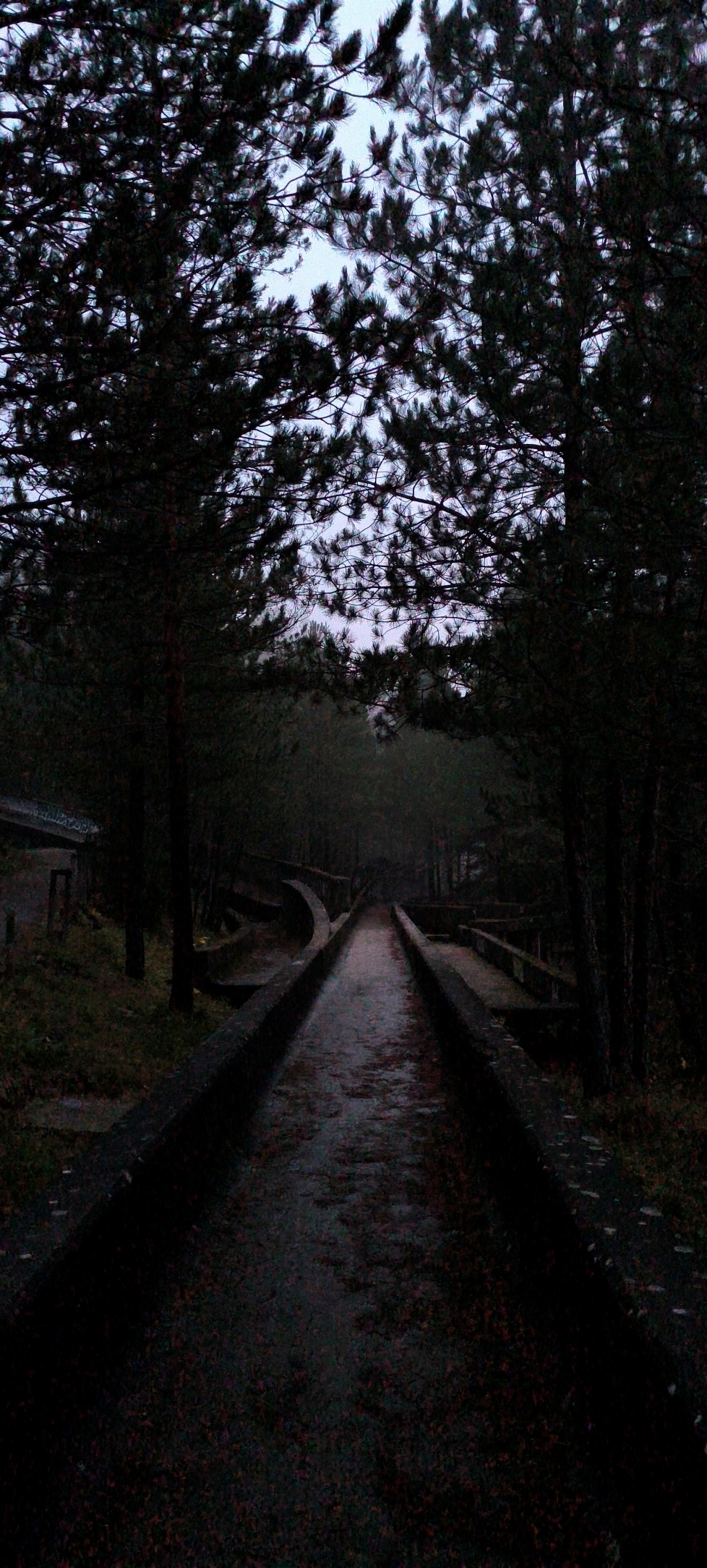
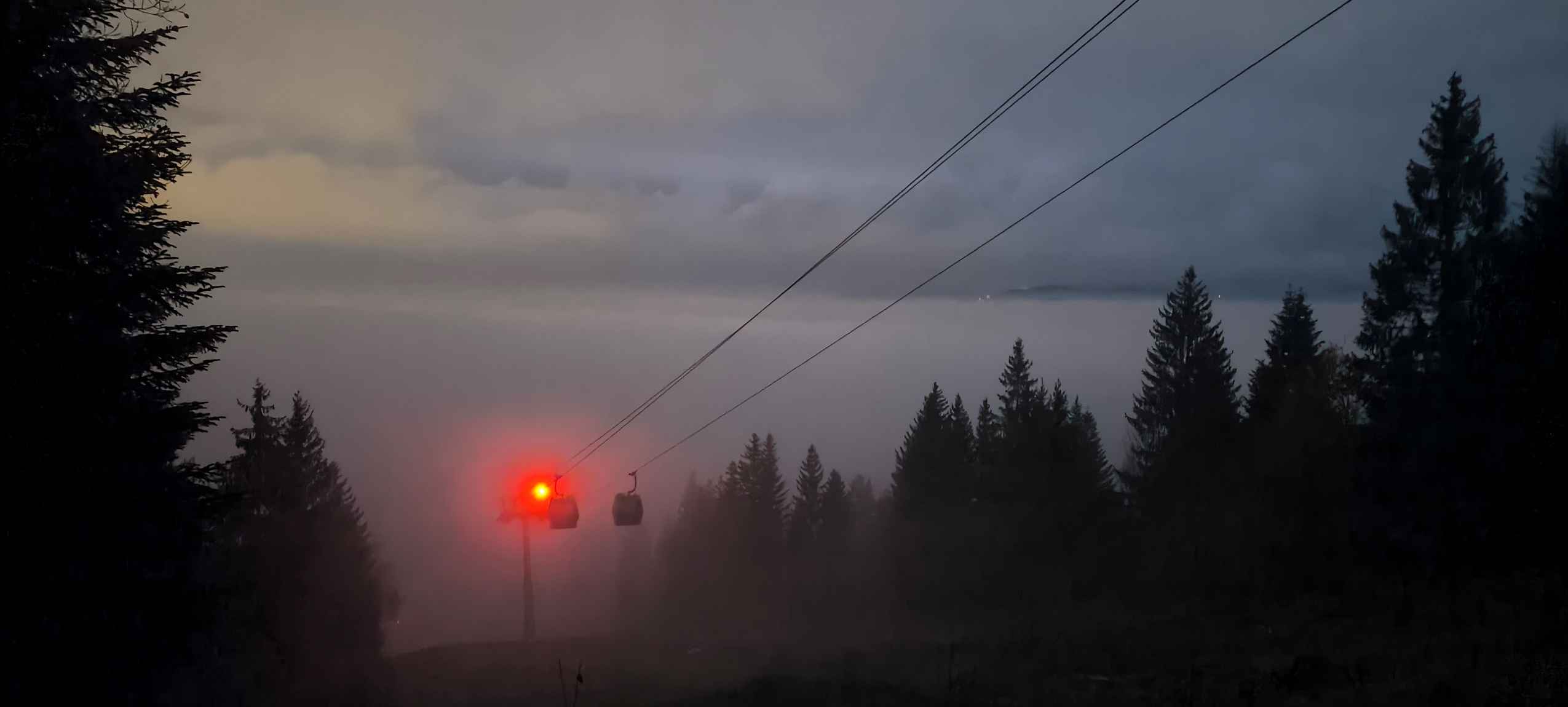
We eventually reached the top, with some nice Olympic rings strangely colourful in the muted surroundings. We arrived about 5 minutes too late to catch the cable car into the city, just in time to see them locking the doors and have a slightly strange chat with the family that had been the last to come up. Of course, this being the Balkans, it mainly involved talking about crime and corruption. But they did offer us a lift back down in their car if we wanted it – there were about 7 of us to 5 seats though, so we turned them down.
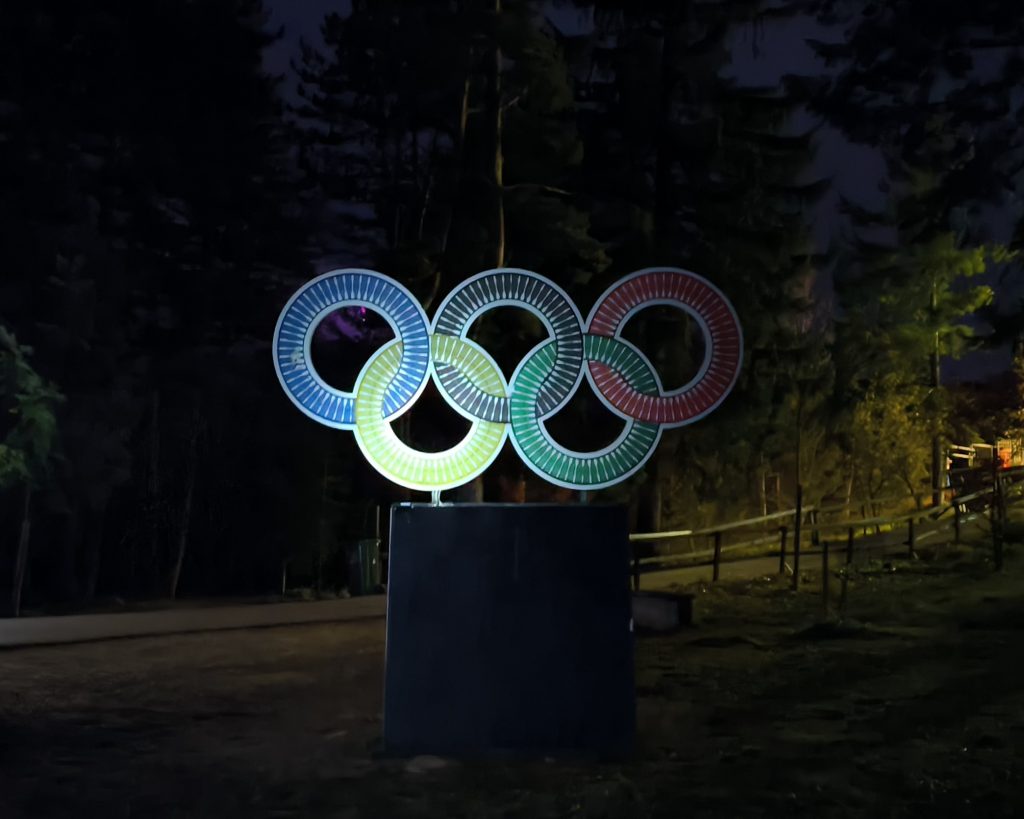
Instead, we walked back down, following the road this time as none of us had torches to see the steep path we had climbed up. The fog had cleared just enough by now to see the lights of Sarajevo below. We went to the pub.
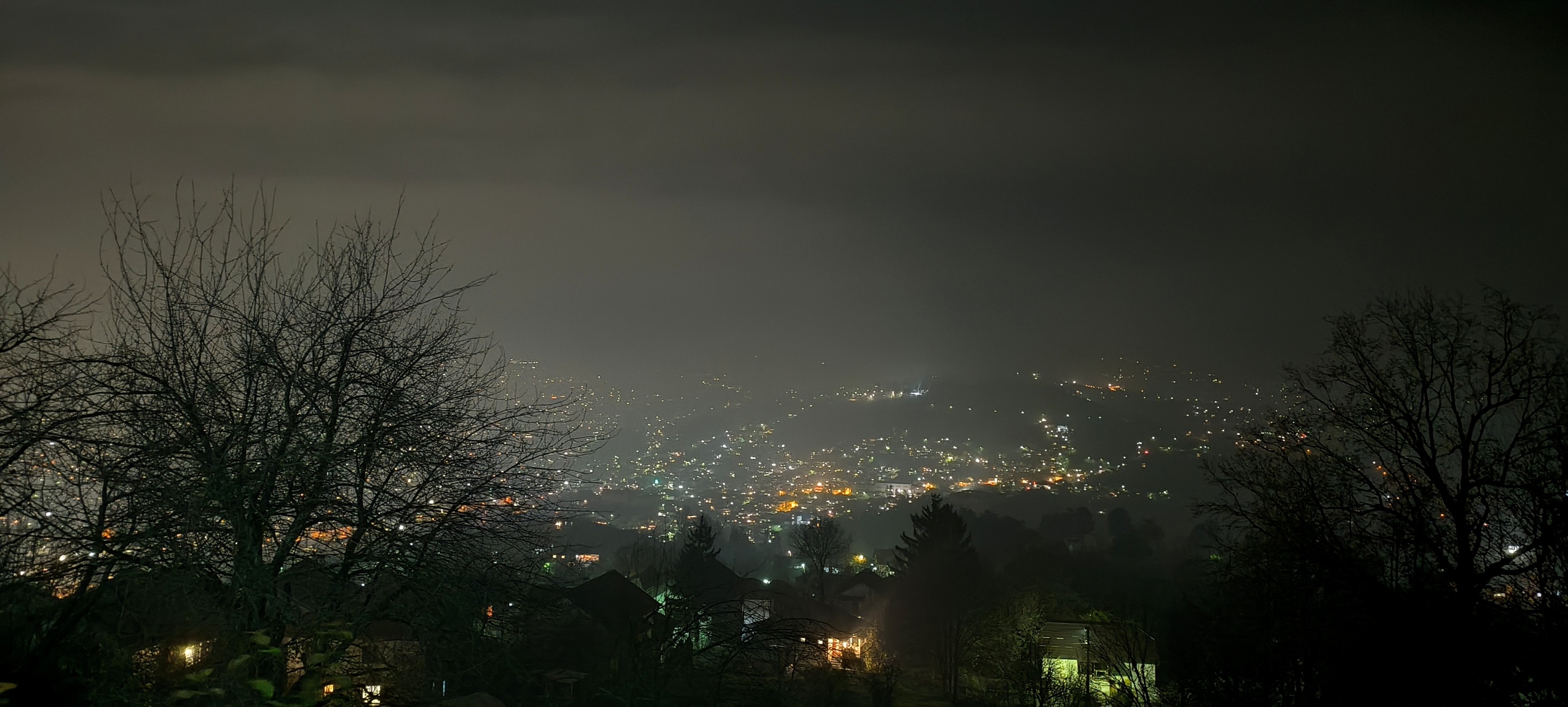
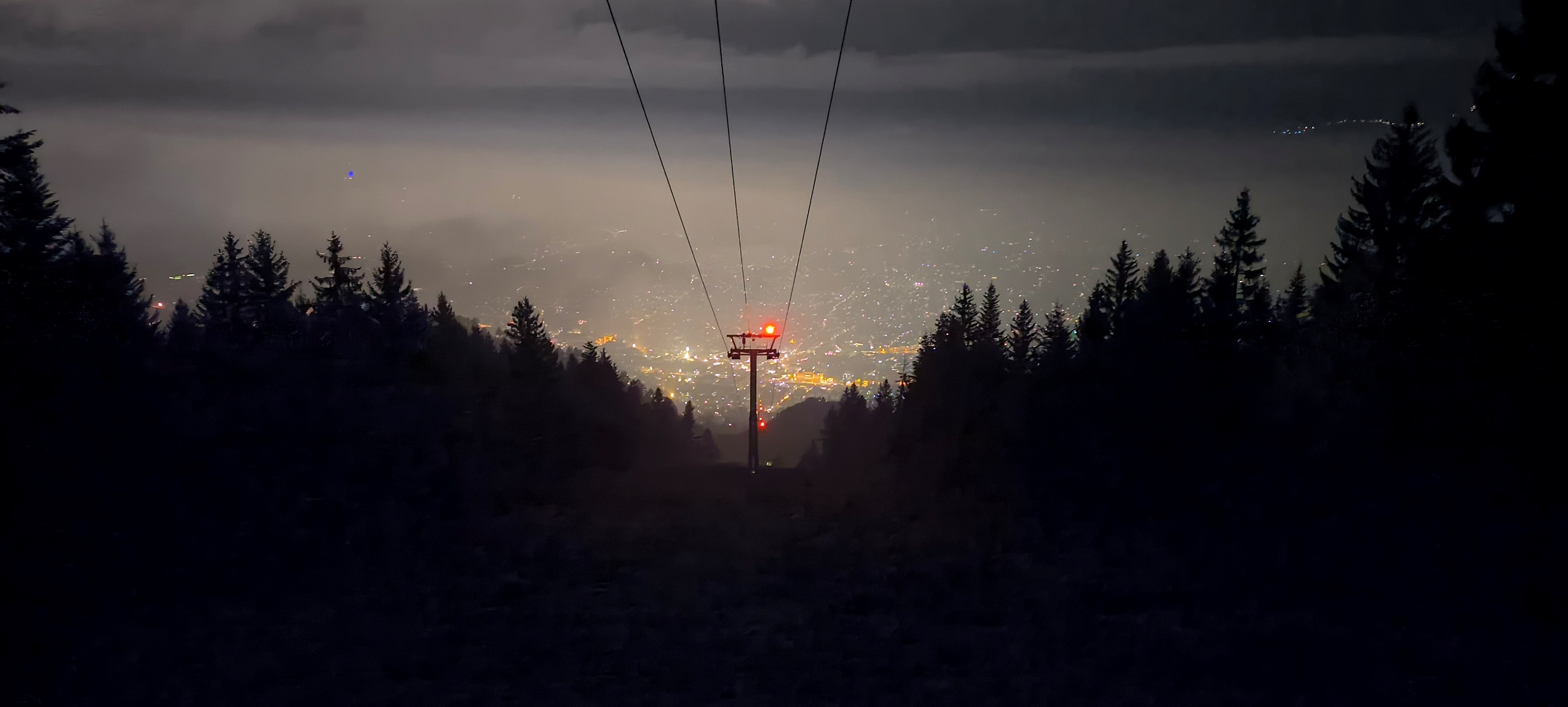
The next day was the 10th of November, so as much as I would’ve liked to stay for another day to see a bit more of the city itself (since we had only really seen a small part), I had to say goodbye to the others and get back moving again.
There are direct busses from Sarajevo to Zagreb from the good bus station – be careful about which bus station you’re using, busses to and from different areas (Muslim/Croat vs Serb) use different stations. However, I did not want to spend a minimum of 7 and a half hours on the bus, and I didn’t want to pay 45 euros.
So instead, I took the bus only as far as Slavonski Brod, via a seemingly endless number of villages and towns – which I was luckily expecting. There were enough connections from the railway station there to Zagreb that I wouldn’t get stuck.
There was a long queue at the border crossing into Croatia, so I asked to get off the bus, and just walked through – much to the amusement of the other bus passengers and the Bosnian border police. There was a passenger checkpoint on the Croatian side, but there was no such facility on the Bosnian side, so I just used the only vehicle lane. After the Bosnian officer asked me why I was walking across (in Croatian, obviously seeing my Croatian passport), he laughed and agreed that it made sense when I just pointed to my bus stuck behind another bus and a few trucks. So after a quick walk over the Sava and through the Croatian side without any trouble, I made it to the station just in time for the second bus of the three available options – I was glad I wouldn’t have to wait until much later to catch the last one, since I would’ve been starving by the time I arrived in Zagreb. Again, it’s a shame that the railways weren’t looked after – there used to be a railway connection parallel to the road bridge from Slavonski Brod all the way through to Sarajevo.


Rather than the old style of train with a locomotive and carriages I had taken from Rijeka to Zagreb, a brand-new multiple unit pulled into the station. And of course, it was quiet enough that I could spread out a little for the 5-hour journey ahead and watch the sun set on the flat lands of this part of Croatia.


I arrived in Zagreb around 20:30, and took a different route out of the station than I had previously, bumping into yet another reminder of World War 2 and an unexpected reminder of where I had been on my trip.
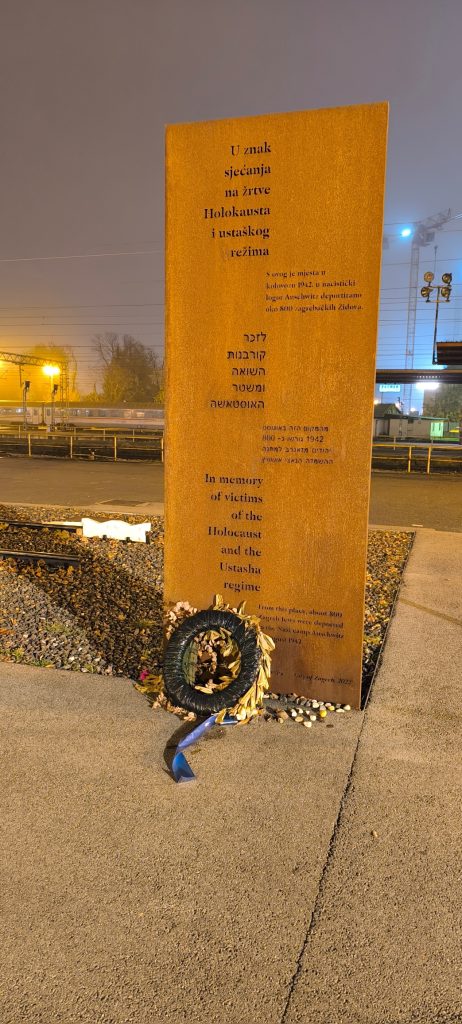
I was not intending to stay in Zagreb since I’m more than familiar enough with it, so I booked the cheapest hostel available – I was glad I was only spending one night in it. Despite being a well-known chain, it was not particularly good.
Wanting to spend as little time there as possible, and having starved all day, I took the tram half an hour out of the centre into the suburbs to a burger bar I had been to previously and did really good and quite large burgers for the price. So, after stuffing that and an extremely large portion of chips (I think they just served me everything that was left, thanks guys) down my throat in the 15 minutes before they closed, I took the tram back into the centre and walked around for a little while before catching up on some sleep.
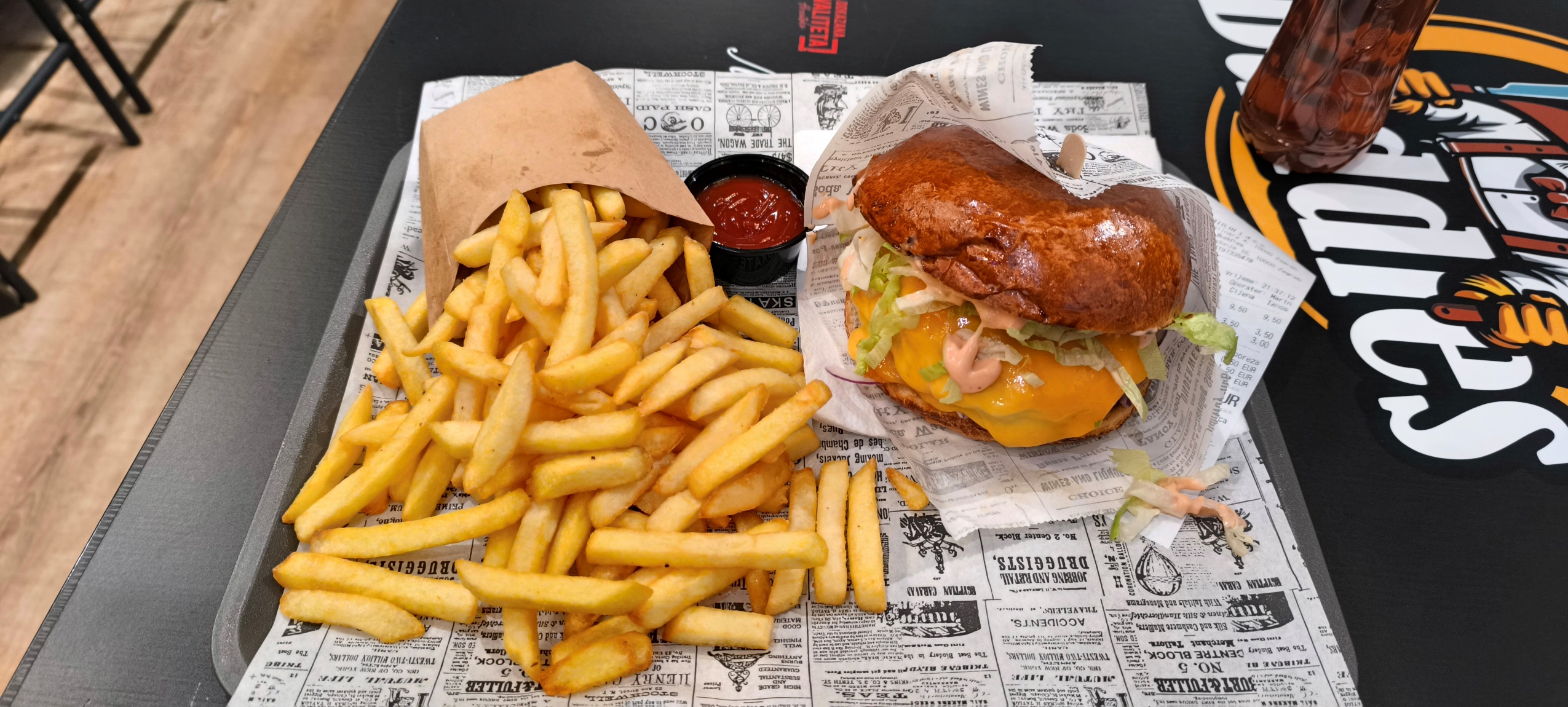
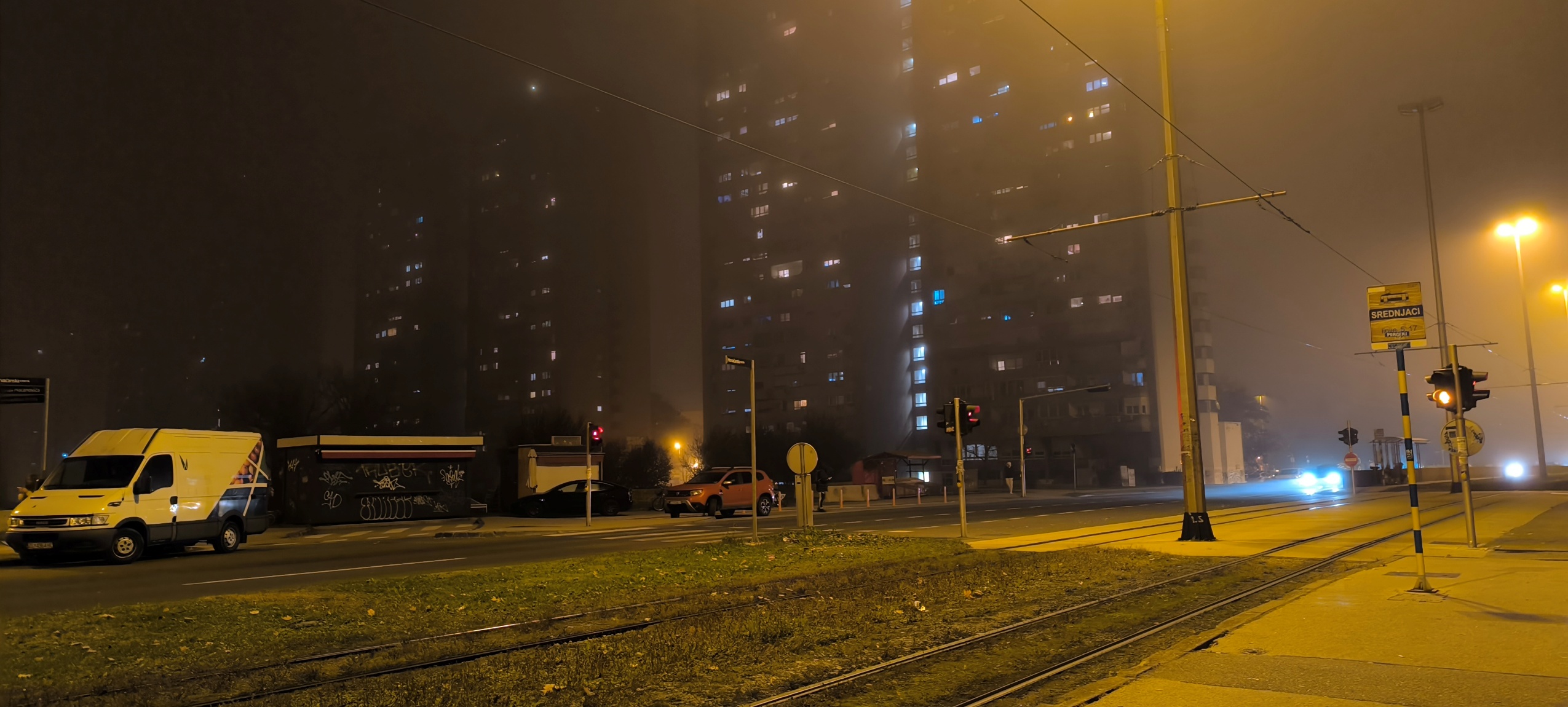
At this point, I was back in more reliable territory and on the home straight. With 4 days until my Eurostar, I could relax a little.
As nice as the route to Rijeka is, I wanted to head into Slovenia in the north, to Maribor, and I wanted to see what that part of the network is like as it winds through the Sava valley. It’s a shame I had to leave the valley at Zidani Most, as the section between Zidani Most and Ljubljana is supposed to be incredibly scenic and underrated – but I had a taste of it as I drew closer to Zidani Most. Unfortunately, it was quite foggy, but it cleared just enough to leave a light haze as I arrived at the station.
Knowing that Maribor was quite a small place and I would have loads of time to see it in my evening and morning, I took the opportunity to stash my bag in the bushes and climb up the hills around Zidani Most to get some nice drone footage.
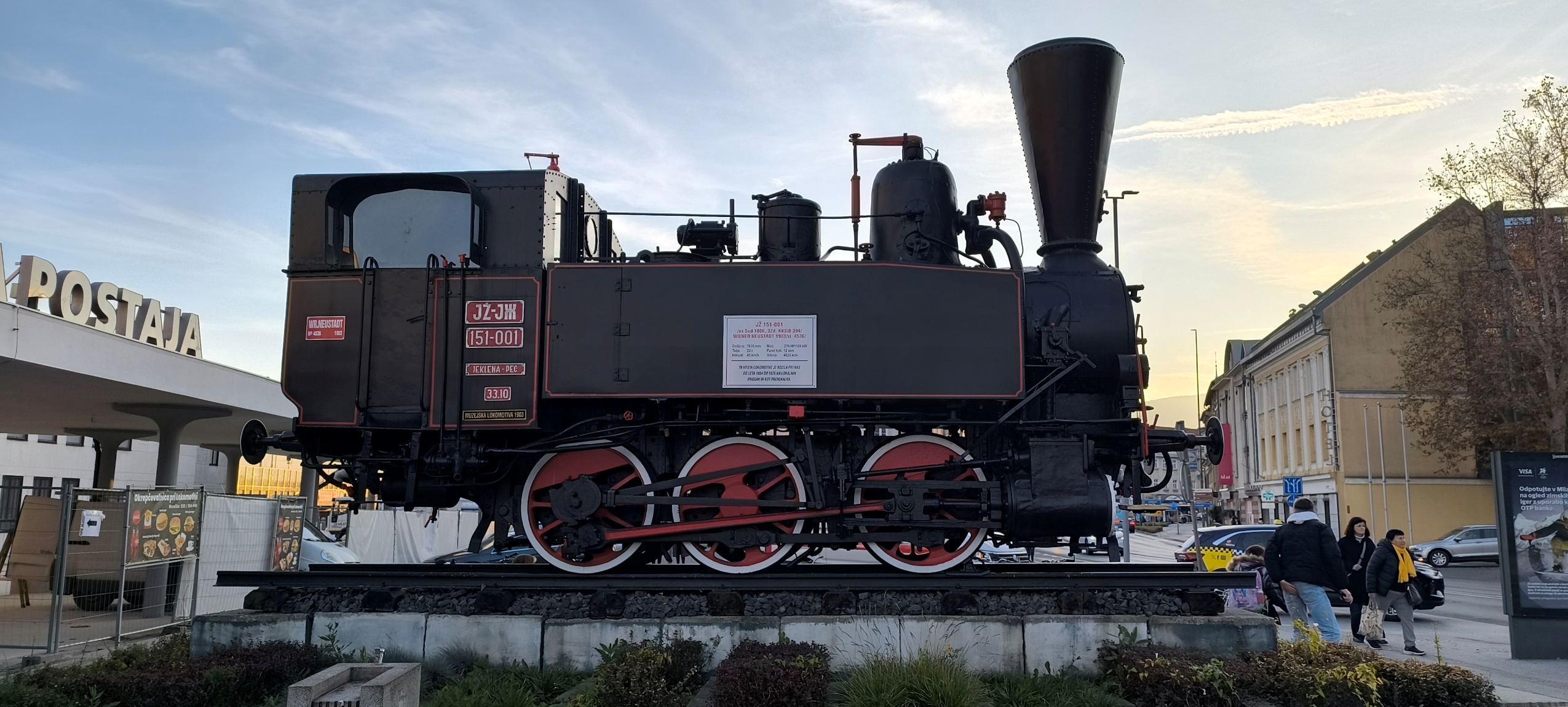
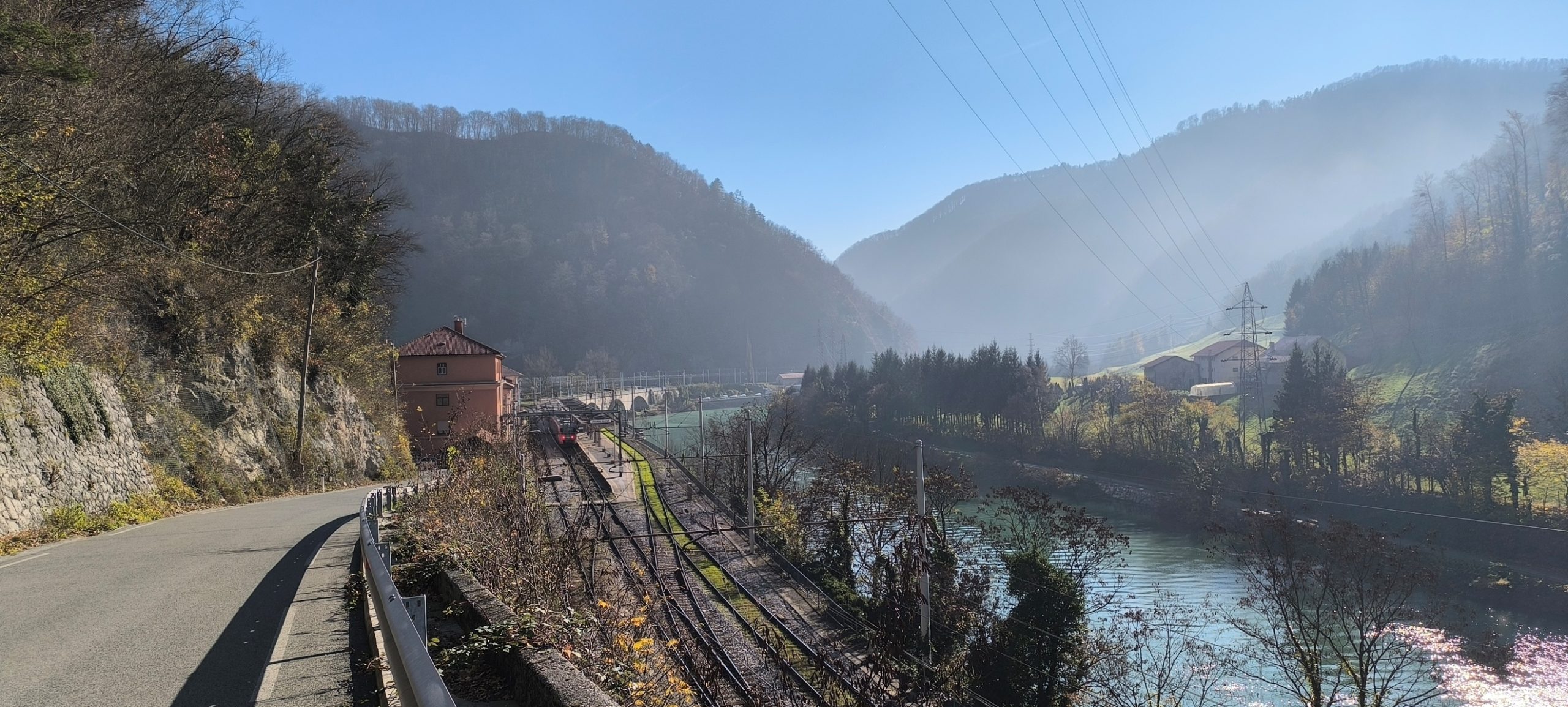
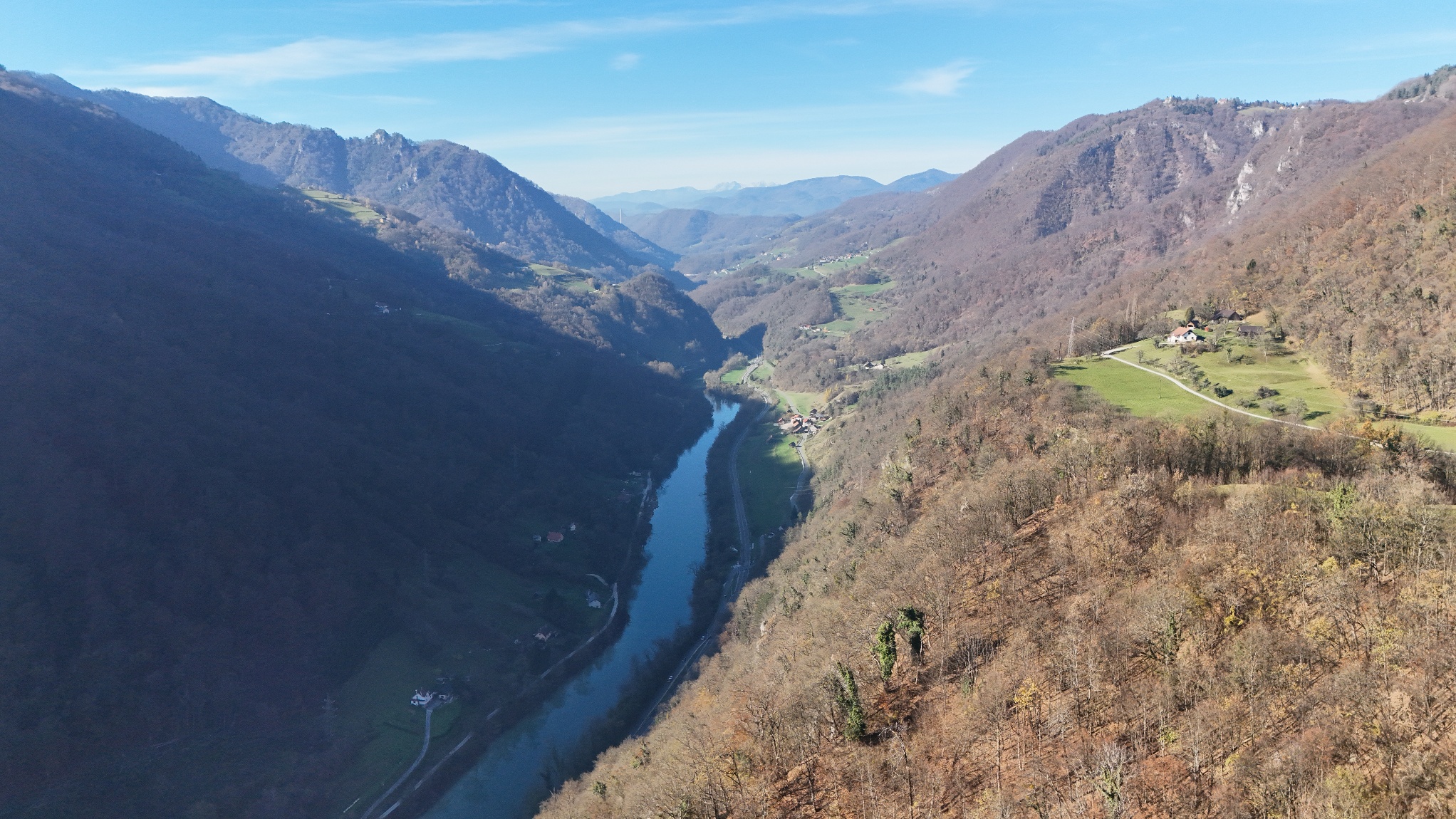
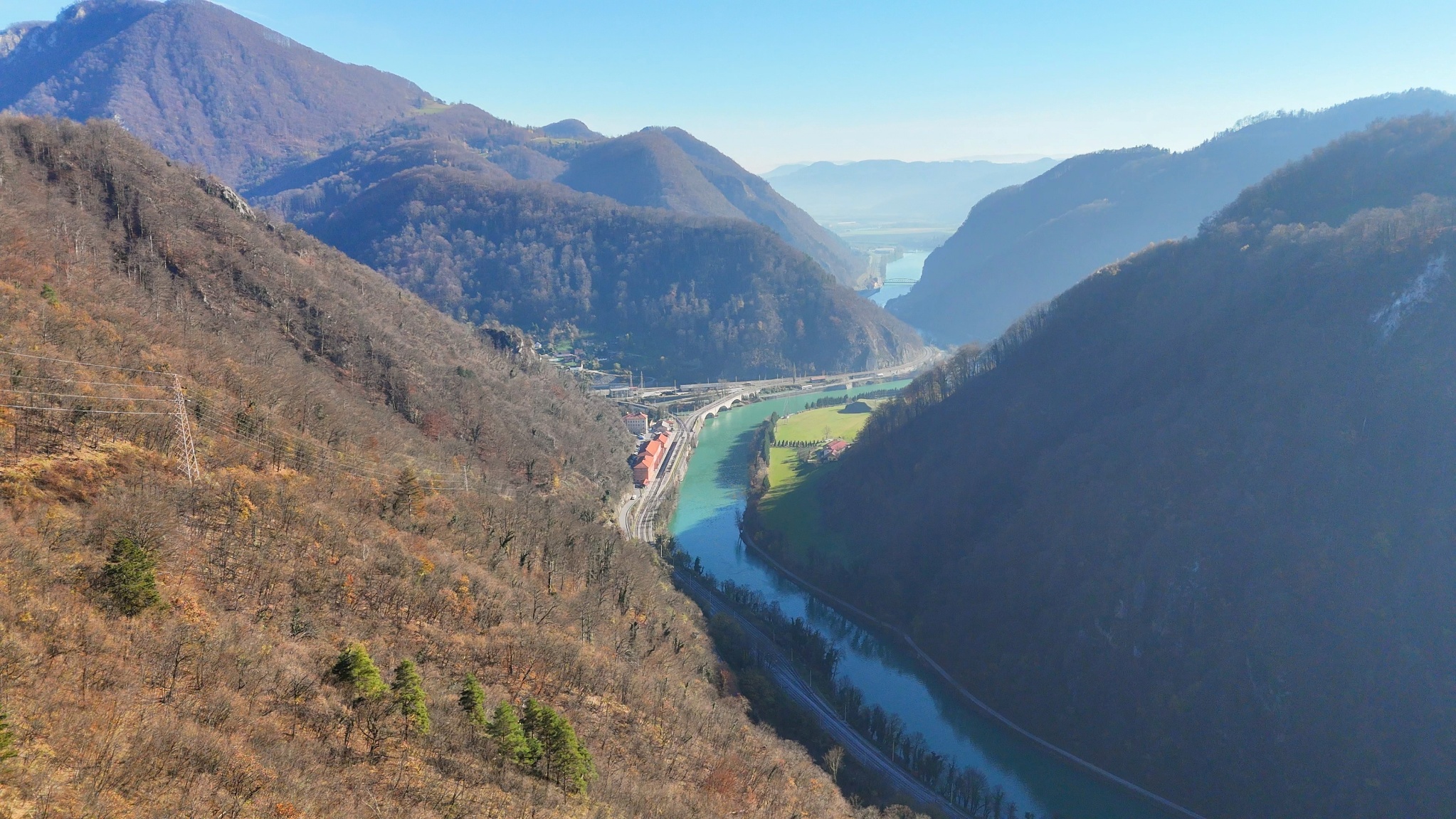
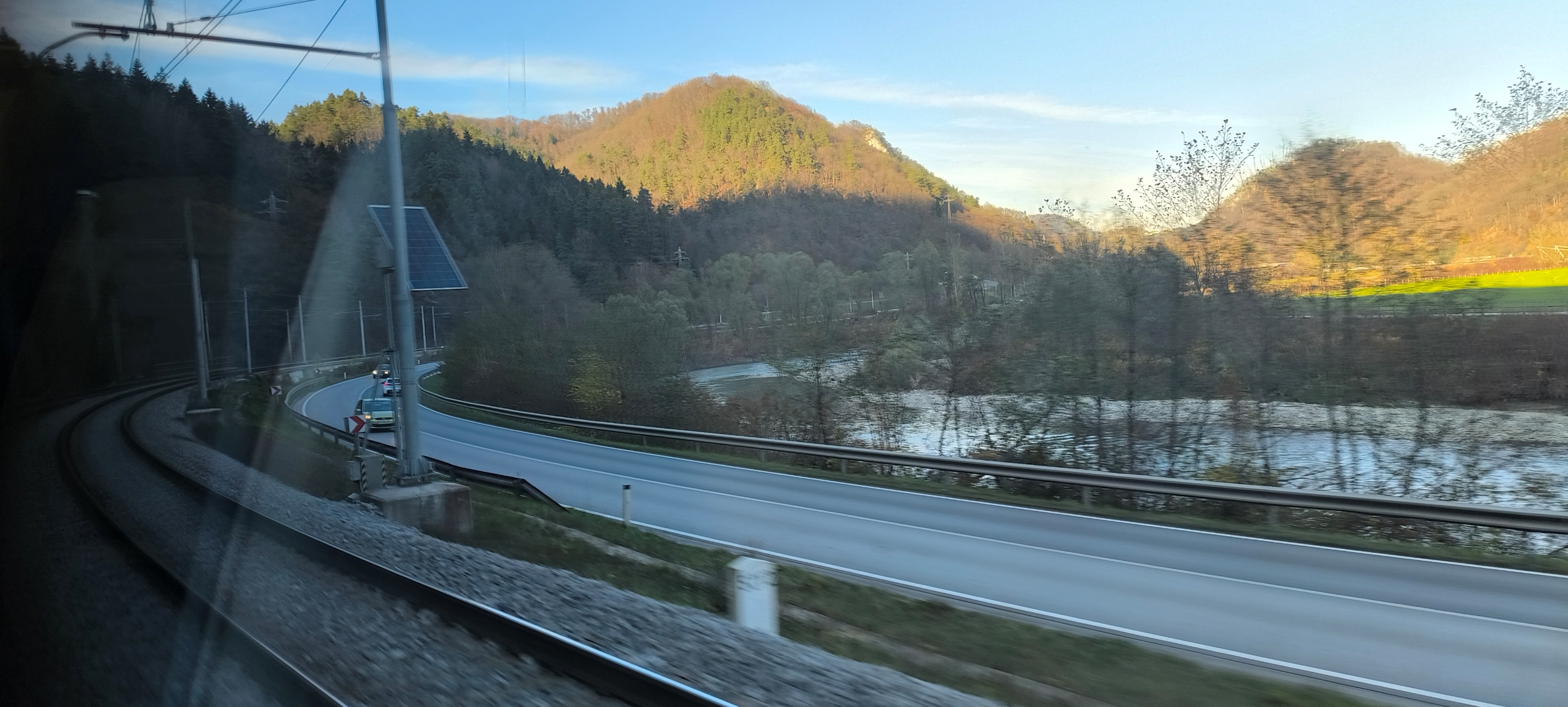
I arrived in Maribor that evening and met another guy in the room. The hostel was a bit strange – it was basically just a hotel with bunk beds and almost zero atmosphere – and so were his previous guests, he told me. He’d been there about a week, and was a regular visitor at this point – it turns out he was a Serb pilot working on getting his EU licences in Slovenia at the small airport in Maribor.
He showed me around Maribor, a pretty nice city but definitely small enough to cover in one long morning or afternoon, the next morning as his flight wasn’t until later in day (before it got cancelled due to poor visibility), which was unexpected but nice of him. We then had a drink in a café, and he bought me a Cockta. I had had a lot more luck with friendly people in this part of Europe.


I caught my train to Salzburg via Graz that afternoon, and I had seen most of what Maribor had to offer, so that was a good stop for this point on the trip of just passing through places as I headed home.
At Graz station, I noticed an ÖBB Infra safety poster. It’s nature was very different to what we get in the UK, and I had nothing else to do on the train, so I dig some digging. It’s one (or two) of five safety messages they produced as part of a safety campaign. And they have videos for each one, with some memorable visual and audio design, each one slightly different but just as cartoonishly gruesome. https://infrastruktur.oebb.at/de/unternehmen/sicherheit-ist-unser-thema/pass-auf-dich-auf/ueberschreiten-der-gleise. Very different style to National Rail’s safety campaigns.
Having only taken one night in Maribor, and planning to spend only one night in Bruxelles, I had my last full day left on my trip to spend in Salzburg. The train there was pretty scenic, although it got dark quite quickly, which was a shame. It was also quite strange, with not only one, but two changes in direction.
Salzburg was a pretty nice city. I spent my morning sorting some things out, so I took the afternoon to go up to the fortress on the south side of the city. I should’ve planned ahead a little more, because I entered a little too early then decided to really get the money’s worth and stay up there all afternoon into the early evening to catch the last sunset of the trip.
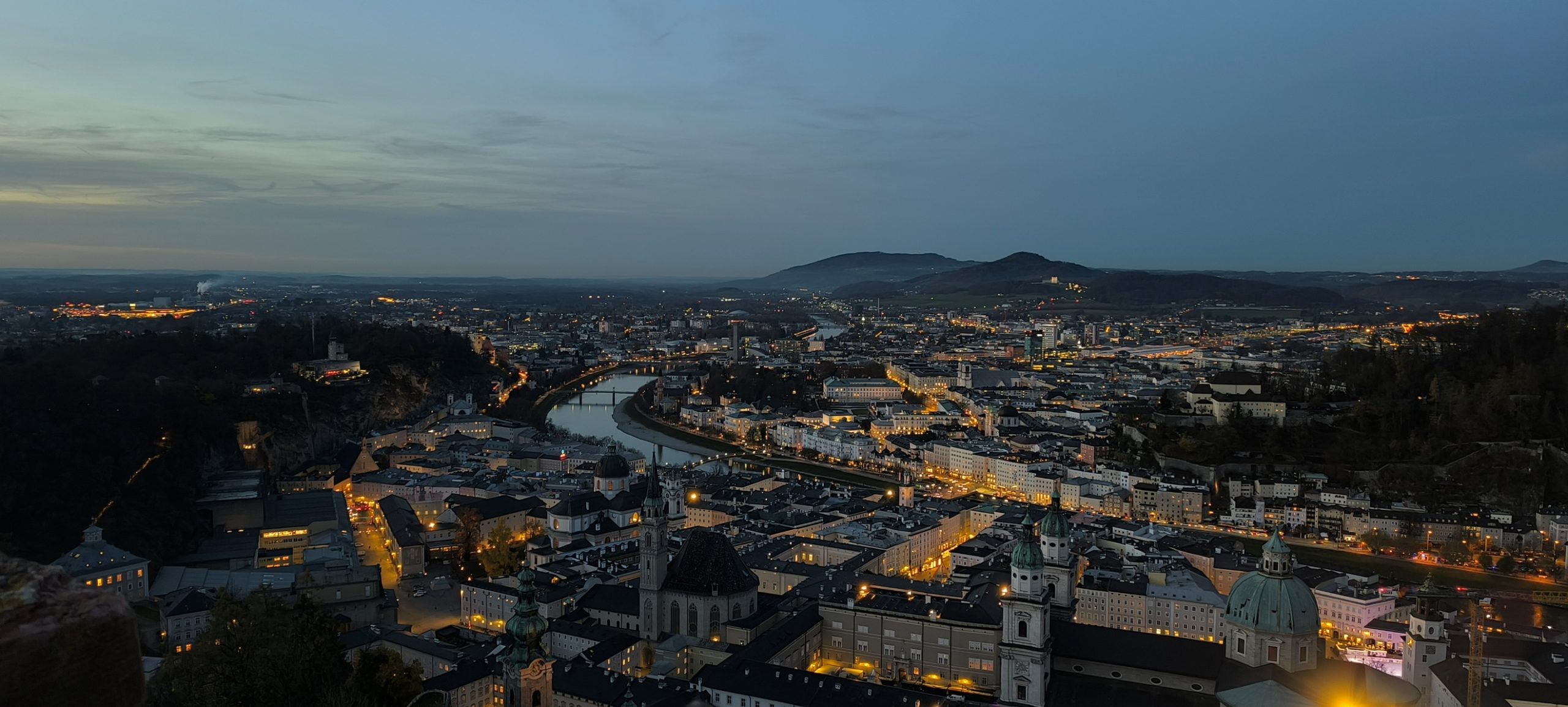
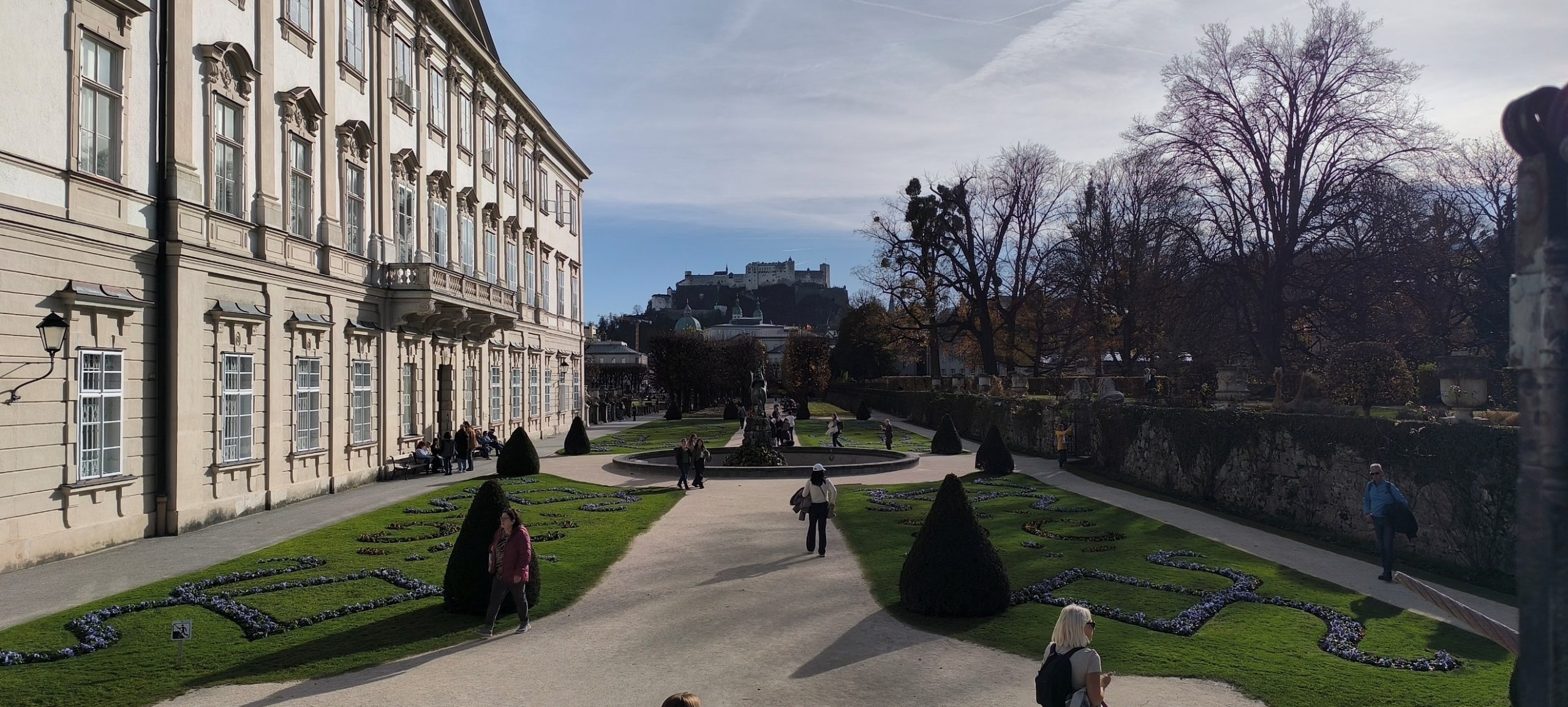
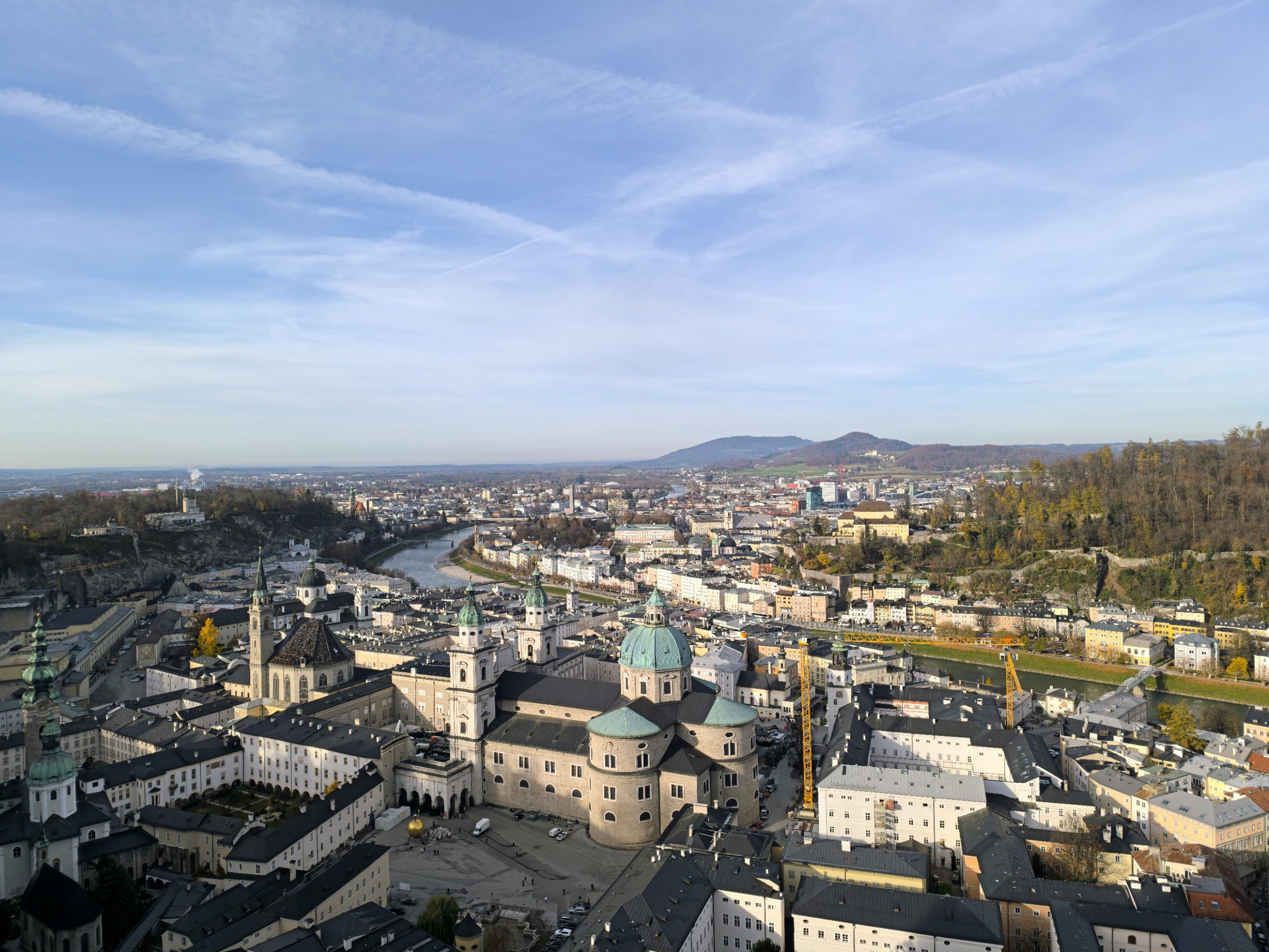
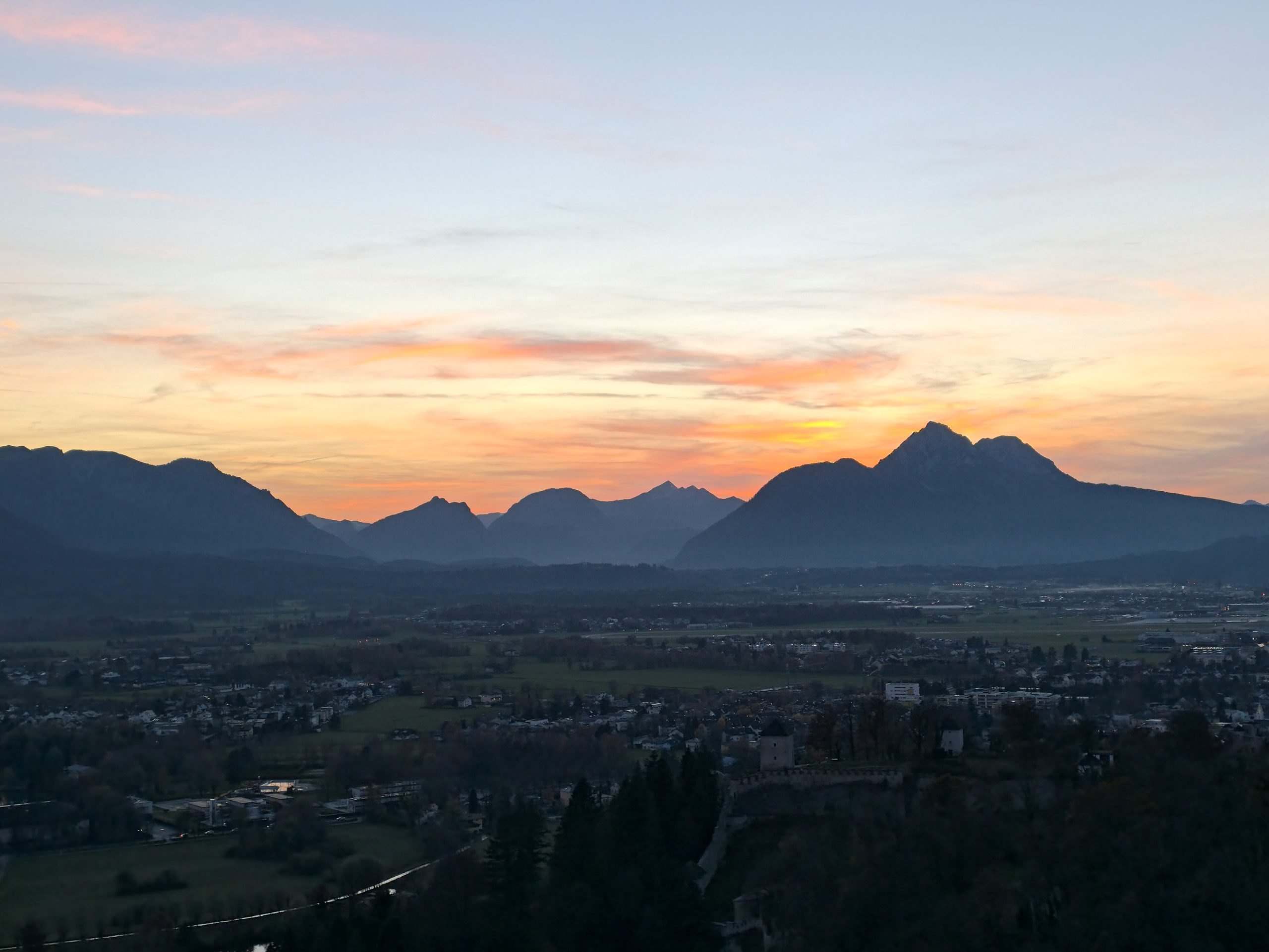
It wasn’t the best sunset, but it seemed to hold some sort of meaning. I had seen a lot of sunsets on the trip.
It was some kind of constant theme while the rest of the environment around me was constantly changing: the season, the light itself, the flora and fauna, the people, the food, the transport – everything. Each sunset itself was different to the last. Sometimes I didn’t see it because I was falling asleep on a long train ride. Sometimes it was hidden by clouds or fog. But there was always a sunset at the end of the day.
As I walked back down the hill, I walked into a couple of people setting up stalls for the Christmas market, then found a local kebab place and walked along the river for a while, mostly thinking about how I didn’t really want to finish the trip.
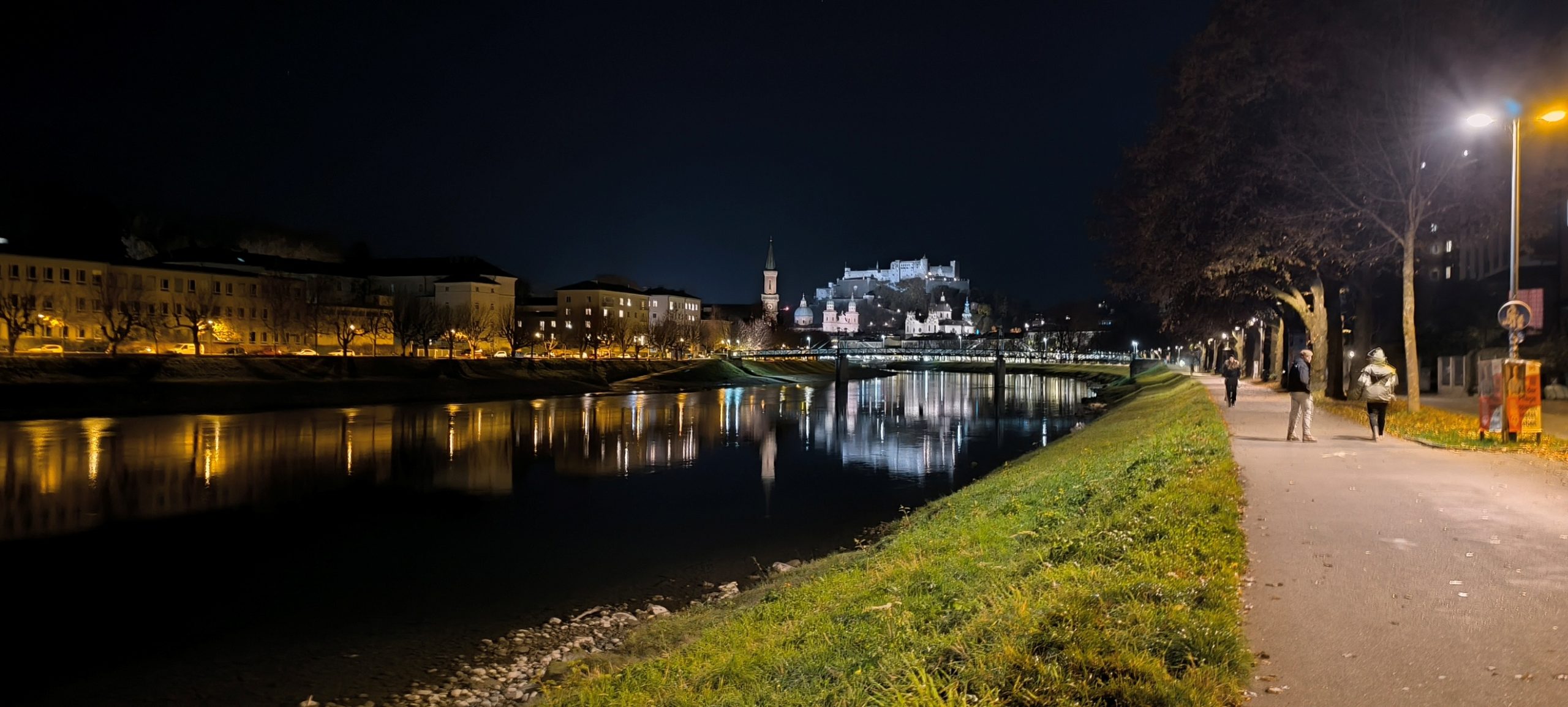
But the next day, it was time to do exactly that.
My route involved a huge jump, putting my trust in DB. I had a little under 1000km to do to get to Bruxelles, and I wanted to reach there that evening. Plenty of time – assuming there weren’t any delays.
I had two transfers (plus one in Bruxelles, but that didn’t really matter), one of 15 minutes in Munich, and one of 20 in Frankfurt. More than enough in theory, but with my first train delayed enough to make the DB app think I would miss the connection, I wasn’t so sure I would make it. If I missed it, the trip would become much longer.
So, as we pulled into Munich I was preparing again to run for the next train. But, we actually arrived a little earlier than predicted (earlier than the revised time, not the scheduled time), and I had some luck with a nice short platform transfer, so it was easily doable in the 7 minutes I had. That train took me to Frankfurt, where we pulled in only one minute late.
As it turns out, it is possible to rely on DB to be punctual!
Bruxelles was my last city. It was dark and cold but dry when I arrived and walked through the city centre to my last hostel.
Dinner was yet another pasta dish – but the last one of the trip. There was another guy, a little older, in the kitchen. He was about 1 month into a long trip (he was American, interestingly one of the only ones I had met, and so didn’t want to be flying back and forth across the Atlantic too much) and had completed the UK and was on his way into Europe, planning to carefully use non-Schengen countries not to overstay the 90/180 rule. As he was cooking food for the next week, I was cooking my last meal of the trip, and we were joined by seemingly the only other occupants of the hostel, a school group from Italy.
Red pesto tastes pretty good and is much better than green pesto. And I had been relying on it when I wanted to break the bolognese streak.
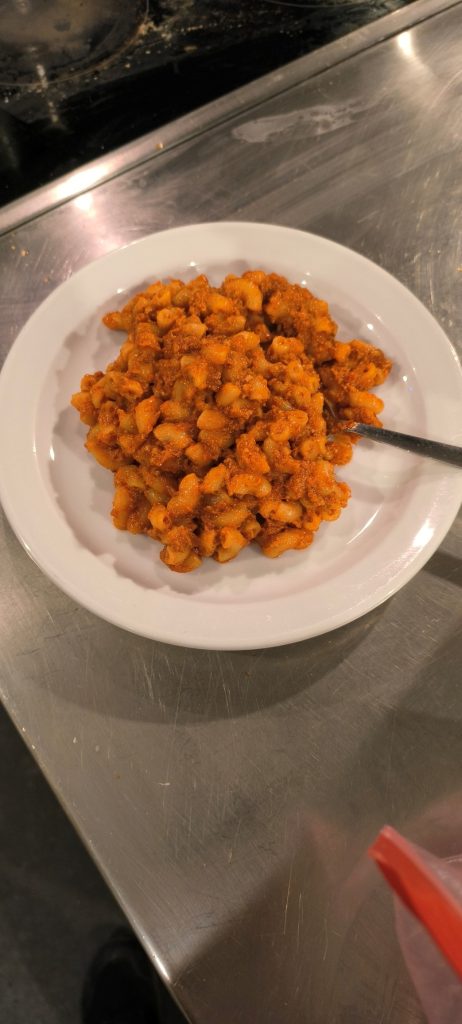
After eating and talking for a little while, they went off to their rooms (because they were on some sort of schedule) and it wasn’t long before I went to sleep as well.
It was raining and overcast on the last day of the trip – just as it had been exactly 2 months before in Amsterdam.
Between Amsterdam and Bruxelles, there’s only 211km between them by road, or around 2 hours by train.
Or, you could take the long way around. Via 21 countries, the UK, the Netherlands, Germany, Denmark, Sweden, Norway, Finland, Estonia, Latvia, Lithuania, Poland, Czechia, Austria, Slovakia, Hungary, Serbia, Montenegro, Bosnia and Herzegovina, Croatia, Slovenia, and Belgium. Via ~11,500 km on trains over ~6 days, ~2,500 km on busses over ~2 days, and a ferry or two.
I took the day to walk around, explore, and just relax in my last day of freedom.
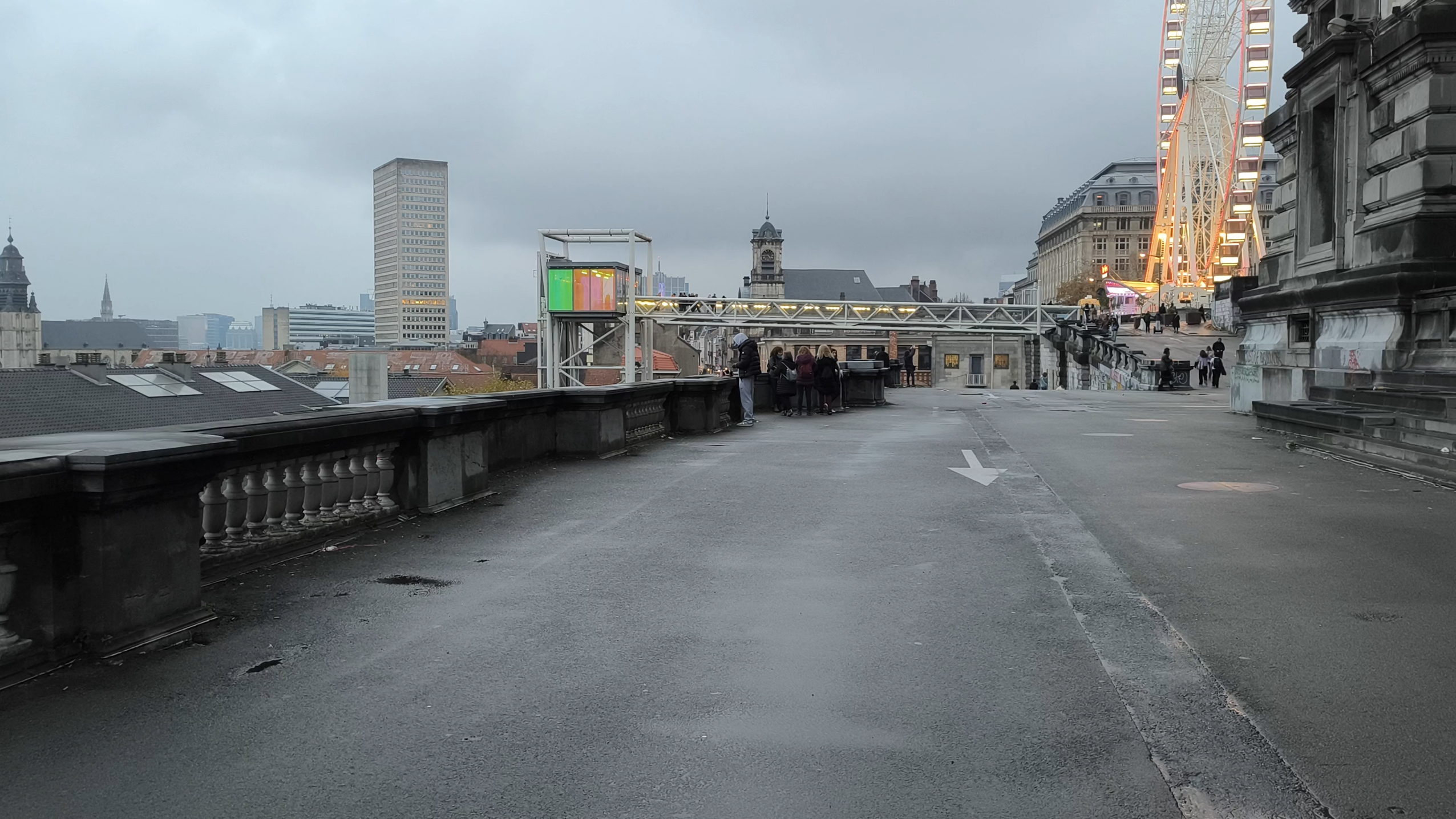
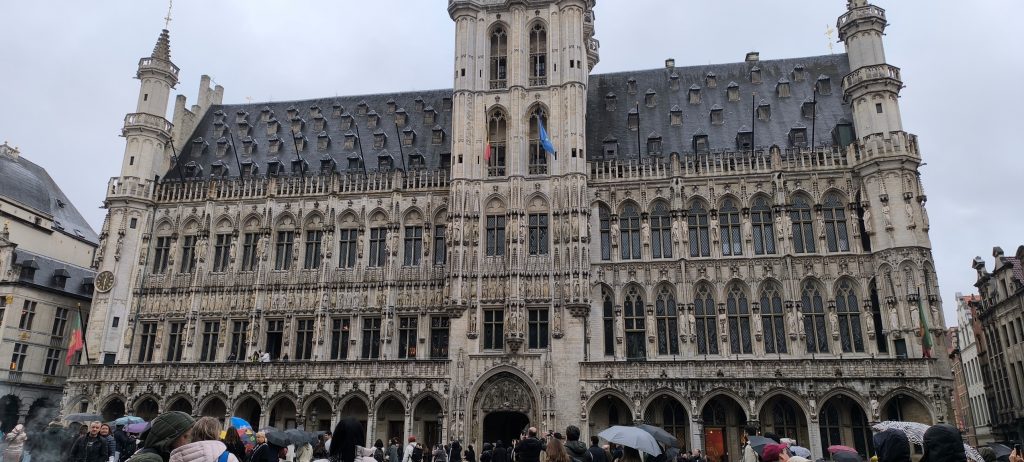
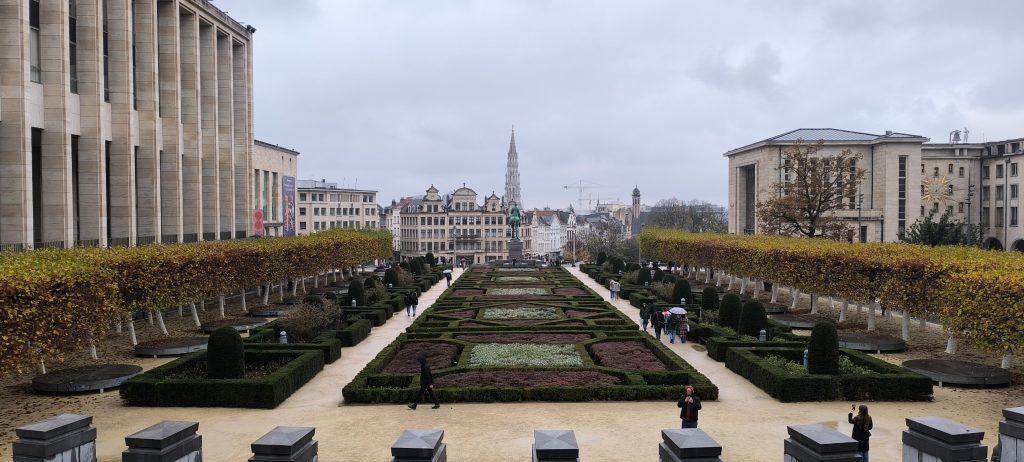
My Eurostar back home was at 6:20pm, which, after navigating the London Underground (because the Elizabeth Line was closed), left more than enough time to catch my last train of the trip. To home. At least for now.
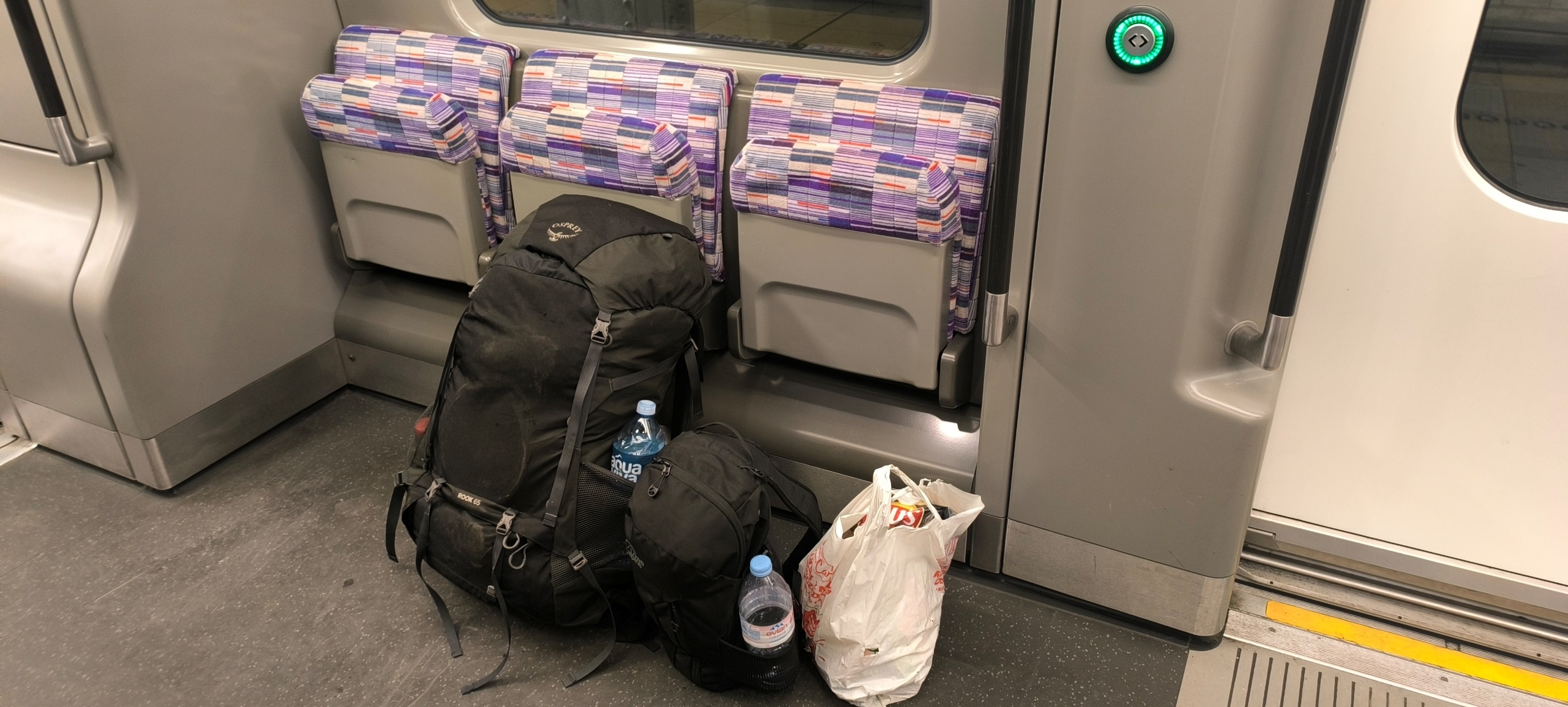
Leave a Reply